

Programs
Students in the IS program need to possess strong mathematics and logical reasoning skills. High school students planning collegiate programs in business, including information systems, should take algebra/trigonometry or pre-calculus courses in high school.
Information Systems (IS)
College of Business Administration
Department Chair: Kuang-Wei Wen
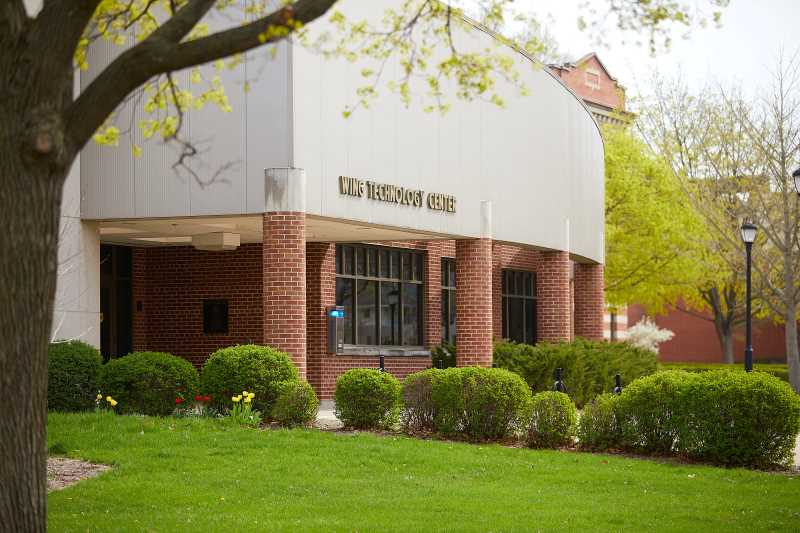
241 Wing Technology Center
(608)785-6658
email: kwen@uwlax.edu
Professor: Wen
Associate Professor: Yang
Assistant Professors: Haried, Dai, Chen
(Visiting).
Lecturer: Annino
Students in the College of Business Administration must complete the college core requirements viewable here. (36 credits of the common core)
Information Systems Major
(College of Business Administration) - 29 credits - CS 120, 220, 364; IS 300, 310, 330, 401, 411; one elective course from: IS 320, 405, 410, 451, 499; MGT 370, 395.
Information Systems Minor
(College of Business Administration) - 16 credits - CS 120, IS 300, 310, 401; one elective course from: ACC 327, IS 320, 330, 410 , MGT 395.
For Information Systems Minor application click Word or PDF
Information Systems Minor
(All colleges excluding College of Business Administration) - 25 or 28 credits - CS 120, either ACC 221 and 222 or 235, ECO 110, IS 220, 300, 310, 401, 410; one elective course from: ACC 327, IS 320, 330, MGT 395.
Admission and Retention Process:
- Provide a completed application form and a copy of your transcript to the IS office. (Wing 240)
- Have a declared major. 3) Have taken IS 220 with a grade of "B" or better. 4) Have taken MTH 175 or MTH 151, with a grade of "C" or better. 5) Have a minimum 2.50 cumulative GPA.
Note:
All students must meet prerequisite requirements for courses counting toward the minor. Required courses for any non-IS major cannot be counted as electives for the IS minor. Admissions are subject to an annual space limitation set by the department. If the number of qualified applications exceeds the annual space limitation, College of Business Administration majors must account for at least 60% of admitted applicants. Retention in the minor requires that CS 120 be taken no later than the first semester in the minor with a grade of "C" or better.
IS
220 Cr. 4
Information Systems for Business Management
This course provides the basic
level of management information systems literacy. Students will be
exposed to the building blocks of computer-based information systems,
the various organizational aspects of utilizing information systems, and
the role of information technology in the digital economy. To stress the
importance of user participation, the systems development life cycle
will be introduced from end-users' perspective. Additionally, students
will acquire essential skills of personal productivity tools through
hands-on training in small classes. Offered Fall, Spring.
The 300/400 level information
system courses are open only to those students who have been admitted to
the business program or IS minor program. Exceptions to this policy may
be made only by the College of Business Administration dean.
IS
300 Cr. 3
Information Systems Theory, Problem Solving, and Decision Making
This course provides an
understanding of the systematic ways for formulating business problems
from information systems perspectives, and of the necessary decision
processes that lead to effective solutions. Major topics include
information systems theory, organizational decision support using IS,
decision theory, decision analysis paradigms, and other problem solving
techniques. Group decision support technology will also be introduced.
Prerequisite: IS 220. Offered Spring.
IS
310 Cr. 3
Information Systems in Networked Environments: Technical Foundations and
Applications
This course provides
fundamentals of data communications and business networking
requirements, and examines the linkage of information technology
strategies and technological solutions for enabling effective business
processes within and between organizations in emerging environments.
Major topics include fundamentals of data communications and business
networking, applications to data communications, basic technologies of
the Internet and the Web, commercial use of Internet technologies,
e-business applications, and cases in online industries. Prerequisite:
IS 220. Offered Spring.
IS
320 Cr. 3
Computer-based Decision Support Systems for Management
An examination of how various
software application packages such as spreadsheets, database management
systems, and other software tools, are employed to support decision
making in business environments. Topic areas include modeling,
decision-support systems, data warehouses, on-line analytical
processing, and data mining. Prerequisites: CS 120; IS 220. Offered
Spring
IS/HIMT 321/320
Cr. 3
Survey of Information Technology in Health Care
In this course essential
information technologies in health care (HITs) will be surveyed. Many
important health care information systems (HISs) are built upon three
categories of HITs: data processing technologies, information reporting
technologies, and decision supporting technologies. Specific subjects
pertaining to these technologies will be identified and introduced.
(Cross-listed with HIMT 320; may only earn credit in IS or HIMT.)
Offered Fall, Spring.
IS
330 Cr. 3
Business Choices and Telecommunications Decisions
An examination of the business
and organizational role of telecommunications. The course will not
address the theoretical foundations of telecommunications, but rather
focus on using telecommunications to support and achieve business
strategies. Course topics will include how businesses are being reshaped
by advances in telecommunications; how businesses plan, deploy and
manage telecommunications resources; and how businesses are utilizing
and administrating local area network (LAN) and wide area network (WAN)
technology to achieve business objectives. Prerequisites: CS 120 and IS
310. Offered Fall.
IS/HIMT
340 Cr. 3
Ethical Issues, Security Management and Compliance
This course introduces three
broad subjects: 1) evidence-based medical ethics pertaining to health
care information management; 2) framework of health care information
security management including security principles, policies and
procedures, security management models, risk assessment, and protection
mechanisms; and 3) health care regulations and compliance with focuses
on the legislative systems, policies, and legal environment of health
care in the U.S. and the existing health information laws, regulations
and standards. Also addressed are the elements and development of
compliance programs. (Cross-listed with HIMT; may only earn credit in IS
or HIMT.) Offered Fall, Spring.
IS
360 Cr. 3
Management of Information Technology
An examination of issues that
both MIS and non-MIS managers face in managing information and
information technology within an organization. The course is a topics
course and will, of necessity, vary from semester to semester to stay
current with the technological changes which managers would face in the
workplace. Topics include strategic uses of information technology,
technological trends and their implications, the relationship between
organizational structure and information technology, evaluation of the
effectiveness of information technology, end user computing, management
of new and existing systems and ethical and international issues.
Prerequisite: junior standing. Offered Fall.
IS/HIMT
370 Cr. 3
Health Care Systems: Analysis and Design
This is the first course in a
two-course sequence that addresses methods and techniques of health care
information system (IS) analysis and design as performed within the
system development life cycle. Included will be the definition of the
problem, fact gathering, analysis, logical design, selection and
evaluation of alternative health care information systems solutions from
the point of view of the health provider and user. The course focuses on
the problem solving process that leads to the development of logical IS
solutions to applied health care problems. Prerequisite: IS 220 or HIMT
300. (Cross- listed with HIMT; may only earn credit in IS or HIMT.)
Offered Fall, Spring.
IS
401 Cr. 3
Management Information Systems: Analysis and Design
This is the first course in a
two-course sequence that covers the development process for
computer-based management information systems. This course emphasizes
information analysis and the logical design of management information
systems. Prerequisites: CS 120; IS 300, 310. Offered Fall.
IS
405 Cr. 1-3
Information Systems Seminar
Emphasis will be on
examination and study of current issues in information systems. Topics
will vary from semester to semester. Prerequisite: IS 401. Offered
occasionally.
IS
410/510 Cr. 3
Information Security Management
This course provides a
comprehensive treatment of the managerial aspect of information security
while leaving the technical aspect to the computer science discipline.
Concepts of information security management (ISM) related to governance,
risk management, and compliance will be acquired from survey of
contemporary literature including textbooks, journal articles, and
online publications while positive models serving as industry standards
that are governing today’s ISM practice will be introduced and compared.
Prerequisite: IS 220 or CS 220 or two years of relevant industry
experience. Offered Fall.
IS
411 Cr. 3
Management Information Systems: Design and Implementation
This is the capstone course in
a sequence that covers the development process for a computer-based
management information system. This course emphasizes physical design
and implementation of the system. Students will implement an information
system in a client-server environment, using a programming language
capable of calling functions in a database management system.
Prerequisites: CS 364 and IS 401. Offered Spring.
IS/HIMT
420 Cr. 3
Health Care Systems: Project Management
This course addresses the
phenomenal impact information system (IS) projects have had on health
care delivery. Students learn how IS health care projects affect
organizations, doctors, patients, and chronic-illness treatments, as
well as individuals interested in managing their own health care.
Concepts and tools for IS health care project management, process
reengineering and work redesign are introduced. The purpose of this
course is to expose students to IS project management activities in
health care settings. Topics covered include recent IS health care
project trends, budgeting, scheduling, resource management, scope,
risk analysis, and deployment controls. The genesis of health care
project management is covered using specific cases and examples.
(Cross-listed with HIMT; may only earn credit in IS or HIMT.) Offered
Fall, Spring.
IS/HIMT
435 Cr. 3
Data Communications and Computer Networks in Health Care
This course provides
fundamentals of data communications and networking techniques, and
examines the linkage of information technology strategies and
technological solutions enabling effective communication within and
between health care organizations. Major topics include fundamental
concepts of data communications and applications, network communication
devices, basic technologies of the Local Area Network, Wireless Local
Area Network, Wide Area Network, Internet and the Web, the OSI stack,
health care information system standards, and the HIE, RHIN, and the
NHIN. Prerequisite: IS 220 or HIMT 320 (Cross-listed with HIMT; may only
earn credit in IS or HIMT.) Offered Fall, Spring.
IS
451 Cr. 1-6
College of Business Administration Management Information Systems
Internship
The internship program as
conceived and implemented is an unusual program designed to provide an
opportunity for students in the College of Business Administration to
participate in an approved program with a cooperating business,
governmental or civic organization for usually 15 weeks of their
undergraduate work. All management information systems (MIS) internships
must be approved and supervised by an IS faculty member. For additional
information, see internship description under the College of Business
Administration heading. Repeatable for credit. Pass/Fail grading.
Offered Fall, Spring, Summer.
IS/HIMT
490 Cr. 3
Capstone Project
This course is the capstone
course for both tracks of the Health Information Management and
Technology degree program. Students are required to find an internship
site that is related to health care and set up a semester long project
from which they can gain hands-on experience in the areas of their
concentration. Project set-up will be jointly done by the student, site
sponsor, and the faculty of this course, whereas internship supervision
will be performed by the project supervisor and the course instructor.
Prerequisite: last semester of study in the HIMT program. (Cross-listed
with HIMT; may only earn credit in IS or HIMT.) Offered Fall, Spring.
IS
499 Cr. 1-3
Independent Study
Individual reading or research
under the guidance of a staff member. Open to selected advance students
who have excellent records in the department. Registration with the
consent of the student’s regular advisor, the instructor and the
department chairperson. Repeatable for credit — maximum six. Pass/Fail
grading. Offered Fall, Spring, Summer.