



Medical Dosimetry
A page within Medical Dosimetry
Questions? Please email the program at mdprogram@uwlax.edu for assistance
What is Medical Dosimetry?
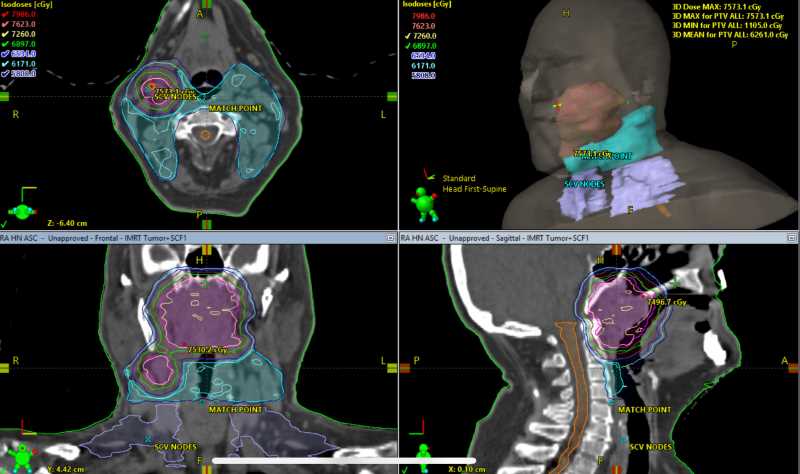
Medical Dosimetrists use their knowledge of mathematics, medical physics, anatomy, and radiobiology along with strong critical thinking skills to develop optimal radiation treatment plans. The medical dosimetrist is a member of the radiation oncology team that plays a role in the management/treatment of cancer. Medical Dosimetrists specialize in the planning of optimal radiation treatment techniques and dose calculations in collaboration with the medical physicist and radiation oncologist.
The professional organization, American Association of Medical Dosimetrists (AAMD) provides an in depth description of the medical dosimetry profession and the skills required.
Diverse learning environment
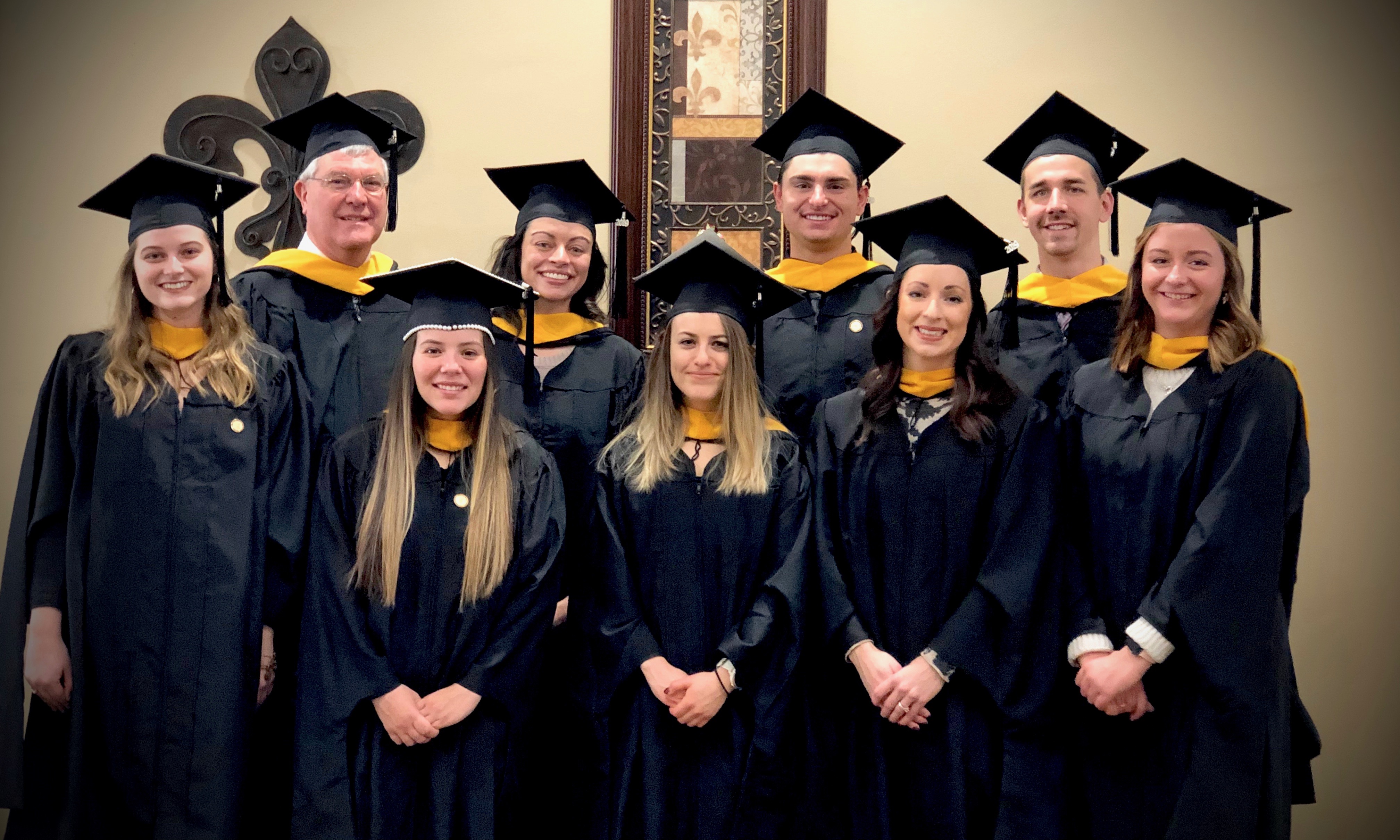
The distance education format along with the multiple prestigious clinical internship sites throughout the nation make our program unique because students bring diversity and multi-institutional experiences to one collaborative learning environment. This diverse learning environment enriches the clinical lab and research experience while improving clinical knowledge to better prepare our graduates for entry-level employment.
Program entry
There are a number of options for entering this program. A student who has completed radiation therapy school (Track A) or an undergraduate degree in the sciences (Track B) would be an excellent candidate for this program.
Program Tracks
Track A - for registered radiation therapists with a BS/BA
The Medical Dosimetry program's Master's Degree (Track A) is a 16 month program. Clinical internship will take place from January through December. The didactic online courses begin in the fall semester prior to starting clinical internship training. This Master's degree program not only delivers the core medical dosimetry curriculum, it also offers advanced professional and research coursework that prepares graduates for future advancement in the profession. Upon graduation, the student is eligible to sit for the MDCB exam. This program adheres to all JRCERT accreditation standards.
Program highlights include:
- online courses with a high degree of interaction with instructors and peers
- 46 credits
- clinical internship sites located throughout the U.S. with new sites established annually
Track B - for individuals with a BS/BA
The Medical Dosimetry program's Master's Degree (Track B) is a 16 month program. This is a great option for students who have recently completed their undergraduate degree in the sciences. Clinical internship will take place from January through December. The didactic online courses begin in the fall semester prior to starting clinical internship training. This Master's degree program not only delivers the core medical dosimetry curriculum, it also offers advanced professional and research coursework that prepares graduates for future advancement in the profession. Upon graduation, the student is eligible to sit for the MDCB exam. This program adheres to all JRCERT accreditation standards.
Program highlights include:
- online courses with a high degree of interaction with instructors and peers
- 46 credits
- clinical internship sites located throughout the U.S. with new sites established annually
About the Program
The Profession
The medical dosimetrist is a member of the radiation oncology team that plays a role in the management/treatment of cancer. Medical Dosimetry allows professionals to utilize their knowledge of mathematics, medical physics, science, and critical thinking in his/her everyday work. Medical Dosimetrists specialize in the planning of optimal radiation treatment techniques and dose calculations in collaboration with the medical physicist and radiation oncologist.
The professional organization, American Association of Medical Dosimetrists (AAMD) provides an in depth description of the medical dosimetry profession and the skills required.
Career Outlook
The future job market for Medical Dosimetry is strong. The advances in treatment planning continue to increase the demand for qualified medical dosimetrists. Wages are comparable with other healthcare professions. Given the diversity and ever changing technology of the job, lifelong career satisfaction is achievable.
Certification
After successful completion of the medical dosimetry program and several months of work experience, students are eligible to apply to take the medical dosimetry certification exam. The exam is held in various locations throughout the United States annually. The Medical Dosimetry Certification Board (MDCB) is the credentialing body for the certification exam.
Missions, Goals, and Outcomes
Mission
The Medical Dosimetry Program at the University of Wisconsin – La Crosse is committed to the education of medical dosimetrists who are knowledgeable, competent, and dedicated to their profession and their patients.
Goals & Student Learning Outcomes (SLO)
- Students will demonstrate clinical competence in medical dosimetry.
- SLO: Students will contour anatomy proficiently.
- SLO: Students will create a treatment plan to meet given prescription and dose constraints.
- Students will demonstrate effective communication skills.
- SLO: Students will apply effective oral communication skills.
- SLO: Students will apply effective written communication skills.
- Students will use critical thinking skills to practice in current and emerging technology.
- SLO: Students will examine factors that affect dose distribution.
- SLO: Students will identify safety concerns and respond appropriately.
- Students will use graduate-level skills in medical dosimetry.
- Students will implement principles of protocol planning.
- Students will develop a manuscript at graduate-level rigor.
Accreditation
Institutional
The University is accredited at the institutional level by the Higher Learning Commission of the North Central Association.
Programmatic
The UWL medical dosimetry program is accredited by the
Joint Review Committee on Education in Radiologic Technology
20 N. Wacker Drive, Suite 2850
Chicago, IL 60606-3182
Phone: (312) 704-5300
email: mail@jrcert.org
The program's current award is 8 years. General program accreditation information and the current accreditation award letter can be found here.
What does an accredited program mean to a prospective student?
- The profession is assured the program provides minimum education in the profession as required.
- Educators are assured their program maintains professional standards.
- Patients are assured that students who perform procedures have appropriate supervision and that graduates meet the minimum level of competency required.
- Students are assured that the program provides the requisite knowledge, skills, and values to competently perform professional responsibilities expected by potential employers and that students are prepared for the certification exam.
Program Effectiveness
The UWL Medical Dosimetry program tracks effectiveness data (credentialing examination pass rate, job placement rate, and program completion rate) on an annual basis. The program effectiveness data is reported to the JRCERT for accreditation purposes in an annual report.
100 |
97 |
100 |
| Completion Rate (%) | Exam Pass Rate (%) | Job Placement Rate (%) |
Program Effectiveness Data 5 year average (2020-2024)
Graduate Research
An important concept of the Medical Dosimetry Program is evidence-based practice. Therefore, graduate students are given the opportunity to perform research through practicum experiences.
The program faculty encourage students to present and/or publish their research. The American Association of Medical Dosimetrists (AAMD) offers an annual writing competition for students and for medical dosimetry professionals. Students are encouraged to enter the writing competition after their research is completed. They are also encouraged to submit their research for publication within the various professional organization publications, such as Medical Dosimetry journal or the Radiation Therapist journal.
News
 Saying more with less
Posted 2:30 p.m. Thursday, Dec. 11, 2025
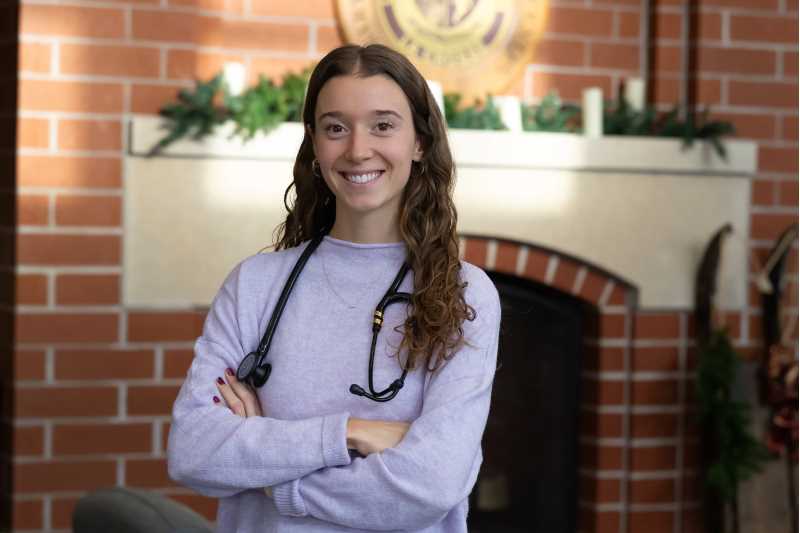
Say it in 6 competition challenges grad students to rethink communication, reflect on growth
Read more about Saying more with less
Saying more with less
Posted 2:30 p.m. Thursday, Dec. 11, 2025
Say it in 6 competition challenges grad students to rethink communication, reflect on growth
Read more about Saying more with less
 Life lessons from cancer care
Posted 1:56 p.m. Thursday, Feb. 8, 2024
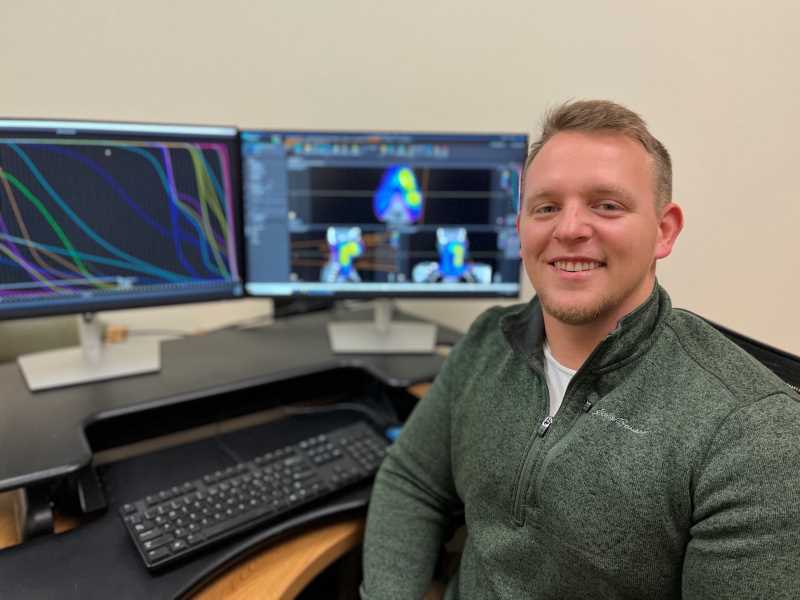
Alumnus Jacob Wudtke shares wisdom from caring for cancer patients
Read more about Life lessons from cancer care
Life lessons from cancer care
Posted 1:56 p.m. Thursday, Feb. 8, 2024
Alumnus Jacob Wudtke shares wisdom from caring for cancer patients
Read more about Life lessons from cancer care
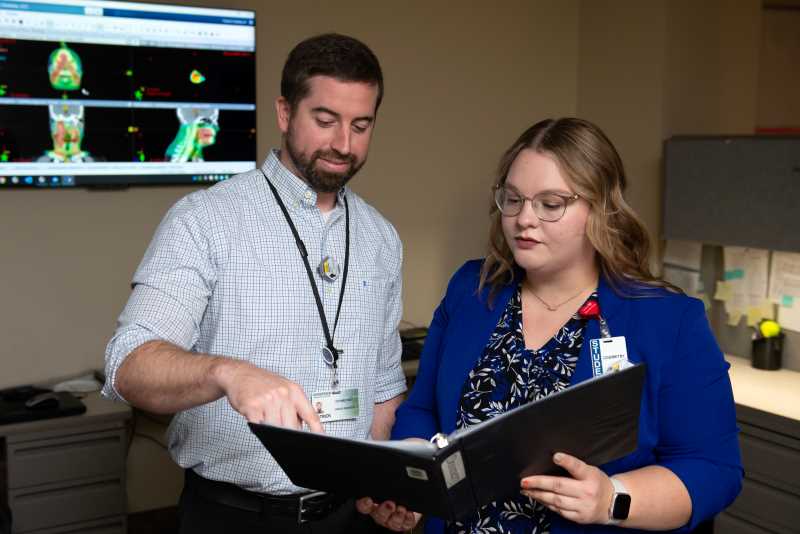 Fighting cancer with calculations
Posted 8 a.m. Tuesday, Oct. 25, 2022
A mystery profession to most, medical dosimetrists target cancer from behind the scenes
Read more about Fighting cancer with calculations
Fighting cancer with calculations
Posted 8 a.m. Tuesday, Oct. 25, 2022
A mystery profession to most, medical dosimetrists target cancer from behind the scenes
Read more about Fighting cancer with calculations