

Leadership Development and Assessment Course (LDAC)
ROTC Leadership Development and Assessment Course (LDAC) is the most important training
event for an Army ROTC cadet or National Guard Officer Candidate.
The 29-day course incorporates a wide range of subjects designed
to develop and evaluate leadership ability. The challenges are
rigorous and demanding, both mentally and physically. The Leadership Assessment and Development Course tests intelligence, common sense, ingenuity
and stamina. These challenges provide a new perspective on an
individual's ability to perform exacting tasks and to make difficult
decisions in demanding situations.
The course places each cadet and officer candidate in a variety of leadership
positions, many of which simulate stressful combat situations.
In each position, cadets are evaluated by platoon tactical and
counseling (TAC) officers and noncommissioned officers. In addition
to proving their leadership ability, cadets and officer candidates
must meet established standards in physical fitness, weapons
training, communication, combat patrols and demonstrate their
proficiency in many other military skills. Cadets and officer
candidates must excel at camp to be considered competitive for
a commission as an Army officer.
|
|
Field Leaders Reaction Course
FLRC
is designed to develop and evaluate leadership and
to build teamwork early in the camp cycle. Course
administration is accomplished using the established
cadet organization and chain of command. Cadet leadership
potential is assessed by committee evaluators. Cadets
are provided the opportunity to get early feedback
on their leadership strengths, weaknesses, styles
and techniques.
|
|
|
Automatic Weapons
Squad
Automatic Weapon / M60 machine gun training teaches
cadets the characteristics, functions and employment
of the weapons. This training provides skills used
in later tactical phases of camp.
|
 |
Land Navigation
Land
navigation training must be mastered early in the
camp cycle for the cadets to be fully successful
in the tactical training which follows. The land
navigation evaluation consists of three portions
totaling 100 points. The written examinations is
worth 30 percent. The day land navigation test is
worth 50 percent. Night land navigation is worth
20 percent. Each cadet must earn 70 percent on each
test to pass this event. A passing score in land
navigation is a camp completion criterion.
|
|
|
Hand Grenade
Basic
understanding and use of hand grenades is an important
facet of weapons and tactical training. Cadets learn
to identify major types of grenades. They learn the
grenades' characteristics and uses. Cadets also employ
live grenades.
|
|
|
Nuclear, Biological, Chemical
NBC
training provides basic soldier skills that cadets
must master to meet pre-commissioning requirements.
Cadets learn characteristics, maintenance and employment
of NBC equipment. They also develop confidence in
defensive equipment during mask confidence exercises.
|
|
|
Squad Situational Training Exercises
Squad
STX is a five-day, two-phase event. The first two
days, the Squad training phase, are designed to train
squad battle drills and collective tasks. The last
three days, the Squad STX lane phase, are designed
to evaluate leadership using tactical scenarios.
Each cadet receives two formal evaluations of their
performance as a squad leader during this phase.
Squad operations builds on and reinforces all previous
instruction. Cadets use knowledge of land navigation,
terrain association, weapons systems, and all individual
training previously presented.
|
|
|
Patrolling Situational Training Exercises
Patrolling
STX is a three-day event that provides cadets practical
experience leading soldiers at the section level.
The first day is a training day on which cadets are
taught the fundamentals of patrolling missions. The
following two days are designed to evaluate leadership
potential using tactical scenarios by giving cadets
opportunities to utilize the training as patrol leaders
and assistant patrol leaders. Patrolling STX builds
on and reinforces all previous instruction, and teaches
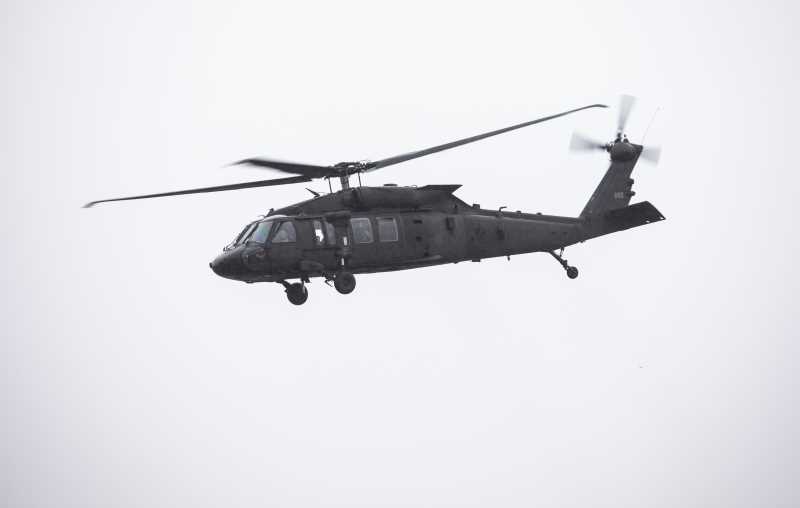
cadets the basics of air assault operations. This
event culminates cadets' training at National Advanced
Leadership Camp.
|
 |
Infantry Platoon Tactical Standing Operating Procedure
This
publication is an extract from FM 3-21.8 Infantry Rifle
Platoon and Squad. It provides the tactical standing
operating procedures for infantry platoons and squads
and is tailored for ROTC cadet use. The procedures
apply unless a leader makes a decision to deviate
from them based on the factors of METT-T. In such
a case, the exception applies only to the particular
situation for which the leader made the decision.
|
|