
Plenary speakers
Chevelle Newsome
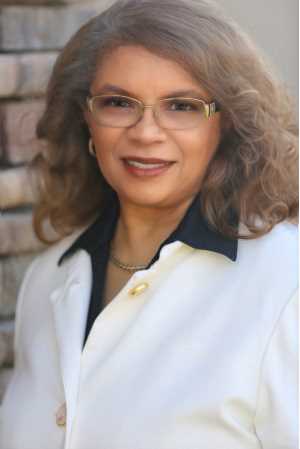
Chevelle Newsome
Council of Graduate Schools
Dr. Chevelle Newsome became the seventh president of the Council of Graduate Schools (CGS) in 2025, leading one of the nation’s most influential organizations in advancing graduate education. She represents 443 U.S. and Canadian institutions, 24 international members, and programs awarding over 563,000 master’s and 65,000 doctoral degrees annually. Guided by three imperatives, Excellence First, Graduate Education at the National Table, and Student-Centered Success, she champions innovation, academic success, and institutional excellence. Previously, as Dean of Graduate and Undergraduate Studies at California State University, Sacramento, she oversaw curriculum development, expanded doctoral education, and aligned learning outcomes with career success.
Karen Marrongelle
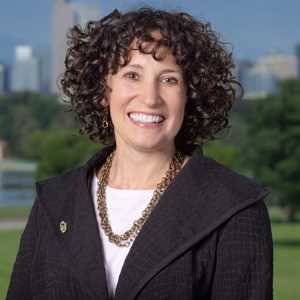
Karen Marrongelle
University of Colorado Denver
Karen Marrongelle, Ph.D., is the Provost and Executive Vice Chancellor for Academic Affairs and a Professor of Mathematics. As Provost, she provides leadership for academic planning and research advancement, working in collaboration with the deans of CU Denver’s schools and colleges to ensure academic excellence, promote robust student outcomes, and support CU Denver’s mission as a leading public urban research university.
Prior to her appointment as Provost, Karen was the Chief Science Officer and Chief Operating Officer at the U.S. National Science Foundation (NSF), where she oversaw scientific direction and operations of the federal agency whose mission includes support for all fields of fundamental science and engineering. She also served as Assistant Director of the NSF for Education and Human Resources (EHR), supporting research that enhances learning and teaching to achieve excellence in U.S. science, technology, engineering, and mathematics (STEM) education.
Prior to joining NSF, Karen was Dean of the College of Liberal Arts and Sciences at Portland State University and a Professor of Mathematics and Statistics. At Portland State, she oversaw departments and programs across the humanities, social sciences and natural sciences. She also held positions as the Vice Chancellor for Academic Strategies and as Assistant Vice Chancellor for Academic Standards and Collaboration with the Oregon University System. From 2007-09, Karen researched undergraduate mathematics learning and teaching. She served on a rotation as a program officer at NSF and led numerous grants, collaborating with researchers nationally and internationally to improve undergraduate mathematics education and K-12 mathematics professional development.
Karen has a bachelor’s degree in mathematics and philosophy from Albright College, a master’s degree in mathematics from Lehigh University, and a doctorate in mathematics education from the University of New Hampshire.
Barrie Robison
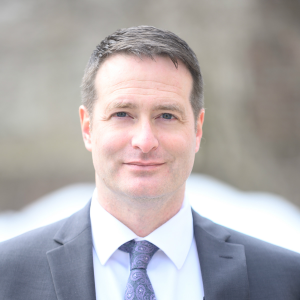
Barrie Robison
Research Faculty, Institute for Health in the Human Ecosystem, Office of Research and Economic Development, University of Idaho
Barrie Robison is a Professor of Biology at the University of Idaho, and the Director of the Institute for Interdisciplinary Data Sciences (IIDS). As IIDS Director, Robison leads more than 20 full time staff with extensive experience in software development, databases, data science, artificial intelligence (including generative AI), machine learning, genomics, bioinformatics, web and mobile app development, and the administration and construction of high-performance computing hardware. He has been an active researcher at the U of I for more than 20 years, studying behavioral genomics, evolutionary biology, and data science. Robison is actively engaged in developing and deploying generative Artificial Intelligence models in multiple higher education contexts and leads the U of I’s efforts to deploy AI to improve operational efficiency. He is also CoPI on a ~$4.6 million NSF grant (AI4RA) which is focused on building trustworthy and explainable AI solutions for research administration workflows.
Aaron Thomas
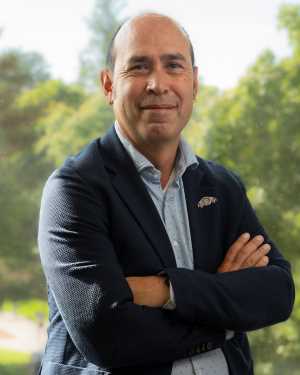
Aaron Thomas
Director, Indigenous Research and STEM Education Center (IRSEC)
Dr. Thomas works closely with Native undergraduate and graduate students while establishing relationships with the tribal colleges and reservation communities in working towards better Native STEM education and STEM research collaborations. He has established the Montana American Indians in Math and Science Program (MT AIMS), and is the primary PI for the NSF INCLUDES Award for the CIRCLES Alliance which focuses on Native STEM Education in collaboration with 5 other EPSCoR jurisdictions, and a Howard Hughes Medical Institute Direct Change award focusing on Native STEM education within UM.