



Relocation
Due to the demolition of Cowley Hall and construction of Prairie Springs Science Center Phase II, the Physics Department will be temporarily relocated to 339G Wimberly Hall. We apologize for any inconvenience.
Undergraduate programs
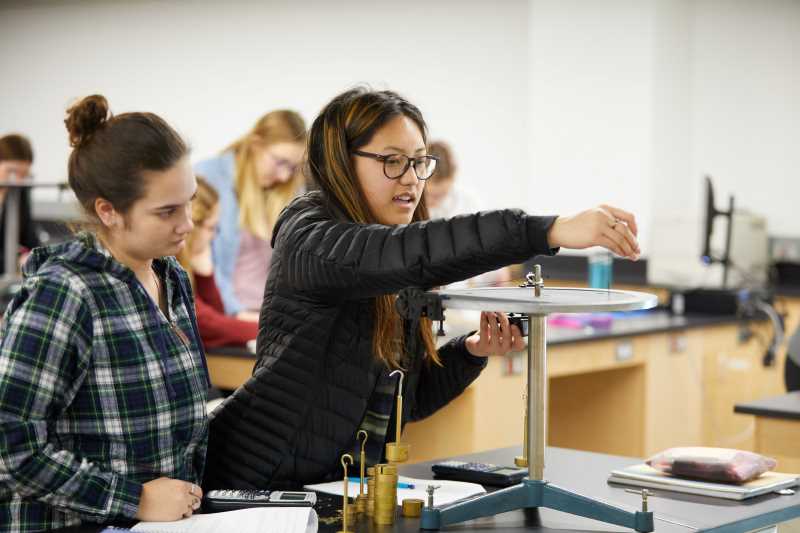
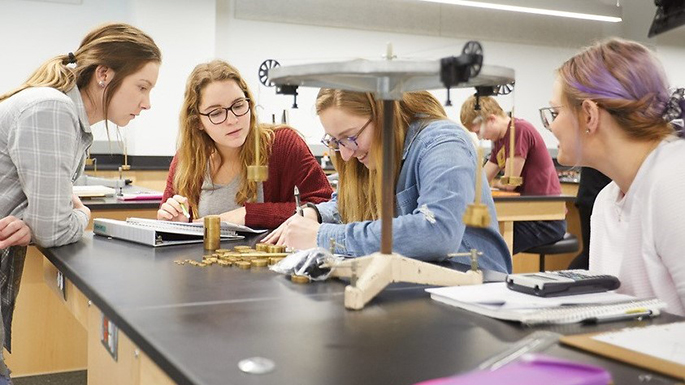
Physics
Undergrad major Undergrad minor Teacher licenseUWL's Physics Department is a nationally-recognized leader in physics education and one of the largest undergraduate physics programs in Wisconsin.
Areas of study
Applied Emphasis
The applied emphasis gives you theoretical background to focus on the experimental aspect of physics. While not an engineering degree, this emphasis requires the same basic classes as the Bachelor of Science in Physics & Bachelor of Science in Engineering Dual Degree Program.
Undergrad major View a sample plan for Applied Catalogfor AppliedAstronomy Emphasis
The science of astronomy applies principles of physics to everything beyond Earth’s atmosphere. Students use what they learn in core classical and modern physics courses to study the properties of stars, planets and exoplanets, white dwarfs, neutron stars, black holes, other galaxies, dark matter, dark energy, and cosmology.
Undergrad major Undergrad minor View a sample plan for Astronomy Catalogfor AstronomyBiomedical Concentration
Do you like physics, mathematics, chemistry, and biology? Are you struggling to choose just one for a major? You don’t have to with the biomedical concentration! This physics concentration combines all of these subjects by providing a set of core courses and allowing you to choose the advanced courses you will take to prepare for your future. Whether you are looking ahead to the rigors of medical school, a program in medical physics, a future in biomedical engineering or other options, a biomedical concentration could be the perfect path for you.
Undergrad major View a sample plan for Biomedical Catalogfor BiomedicalBusiness Concentration
Combine physics with business to grow your problem-solving skills while expanding your background in business including economics, accounting, finance and marketing. This concentration requires the physics core courses and provides the flexibility to choose from 12 additional physics classes from a catalog of classes. The rest of the classes are taught in the College of Business Administration.
Undergrad major View a sample plan for Business Catalogfor BusinessScience Education
Completion of the physics: science education concentration program and associated benchmark assessments will lead to endorsement for the Wisconsin teaching license in middle and high school science, grades 4-12 (2600). Students in all teacher education programs must satisfy the School of Education (SOE) core requirements.
Undergrad major Teacher license View a sample plan for Science Education Catalogfor Science EducationOptics Emphasis
From lasers and light-emitting diodes (LEDs) to fiberoptics, microscopes, spectrometers and telescopes, optical instruments play a key role in how we live and study the universe around us. In this emphasis, students take specialized optics courses where they learn about the fundamental properties of light and how modern optical instruments work.
Undergrad major View a sample plan for Optics Catalogfor OpticsPhysics & Engineering
Receive a degree from UWL and a degree from UW-Madison, UW-Milwaukee, UW-Platteville, UW-Stout, the University of Minnesota Duluth, or Winona State University.
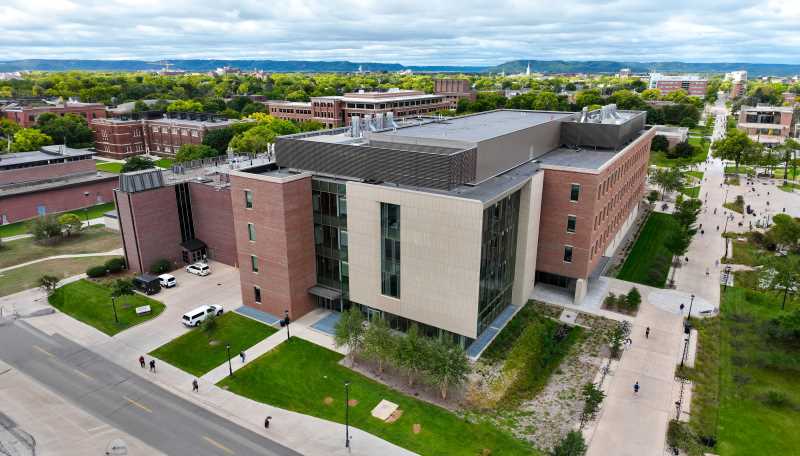
Engineering Physics
Undergrad majorEngineering Physics combines science, mathematics, and engineering to equip graduates with skills to address complex, interdisciplinary challenges.
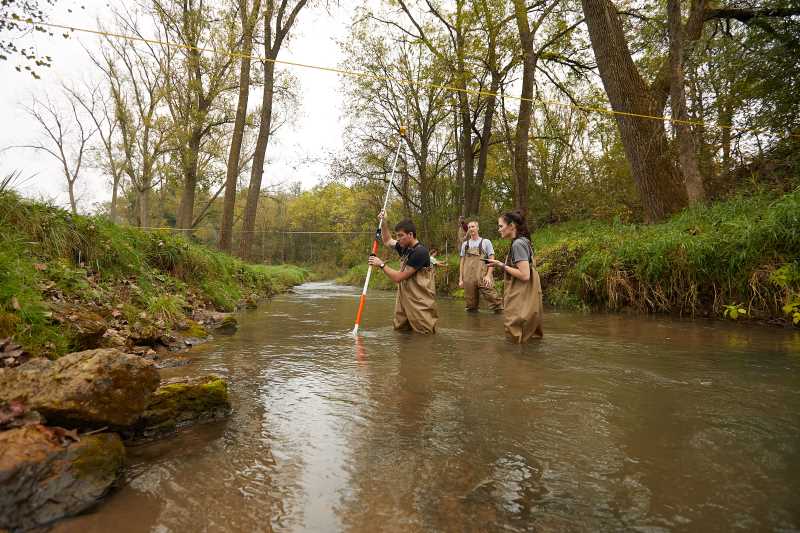
General Science for Teachers
Undergrad minorImprove your ability to teach science in elementary and middle school settings with the General Science for Teachers Minor.
Related programs from other departments

Featured courses
View all coursesGet assistance
Upcoming events
Latest news


Upcoming Academic Calendar dates

Hear from an alum
Anja Clauson
This program has been helpful toward teacher preparation because I have been able to take my experiences in the courses and find ways to relate them to my education course discussions. I also have a love for science, so this program has let me to continue to learn!

Hear from an alum
Elizabeth (Beth) Tennyson
The Physics Department at UWL is a true gem. The warmth and support offered by the professors remains unmatched. The opportunity to perform research independently as an undergraduate was so valuable. It really helped me flourish in graduate school where I continued researching.

Hear from an alum
Jojo, Cheuk Yin Lo
As an international student from Hong Kong, my experience in the Physics Department was amazing. I enjoyed doing undergraduate astronomy research with Dr. Sallmen. I appreciated all the mentorship, academic and work opportunities provided by faculty, as well as the clubs and events that widened my horizons.

Hear from an alum
Xavier James
In the UW-L Physics program, the McNair Scholars Program and Dr. Shelly Lesher prepared me for graduate school. While the McNair Scholar program provided workshops to understanding the graduate school process, Dr. Lesher provided the experience I gained from working alongside her that assured my decision to become a nuclear physicist.

Hear from an alum
Leah Clark
My time conducting nuclear physics research within the UWL Physics Department opened my eyes to exciting projects and career paths that physics can bring. I would not have made my commitment to pursue nuclear science had it not been for my undergraduate advisor, Dr. Shelly Lesher, and the rest of the faculty in the department.

Hear from an alum
Laura Marschke
UWL granted me the opportunity to do multiple years of undergraduate research and present at numerous conferences, putting me ahead of many of my peers entering graduate school.