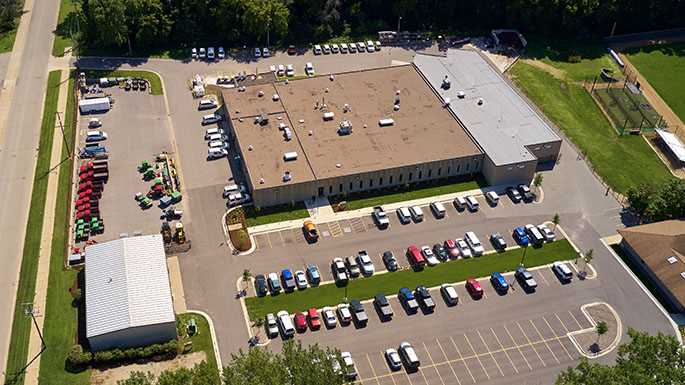


UW-L REFUSE AND RECYCLING PROGRAM
All dumpsters and waste or recycling collection bins at UW-L are only for waste and recyclables generated at UW-L. UW System Administrative Code 18.06 allows for fines against any violator.
Each building or set of buildings on campus is served by a designated dumpster screen for collection of day to day waste and recyclables. Each location generally has a minimum of three dumpsters, one green, one white and one blue. Depending on the volume of waste generated by a particular building, some buildings may have more than one of each color dumpster. Waste and recycling should be sorted and placed in these dumpsters as follows:
Blue dumpsters : co-mingled container recycling
- Acceptable items:
- Aluminum/tin/steel cans
- Glass beverage containers
- Plastic containers (#1-#7)
- Unacceptable items:
- No window/tempered/auto glass
- No glass or metal cookware/bakeware
- No plastic shopping bags
- No scrap/demolition metal
- No light bulbs
- No unnumbered plastics
White dumpsters: mixed paper and cardboard recycling
- Acceptable items:
- Office paper, envelopes, soft and hardcover books
- Paper with paperclips or staples
- Spiral notebooks with metal spiral
- Cardboard
- Unacceptable items:
- No paper/cardboard contaminated by food
- No waxed paper or waxed cardboard
- No bathroom waste paper
- No carbon paper or photo paper
- No 3 ring binders
Green dumpsters: regular household/office trash with recyclables already removed
- Unacceptable items:
- No items over 4 feet in any dimension
- No items over 100 lbs
- No furniture
- No carpeting
- No tires
- No major appliances
Contractors on campus are not allowed to use these dumpsters for disposal of demolition waste generated from a contracted project. Contractors are responsible for removing and disposing of waste from the site by other means, such as arranging for delivery and removal of a roll off dumpster. Contractors also are not allowed to haul any waste to the physical plant for disposal.
In addition to the blue, white and green dumpsters at each building the University maintains collection points at the physical plant for other categories of special waste and recycling as follows:
Electronics and Appliance Recycling bin:
Items placed in the bin should be labeled with the building
and/or department that they came from.
Electronics and appliances required to be recycled by State Law:
- Major appliances: washers, dryers, refrigerators, stoves, furnaces, water heaters, dehumidifiers, air conditioners, dishwashers
- Major electronics: computers, computer monitors, scanners, printers, fax machines, televisions, DVD players, VCRs
- Commercial appliances/equipment: examples: copy machines, autoclaves, kilns, commercial kitchen equipment
**Whenever possible departments purchasing new appliances or commercial equipment should have the old appliance hauled away as a part of the new purchase transaction.
Metal recycling bin:
This bin is for scrap
metal that will be recycled. Items placed in this bin should be
at least 95% recyclable metal. If items contain more than
5% wood, plastic, fiberglass or upholstered surfaces they should
be dismantled and non metal parts should be removed before
placing them into the bin. If parts cannot be removed the
items should go into the roll off dumpster to be landfilled.
- Acceptable materials:
- Demolition scrap metal
- Metal chair frames, file cabinets, shelves or desks that meet criteria above and that have been deemed unsalable by Campus Stores Surplus Property staff.
- Empty fuel tanks that have been cut in half
- Unacceptable materials:
- Appliances
- Ballasts from light fixtures
Pallets and scrap wood recycling bin:
For
pallets and untreated, unpainted, unstained lumber only.
Demolition bin:
For demolition
material from campus projects performed by UW-L Facilities
Maintenance staff only. Contractors are NOT allowed to
haul waste from contracted projects on campus and dispose of it
in this bin.
Items suspected of containing asbestos should test negative before being placed in this bin.
- Acceptable materials:
- Concrete, steel, asphalt, sinks, tubs, toilets, porcelain, ceramic, roofing material, electrical fixtures, windows, doors, carpet, flooring material, brick, lumber, drywall, insulation
- No brush
- No bagged garbage
- No appliances
- No furniture
- No electric motors
- No paper or cardboard
20 yard roll off dumpster:
Items
placed in this dumpster will go directly to the landfill and are
charged the most expensive landfill rate. All other
options should be exhausted before placing items in this
container.
- Materials to place in this container:
- Upholstered, wood, or plastic furniture
- Metal furniture with upholstery, wood or plastic parts that can’t be easily removed
- Mattresses
- Large or bulky items that cannot go into the green dumpster due to size restriction – for example, tarps or nets
- No tires
- No appliances
- No lead acid batteries
- No waste oil or other liquid waste
- No materials banned from landfills by State law such as recyclable cardboard, paper, aluminum, plastic and glass
- No bagged household trash
Tire bin:
There is a separate bin near
the roll-off dumpster for collection of tires for disposal.
Only tires from University owned vehicles or equipment should be
placed in this bin.
Brush bin:
Brush (up to 8 inches in
diameter), leaves, grass clippings and other plant materials are
collected and hauled to the City of La Crosse yard waste site to
be turned into mulch or compost. Limbs and logs larger
than 8 inches in diameter are also hauled to the City of La
Crosse collection facility or to the La Crosse County Landfill.
Fluorescent light bulb collection:
Custodians throughout campus collect fluorescent light bulbs for
recycling. Boxed used bulbs are collected through Campus
Stores where they are picked up for recycling by a private
vendor.
Ballasts, liquid waste, hazardous waste:
Ballasts containing PCBs are collected in the Hazardous
Materials room in the Physical Plant.
Liquid waste such as used oil, old paint or solvents are collected in the Hazardous Materials room in the Physical Plant.