

Health Information Systems Management (HISM) Minor
The HISM minor program provides rigorous coverage and training in the areas of project management and healthcare data communications. These strengths are highly desirable in today’s healthcare professions.
By taking the elective courses students could choose to learn data-driven decision support systems which are highly relevant to clinical decision making and care planning, or to gain deeper exposure to IT management that is essential to practice management.
The HISM minor program will typically take two years to
complete. However, students carrying HP 250 or IS 220 credits
into the Program may fast-track to completion in the near
future.
For Health Information Systems Management Minor
brochure click
HERE.
For Health Information Systems Management Minor application click
Word
or
PDF
Information Systems (IS)
College of Business Administration
Department Chair: Kuang-Wei Wen
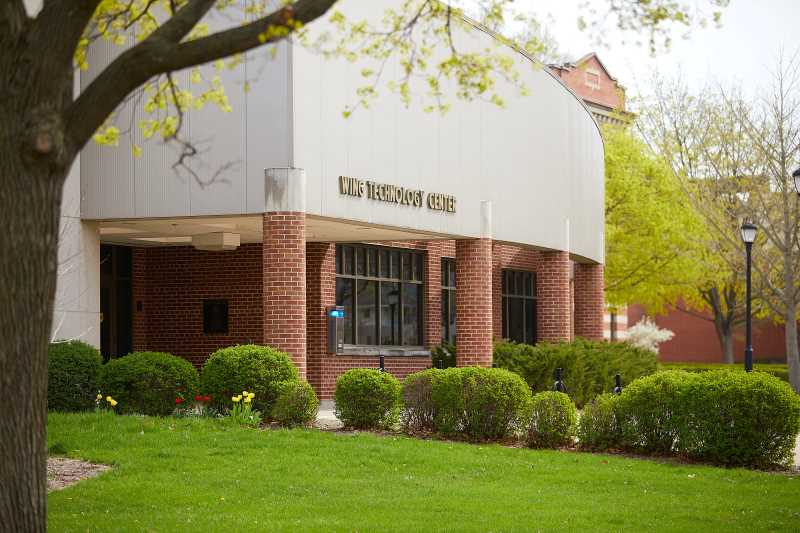
241 Wing Technology Center
(608)785-6658
email: kwen@uwlax.edu
Professor: Wen
Associate Professor: Yang
Assistant Professors: Haried, Dai, Chen
(Visiting).
Lecturer: Annino
The HISM minor can be taken by non-IS CBA majors and majors in
non-CBA colleges.
FOR CBA MAJORS
the minor program consists of seven courses (six required, one
elective) totaling 19 credits:

FOR NON-CBA MAJORS
the minor program consist of eight courses (seven required, one
elective) totaling 23 credits:

For Health Information Systems Management Minor application click Word or PDF
Admission and Retention Process:
- Provide a completed application form and a copy of your transcript to the IS office. (Wing 240)
- Have a declared major. 3) Have a minimum 2.50 cumulative GPA.
Note:
All students must meet prerequisite requirements for courses
counting toward the minor. Required courses for any non-IS major
cannot be counted as electives for the HISM minor. Admissions
are subject to an annual space limitation set by the department.
HP
250 Cr. 1
Medical Terminology for Health Professions
Students in various allied
health fields will learn to use medically related terms in their
professional communication. This covers the study of the
language of medicine used in clinics, hospitals, and other
health agencies. The student will develop a working knowledge of
terms, word roots, and abbreviations with emphasis on spelling,
definitions, and pronunciation. An introduction to health care
records, disease process, operative, diagnostic, therapeutic,
and symptomatic terminology of body systems will be covered as
they pertain to medical practice. Online course. Offered Fall,
Summer.
IS
220 Cr. 4
Information Systems for Business Management
This course provides the basic
level of management information systems literacy. Students will
be exposed to the building blocks of computer-based information
systems, the various organizational aspects of utilizing
information systems, and the role of information technology in
the digital economy. To stress the importance of user
participation, the systems development life cycle will be
introduced from end-users' perspective. Additionally, students
will acquire essential skills of personal productivity tools
through hands-on training in small classes. Offered Fall,
Spring, Summer.
IS/HIMT 321/320
Cr. 3
Survey of Information Technology in Health Care
In this course essential
information technologies in health care (HITs) will be surveyed.
Many important health care information systems (HISs) are built
upon three categories of HITs: data processing technologies,
information reporting technologies, and decision supporting
technologies. Specific subjects pertaining to these technologies
will be identified and introduced. (Cross-listed with HIMT 320;
may only earn credit in IS or HIMT.) Offered Fall, Spring.
IS/HIMT
340 Cr. 3
Ethical Issues, Security Management and Compliance
This course introduces three
broad subjects: 1) evidence-based medical ethics pertaining to
health care information management; 2) framework of health care
information security management including security principles,
policies and procedures, security management models, risk
assessment, and protection mechanisms; and 3) health care
regulations and compliance with focuses on the legislative
systems, policies, and legal environment of health care in the
U.S. and the existing health information laws, regulations and
standards. Also addressed are the elements and development of
compliance programs. (Cross-listed with HIMT; may only earn
credit in IS or HIMT.) Offered Fall, Spring.
IS/HIMT
370 Cr. 3
Health Care Systems: Analysis and Design
This is the first course in a
two-course sequence that addresses methods and techniques of
health care information system (IS) analysis and design as
performed within the system development life cycle. Included
will be the definition of the problem, fact gathering, analysis,
logical design, selection and evaluation of alternative health
care information systems solutions from the point of view of the
health provider and user. The course focuses on the problem
solving process that leads to the development of logical IS
solutions to applied health care problems. Prerequisite: IS 220
or HIMT 300. (Cross- listed with HIMT; may only earn credit in
IS or HIMT.) Offered Fall, Spring.
IS/HIMT
420 Cr. 3
Health Care Systems: Project Management
This course addresses the
phenomenal impact information system (IS) projects have had on
health care delivery. Students learn how IS health care projects
affect organizations, doctors, patients, and chronic-illness
treatments, as well as individuals interested in managing their
own health care. Concepts and tools for IS health care project
management, process reengineering and work redesign are
introduced. The purpose of this course is to expose students to
IS project management activities in health care settings. Topics
covered include recent IS health care project trends,
budgeting, scheduling, resource management, scope, risk
analysis, and deployment controls. The genesis of health care
project management is covered using specific cases and examples.
(Cross-listed with HIMT; may only earn credit in IS or HIMT.)
Offered Fall, Spring.
IS/HIMT
435 Cr. 3
Data Communications and Computer Networks in Health Care
This course provides
fundamentals of data communications and networking techniques,
and examines the linkage of information technology strategies
and technological solutions enabling effective communication
within and between health care organizations. Major topics
include fundamental concepts of data communications and
applications, network communication devices, basic technologies
of the Local Area Network, Wireless Local Area Network, Wide
Area Network, Internet and the Web, the OSI stack, health care
information system standards, and the HIE, RHIN, and the NHIN.
Prerequisite: IS 220 or HIMT 320 (Cross-listed with HIMT; may
only earn credit in IS or HIMT.) Offered Fall, Spring.
ELECTIVES
IS
320 Cr. 3
Computer-based Decision Support Systems for Management
An examination of how various
software application packages such as spreadsheets, database
management systems, and other software tools, are employed to
support decision making in business environments. Topic areas
include modeling, decision-support systems, data warehouses,
on-line analytical processing, and data mining. Prerequisites:
CS 120; IS 220. Offered Spring.
IS
360 Cr. 3
Management of Information Technology