

Military Careers...
When
a cadet reaches their final year in the ROTC program, they order their branch choices by priority to
determine their Army specialty. Their selections are sent before the
accessioning board, which convenes in October. By January, cadets receive
their branch selections and begin to prepare for their new Army careers. Branches
are divided generally into three categories: Combat Arms,
consisting of branches involved in direct combat; Combat Support,
consisting of branches which directly aid Combat Arms; and Combat Service
Support, consisting of branches providing logistical or other forms of
support to the Army.
The
Branches...
Adjutant
General Corps
AG
Combat Service Support
OBC: Ft Jackson, SC
|
Officers in the Adjutant General's Corps
serve at all organization levels of the Army where they plan, develop, and
operate the Army's personnel management support systems: a vital
responsibility in both peace and war. Personnel systems include all life
cycle functions such as personnel requisitioning, reassignments,
evaluations, promotions, awards and decorations, reenlistment, casualty
reporting, strength accounting, and replacement operations. Administrative
systems management includes courier and postal services. The Army's
Adjutants General shoulder a huge amount of responsibility for the smooth
running of day to day Army operations. |
Air
Defense Artillery
AD
Combat Support
OBC: Ft Bliss, TX
|
Air Defense Artillery encompasses positions
concerned with the employment of a family of Air Defense Artillery weapons
in support of military land combat operations and against enemy aircraft
and missile attacks. Depending upon the mission, Air Defense Artillery
units are found defending the ground-gaining combat arms units or critical
units/areas against enemy air attack. When not in combat, Air Defense
Artillery units maintain an around-the-clock state of readiness to respond
immediately to hostile action. |
|
Armor
AR
Combat Arms OBC: Ft
Knox, KY |
The Armor encompasses positions concerned
with the employment of the Armor/Cavalry maneuver forces and combined arms
organizations during mobile combat operations. Armor's mission is to close
with and destroy the enemy using fire, maneuver, and shock action. The
dynamism that distinguished the cavalry of yesteryear is now the hallmark
of the Armor, the Combat Arm of Decision. |
Army
Nurse Corps
Nursing
Website #2
AN
Combat Service Support
OBC: Ft Sam Houston, TX |
The Army Nurse Corps is a part of the Army
Medical Department (AMEDD) and is a special branch of the Army. The
mission of the Army Nurse Corps is to provide quality nursing support and
nursing leadership. To fulfill its mission, the Army Nurse Corps officers
specialize as nurse practitioners and clinical nurse specialists and serve
as staff officers at all levels throughout the AMEDD. |
Aviation
AV
Combat Arms
OBC: Ft Rucker, AL
|
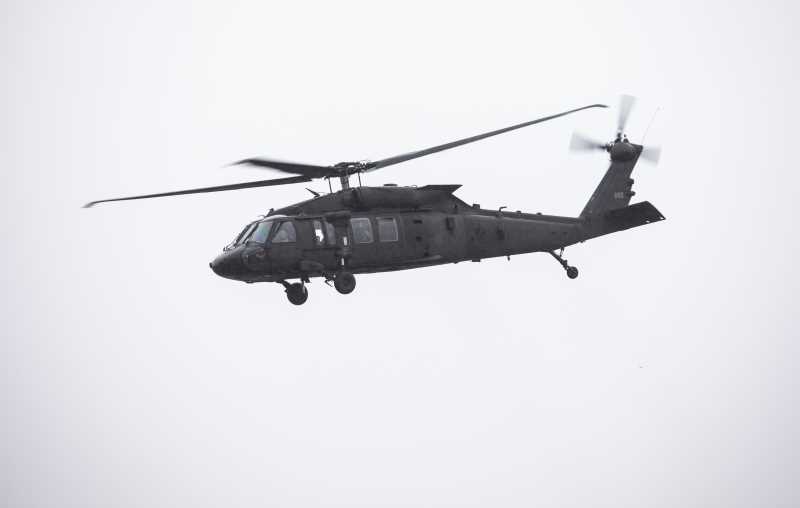
Aviation is a combat arms branch which
encompasses 80 percent of the commissioned officer operational flying
positions within the Army (less those in Aviation Material Management and
Medical Service Corps). Army Aviation is concerned with the accomplishment
of the assigned mission to conduct prompt and sustained combat operations.
Upon completion of flight training, the newly rated officer can expect
challenging leadership positions with aviation units. Some of
our helicopters... |
Chaplain
Corps
CH
Combat Service Support |
The Chaplains Branch is a special branch
which has the primary mission to perform or provide for comprehensive
religious support for soldiers and their family members in war and peace.
Chaplains assist commanders in facilitating the right to free exercise of
religion for all personnel. Chaplains are commissioned officers and
accredited clergy endorsed by a recognized denomination or faith group for
the military ministry. |
Chemical
Corps
CM
Combat Support
OBC: Ft Leonard Wood, MO
|
Chemical officers develop doctrine,
equipment, and training to protect the Army against Nuclear,
Biological, and Chemical weapons and weapons of mass destruction.
They also provide the Army with smoke, obscurant, and flame capabilities
on the battlefield. |
Civil
Affairs
CA
Combat Service Support |
Like SF, cadets rarely branch directly into Civil Affairs
directly from ROTC. CA officers use their
language fluency and interpersonal skills to provide a liaison between the
Army commander and the indigenous people in the area. The vast majority of
officers in this branch are in the Army Reserves. |
Engineers
EN
Combat Arms
OBC: Ft Leonard Wood, MO
|
The Corps of Engineers is a Combat Arms
Branch which also has combat support and combat service support roles.
Engineer officers plan and execute missions relating to engineer support
on the battlefield in light, heavy, airborne, and topographic missions.
They coordinate and control all facilities and housing support at military
installations. On a tactical level, Combat Engineers are responsible for
helping the movement of friendly troops (building bridges) and hindering
the movement of enemy troops (blowing up bridges). Engineering units are
augmented with, among other things, Bradley Fighting Vehicles and
bulldozers. Additionally, the engineer officer serves as the Army's
component to the Department of Defense (DOD) team charged with mapping,
charting, geodesy, and military geographic responsibilities. |
Field
Artillery
FA
Combat Arms
OBC: Ft Sill, OK
|
The Field Artillery is the King of Battle.
They are sound leaders of soldiers as well as astute managers of the most
deadly resources on the modern battlefield. They blend a knowledge of
tactics and a technical expertise of many weapons systems to provide all
types of fire support to the ground-gaining arms. They are experts in the
capabilities of cannons, rockets, missiles, naval gunfire, and close air
support. |
Finance
FC
Combat Service Support
OBC: Ft Jackson, SC
|
All officers commissioned in the Finance
Corps (FC) serve in a variety of financial management and leadership
positions in today's Army. The ultimate mission of the FC is to support
the soldiers and commanders in the field and provide the Army with
expertise concerning all aspects of financial management. Finance officers
are required to be both technically and tactically proficient to perform
their mission in wartime as well as peacetime. They must continuously
develop their professional skills and knowledge in order to stay abreast
of evolving doctrine and stay current in the finance and accounting
profession. |
Infantry
IN
Combat Arms
OBC: Ft Benning, GA
|
The Infantry encompasses positions concerned
with the employment of the combined arms to close with the enemy by means
of fire and maneuver in order to destroy or capture him, or repel his
assault by fire, close combat, and counterattack. Infantry forces fight
dismounted or mounted according to the mobility means provided. They form
the nucleus of the Army's fighting strength around which the other arms
and services are grouped. |
Judge
Advocate General Corps
JG
Combat Service Support |
The Judge Advocate General's Corps is a
special branch of the Army whose officers are all lawyers. Their duties
include all areas of legal practice including criminal law, administrative
and civil law, contract law, and international law. |
Medical
Service Corps
MS
Combat Service Support
OBC: Ft Sam Houston, TX
|
Medical Service officers run hospitals and clinics as patient
administrators and provide patient care on the battlefield. There
are three functional areas in the Army Medical Corps: Clinical Medicine,
Staff and Command, and Research. |
Military
Intelligence
MI
Combat Support
OBC: Ft Huachuca, AZ
|
Military Intelligence encompasses the
application and integration of all Military Intelligence functions at both
the tactical and strategic levels. Officers serving in this specialty
plan, conduct, and supervise intelligence collection resources, analysis
of the resultant raw intelligence information, and the production and
dissemination of finished all-source intelligence in the form of briefings
and written reports to the ultimate consumer, the commander. |
Military
Police
MP
Combat Support
OBC: Ft Leonard Wood, MO
|
The Military Police Corps encompasses
positions concerned with Military Police (MP) support to combat
operations, law enforcement, security of U.S. Government resources,
criminal investigation, and corrections. The combat support role provides
a vital link in our national defense, and the MPs provide the tactical
commander with a force that is highly organized, trained, and responsive
to the battlefield commander. Military Police also serve as peacekeeping
forces in a low-intensity conflict and provide security in war and peace
to critical Army facilities and resources. |
Ordnance
OD
Combat Service Support
OBC: Aberdeen Proving Ground, MD
|
The purpose of the Ordnance Corps is to
develop, produce, acquire, and support weapons systems, ammunition,
missiles and ground mobility material during peace and war in order to
provide combat power for the U.S. Army. The Ordnance Branch encompasses
all functions related to the life cycle management of its three
commodities: tank/automotive materiel, munitions materiel, and missile
materiel. |
Quartermaster
QM
Combat Service Support
OBC: Fort Lee, VA
|
The Quartermaster Corps offers a broad
spectrum of opportunities. The Quartermaster Corps officer plans and
directs the activities of Army units and organizations engaged in the
acquisition, receipt, storage, preservation, and issue of equipment,
repair parts, fortification/construction material, subsistence, petroleum
products, water, and other general supplies. Quartermaster Officers
must be both meticulous in their record keeping and far-sighted in their
planning for future needs. |
Signal
Corps
SC
Combat Support
OBC: Fort Gordon, GA
|
Signal Corps officers must blend together
combat leadership skills and technical proficiency as they plan and manage
information systems that support the command and control of the Army's
forces. Signal officer assignments and career opportunities are diverse
and challenging. They direct and control the installation, operations,
maintenance, and reconfiguration of networks of information systems for
theater/tactical, strategic, and sustaining base operations and the
operation of the Army portion of the global defense communications
systems. |
Special
Forces
SF |
Special Forces is a nonaccession
branch(eligible after promotion to Captain) which encompasses positions
concerned with the employment of highly specialized Army units and
elements to accomplish specific missions throughout the levels of warfare.
They conduct the missions of unconventional warfare, foreign internal
defense, direct action, strategic reconnaissance, and counterterrorism.
Special Forces unit members are airborne qualified, language trained and
area oriented. Since potential missions are worldwide, soldiers train in
forest, desert, mountain, arctic, jungle, and urban environments. |
Transportation
Corps
TC Webpage #2
TC
Combat Service Support
OBC: Ft Eustis, VA
|
"Nothing Happens Until Something
Moves." No matter how deadly a unit's firepower, it has no effect on
the enemy unless that unit can get to the battlefield. The monumental task
of moving the Army from one place to another falls upon the Transportation
Corps, encompassing those positions related to the
multi-modal movement of personnel and cargo over land, sea, and air,
anywhere in the world. |
Additional Information can be found using: DA
PAM 600-3, Commissioned Officer Development and Career Management
Functional Areas
Career Progression...
An Army officer's
career is generally a series of 2 and 3 year assignments, each one preparing you
for the next. Personal abilities and preferences affect the choices a person
makes, so there is no one career blueprint. There is, however, a general
progression most officers' careers follow.
Getting Promoted
One of the most attractive aspects of being an Army
officer is the structured promotion system. The promotion system is designed to
help both the Army and the Officer. The system design enables the best officers
to reach positions of most importance and highest responsibility. From an
individual officer's point of view, the promotion system assures a qualified
person advancement after a certain time. In other words, your career can never
get endlessly mired at middle management. You're performance is reviewed on a
regular basis during rating periods. You will be told you are being rated, and
told what is expected of you during this period. We think this process is more
than fair, and that it gives every officer a real chance to be at his/her best.
The Lieutenant Phase
Once a cadet graduates, he/she is commissioned as a Second
Lieutenant. The first thing a young officer does is develop in his/her primary
branch by attending the Basic Course. After that, some officers opt for Airborne
or Ranger training (or both). But most go right to their first duty assignment.
Progressing from second to first Lieutenant, the young officer applies his/her
training and develops his/her leadership abilities. In fact, learning how to
lead troops is the key objective of this phase. Promotion to First Lieutenant
takes about two years.
The Captain Phase
A lot happens while you're a captain. The most important thing
is to get experience as a company commander. A Company Commander is normally in
charge of over 100 soldiers. Command experience, obviously, is a valuable
resource throughout a career. During this phase, you attend the Officer Advanced
Course. Later in this phase, you will attend the Combined Arms and Services
Staff School (CAS3), which provides you with the necessary training to perform
as a field grade staff officer. Additional training during the captain phase is
your opportunity to become more valuable to the Army, since this is when you
choose and begin to become qualified in a functional
area. Promotion to Captain
takes about four years.
The Major Phase
Being promoted to major signals a big step in your career.
You've become a key staff officer in charge of such areas as Personnel,
Intelligence, Operations, or Logistics. You'll be given new assignments which
permit you to use previously developed skills, as well as expand your overall
professional development. The objective here is to develop further in your
branch, and continue development in your functional area. Some officers area
selected for Command and General Staff College or given the opportunity to
attend civilian schools. Promotion to Major takes about 11 years.
The Lieutenant Colonel Phase
Your assignment might be as a Battalion Commander in charge of
hundreds of soldiers or a general staff officer in a division or corps.
Outstanding performance will merit more and more challenging positions. Some
officers are selected for the Army War College, where they become
"experts" at their profession. Promotion to Lieutenant Colonel takes
about 17 years.
The Colonel Phase
At this phase, the Army takes maximum advantage of your
talents. This means you'll be assigned as a Brigade Commander in charge of
thousands of soldiers or director of a large staff. Your technical skills and
accumulated executive talents will be put to the test. This is the senior level
of responsibility. You're a top executive. Promotion to Colonel takes about 22
years.
General Officer
Officers who demonstrate extraordinary leadership and
executive abilities are selected to become general officers; the CEO's of the
Army. They do nothing less than run the Army. From division commanders to post
commanders to high level staff positions, general officers are responsible for
maintaining an efficient and effective Army. Promotion to General takes about 25
years.
|
|