

Undergraduate Research & Creativity Grants

Grants are available on a competitive basis to support undergraduate and international undergraduate research and creativity activities to all full-time (12+ credits) and part-time (1-11 credits) UW-L undergraduates. Two competitions are held each year—one during spring semester and one during fall semester. Projects within the US can be funded for up to $1,500 when one student is involved and up to $1,650 when there are two or more students. Projects involving international travel can be funded for up to $3,000. Collaborative projects involving two or more students are allowed for both domestic and international projects; students must determine how their stipends would be split.


Undergraduate Research Grants:

Award Amounts Domestic applicants may request a maximum of $1,500 including a $600 stipend for individual projects or up to $1,650 including a $950 stipend for projects with two or more student investigator's.  International applicants may request up to $3,000 for projects with one student investigator; includes stipend of up to $600.  International projects with two or more student investigators may request a stipend of up to $950.
Spending Deadlines All funding must be expended by one year after the award date.
Submission Guidelines Students must request to be enrolled in the URCC's D2L course by Wednesday, October 10th, 2012 at 4pm.  You may request enrollment by emailing stdtresearch@uwlax.edu .  Students who attend the Grant Writing Workshop will be automatically enrolled.  Students must submit their grants in a single PDF or word document via the D2L drop box by Wednesday, October 17th, 2012 at 4pm to be considered.   
Notification of Award The Office of Undergraduate Research & Creativity will notify award recipients, typically within 6 weeks of grant submission. 
Signatures PLEASE DO NOT WAIT UNTIL THE DEADLINE DATE TO ACQUIRE REQUIRED SIGNATURES! Departments and colleges have deadlines for turning in proposals to get the necessary signatures. Please find these out and plan accordingly.
Eligibility UW-L full or part-time students who are not graduating during the semester in which they are applying for grant funds.
Restrictions Funding will not be available for any work already completed, for travel to present research findings at conferences or for publication printing fees.


If funded, students are required to:

1.Complete a verification of travel form upon purchasing flight ticket to get the rest of your travel funds. Adobe PDF version MS Word version (if applicable).
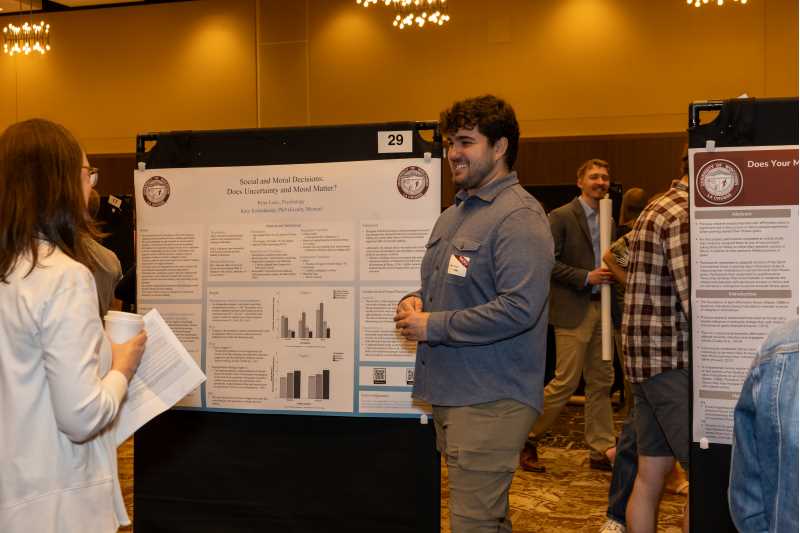
2.Present the results of their work at the annual UW-L Celebration of Student Research & Creativity, held in the spring semester. RECEIVING A GRANT DOES NOT AUTOMATICALLY REGISTER YOU FOR THE CELEBRATION. You must submit an abstract; the call for abstracts usually begins in the spring semester and will be announced.
3.Submit a FINAL REPORT to the Office of Undergraduate Research & Creativity.
4.In addition, certain award recipients may be asked to sit on the Undergraduate Research and Creativity Committee during the following year to assist in the review of new student grant applications.

I. INTRODUCTION
The University of Wisconsin-La Crosse is pleased to provide funding on a competitive basis to support meaningful, campus-wide, undergraduate research and creativity activities. Students should carefully read the information that follows and submit proposals that adhere to these guidelines.

The Undergraduate Research and Creativity Committee equally welcomes single- or multiple-discipline proposals. This Committee recognizes that different disciplines call for different methods of inquiry. Methodologies used in the physical and social sciences will likely be different from those of the arts and humanities. Nonetheless, all proposals will need to meet certain general criteria. Ideally, research projects will result in some form of publication or a product that may be presented and disseminated through other acceptable means of communication or expression.

You may pursue projects during free time in the summer, between semesters and/or in conjunction with advanced (independent study/research) coursework for which credit might be earned. Multiple investigators may submit a single proposal and may work collaboratively on one research project.

II. COMPLIANCES
Researchers should be aware of the various regulations and compliances to which the University must adhere. Any students with questions about protocols may contact the Office of Research and Sponsored Programs located at 220 Morris Hall.

1.Responsible Conduct of Research (RCR): All grant recipients must complete RCR training before receiving their funds. More information can be found at http://www.uwlax.edu/grants/compliance/RCR.htm

2.Institutional Review Board (IRB): All undergraduates conducting research involving human subjects must complete IRB protocol. More information can be found at http://www.uwlax.edu/grants/compliance/IRB.htm  

3.BioSafety (IBC): More information can be found at http://www.uwlax.edu/grants/compliance/IBC.htm

4.Institutional Animal Care and Use Committee (IACUC): More information can be found at http://www.uwlax.edu/labanimal/iacuc.htm

III. PROPOSAL WRITING GUIDELINES
The proposal will consist of the following required six elements TYPED AND ASSEMBLED IN THE ORDER LISTED BELOW IN A SINGLE PDF OR WORD DOCUMENT. A checklist has been created for your convenience and personal use to aid in completing the proposal.

1.Cover Sheet
2.Project Budget Sheet
3.Previously Funded Research Form, if applicable
4.Faculty letter of support
5.Student transcript(s) (not SNAPs) - unofficial are OK
6.Proposal narrative (maximum five pages double-spaced, must be typed, must include title of proposal on the first page, pages must be numbered, student’s last name(s) must be on each page in the header)
You may use appendices to incorporate additional, pertinent diagrams or information if absolutely necessary. All portions of the proposal must be typed, not handwritten.

The following guidelines should be followed in preparation of each portion of the research proposal:


Cover Sheet (follow instructions on the cover sheet)
Adobe PDF Version MS Word Version
Note: If your project includes the use of human subjects, contact the Office of Research and Sponsored Programs (785-8007 or 220 Morris Hall) for Institutional Review Board (IRB) or the Institutional Animal Care and Use Committee (IACUC) protocols or if hazardous chemicals or potentially hazardous biological agents are to be used, contact the Environmental Health and Safety Officer. If you have any questions, consult by email stdtresearch@uwlax.edu.

Budget
Adobe PDF Version MS Word Version

Domestic Proposals
Applicants may request a maximum of $1,500 for individual domestic projects or up to $1,650 for collaborative projects.   All funding must be expended by one year after the award date. Applicants for international projects may request a maximum of $3000.  Each student who has a proposal funded will receive a stipend. The stipend is already included in the total award amount; it is not in addition to the award amount. For proposals with single student investigators, the stipend is $600 for that student. For proposals with multiple student investigators, the maximum stipend is $950 per project and students should explain how this amount is to be distributed on the Budget Summary page. The remainder of the funds requested should be used for supplies, travel, books and instructional materials and other expenses required for execution of the research project. Money for all categories will be awarded upon acceptance of Students may use up to $30 for poster printing for presentation of the proposed research. Incentives given to research participants must not exceed more than 10% of the total grant award.

An itemized budget must accompany each proposal. While the Committee reserves the right to adjust budgets, it is important that proposers carefully assess their needs and ask for funds accordingly. Applicants must correlate budget items with materials or expenses mentioned in the proposal narrative, e.g., if travel funds are requested, the narrative should explain why the travel is necessary for completion of the project. Applicants should note that items included in broad categories such as "miscellaneous" or "other" will not be accepted by the Committee for funding. Round all budget entries to the nearest dollar.

IMPORTANT: Please refer to the UW-L Travel Regulations website http://www.uwlax.edu/budgetandfinance/travel/ for guidelines for allotted hotel and mileage amounts.


Previously Funded Research Form
Adobe PDF Version MS Word Version
This form must be filled out by any student who has previously received funding for undergraduate research. Providing these details gives the Undergraduate Research and Creativity Committee a better idea of the work you’ve completed in the past. The Undergraduate Research and Creativity Committee will NOT fund proposals for work that has already been completed. If the work is an extension of research that has already been completed, the applicant must make this clear in their proposal.


Letter of Support
The applicant should arrange to have his or her sponsoring faculty member write and sign a critical letter of support to the Undergraduate Research and Creativity Committee, commenting on the individual abilities of the student investigator to succeed in the undertaking. The faculty sponsor should clearly explain how the student will act as an independent investigator in the project and describe the role of the student in carrying out the research. In addition, mention should be made of what facilities, equipment, and supportive roles he or she intends to lend to the work. Finally, the faculty sponsor should make an estimate of the time required to complete the proposed work.


Transcripts
Copies of current academic transcripts for all applicants listed on the proposal must be included. Unofficial copies of transcript are acceptable. Student Notice of Academic Progress or SNAPs are not allowed.


Proposal Narrative
The Undergraduate Research and Creativity Committee must make comparisons and judgments across disciplines and methodological lines. The applicant should keep this in mind, and remember that the review committee is an interdisciplinary one and that there will be several members who are not familiar with your field of study. Therefore, proposals should be directed toward a general audience and avoid the excessive use of jargon.
Remember: Proposal narratives (not including bibliography, references and/or appendices) must be no longer than five double-spaced typed pages. Proposal narratives MUST include the title of the proposal on the first page, numbered pages, and the name of the student(s) in the header.


All applicants must follow the narrative outline provided here:

1.Background/Statement of the Problem/Significance of the Project. Be succinct. Clearly support your statement with documentation and references, and include an up-to-date and pertinent review of the relevant literature.

2.Objectives. Define the specific, proposed outcome(s) and product(s) of the research. What will be known after the project has been completed? If the anticipated outcomes are quantifiable, explain how they will be measured.

3.Research Methods. Design and describe a work plan consistent with your academic discipline. This may include, but is not limited to, scientific research in the physical, biological or social sciences, use of population samples, experimental and control groups, or other methods of data gathering and statistical analysis. The work plan may include archival research, translations, ethnographic fieldwork, solitary thinking, or other forms of analysis and synthesis of ideas and concepts in the arts and humanities.

4.Final Products and Dissemination. Describe possible forms of the final product, e.g., publishable manuscript, conference paper, invention, software, exhibit, performance, etc. Be specific about the methods used to disseminate your results to a wide audience.

IV. Final Report
Grant awardees are required to submit a FINAL REPORT to the Office of Undergraduate Research. The report is an electronic form that is filled out using Qualtrics. You must login with your 8.4 and your student password.


Click here for Examples of Funded URCC Proposals