
Glossary
Tool Kit
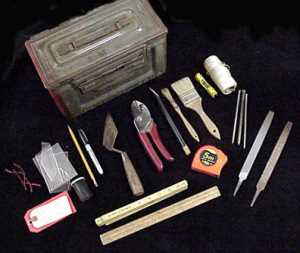
An archaeologist's tool kit is comprised of several tools, along with the larger tools needed for excavation.
 Tool kit Tool kit |
Tools in the kit include bags, tags, twisties, a film canister to hold fragile artifacts, pencil, marker, trowel, root cutter, wooden pick, two brushes, line level, string, nails to mark the unit border, rulers, tape measure, and files. |
 File File |
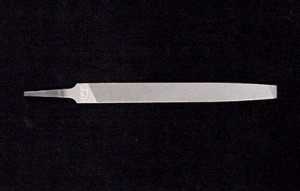
Files: Used out in the "field" or on an archaeological dig, files are essential for keeping shovels, trowels and other items sharpened. |
 Line Level Line Level |
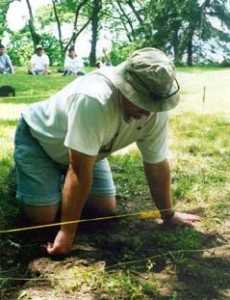
Line Level: A small level that sits on top of a string that is attached to a datum point. The string, when pulled taut, will allow an archaeologist to use the level and then measure the depth below the datum point (an extremely useful tool on a dig!!). |
 Probe Probe |
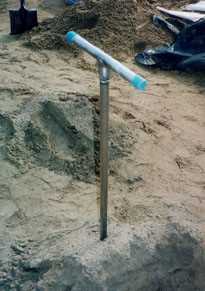
Probe: Soil probes are used to find the depths of soil layers of feature stains. |
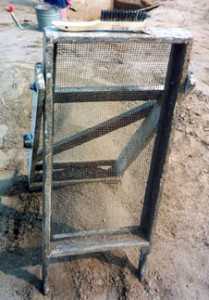 Screen Screen |
Screen: Field screens are used to catch artifacts that are larger than the 1/4" mesh. |
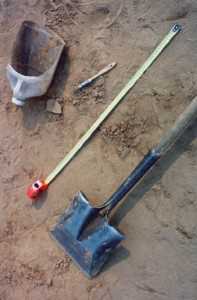 Shovel Shovel |
Shovel: Archaeologists generally use curved spades for shovel tests and flat shovels for skim shoveling excavation units. |
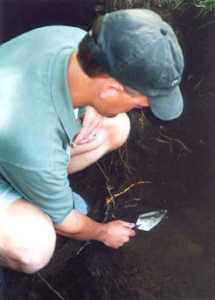 Trowel Trowel |
Trowel: This tool is used for carefully removing layers of soil and creating flat profiles and unit floors. |
