Posted 2:01 p.m. Friday, Oct. 16, 2026
New garden will foster community, educational conversations and cultural understanding
An Indigenous Medicine Garden planned for spring 2027 at UW-La Crosse is envisioned as more than a place to grow plants. It will be a space for healing, reflection, learning and building relationships across cultures.
The 3,100-square-foot garden will be located at the southeast corner of Drake Field, near the intersection of former 16th and Pine streets, between Centennial Hall, the Lowe Center for the Arts and Murphy Library. The garden will feature plants indigenous to the area and is being developed in collaboration with Ho-Chunk community and other community partners.
"UWL is committed to supporting Indigenous students, honoring the sovereignty and knowledge of Tribal Nations, and building learning environments shaped by diverse cultural perspectives," says Vickie Sanchez, UWL director of Multicultural Student Services. "This project expands that mission by creating a public, accessible Indigenous Medicine Garden rooted in Indigenous ecological knowledge, cultural practice and community wellbeing."
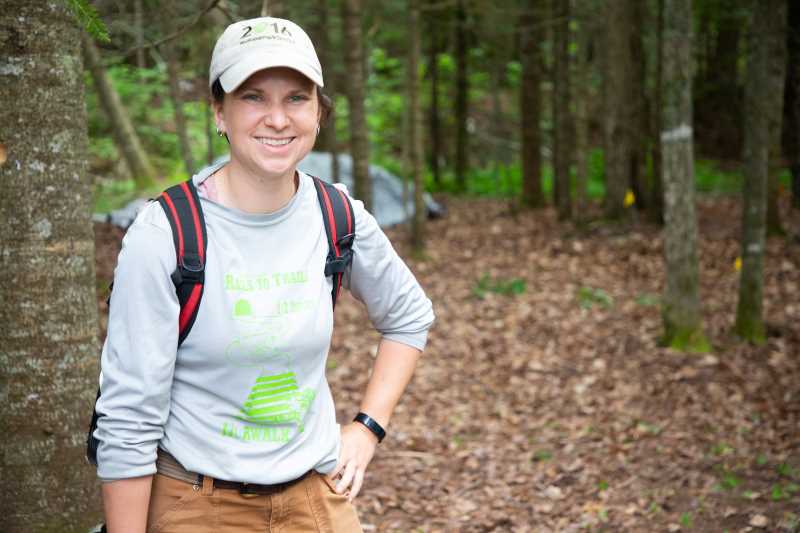
For Tracy Littlejohn, ’07, a UWL alumna and director of the La Crosse Ho-Chunk Nation Youth Services Center, the space will offer an opportunity to reconnect people with nature and one another.
“All Indigenous peoples around the world know healing comes from plants and community,” Littlejohn says. “I see it as a space for people to sit and be in a calm space, maybe do some grounding. I hope it also inspires people to learn the plants and what they can provide.”
Sage, cedar and sweetgrass are among the plants being considered for the garden. These plants have spiritual and healing connections for many Indigenous communities, Littlejohn says. Heather Walder, an assistant professor of archaeology, adds that the space will also have places designed for teaching and learning, conversation and quiet meditation.
“Today’s world has so many people rushing through their days, not stopping to ‘smell the roses’ and have forgotten that we rely on nature,” Littlejohn says. “Hopefully this garden can help people slow down a little bit, reflect on their days and the undetachable necessity of the natural world we live in.”
Building relationships through collaboration
Although planting is not expected until spring 2027, the garden project is already bringing people together. A working group of UWL faculty and staff, the Indigenous Actions Collective, has been working with Ho-Chunk community and other community partners on the garden's design and site plan since May 2026.
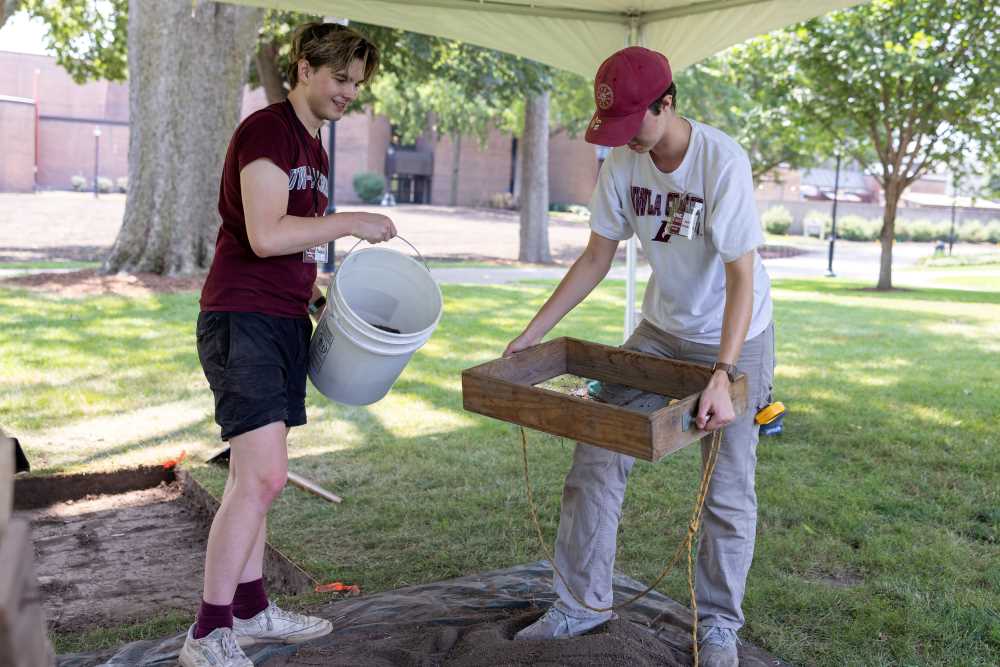
In this process, the project organizers are considering the history and significance of the garden location. In August, Walder and seven UWL archaeology students conducted an archaeological survey to better understand the site's history before it is transformed into a gathering, learning and healing space.
The future garden site, like all of the UWL campus, now occupies land ceded in an 1837 treaty that forced the removal of Ho-Chunk peoples from their ancestral homes. The site then became part of Goosetown, a historic working-class La Crosse neighborhood that developed in the late 19th century and continued into the mid-20th century. Archaeology students uncovered a layer of early- to mid-20th-century debris about five inches below the surface. Walder says the discovery supports the conclusion that the material was left when houses in the neighborhood were demolished in the early 1960s to make way for the growing UWL campus, displacing immigrants and Black families who lived there. Although Indigenous ancestors likely visited or lived near this place before European contact, the archaeological investigation found no physical evidence of that earlier use.
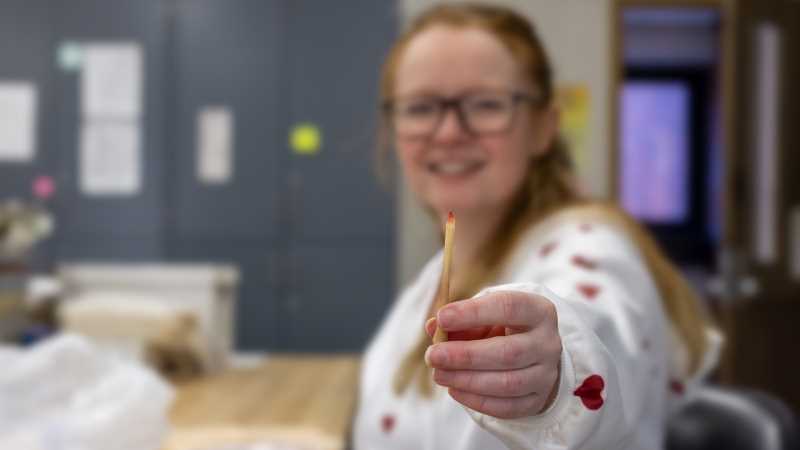
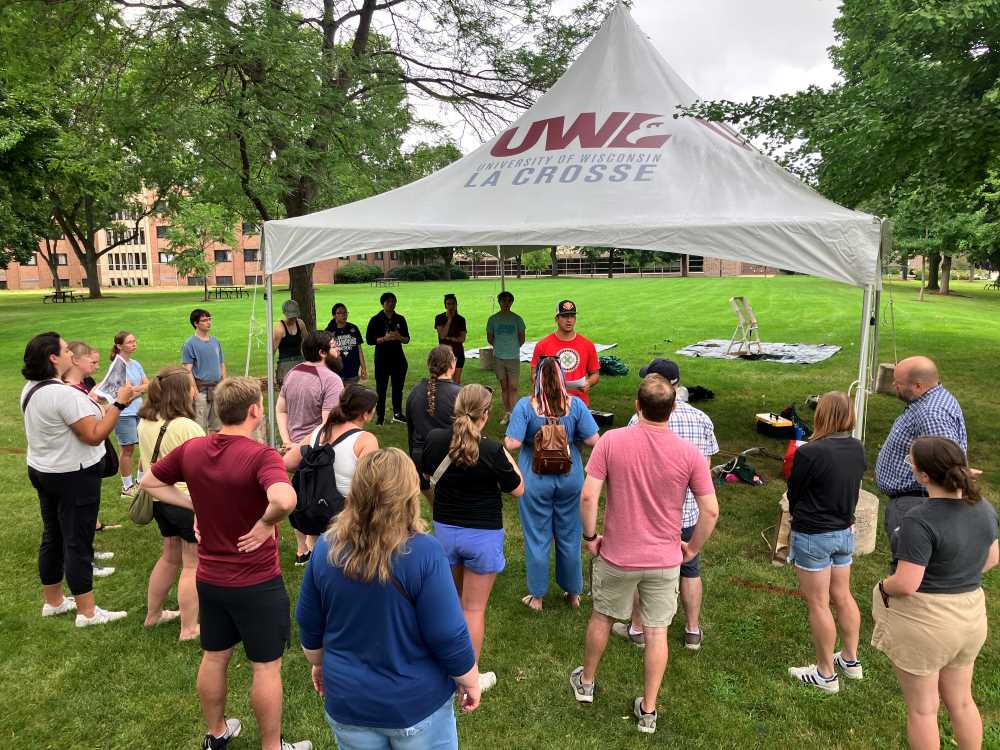
The excavation also offered opportunities for community learning. Ho-Chunk youth visited the site with Littlejohn to learn about archaeology from Walder and her students and see a college campus up close, visiting the Mississippi Valley Archaeology Center and exploring the Hįnųkwas Tree Trail. UWL Residence Life hall directors and other staff also toured the site as part of an annual mystery bus tour highlighting campus resources. During the visit, Oliver Cleveland, a UWL history student, shared archival research into Ho-Chunk and La Crosse history that will help inform educational signage planned for the garden.
Walder says the collaborative process is itself an important part of the garden's purpose.
“The process of building something new together for the benefit of our campus community and the Indigenous members of our La Crosse community and community as a whole is healing because it allows people to interact with people of different backgrounds and cultures,” Walder says. “That time spent preparing the site, planting plants or pulling weeds creates cross-cultural understandings in a way that can be really meaningful.”
Walder brings experience in collaborative archaeology to the project. Her ongoing research has included partnerships with Wisconsin Native Nations, including the Red Cliff Band of Lake Superior Chippewa, through the Geté Anishinaabeg Izhichigéwin Community Archaeology Project.
A space for learning and connection
The idea for the garden grew out of a conversation among UWL faculty and students and Robin Wall Kimmerer during her campus visit in 2024. Students asked Kimmerer about creating spaces on campus where people could feel at home. She recommended a medicine garden. In addition, with the call to enhance campus green spaces, the garden will provide a meaningful opportunity for students, faculty and staff to learn about the relationship between land and environment while fostering reflection on the importance of generational healing for all communities.
The project later gained momentum alongside student efforts to recognize the Ho-Chunk Nation on campus. In October 2025, the UWL Student Senate passed a resolution asking university administration to consider displaying the Ho-Chunk Nation flag in a prominent campus location. When one-time funding requests opened to campus in winter 2025, university leadership approved a proposal combining a medicine garden with a Ho-Chunk Nation flag display.
The garden site is intended to host the first raising of the Ho-Chunk Nation flag on campus. UWL is planning the garden in collaboration with Ho-Chunk and other community partners, with further details about the flag-raising celebration to be determined.
Beyond its role as a gathering place, the garden will serve as an educational resource. Classes will be able to meet there, explore the site's history and significance, and discuss culture, community and healing.
Through the garden, project partners hope to create a lasting campus space that encourages people to pause, learn from one another and strengthen their connections to the natural world and the broader community.
Support the garden on One Day for UWL
The Indigenous Medicine Garden is one of many areas donors can support on One Day for UWL Oct. 20-21.
Support for the garden will help fund ongoing maintenance, educational opportunities, and future Indigenous Actions Collective projects that benefit the UWL campus community.
An anonymous donor will match gifts up to $1,000 made to the Access, Belonging, and Student Engagement General Fund, doubling your impact toward supporting the garden.