Posted 12:17 p.m. Tuesday, Aug. 11, 2026
Chancellor Beeby, UW leaders call for greater investment in health education
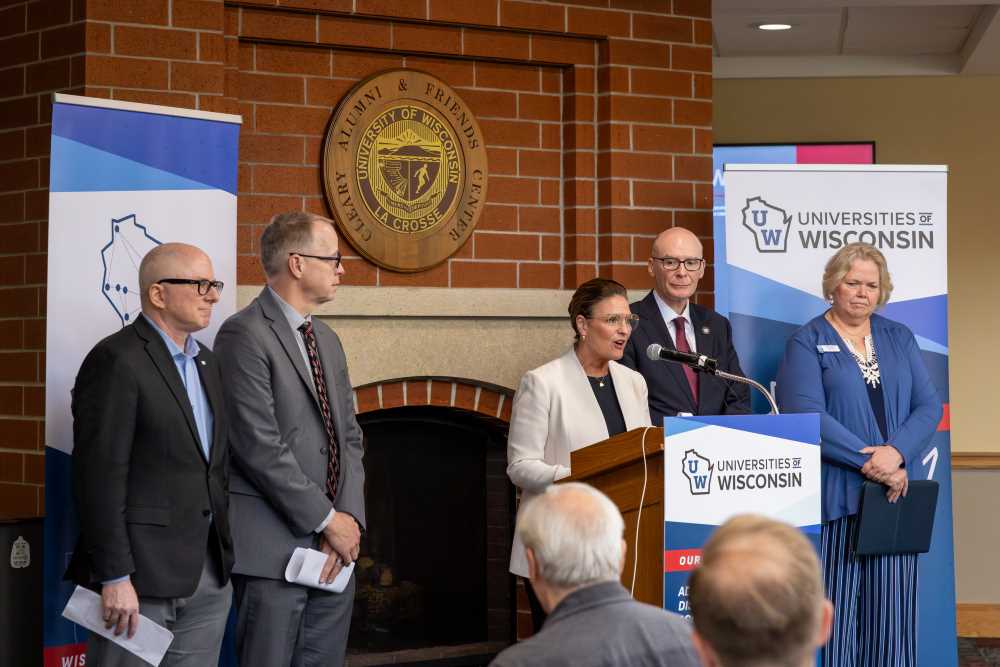
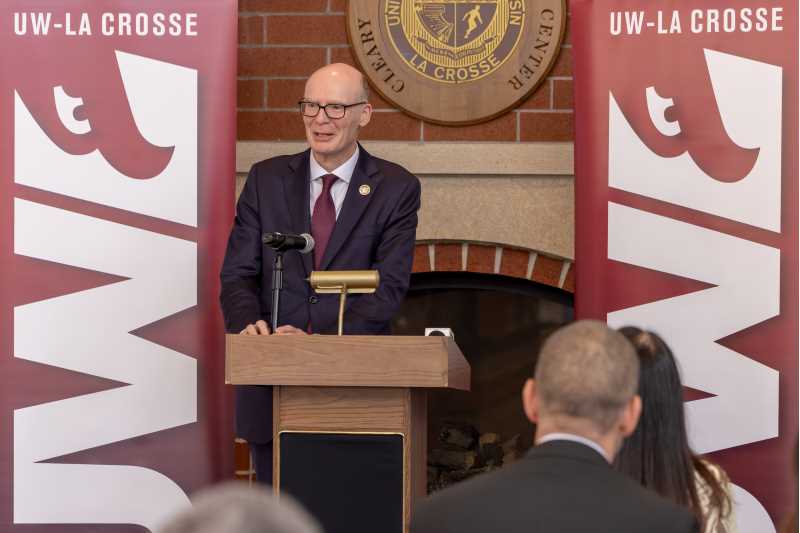
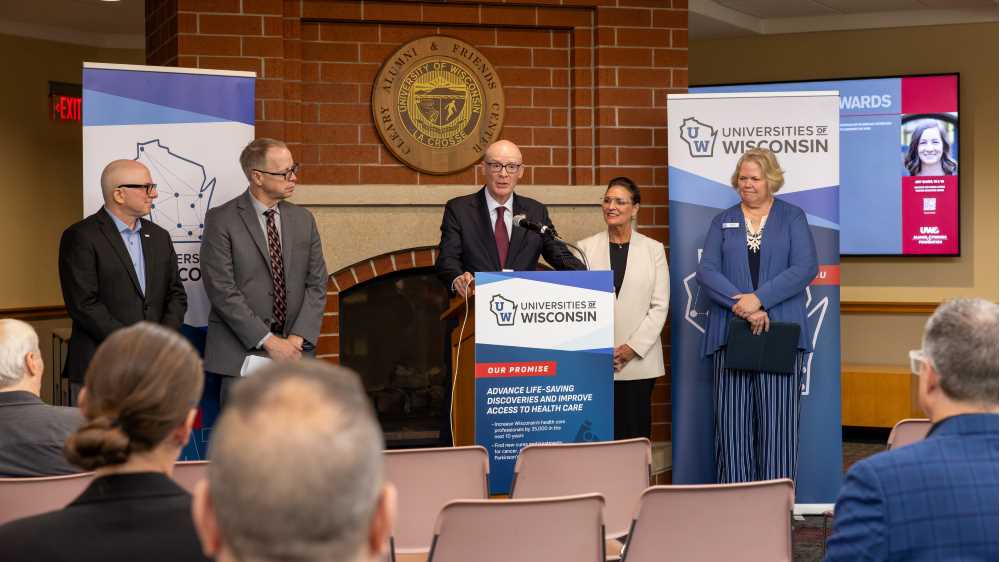
UW-La Crosse Chancellor James Beeby joined university leaders from across Wisconsin on Monday to outline a shared vision for strengthening health care throughout the state.
That vision — known as “Healthy Wisconsin” — calls for a $90 million investment in the 2026-27 biennium state budget to expand health care education and training programs across the 13 Universities of Wisconsin campuses.
The proposal aims to address workforce shortages by preparing an additional 35,000 Wisconsin-based health care professionals over the next decade.
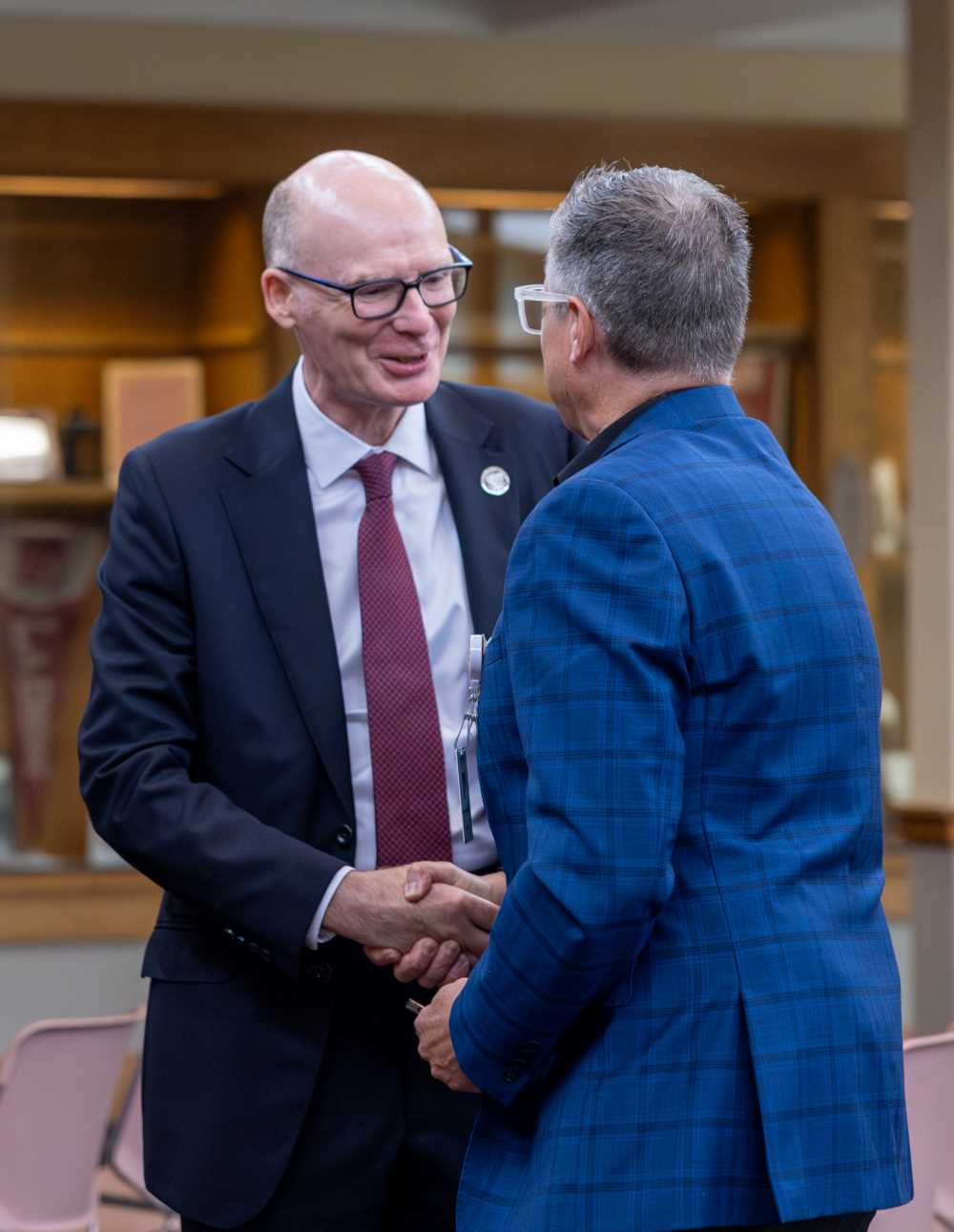
Beeby — who spoke alongside Universities of Wisconsin Interim President Renée Wachter, UW-Parkside Provost Matt Cecil, UW-Stout Polytechnic Dean of Students Sandi Scott and UW-Madison Provost John Zumbrunnen — said further investment would allow UWL to build on proven strengths.
“We are proud of our many exceptional programs that meet Wisconsin’s workforce needs, including those that prepare future generations of health care workers while improving access to care,” said Beeby, speaking at a news conference at UWL’s Cleary Alumni & Friends Center. “But we know there is more to be done. We need more doctors, more physician assistants, more caregivers and medical researchers.
“This is a concern we hear across the state, particularly in rural areas, where it is difficult to recruit and retain health care workers. With an investment in the upcoming state budget, UWL is ready to meet that challenge.”
Beeby explained that state support would allow UWL to:
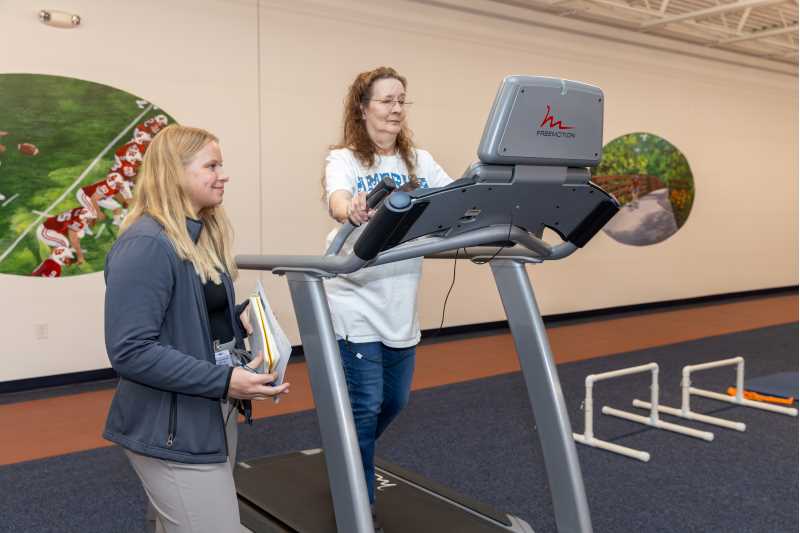
- Graduate more students in high-demand areas such as UWL’s Physician Assistant program
- Strengthen scholarships and financial support for students pursuing careers in rural health care
- And continue to provide state-of-the-art facilities and learning opportunities that prepare graduates for successful careers.
Cecil, Scott and Zumbrunnen highlighted similar opportunities at their respective campuses, citing potential growth in physician and physician assistant programming , mental health counseling, biomedical product development, and other high-demand fields.
According to Wachter, the Healthy Wisconsin proposal leverages the unique strengths of each UW campus to strengthen Wisconsin's health care workforce, improve student opportunities and enhance care for patients of all ages.
“This is personal for Wisconsin families,” she said. “We do not need a spreadsheet to understand what rural Wisconsinites already know: When health care professionals are in short supply, it can be harder to get an appointment, harder to get timely care and harder for communities to thrive.
“This proposal strengthens that pipeline and involves all UW universities to make it happen. It is the Wisconsin Idea in action: to use the UW, one of the state’s greatest assets built over generations, to solve one of the state’s biggest challenges – health care access.”
Monday's news conference at UWL was the first stop in a statewide campaign announcing the Universities of Wisconsin's priorities for the 2026-27 state budget.