

Posted 11:19 a.m. Wednesday, March 4, 2026
Biology graduate studies fish winter behavior to inform habitat decisions
On a frigid February day, Alumnus Ben Patschull steps across the frozen backwaters of the Mississippi River, his ice cleats scraping against a sheet of ice that forms a roof over a hidden world below.
Beneath the surface, more than 140 species of fish inhabit the Upper Mississippi River. For Patschull, the river isn’t just their home.
"I grew up in La Crosse and fishing all of these spots, so that was a big inspiration for me to do this work,” he says, lifting his auger out of a freshly drilled hole in the ice.
Patschull earned both his bachelor’s and master’s degrees in biology from UWL. Now a water resources management specialist with the Wisconsin Department of Natural Resources (DNR), he studies fish habitat in the Upper Mississippi River — with a particular focus on what happens during winter, one of the least understood seasons in freshwater ecology.
A winter refuge
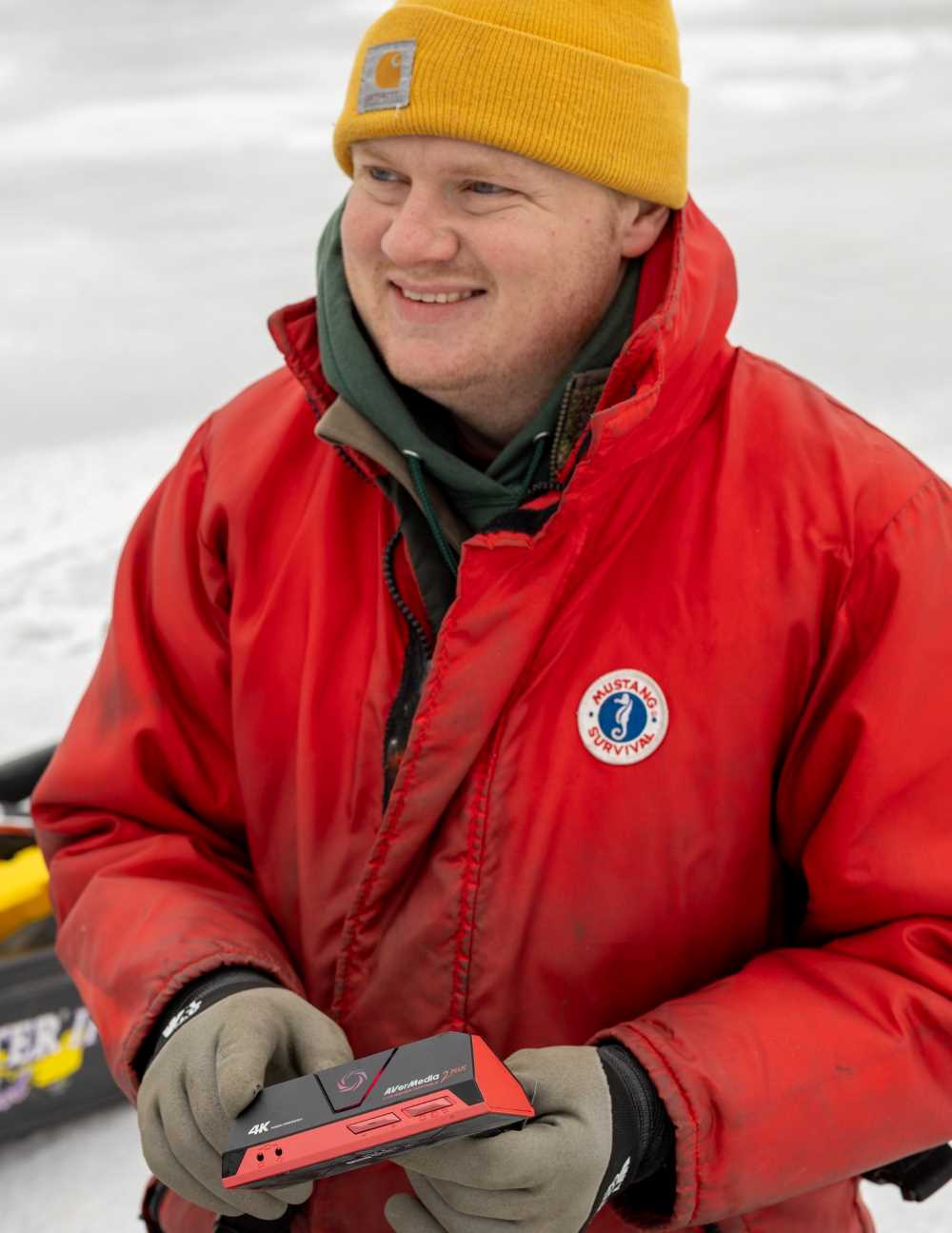
Research conducted in the 1990s showed that species such as bluegill and largemouth bass often seek out slow-moving backwaters in winter. These areas typically remain slightly warmer — often just above 2 degrees Celsius — compared to the faster-flowing main channel, which can hover near 0 degrees.
“Colder water in the main channel, combined with flow, can stress or even damage fish,” Patschull explains. “The backwater is warmer and maintains adequate dissolved oxygen levels. We call it a thermal refuge — pockets where fish can survive over the winter.”
That makes backwater habitat critical for some species. But the Upper Mississippi River is home to more than 140 fish species, and for most of them, scientists don’t know what habitats they use in winter — or how they respond to changing water conditions.
Building a better way to see
To fill that gap, Patschull developed an innovative under-ice camera system — one he largely built himself.
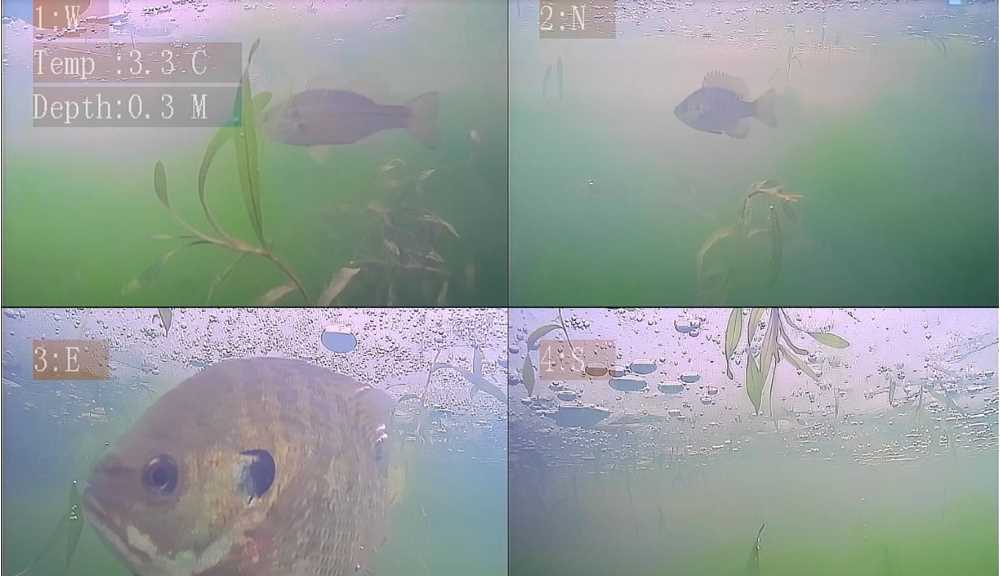
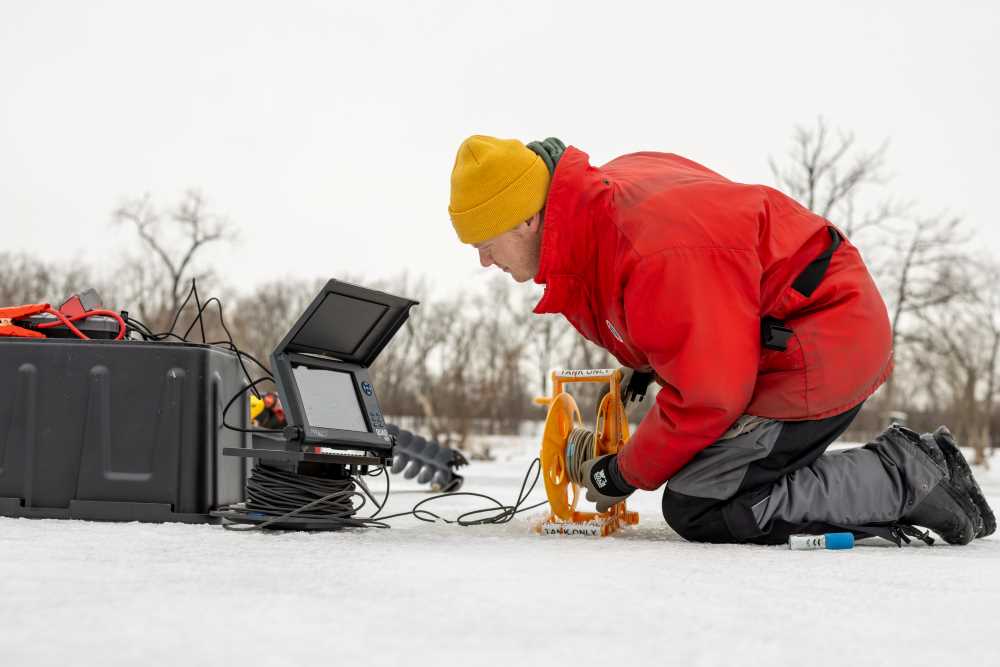
His setup includes a welded metal frame that stabilizes a 360-degree underwater camera beneath the ice. The camera connects to recording equipment adapted from consumer electronics, allowing him to monitor fish activity in real time from above the ice. A small screen rests near the hole, occasionally lighting up as a fish glides past.
The goal is to document which species use backwater habitats in winter, estimate fish density and measure water quality variables such as dissolved oxygen and filamentous algae levels. In high concentrations, certain algae can alter oxygen availability and create lethal conditions for sensitive species.
On this February day, Patschull is alone on the ice.
“I think that has a lot to do with people not wanting to go outside in the cold,” he says with a smile.
But winter, he argues, is exactly when scientists need to be there.
From graduate research to management tool
Patschull first conceived of the project as a UWL biology graduate student while working for the DNR. The agency routinely samples fish populations in spring, summer and fall, but winter remained largely a blind spot.
“We did fish sampling in the summer, but there was no way to track them in the winter,” he says. “I thought, why not use the kind of camera systems they use in saltwater environments?”
His graduate research focused on developing and testing that method. As he progressed through the master’s program, he realized how directly his coursework and field research supported his professional work.
“Having completed my degree, I can’t imagine not having done it,” he says. “Everything I did in class and in the field I could directly apply to my job.”
Now, after completing his degree in 2025, Patschull continues the research in his role with the DNR. He is also developing an algorithm that can automatically identify fish in video footage — reducing the need for researchers to manually review hours of recordings and making the method more scalable for long-term monitoring.
Informing the future of the river
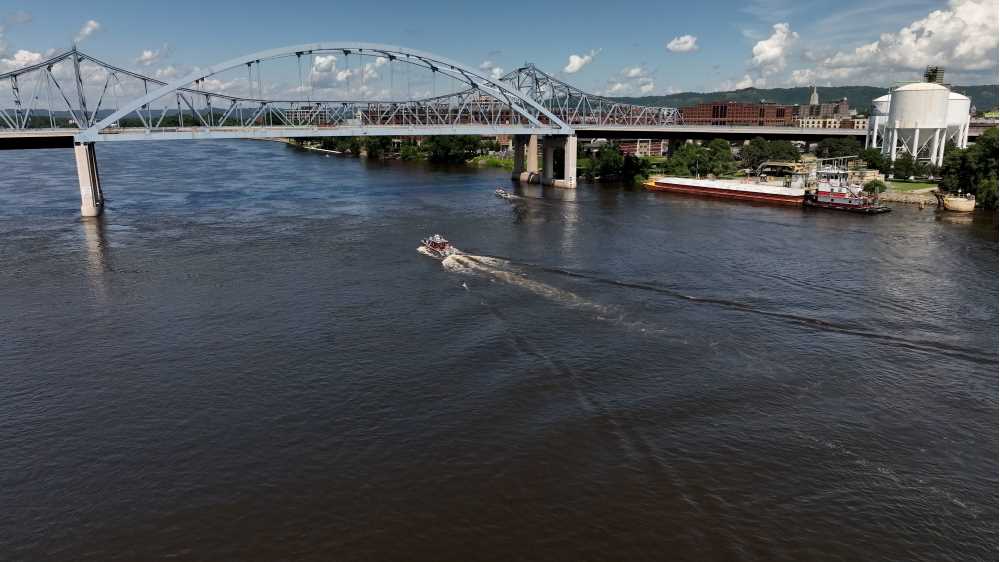
Winter habitat is increasingly important as river systems face pressures from climate variability, habitat alteration and water quality changes. Understanding where fish survive the coldest months can help prioritize conservation efforts and make informed decisions about backwater protection.
Standing on the ice, watching fish flicker across his monitor, Patschull is contributing new knowledge about a season long overlooked.
The findings don’t just benefit the fish below.
They also inform the decisions that shape the future of the Mississippi River and the people who consider this river their home.