Posted 7:55 a.m. Thursday, April 9, 2026
Revamped program equips educators to foster belonging, community-connected learning
Across Wisconsin, schools need educators who help students connect classroom learning with the communities and experiences that shape their lives.
And now, UW-La Crosse’s Institute of Professional Studies in Education (IPSE) is uniquely positioned to prepare them.
IPSE — long recognized for its transformative graduate programs for practicing educators — has redesigned its Professional Teaching: Learning Community master’s program into two distinct Master of Science in Education pathways that reflect how learning happens in PK-12 classrooms and communities.
The pathways share a common foundation rooted in experiential learning and community engaged practices. They begin with introductory courses such as Foundations of Experience-Based Education and Foundations of Learning Communities, before transitioning into more advanced offerings such as Learning Through Place and Insightful Expeditions.
First, the Professional Teaching: Learner-Focused Instruction Emphasis (MSED) will equip educators with the skills they need to create instruction that builds on learners’ strengths and connects learning to the environments where they live and grow.
Participants will explore how anchoring instruction in local communities, landscapes and cultures can make learning more meaningful, motivating and enduring – recognizing that when learning feels rooted in a learner’s own world, it fosters deep engagement and a genuine sense of belonging. Inaugural cohorts are scheduled to take place in hybrid locations across the state.
Additionally, the Professional Teaching: Experience-Based Learning Emphasis (MSED) will prepare educators to create authentic learning experiences that shift learning from something students receive to something they actively construct. Through authentic educational experiences, learners develop adaptability, problem-solving and self-reflection — skills that will help them navigate the world beyond school.
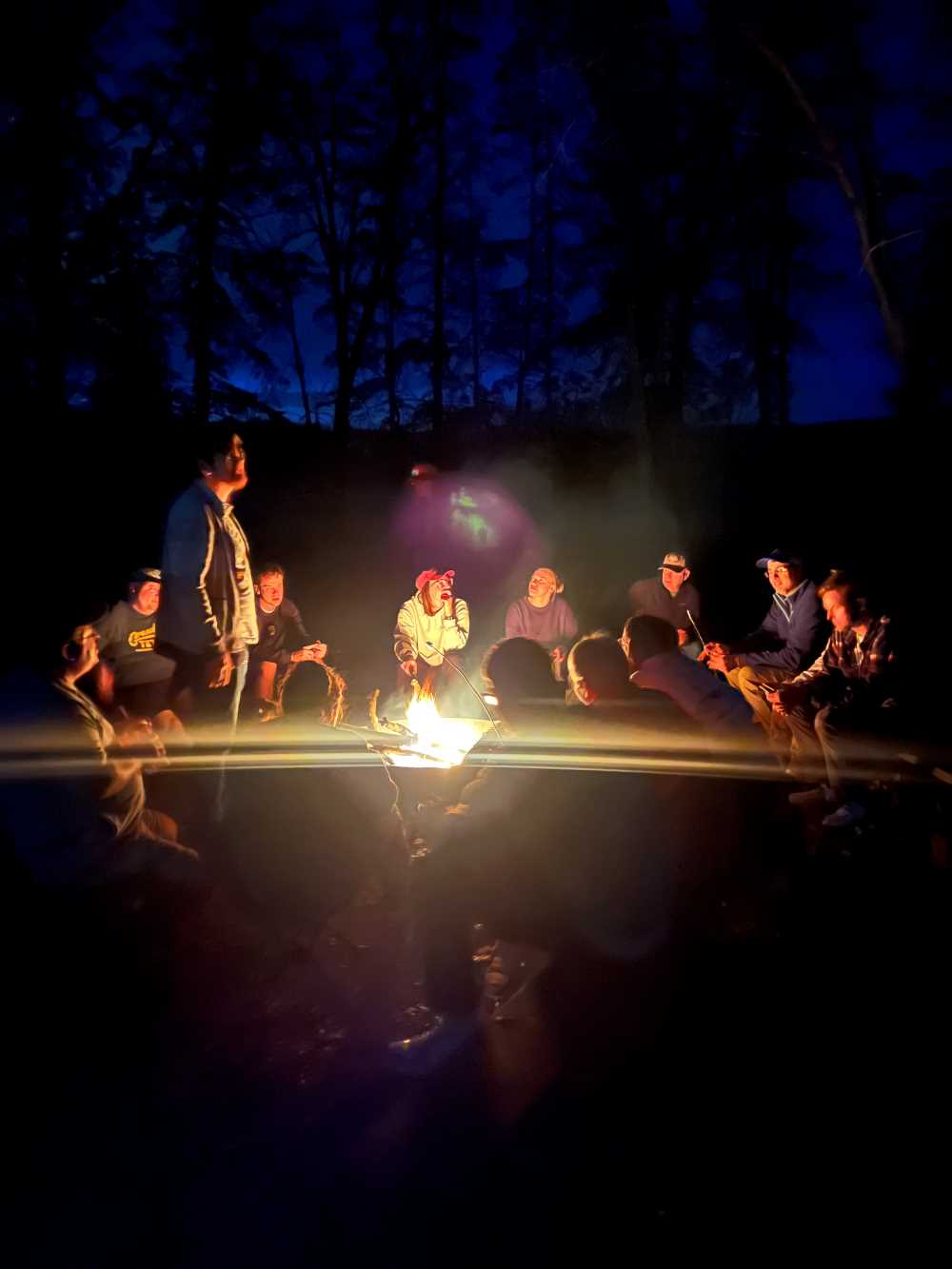
This pathway incorporates expeditionary learning. Participants engage in outdoor activities and camping excursions during which they gain firsthand experience overcoming challenges and connecting academic content to natural environments and the broader world. The Mackenzie Environmental Center, 30 miles north of Madison, will serve as the hybrid site location for the inaugural cohort.
Both pathways, consisting of 32 credits and four academic terms, are being offered for the first time this summer and fall. Geared toward working educators, the courses use a hybrid model allowing participants to review key concepts and materials before coming together approximately three times per semester for in-person weekend sessions that deepen understanding.
“In talking with teachers and school district leaders across the state, it became evident that we needed to adapt our program to help address their current needs,” says Jeannette Armstrong, director of IPSE. “We already had successful cohorts focused on learning communities and experiential/adventure-based education, and school leaders value that. However, they also expressed a growing desire for educators who can use asset-based approaches to build a deep sense of belonging for students while drawing on learners’ knowledge, experiences and community contexts. We just needed to thoughtfully reenvision our programs and make some adjustments to strengthen the experience for our graduate students and the kiddos they teach.”
After completing their master’s degree, educators will be adept at designing asset-based, learner-centered instruction, reflecting on the effectiveness of their teaching, sharing best practices, and adapting their pedagogy to align with learners’ backgrounds, community contexts and educational settings.
“Today, our classrooms, schools, and communities are so incredibly diverse: How do we make sure we’re viewing that diversity as an asset?” Armstrong says. “With these programs, we’ve really tried to frame each student’s histories, culture, languaging and ways of knowing not just as part of their identity, but as assets that will allow us to design instruction that empowers students both at school and within their community.
"We really want our graduate students to be involved in their own learning process and construct knowledge in an active and meaningful way,” Armstrong adds, noting outdoor activities such as rock-climbing, kayaking and camping. “By putting our graduate students in these types of challenging settings, they are able to develop strength, leadership and compassion for others – skills that will help them genuinely connect with their PK-12 students and support them on their journey of school.”
Cindy Kuhrasch, ’82 & ’89, IPSE adjunct instructor and distinguished teaching faculty emerita at UW-Madison, worked closely with Armstrong to update the program. A longtime expert in teacher education and kinesiology, Kuhrasch says UWL is one of a small handful of universities offering master’s programming with expeditionary experiences as a focus.
Together, she believes the two pathways will deliver the kind of diverse, impactful experiences teachers need to best serve their learners and communities.
“These programs are unique because they possess two foundational components. First, we help educators develop the necessary skills to create learning environments where people feel cared for and comfortable enough to make the mistakes required to truly learn and grow,” she says. “Second, the use of experiential learning as the pedagogical basis is really rare and unique to UWL. Not all students want to learn by watching a PowerPoint or taking a quiz — they want to engage in an authentic experience and learn from it.”
The strong sense of community that exists within the program is also a benefit.
“This is a transformative program where people stick together long after they’ve earned their degree, and that’s a unique benefit among graduate-level programs,” Kuhrasch says. “Experiential learning with a group of people that care about one another creates not only a professional network, but real, lasting relationships of support and community.
Learn more about UWL’s Professional Teaching master’s program.