Posted 3:43 p.m. Wednesday, March 11, 2026
"A Note from the Director"--Literacy Narrative
When I was younger and struggled to fall asleep, my father would read me a book of my choosing. We would jump around from Charlotte's Web to Harry Potter to Where the Wild Things Are, but while the genre of the book changed, the way my father read it did not. He would shift from character to character within each line. One moment he was a preposterous pig and the next a sensuous barn spider. Each change of character immersed me in the book and deepened the meaning. The way my father read these stories came from his love of performing, but more specifically, his appreciation for theatre.
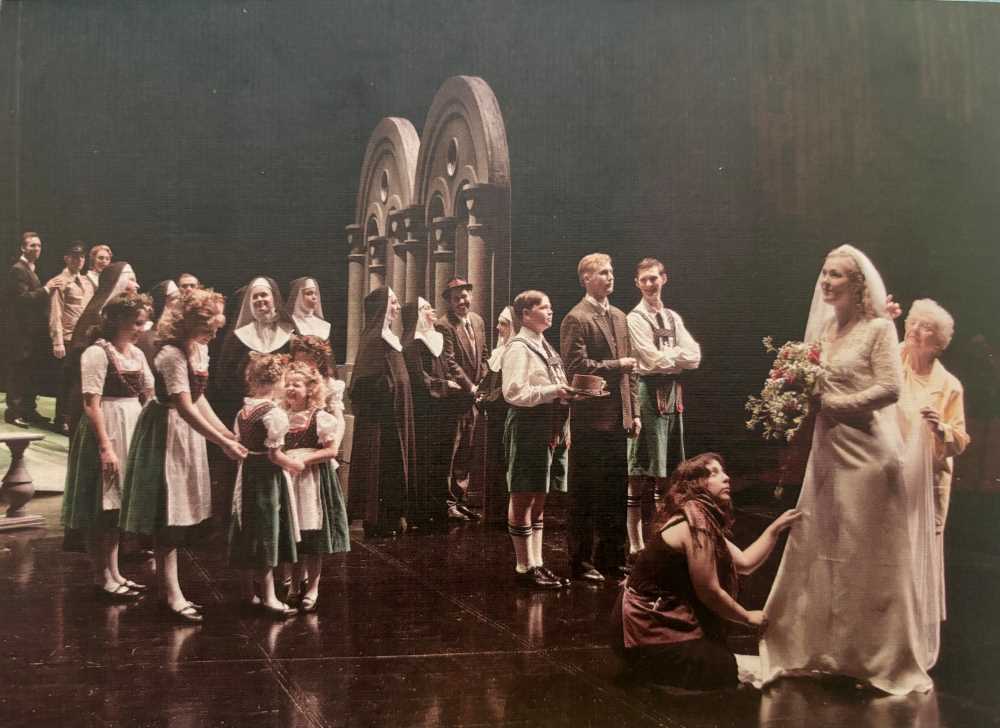
Growing up my family was surrounded by theatre, not only from the audience's perspective but on the stage as well. I have both my parents to thank for this since it was something they took a liking to throughout their personal lives. I was given multiple opportunities to perform with my family in Shrek Jr. and Hairspray. Both of which turned into some of my favorite experiences in theatre. Stepping into a new role was always interesting and opened my eyes to the themes of words, movement, and tone and how they change through delivery. At the time, it was considered a fun way to stay involved and to see family, so I did not think much more of it, but looking back I realize that the art of performing held so much more than just costumes and the confidence to say, “Line…?” It brought on a deeper understanding of literacy and the importance of suspending one's disbelief through writing, specifically by the means of the director.
Once I discovered how literacy and theatre intersect, I wondered if there might be others who also felt the same way about a hobby or event in their lives. I decided to survey my ENG-110 class with a broader question, “Has having a passion outside of your curriculum (i.e., sports, music, etc.) helped you gain additional knowledge toward your own understanding of literacy (speech, disposition, writing, etc.)?” I wanted to see if other students could also connect their personal hobbies to literacy, like I had with theatre. My results showed that more than 70% of students felt like their outside experiences contributed to their literacy, with about 15% being unsure, and another 15% saying no. The sample size was made of forty-seven students, some of whom may have been more involved with their hobbies than others, but overall, the majority felt like their outside experiences contributed to some of their success in writing. On the contrary, some might not realize the impact their opportunities have had on their writing, which is exactly what happened with me and my theatre experience.
Looking back, the experience of working in multiple theatre performances has taught me the importance of tone, grammar, meaning, and how to send a message. When I first started, I saw how the director held the most power on the stage, no matter who the lead role was. The decisions the performers made were based on articulated notes that were cast into the script and reeled in by the director. At the time, I considered these casted notes as a set of directions that I was required to adhere to, but as I aged within these performances, I noticed that these notes were more than just words on paper. They were stories brought to life, filled with imagery, allusion, and temptation, to name a few.
I began to crave that feeling of art and eloquence in my own words. I searched for ways to immerse my reader in the story I was telling. Whether it was an analysis of osmosis and DNP on guard cells or interpreting an excerpt from an assigned reading, I found myself considering the audience and how they may perceive my words. I began to consider how my writing could impact such simple assignments, and potentially future assignments, so I decided to put more time and effort into my writing by constructing new ideas and formats based on my given tasks.
However, my perspective truly developed when I found myself in a theatre appreciation class first semester of my freshman year. Throughout the class, we were given an assignment for a five-page paper based on our observations of the relevant performance. Although to some, writing five pages posed the same difficulty as reading Shakespeare's Othello, I was eager to use the extra pages to bring my observations to life. Watching the show, I took note of the minor details and what the director was trying to tell the audience through them. There were messages hidden throughout the set that would’ve been missed at a quick glance. I found items that suspended my disbelief as an audience member and truly brought me to the time and place of the performance. Once I was done with my notes, I began to write my paper.
I realize now that those notes and my interpretation of the performance allowed me to create my idea of how I wanted to write and how I wanted my audience to feel about my writing. In a sense, I had become the director of my own performance. I wrote about the sound of the music, the change in the lights, the costume, and the set design, all while giving my readers a picture of these themes as if they were in the room with me. This experience of seeing the stories brought to life allowed me to see the script for what it was, rather than what it did. As a backbone for the story, the script acknowledges the rising action, climax, and resolution, but the director has enough room to interpret those concepts and deliver them in the ways they see best fitting. I admired the process that directors go through to tell the story they see, while proving the power they hold amongst the cast, crew, and even the audience. The script and decisiveness from the director became notions for how I wanted to write and flipped a stage light on in my brain.
During my performances, I have many times heard the saying, “It's not what you say, but how you say it.” The emotion you can bring with a single word is significant throughout all theatrics. I feel that being immersed in the art of theatre growing up has helped me develop the idea of giving my readers a better understanding of what and how I am trying to write. I have found that being my own director has given me freedom in writing and is a quality that I admire. If I had not been raised surrounded by the art of acting and theatrics, I believe my writing would not be the way it is today. If I had not been involved in theatre appreciation my freshman year, I believe my interpretations would lack meaning and emotion.
I want to continue to write with this lens throughout college and my career. I think that writing as a discipline has helped me to see things I couldn’t see before and will serve as a strong baseline for my future. Exposing myself to new forms of writing has allowed me to reflect on myself within my literacy. However, taking a step away from the physicality of writing, I believe that seeking out interpretation and deeper meaning in words, symbols, and phrases has given me a different outlook on life. I have found myself expressing gratitude for the words I can write, speak, and hear. I want to continue to find symbolism in everyday life, such as the change of the seasons, the sweet scent of petrichor, the sound of spring peepers, the taste of rich chocolate, and the idea that not everything is how it seems. I feel like I can do that because of my deeper understanding of writing and an immersion in theatre.
As I move forward in my writing, I will take this baseline of who I am and what I deem important to collaborate with myself and others as I continue to grow and change my literacy. I have discovered a new discipline in my writing that I approach through three personal steps. First, I bring spotlights onto my words by finding ways to pinpoint the messages I am trying to send and developing the broader image of my story. Secondly, I use a mental camera lens while re-reading my work, aimed at deepening the understanding of my information and how I present it. Lastly, I read the flow of the words, making sure they engulf my thoughts, perception, and immersion in my own set of writing. I am placed in the narrative at the center of the stage, and the curtains are prepared to recede. Action.