Posted 4:09 p.m. Monday, Oct. 26, 2026

UWL professor’s Fulbright research advances early childhood assessment in Kosovo
During a child’s early years, development happens rapidly. Children build the foundations for communication, cognitive, motor, adaptive, and social-emotional skills that shape their learning and development throughout life.
When developmental concerns are identified early, families and professionals have a better opportunity to provide the right support, potentially making a lasting difference in a child’s life.
That belief in the importance of a strong childhood foundation brought UWL Professor Lema Kabashi to Kosovo this fall on a Fulbright scholarship. Her goal is to help establish a reliable, culturally and linguistically appropriate assessment tool that will help professionals in Kosovo to identify developmental concerns earlier and better support children and their families.
Currently, Kosovo lacks a developmental assessment tool available in Albanian that is specifically designed and validated to assess children from birth to age six and support early identification of developmental delays. Without one, professionals face challenges in systematically identifying children’s developmental needs and planning individualized interventions.
For Kabashi, addressing this gap is both a professional priority and a personal commitment.
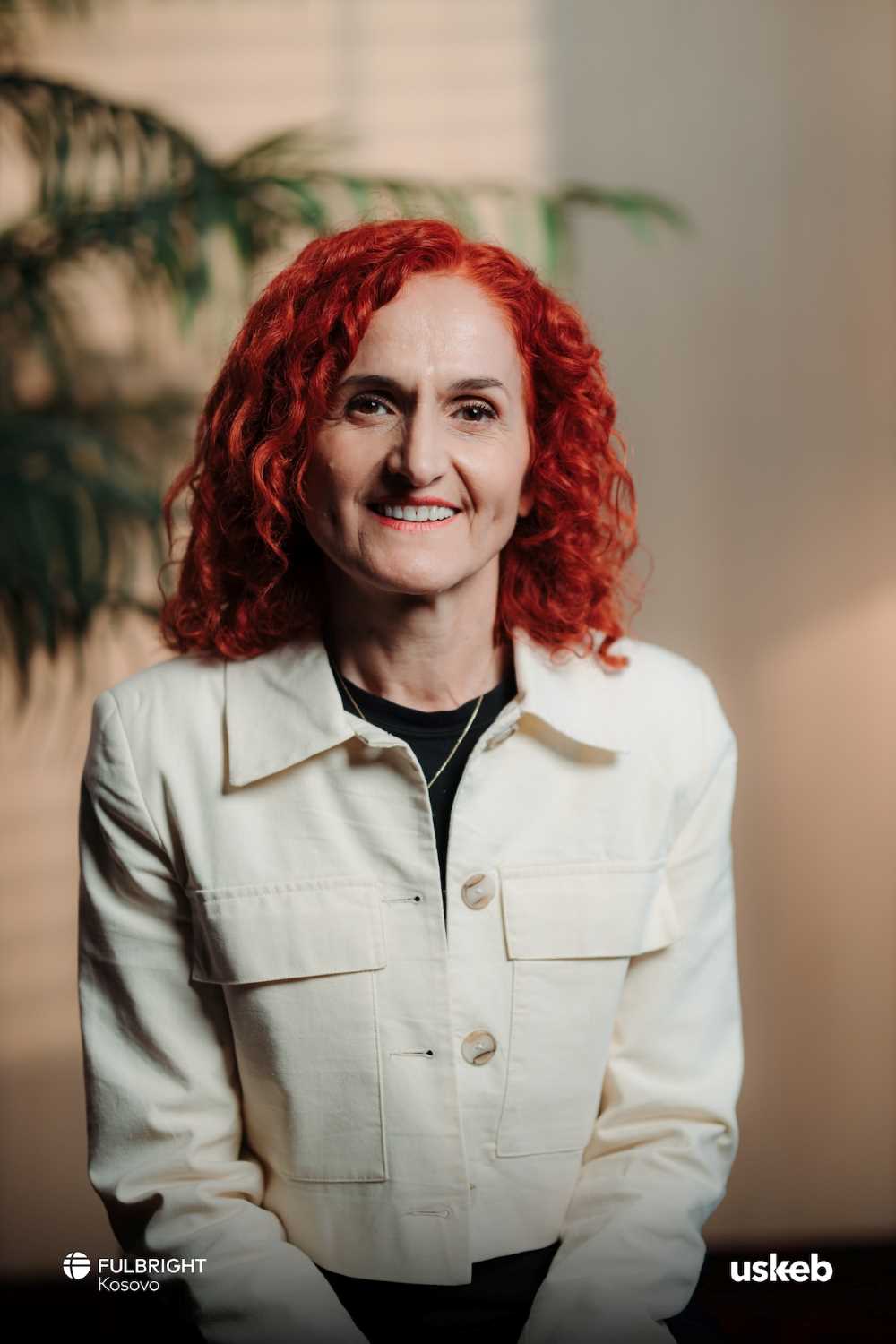
“As a native of Kosovo and an Albanian speaker, I understand the importance of developing resources that reflect the language and cultural context of the children, families, and professionals who use them,” she says. “My goal is to help address this gap through a rigorous research process while equipping local professionals with the knowledge and skills to use the assessment effectively.”
The project is also an opportunity for Kabashi to give back to the country where she grew up.
“I hope this work will contribute to stronger early childhood and special education services in Kosovo and help more children receive the support they need as early as possible,” she says.
Kabashi says she values the collaborative environment at UWL that supports faculty who want to pursue research interests beyond the classroom and have a meaningful impact on communities.
“The combination of research funding, technology, supportive colleagues, and institutional encouragement has allowed me to connect my professional expertise with my personal roots in Kosovo, build international research collaborations, and explore innovative ways to prepare professionals to support young children,” she says.
Working together
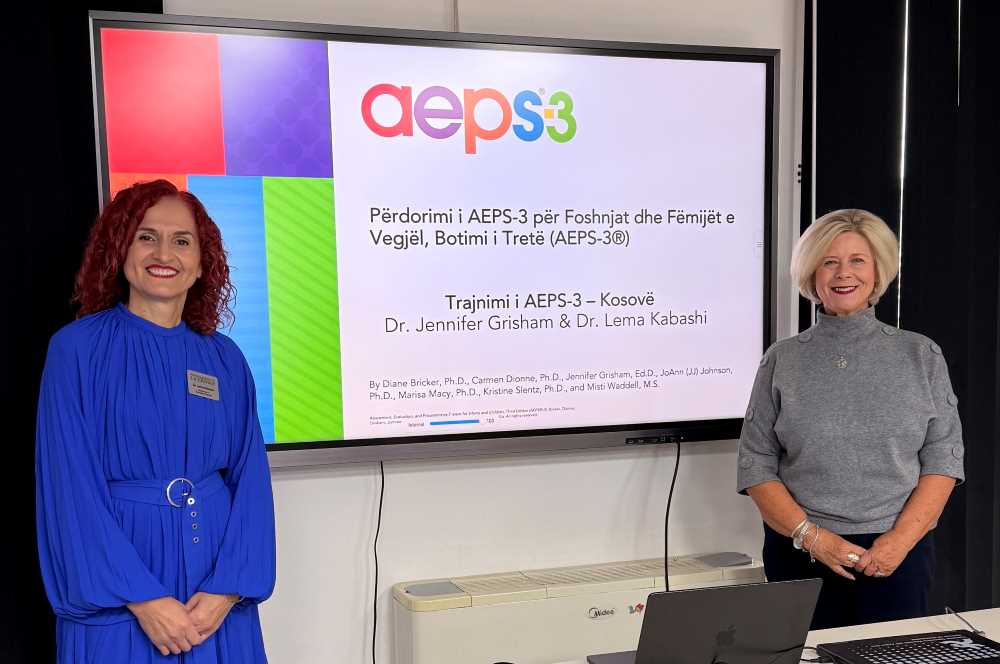
Kabashi’s Fulbright research goes beyond validating an assessment tool; it also prepares local professionals to use it effectively. Once the Albanian version of the assessment tool is fully validated, published, and available for use, these professionals will have access to the first validated developmental assessment for children from birth to age six in the Albanian language, helping address a critical gap in Kosovo’s early childhood assessment resources.
Working with her research collaborator Jennifer Grisham, Kabashi is collaborating with early childhood educators, medical nurses and other professionals who work directly with young children and families throughout Kosovo. She is training and supporting these professionals as they administer the assessment and collecting the data needed to establish its reliability and validity.
By working alongside local professionals, Kabashi aims to build on existing expertise and create a foundation for continued use of the assessment rather than simply introducing a new tool without a plan for implementation.
At the end of September, Kabashi and Grisham led two full-day training sessions for approximately 50 early childhood educators and medical nurses from all over the country who work with young children and their families. The sessions prepared participants to administer the assessment tool — the Assessment, Evaluation, and Programming System for Infants and Children, Third Edition (AEPS-3) — accurately and consistently to evaluate children’s developmental progress from birth through age 6.
The AEPS-3 is a criterion-referenced curriculum-based assessment, and it examines specific skills against established developmental expectations. Kabashi also developed 30 video-based quizzes featuring children at different developmental levels and demonstrating a range of skills. Through an online Canvas course, participants use the videos to practice scoring the assessment and demonstrate that they can evaluate children’s skills consistently with other assessors with at least 80 % reliability.
All participants are now administering the assessment with four to five children between birth and age 6. This hands-on experience allows them to apply their training in real-world settings while helping Kabashi and her co-researcher gather the data needed to determine how consistently and accurately the AEPS-3 measures children’s development and establish cutoff scores to help identify children who may have developmental delays or disabilities in Kosovo.
Bringing the research home
When Kabashi returns to UWL, she plans to bring the experience into her teaching, where she prepares future teachers to support students with diverse learning needs.
“My work in Kosovo provides real-world examples of how educators address challenges when resources, assessment tools, and support systems differ from those available in the United States,” she says. “This experience will strengthen my teaching by bringing an international perspective into my courses and helping my students understand how early childhood assessment, special education, and early intervention operate in different cultural and educational contexts.”
She also hopes to use her experiences abroad to encourage students to think critically about educational equity, culturally responsive practices and the importance of adapting teaching approaches to the needs of individual children and families.
Beyond the classroom, Kabashi sees opportunities to strengthen research collaborations and mentor students and colleagues interested in early intervention, inclusive education and international research.
“Ultimately, my goal is to prepare future teachers who can recognize children's strengths, identify their needs, and create meaningful opportunities for every child to learn and thrive,” she says.