Posted 9:36 a.m. Tuesday, Oct. 7, 2014
With the influx of international students on college and university campuses across the country, understanding different cultural norms surrounding teaching and learning is critical. A visiting scholar on campus Oct. 13-15 will share her research on the topic.
[caption id="attachment_36783" align="alignright" width="200"]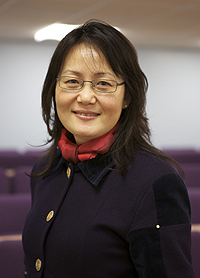 Visiting Scholar Lixian Jin[/caption]
The definition of “a good teacher” or “a good student” varies greatly across the globe. With the influx of international students on college and university campuses across the country, understanding different cultural norms surrounding teaching and learning is critical to effective education.
A visiting scholar on campus Oct. 13-15 aims to share her extensive research surrounding different cultures of learning. Lixian Jin, a professor at De Montfort University in the United Kingdom, will share examples of international students’ ways of learning, their perspectives on educational success and how classroom behavior and different expectations of learning and teaching can be taken for granted and misunderstood.
Imagine the scenario: An international student from China attends a class at an American university where students are traditionally expected to be actively involved in class discussions. However, without this understanding, the international student is confused why students are always talking during the class, and considers this disrespectful to the teacher. The student has learned through early socialization and education in China to only share thoughts once he or she has learned what experts and academics have to say about it. At the same time, the American teacher would potentially be concerned that the international student was not participating and assume he or she doesn’t understand English well enough. Rushing to these assumptions without dialogue can be a recipe for negative learning outcomes.
With 320 UW-L international students this fall, learning about the concept and practice of cultures of learning at UW-L can help people on campus evaluate values and ways of teaching and learning, notes Jin. It’s also a way to develop professional integrity and students' attitudes and skills for their professional future, she adds.
“Paying attention to cultures of learning should improve the efficiency, effectiveness and satisfaction involved in learning and teaching,” she says.
When Jin first went to Britain to earn her master's degree, she noticed the difficulties that both she and other international students experienced in classes. That piqued her interest in research in this area. Today she is an internationally acclaimed researcher and scholar who has dedicated her professional career to exploring the unique cultures of learning.
Jin is the chair and professor of Linguistics and Intercultural Learning, and the director of the Centre for Research in Intercultural Communication and Learning at De Montfort University.
Jin’s visit is an opportunity to engage in discussions about the next important step in internationalization in higher education: Further understanding the cultures of learning by others, coupled with the value of learning with and through diverse cultural experiences, thereby increasing the potential for a higher degree of comprehension and innovation in the Western cultures of learning and teaching, says Gary Gilmore, professor and director, Graduate Community Health/Public Health Programs.
Visiting Scholar Lixian Jin[/caption]
The definition of “a good teacher” or “a good student” varies greatly across the globe. With the influx of international students on college and university campuses across the country, understanding different cultural norms surrounding teaching and learning is critical to effective education.
A visiting scholar on campus Oct. 13-15 aims to share her extensive research surrounding different cultures of learning. Lixian Jin, a professor at De Montfort University in the United Kingdom, will share examples of international students’ ways of learning, their perspectives on educational success and how classroom behavior and different expectations of learning and teaching can be taken for granted and misunderstood.
Imagine the scenario: An international student from China attends a class at an American university where students are traditionally expected to be actively involved in class discussions. However, without this understanding, the international student is confused why students are always talking during the class, and considers this disrespectful to the teacher. The student has learned through early socialization and education in China to only share thoughts once he or she has learned what experts and academics have to say about it. At the same time, the American teacher would potentially be concerned that the international student was not participating and assume he or she doesn’t understand English well enough. Rushing to these assumptions without dialogue can be a recipe for negative learning outcomes.
With 320 UW-L international students this fall, learning about the concept and practice of cultures of learning at UW-L can help people on campus evaluate values and ways of teaching and learning, notes Jin. It’s also a way to develop professional integrity and students' attitudes and skills for their professional future, she adds.
“Paying attention to cultures of learning should improve the efficiency, effectiveness and satisfaction involved in learning and teaching,” she says.
When Jin first went to Britain to earn her master's degree, she noticed the difficulties that both she and other international students experienced in classes. That piqued her interest in research in this area. Today she is an internationally acclaimed researcher and scholar who has dedicated her professional career to exploring the unique cultures of learning.
Jin is the chair and professor of Linguistics and Intercultural Learning, and the director of the Centre for Research in Intercultural Communication and Learning at De Montfort University.
Jin’s visit is an opportunity to engage in discussions about the next important step in internationalization in higher education: Further understanding the cultures of learning by others, coupled with the value of learning with and through diverse cultural experiences, thereby increasing the potential for a higher degree of comprehension and innovation in the Western cultures of learning and teaching, says Gary Gilmore, professor and director, Graduate Community Health/Public Health Programs.
Visiting Scholar Lixian Jin[/caption]
The definition of “a good teacher” or “a good student” varies greatly across the globe. With the influx of international students on college and university campuses across the country, understanding different cultural norms surrounding teaching and learning is critical to effective education.
A visiting scholar on campus Oct. 13-15 aims to share her extensive research surrounding different cultures of learning. Lixian Jin, a professor at De Montfort University in the United Kingdom, will share examples of international students’ ways of learning, their perspectives on educational success and how classroom behavior and different expectations of learning and teaching can be taken for granted and misunderstood.
Imagine the scenario: An international student from China attends a class at an American university where students are traditionally expected to be actively involved in class discussions. However, without this understanding, the international student is confused why students are always talking during the class, and considers this disrespectful to the teacher. The student has learned through early socialization and education in China to only share thoughts once he or she has learned what experts and academics have to say about it. At the same time, the American teacher would potentially be concerned that the international student was not participating and assume he or she doesn’t understand English well enough. Rushing to these assumptions without dialogue can be a recipe for negative learning outcomes.
With 320 UW-L international students this fall, learning about the concept and practice of cultures of learning at UW-L can help people on campus evaluate values and ways of teaching and learning, notes Jin. It’s also a way to develop professional integrity and students' attitudes and skills for their professional future, she adds.
“Paying attention to cultures of learning should improve the efficiency, effectiveness and satisfaction involved in learning and teaching,” she says.
When Jin first went to Britain to earn her master's degree, she noticed the difficulties that both she and other international students experienced in classes. That piqued her interest in research in this area. Today she is an internationally acclaimed researcher and scholar who has dedicated her professional career to exploring the unique cultures of learning.
Jin is the chair and professor of Linguistics and Intercultural Learning, and the director of the Centre for Research in Intercultural Communication and Learning at De Montfort University.
Jin’s visit is an opportunity to engage in discussions about the next important step in internationalization in higher education: Further understanding the cultures of learning by others, coupled with the value of learning with and through diverse cultural experiences, thereby increasing the potential for a higher degree of comprehension and innovation in the Western cultures of learning and teaching, says Gary Gilmore, professor and director, Graduate Community Health/Public Health Programs.