Posted 10:24 a.m. Thursday, Oct. 15, 2026
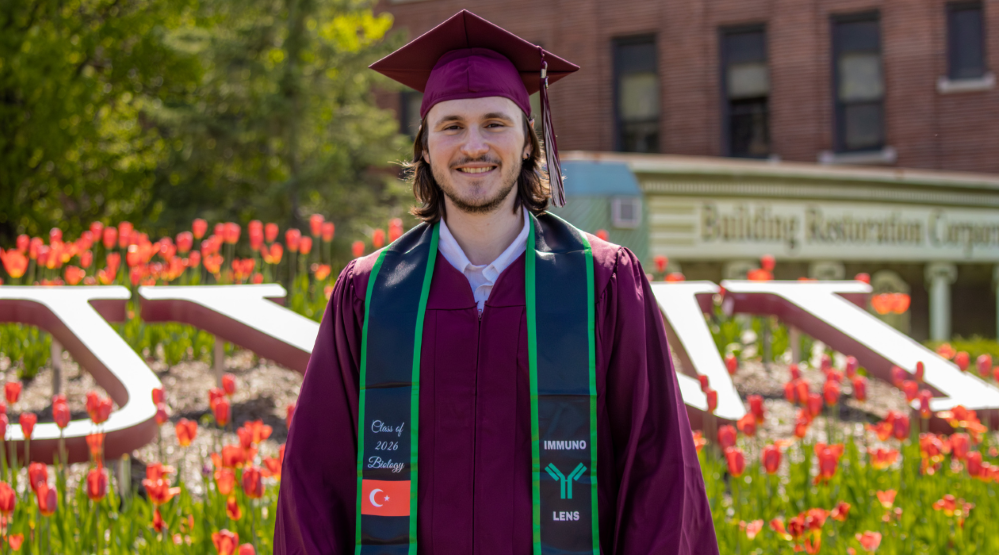
Learn More About a UWL Alumni's Experience
Ege is a recent molecular genetics & cellular biology graduate that attended UWL from Spring of 2024 to Spring of 2026. Read below about his time here at UWL as an International student from Türkiye and what hes been up to since graduating.
What was it like coming to UWL? How did you decide to come here?
I actually started my U.S. journey in New York at NYIT. After a year and a half, I needed a place that was more affordable but still had strong science programs and real research opportunities for undergraduates. UWL checked every box. Moving from New York City to La Crosse was a big change, but it turned out to be one of the best decisions I've made.
What has your experience been like so far?
Busy, challenging, and very rewarding. I worked throughout college, sometimes overnight shifts, while taking a full science course load and doing research. It wasn't always easy, but the faculty and community at UWL made it possible. I graduated in May 2026 and now work as a molecular biologist at the USGS Upper Midwest Environmental Sciences Center, right here in La Crosse.
What were some big differences when you first arrived?
The winters, first of all! Also the pace of life. After New York, La Crosse felt calm and quiet, and it took some time to appreciate that. Food was another adjustment; I missed Turkish breakfast a lot, so I started cooking more for myself and friends.
What did you like about being a student at UWL?
The access to professors. At UWL, faculty know your name, and undergraduates can get real hands-on research experience. I joined Dr. Sumei Liu's lab, where I studied stress-induced intestinal barrier dysfunction, and that experience shaped how I think as a scientist.
What did you do for fun in La Crosse?
I play tennis (I competed in ITF and Tennis Europe events growing up), go to the gym, and cook. I also love hiking up Grandad Bluff and spending time by the Mississippi River, especially in fall.
If you had known one thing before coming to UWL, what would it be?
That it's okay to ask for help early. Professors and staff genuinely want you to succeed, but you have to walk into their office.
How has studying abroad allowed you to excel in your studies or career?
Being a first-generation international student taught me to be independent, adaptable, and resilient. Those qualities helped me balance work, research, and leadership. UWL also opened doors I wouldn't have found on my own, including a fellowship at Gundersen Health System, where I was able to observe surgeries and take part in clinical research. Those experiences led to my clinical research role and my current position in environmental DNA research at USGS, and they keep me moving toward my long-term goal of becoming a physician.
Do you have any advice for incoming international students?
Say yes to opportunities, even if you feel unprepared. Join a lab, start a club, talk to people outside your comfort zone. And build a small community around you; it makes the hard semesters much easier.
Is classroom culture a lot different here?
Yes. In Türkiye, classes tend to be more lecture-based and formal. Here, participation, discussion, and office hours matter a lot, and many professors are very approachable. At first it felt unusual to challenge an idea in class, but now I see how much it helps learning.
What would you like others to know about being an international student at UWL?
Many of us are balancing much more than coursework: visas, finances, distance from family, and a new culture. But we also bring different perspectives into the classroom and lab. A little curiosity and kindness from classmates goes a long way.
A phrase from your native language:
"Damlaya damlaya göl olur." It means "Drop by drop, a lake forms." Small, consistent efforts add up to something big, which is honestly how I got through college.
Special events/projects/experiences at UWL, and why they're meaningful:
I founded ImmunoLens, a student organization focused on autoimmune disorders, to raise awareness and connect students interested in immunology and medicine. Building something from scratch and seeing others get involved was one of my proudest moments. Research in Dr. Liu's lab was equally meaningful because it showed me how lab questions connect to real patients, which strengthened my motivation to pursue medicine.