Posted 12:24 p.m. Monday, June 29, 2026
Composing Literacy
I wince as a dissonant sound makes its way to my sensitive ears. That’s not a C, that’s an A, my piano teacher says. I recognize what he’s saying, but my five-year-old brain is having trouble translating the alphabet I just learned to piano keys. I play a C, then a B…. A- That’s it. I feel a sense of pride, hearing how the notes blend in perfect harmony. C mixes with E and G to make a major chord, and if I want a minor chord, I need to move E down a half step. This may all sound like nonsense to someone with no musical background, but it certainly did to me when I began playing piano. I had no idea that musicality would have such a positive effect on my literacy and future as a student. Through years of practicing piano, I unknowingly developed skills in pattern recognition, interpretation, structure, and revision that would later shape the way I read, write, and understand the world.
I always enjoyed elementary school. I liked adding numbers together to make sums and carefully writing my name in cursive, but there was something I loved even more. Each day, my class gathered in a circle on the bright alphabet rug, our legs crossed as we sang letters that sounded out words- C-A-T, M-A-T. Yet my mind often drifted. Instead of hearing “cat”, I heard C-E-G. That’s a C major chord. G-B-D- that’s G major. While my classmates were putting letters together to make words, I blended notes into harmonies, translating the alphabet into something I understood more naturally: music.
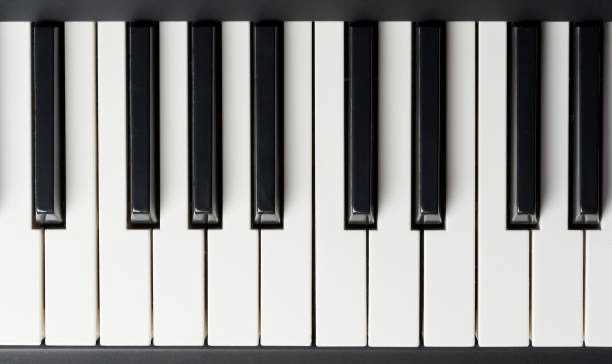
When I got home from school, I dropped my backpack and walked straight to the dining room. Sitting against the wall was what I considered my most faithful companion, the piano. Because the bench was too tall for my short legs, I dragged over a dining room chair, climbed up, and let my feet dangle right over the piano pedals. I ran my small fingers across the slippery keys until they found their way to the note I was searching for. This was where my real lessons began. Bag. B-A-G. I pressed each key one by one, listening closely to the sound coming from the instrument. I discovered that most words formed from the letters A through G, the limit of notes on the piano, clashed when played together. Their proximity created dissonance instead of harmony. Dab. D-A-B. I repeated the notation again and again until the sounds of the chord and the spelling of the word felt permanently engraved in my memory. Without realizing it, I was teaching myself how to connect symbols to sound, and sound to meaning.
My fingers touched those same three keys once again, but now I was in middle school, giving starting notes to a choir. By now, I had been playing piano for six years, and it’d become a pastime for me. Not only this, but it started to show in my language and schoolwork. Piano had started to ground principles of routine, discipline, and organization into my brain. In seventh grade, I sat down to write my first five-page paper. To me, this seemed like a monstrosity of a task. I had grown away from reading, and disliked writing even more. This all changed when I began to approach my schoolwork like playing piano. This is not a unique experience in my life. Research supports the idea that music theory and knowledge can strengthen cognitive skills that enhance literacy development. In “The Power of Music”, Susan Hallam shares that learning an instrument enhances important brain patterns like recognition, memory, and language processing. All these attributes of literacy can be enriched by practicing scales and chords, musical exercises that challenge the brain’s ability to decode symbols and distinguish structure. I began to see this research applied in my own life, especially in my schooling.
From middle school on out, music became my motivation and my dedication. I approached my five-page paper like I was beginning to learn a difficult piece of music. Starting by checking the key signature, translated to reading the directions and rubric. Attempting to read through the piece became free writing. And most importantly, breaking the music down note by note came more easily as editing. Not only was I more motivated to structure my writing like music, but I was also able to develop my own tone and emotion in my writing, like I did when I played piano. I viewed tone shifts in my writing like major vs. minor chords, and conflict in stories as dissonance. To make it easier for myself, I would use this language to annotate assigned readings in class. Little did I know, but music was changing the way I expressed myself and guiding me to develop my own sense of self.
Life became harder in high school, and so did the music I was playing. I began to practice piano less because of my busy schedule and only utilized it as a getaway from my everyday life. Still, music stuck with me everywhere I went. By this time, the sheet music I was reading was hard, but I also noticed my reading comprehension improving, in both music and literature. I developed new connections from the ones I used in middle school. These connections opened up a deeper understanding of literacy and how I could apply it beyond my writing. Reading treble and bass clef at the same time felt like reading layered arguments in essays. My music reading proficiency allowed me to anticipate what I was going to play next, like predicting what was going to happen to the characters in my favorite book. My interpretation of the author's writings became more profound and detailed because I saw each text like a different piece of music, full of stylistic choices, tone, and emotional movement.
This idea connects to Liberty Sprain’s analysis in her piece “A Note from The Director”. She, too, made connections to her writing from her love of theater. Sprain discusses her use of tone in writing in alignment with performing on stage, and how she motivates herself by being the “director” of her writing. The survey she conducted in her work found that 70% of students said that they had outside passions that helped improve their literacy. This directly links to my experience with music and how it guides the way I move through my schoolwork. Just as theatre made Liberty the director of her own writing, piano made me the composer of mine.
Music consumed my schoolwork in a productive way. I noticed the same thing in my peers. Most of us use music in some way when interacting with our schoolwork to help us concentrate, memorize, or simply motivate. I surveyed my own English class to see in what ways people were using music to their advantage to influence literacy. Results showed that 89% of my peers interacted with music in some way when completing schoolwork. 63% prefer to listen to music when studying or doing homework, 16% use music as motivation, 1% use it to memorize, and 8% interact with it in some other way. These results suggest that music plays a bigger role in students’ lives than filling the silence. Music can shape emotion, regulate mood, reduce distraction, and create a sense of structure in many busy lives. 89% of my peers in English class use music as a mediator to make a connection between their academic, emotional, and personal lives. Similar to Spain’s findings, my survey results suggest that outside passions are not separated from academic growth but interwoven within it.
Now that I have reached college, my writing process in alignment with music has become second nature. I feel as if I compose a new piece every week with the amount of writing I do. Still, my writing process stays true. I flow my paragraphs together like movements in an epic orchestral piece, and work on implementing rhythm into my sentences like my favorite jazz artist playing in my headphones. I view the revision and editing processes like long rehearsals where I play the same, difficult line of music over and over till I play it perfectly.
Even when practicing to perfection, I still find myself sitting in the shoes of five-year-old me. Although now, as a college student, I no longer wince at dissonance but embrace it. Whether it appears in my writing, in my playing, or in my everyday life, I welcome it because I now understand that it creates movement and meaning. The little girl who couldn’t distinguish the difference between an A and a C was unintentionally learning how to decode symbols, recognize patterns, and search for meaning. What once felt like dissonance became harmony, not just on the piano, but on the page.
Works Cited
Hallam, Susan. “The Power of Music: Its Impact on the Intellectual, Social and Personal Development of Children and Young People.” International Journal of Music Education [London, England], vol. 28, no. 3, 2010, pp. 269–89, https://doi.org/10.1177/0255761410370658.
Sprain, Liberty. “Note From The Director .” Write Here, Write Now, University of Wisconsin- La Crosse, www.uwlax.edu/academics/department/english/write-here-write-now/?page=1. Accessed 19 Feb. 2026.