Posted 12:47 p.m. Monday, June 29, 2026
The Block
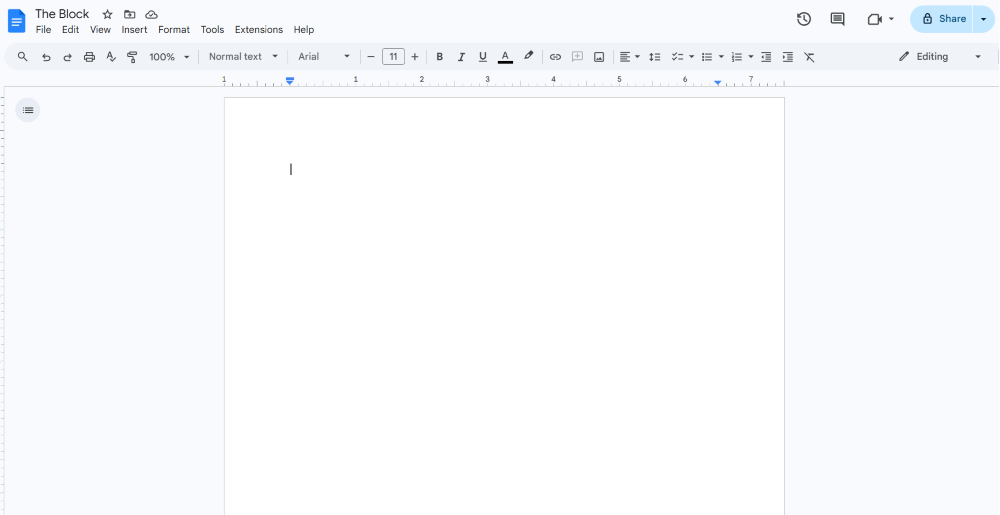
I don’t remember the first time writing scared me. But I remember the first time I noticed the fear. It was late—too late for a school night—and I was staring at a blinking cursor that seemed louder than the furnace kicking on in the basement. I had a half‑finished English assignment open, a mug of cold hot chocolate beside me, and a sinking feeling in my chest that I was supposed to be someone who could do this easily. Someone who could just… write. I couldn’t.
The cursor blinked again.
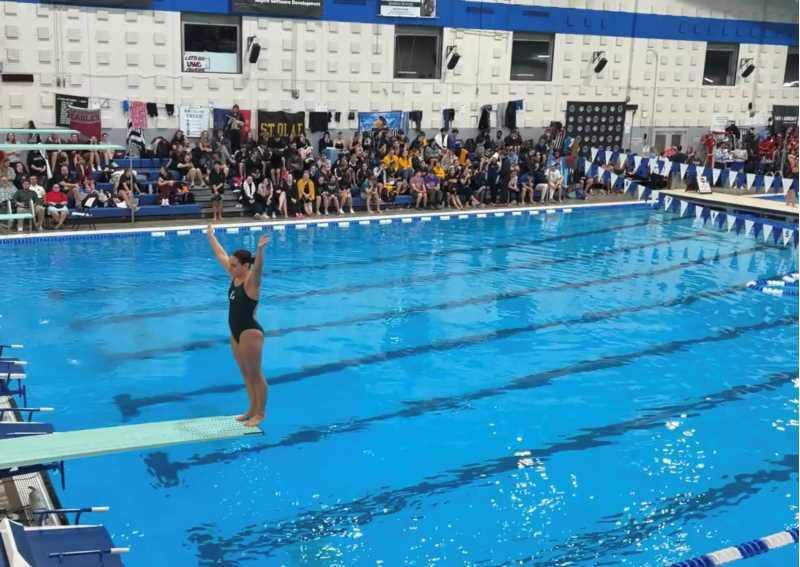
People talk about writer’s block like it’s a quirky inconvenience, like misplacing your keys or forgetting why you walked into a room. Mine has never felt like that. Mine feels like stepping up to the edge of a diving board and realizing, suddenly, that I’ve forgotten how to jump.
My hands hover over the keyboard.
My brain goes blank.
My breath shortens.
My shoulders tighten.
It’s not that I don’t have ideas. I have too many. They crowd the doorway, all trying to get out at once, and the pressure jams them in place. I freeze. I wait. I hope something will unclog itself.
It rarely does.
If I had to choose a moment when the block felt the loudest, when it felt like it swallowed the entire room, it would be the morning of the practice ACT writing test freshman year.
We were in the school’s meeting room, rows of desks spaced out like tiny islands in a sea of carpet. The proctor’s voice echoed off the walls as she read the instructions, but all I could hear was the clock.
Tick.
Tick.
Tick.
It was mounted high on the far wall, too small to see clearly from where I sat, but loud enough that each second that passed felt like a gong ringing in my ears. I remember gripping my leg so tightly my hand cramped before I even wrote a word.
“Begin.”
Everyone around me bent over their laptops immediately, keyboards furiously typed. I stared at the prompt. Then at the blank screen. Then at the clock.
Tick.
Tick.
Tick.
My mind didn’t just go blank, it went silent. Like someone had unplugged the power to the part of my brain that forms sentences. I tried to force something out, anything, but the harder I pushed, the more the words retreated. I wrote a sentence. Deleted it. Wrote another. Deleted that one too. Halfway through the test, I had written maybe four lines. Glancing around the room I could see a mess of paragraphs, some had five others had closer to eight, but there I was, stuck in the same place I always seemed to get stuck: the beginning.
Tick.
Tick.
Tick.
By the time the proctor called, “Five minutes,” I felt like I was drowning in the sound of that clock. I rushed the conclusion, knowing it wasn’t even close to what I wanted to say. When the test ended, I shut my laptop and felt a wave of exhaustion. Not from writing, but from fighting myself the entire time.
That day in the meeting room didn’t teach me anything new about writer’s block. It just confirmed what I already feared: that something in me jammed up when the stakes felt high, when the room felt too quiet, when the clock felt too loud.
There was another day in sophomore year when I sat in the library for an entire class period, pretending to revise an essay. I kept highlighting sentences, un-highlighting them, rewriting the same phrase three different ways. The clock ticked loudly in the corner of the room. My classmates typed confidently, or at least convincingly. I felt like an imposter in a room full of real writers.
When the bell rang, I had written exactly six new words.
I deleted three of them on the walk to my next class.
Nothing was magically getting fixed. If anything, the stakes felt as if they were growing bigger. But something shifted the day I had to email my English 10 teacher, about an assignment I didn’t understand. I stared at the blank email draft the same way I had stared at that practice ACT prompt. Same tight chest. Same buzzing anxiety.
I kept hearing the advice from my friends trying to calm me down the day before: be clear, be respectful, be concise. Before this talk I always felt awkward emailing teachers and asking questions, but the examples they used and how they talked me through it made it feel easier, almost like learning a new dialect of English.
I typed a greeting. Deleted it. Typed another.
Tick.
Tick.
Tick.
Even without a real clock, the pressure felt familiar. But eventually, I wrote the email. I read it out loud. I revised it. And then, after hovering over the send button for way too long, I clicked. The world didn’t end. He responded kindly. We met. He helped me understand the assignment. My stress dissolved. It wasn’t a dramatic moment, but it was a turning point. It was the first time I realized that literacy isn’t just reading and writing, it’s knowing how to advocate for yourself. It’s knowing how to communicate even when you’re scared you’ll sound stupid. It’s knowing that asking for help is not a sign of weakness but a sign of growth. That email didn’t cure my writer’s block. But it taught me how to move through it.
There are other moments, small, surprising ones, that remind me writing isn’t just a struggle. Like the time I scribbled a paragraph in the notes app while waiting for my ride after soccer practice, the sky turning cotton-candy pink above the parking lot. Or the night I wrote a whole page in one breath because a sentence finally clicked into place, like a puzzle piece I’d been turning the wrong way for weeks. Those moments don’t erase the block. But they complicate it. They remind me that the struggle is part of literacy, not a failure of it.
If I had to explain writer’s block to someone who’s never felt it, I’d say this: it’s not an absence of words. It’s an overflow. It’s standing in front of a dam you built yourself, knowing you’re the only one who can open the gate, and still not knowing how.
Sometimes I think the block comes from caring too much—about sounding smart, or original, or polished. About being the kind of writer teachers praise. About not disappointing myself.
Sometimes I think it comes from not caring enough. Most days, I’m not sure which is true.
Because of my experiences in the start of my adulthood, I’ve learned to write around the block instead of through it. To start in the middle of a story instead of the beginning. To write fragments, scenes, flashes—like Olympian Katie Ledecky remembering the feel of water before she remembers the race. I first read an excerpt from her memoir in my College Writing II class, and the way she lets her moments speak for themselves really stuck with me. I’ve learned that structure can wait. That beginnings don’t always need to be chronological to make sense.
I’ve learned that writing is less like building a perfect staircase and that the block doesn’t mean I’m not a writer. It means I’m a writer who feels deeply. Maybe too deeply. But deeply nonetheless.
Tonight, the cursor still blinks.
But I’m blinking back.
And for now, that feels like progress.