

Posted 2:39 p.m. Wednesday, Feb. 11, 2026
UWL professor receives prestigious national award for excellence in undergraduate education
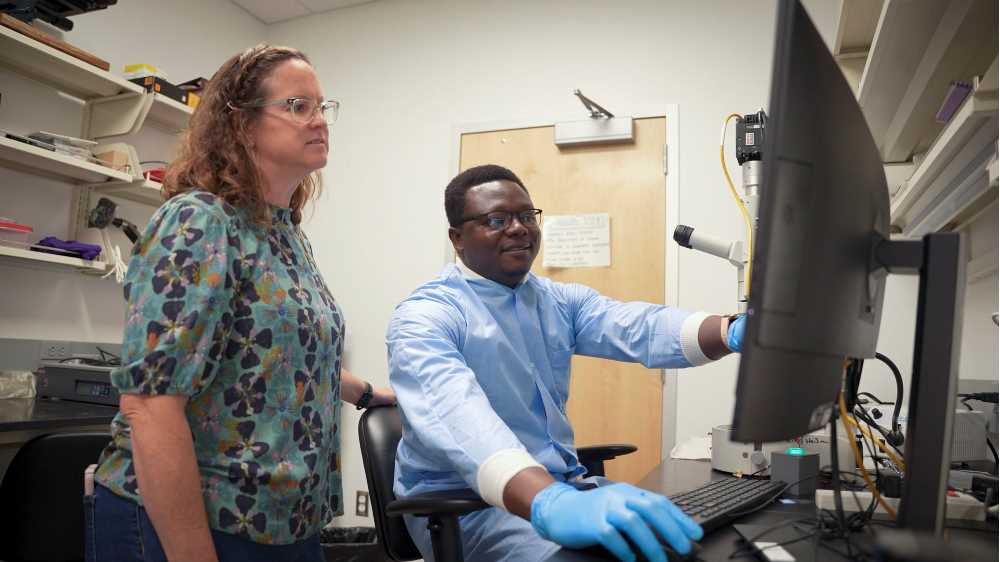
Students describe the passion you can hear in her voice, the energy you feel the moment you step into her biology lectures and labs, and her continual sense of awe at the complexity of the human body — despite teaching the subject for nearly two decades.
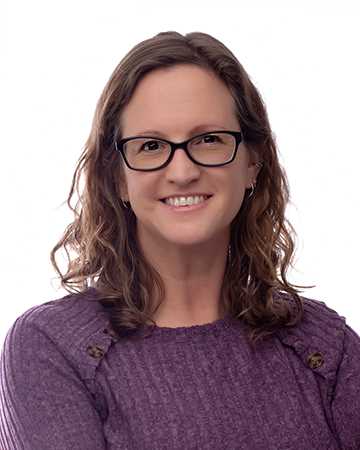
Those qualities have long made UW–La Crosse Biology Professor Tisha King-Heiden a standout teacher. Now, her ability to inspire and connect with undergraduate students — particularly in the field of toxicology — is earning national recognition.
King-Heiden will receive the Rekha Mehendale Undergraduate Educator Award in March 2026, a prestigious honor presented annually by the Society of Toxicology (SOT) to recognize outstanding contributions to undergraduate education in toxicology and toxicology-related areas. The award highlights educators whose work helps shape the future of the field.
Sponsored by the SOT Endowment Fund, the Rekha Mehendale Undergraduate Educator Award recognizes Society of Toxicology members who demonstrate a distinguished record of undergraduate teaching and who have made significant, lasting contributions to toxicology education, the study of how environmental contaminants affect living organisms.
Hooked on environmental toxicology
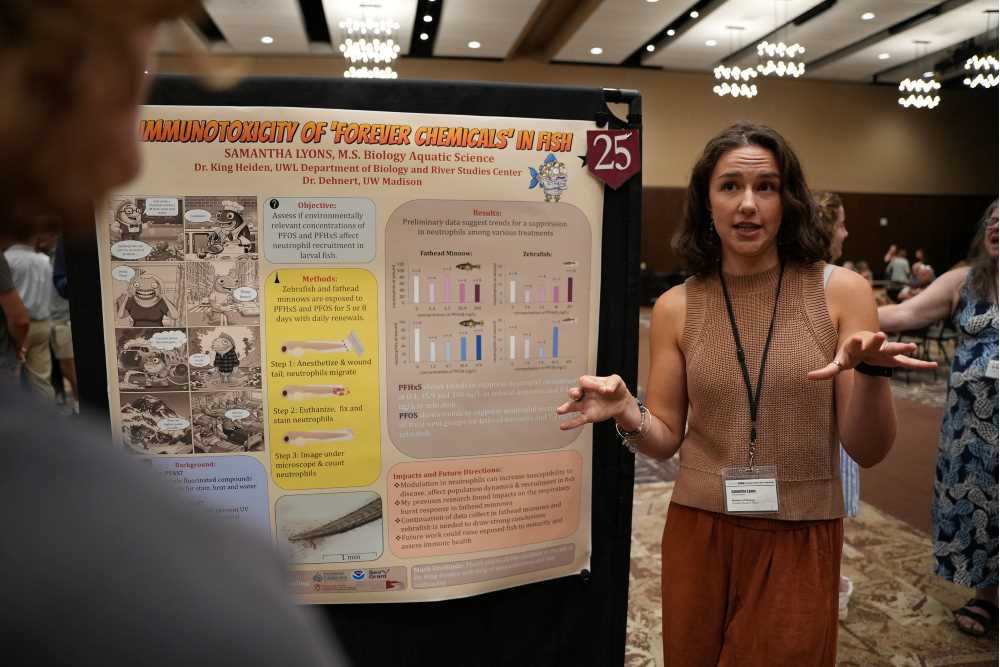
For Samantha Lyons, ’24, taking environmental toxicology with King-Heiden during her sophomore undergraduate year proved transformative. The course inspired Lyons to switch her major from radiation therapy to biology, allowing her to explore health “further upstream” — examining how pollutants impact human health.
“I had an interest in cancer, so realizing that there are factors outside of genetics that can affect our health was exciting for me to learn,” says Lyons. “It means there might be things we can do if we are aware of the health effects.”
Lyons, now a second-year graduate student in biology working in King-Heiden's lab, says she learned nearly everything she knows about environmental toxicology from her. “She makes the topics feel approachable,” says Lyons. “She lets you know you can do it and gives you the right tools to do it."
After graduation in May, Lyons has a job lined up in Madison working in a professional laboratory studying topics similar to what they study in King-Heiden’s lab. “I wouldn’t be where I am today without her insight and knowledge,” says Lyons.
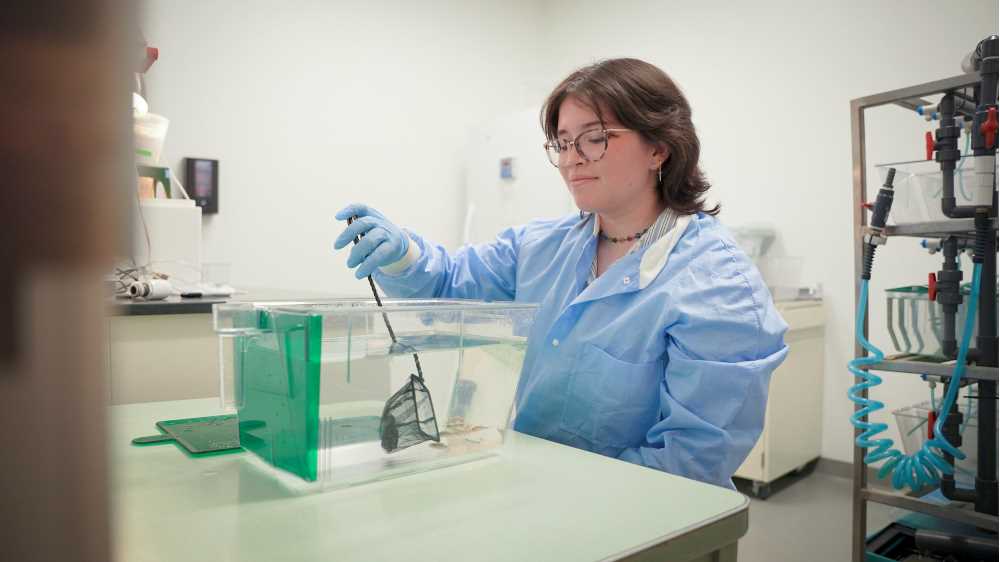
Other students echo that sentiment. Nadalee Thao, a sophomore chemistry major; JoAnn Breier, a junior biology major with a biomedical science concentration; and Carissa Maske, a senior microbiology major, all work in King-Heiden’s lab. They say she takes time to get to know students’ interests and career goals, and then helps find opportunities that align with them.
For Breier, a pre-physician assistant student, that meant focusing her research on the cardiovascular system in fish.
For Maske, who wants to go into food science, King-Heiden helped shape her research around how chemicals in the water impact fish populations and, ultimately, people on fish-based diets. She also helped Maske connect with a job opportunity in food science at Holmen Cheese.
“She is one of the professors I’m closest to on campus,” says Maske. “She is really supportive of your passions.”
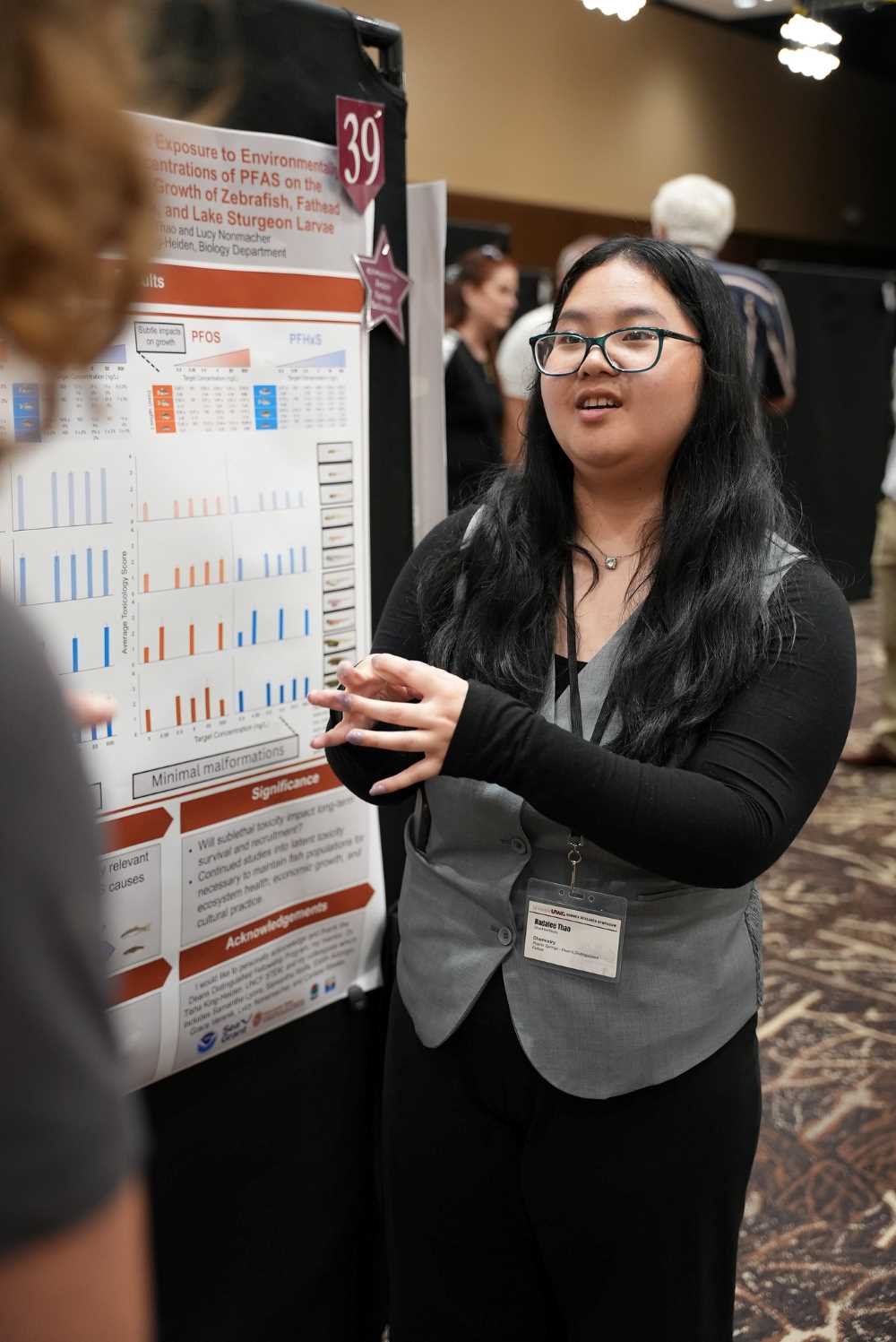
Thao says King-Heiden’s passion is especially evident when their scientific research can reach beyond academic walls.
“She is always thinking about how to reach a broader community — not just the science base,” says Thao.
King-Heiden says her goal as an educator has always been to empower the next generation of scientists by providing students with the tools and confidence to think critically about how the environment impacts wildlife and human health.
“Teaching is my passion, and I am so grateful for what I have learned from my amazing colleagues,” says King-Heiden.
King-Heiden teaches aquatic toxicology as well as an online, introductory water pollution course offered collaboratively across several Universities of Wisconsin campuses. She also integrates units on environmental contaminants into her comparative vertebrate endocrinology and Human Anatomy and Physiology II courses, helping students understand toxicology across biological systems.
“Tisha is an extraordinary teacher and scholar who represents the quality and passion inherent in individuals who place student education and enrichment at the center of their careers,” says UWL Provost Betsy Morgan.
Morgan recalls attending a summer research symposium with King-Heiden and her student researchers—an experience that offered insight into her approach as a mentor.
“As I listened to the chatter among the group, it became clear that Tisha had a strong relationship with each student and knew them as individuals as well as members of the team,” says Morgan. “They were supported as people, learners and researchers. It represented the type of mentorship atmosphere we know leads to the strongest outcomes and is the hallmark of Tisha’s approach to undergraduate education.”
This is not King-Heiden’s first recognition. Over the years, she has received numerous honors for her teaching, scholarship and service, including the 2023 Prairie Springs Environmental Leadership Award for Faculty, which recognizes innovative work promoting environmental education, conservation and restoration. The award is supported by Prairie Springs: The Paul Fleckenstein Trust.
King-Heiden has also recently secured grant funding from the Freshwater Collaborative of Wisconsin to develop a new field and laboratory course focused on water quality and aquatic toxicology, set to launch at UWL summer 2027. The course is part of a broader $2.4 million, six-year collaborative grant involving multiple Universities of Wisconsin institutions. The initiative aims to expand water-related education and research statewide through new academic programs, high school outreach, and enhanced internship opportunities for undergraduate students.
In addition to her teaching and research, King-Heiden is a leader in her professional field. She has served in multiple leadership roles on the Society of Environmental Toxicology and Chemistry–North America (SETAC-NA), including President-elect and as a member of the SETAC World Council. She also served as a member of the Health Professional Advisory Board for the International Joint Commission.
Together, her teaching excellence, mentorship, and leadership continue to shape the next generation — building the future of toxicology, one student at a time.
“My journey as an educator began with a desire to protect wild fish populations, and it continues through the successes of my students and the strength of the community I have found here at UWL,” says King-Heiden.