

Posted 3:46 p.m. Thursday, April 16, 2026
How a campus idea grew and became a 25-year Universities of Wisconsin tradition
It started, as many good ideas do, with a fresh perspective.
In the mid-1990s, a new generation of faculty arrived at UW–La Crosse. They were energetic, innovative and not especially interested in teaching the way it had always been done — a lecture hall, a piece of chalk and rows of students watching.
They shared the belief students learn best by doing.
And undergraduate research, they knew, was one of the best ways to make that happen.
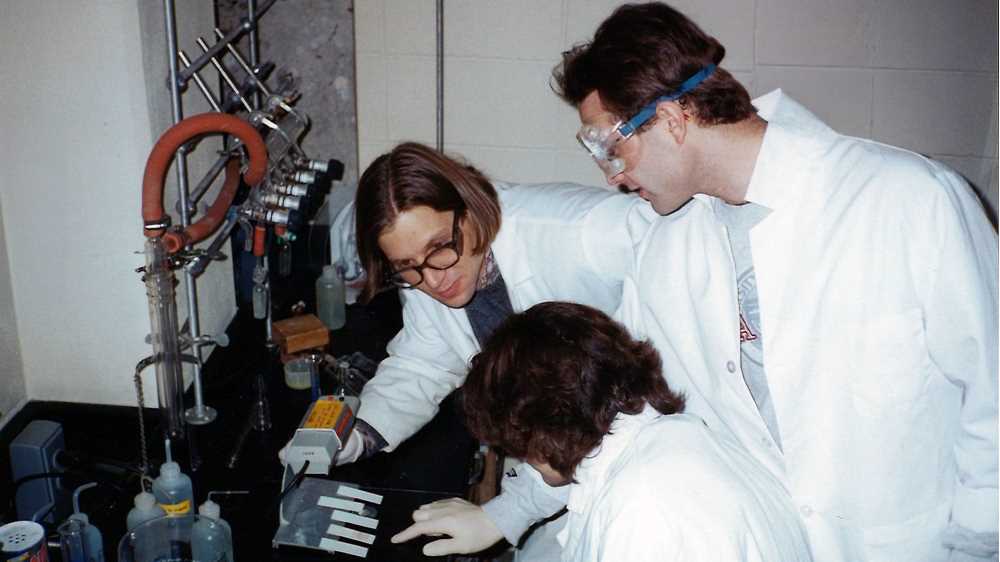
When Scott Cooper and Aaron Monte joined UWL in 1995, undergraduate research was already happening across campus — but in pockets. It wasn’t yet coordinated, widely visible or fully embedded in the student experience.
They saw the potential for something more: a campus where research wasn’t the exception, but the expectation.
Cooper began imagining what that idea could look like beyond a single campus. He proposed an “Olympics of undergraduate research” — a statewide event where students from across the Universities of Wisconsin could present their work, connect with peers and see themselves as part of a larger academic community. Modeled after the National Conference on Undergraduate Research, the goal was to create something that provided the same type of experience for students, but was accessible and affordable for more to attend.
The event would rotate from campus to campus, strengthening connections across the state.
The idea quickly took shape.
In 1999, UWL hosted the first Universities of Wisconsin Symposium for Undergraduate Research, Scholarly and Creative Activity, featuring 58 posters and 57 oral presentations.
More than 25 years later, the symposium has become a statewide tradition, traveling from campus to campus and drawing hundreds of student presenters each year.
This year, it returned to La Crosse — its original home — on Friday, May 1 at the UWL Student Union, with 325 students presenting from all 13 Universities of Wisconsin campuses. Over the years, the Universities of Wisconsin continues to be supportive of the tradition — helping to offset cost to keep it affordable for campuses.
“The fact that it is still going strong — and has now made a full lap around the state and started a second — says a lot,” Cooper says. “It’s always been a grassroots effort. There’s no single person in charge, which shows how much people value it and want to keep it going.”
Creating a research culture
While the symposium would eventually connect campuses statewide, its roots were firmly planted in changes already happening at UWL.
When Cooper and Monte arrived, they were part of a broader shift in higher education — one that recognized undergraduate research as a powerful tool for learning. For them, research wasn’t just about building lab skills. It was about learning how to think: asking questions, solving problems and working through uncertainty without a clear textbook answer.
It mirrored how they themselves had been trained — as apprentices, learning by doing.
“I grew up with an apprentice model,” Monte says. “Students learn from mentors and then begin designing their own experiments. You have to learn before you can create something new.”
They weren’t alone.
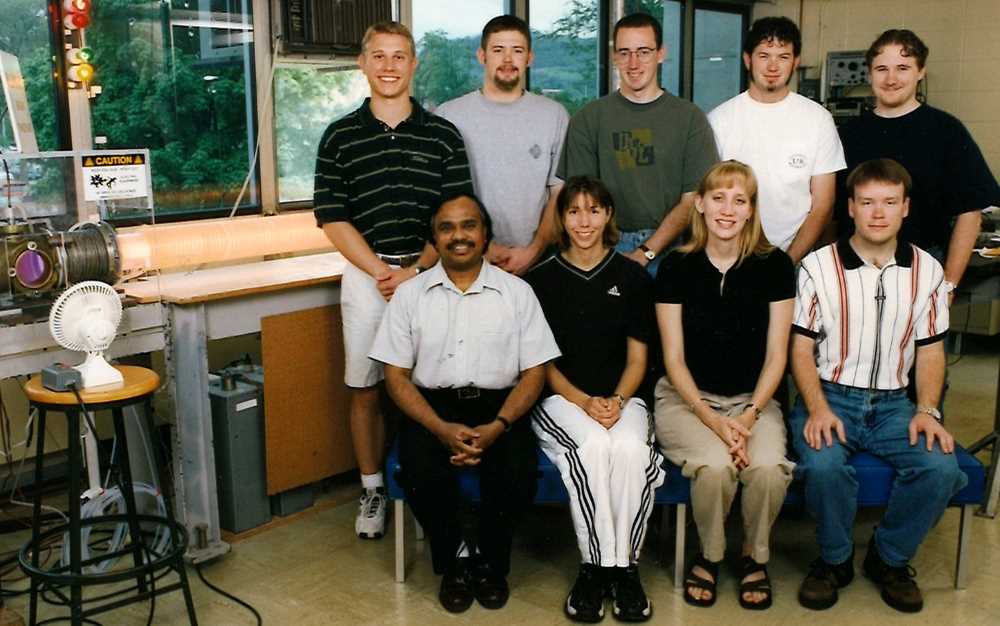
Across campus, faculty were already creating hands-on opportunities for students. In physics, Professor Gubbi Sudhakaran set up the university’s first experimental research lab in the Physics Department — a far-infrared laser spectroscopy system — for students to engage directly in physics research. The department went a step further, embedding research into the curriculum so students could earn course credit rather than squeezing it in on top of already full schedules.
The impact was evident. During the 1990s, the physics program grew from just five majors to around 100 — fueled in part by the appeal of undergraduate research.
“Undergraduate research was a great recruiting tool,” Sudhakaran says. “Parents would visit, and I’d show them the lab and say, ‘Your son or daughter will be working here.’ That made a big difference.”
These local efforts reflected a growing national movement. Since the early 1980s, organizations like the Council on Undergraduate Research had been advocating for student involvement in research. At UWL, interest built steadily through the 1980s before accelerating in the 1990s.
“By the mid-’90s, the impact of undergraduate research was really becoming clear,” says Ron Rada, former interim provost and faculty member.
With that momentum came structure.
Often described as the glue that held early undergraduate research efforts together, former Grants and Contracts Officer Bill Gresens helped bring structure to what had previously been informal. Around 1996, working with then-provost Leo Lambert, he helped establish a university-wide Undergraduate Research Committee made up of faculty committed to supporting student research. Their work created a more formal process for awarding grants and, importantly, signaled institutional support for undergraduate research.
At the same time, similar ideas were emerging from faculty across campus.
Monte, for example, was focused on finding ways to fund student research so undergraduates wouldn’t have to rely on unrelated summer jobs. Faculty were also feeling the strain of reviewing a growing number of undergraduate research proposals and saw the need for more dedicated oversight.
In 1996, the Faculty Senate Research and Grants Committee began reviewing undergraduate proposals alongside faculty projects. By 1998, a separate Undergraduate Research Committee was established to focus solely on student applications. The faculty-led committee and university-wide committee would eventually merge, reflecting the growing importance and volume of undergraduate research on campus.
“It was almost like something was in the air,” Gresens says. “Different people were coming together at the same time and saying, ‘This is something we need to do.’ And it worked out remarkably well.’”
That same year marked other visible milestones.
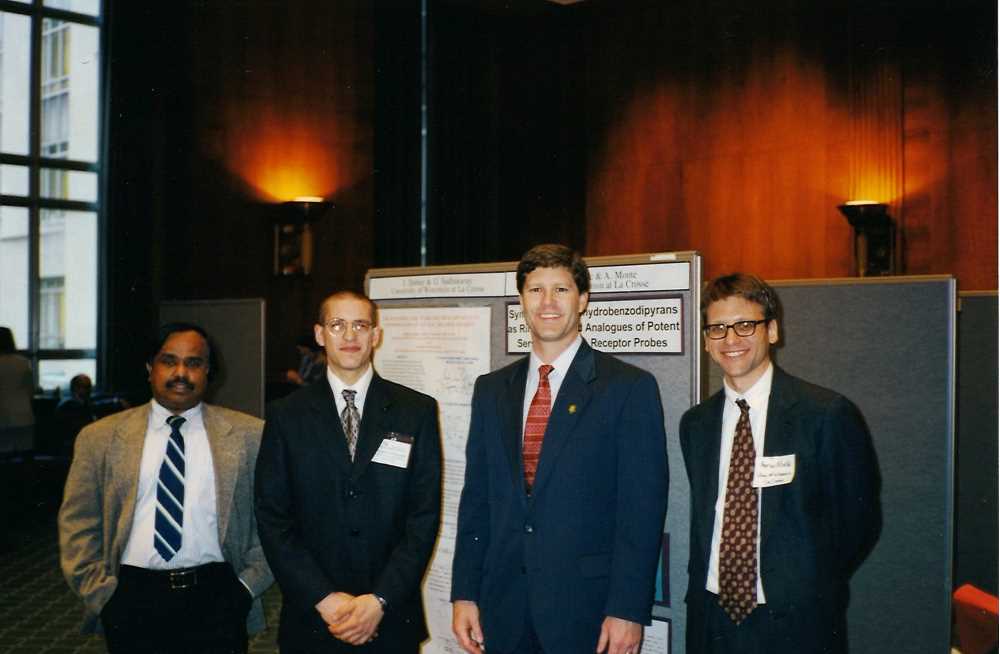
Monte coordinated the university’s first Undergraduate Research Day — an annual forum for students to present their work and the first “Journal of Undergraduate Research” was also launched, giving students a venue to publish their findings.
Monte compares the time to the artificial intelligence boom of today.
“There is this new thing out there and everyone is talking about it — some are curious and trying it and others are opposed, but either way change is coming.”
Not everyone was immediately convinced. Some faculty and staff questioned whether undergraduates were ready for research — or whether public presentations would be too demanding. Others preferred to maintain the status quo.
But the university moved forward.
A group of trusted innovators and thinkers across campus helped guide that change, building momentum that would shape UWL for decades to come.
“There were always folks around campus who wanted to try new things — they were not content to just maintain,” says Rada. “That is part of the sauce here at UWL. Every institution has its sauce. And that is ours.”
Leadership and momentum
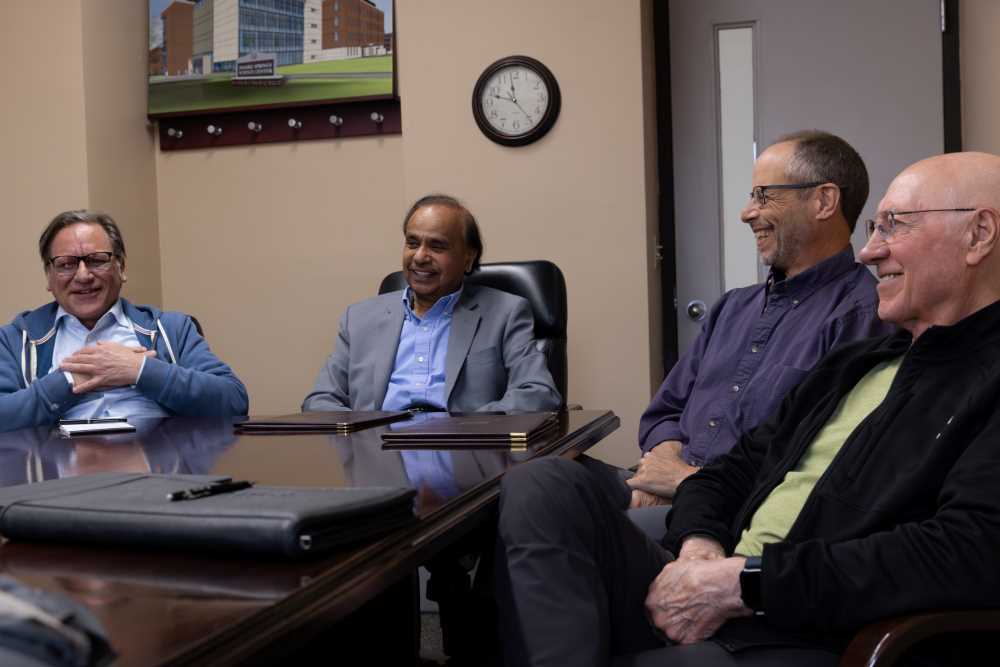
As faculty and staff efforts gained traction, university leadership helped turn momentum into lasting impact.
Administrators including Rada, Leo Lambert, and College of Science & Health Dean Mike Nelson recognized the value of undergraduate research and worked to expand opportunities.
When Nelson arrived at UWL in 1998, he came with a clear charge: grow undergraduate research.
He brought decades of experience — first as a student researcher, then as a faculty mentor, and later as president of the national Council on Undergraduate Research, where he advocated for undergraduate research across the country.
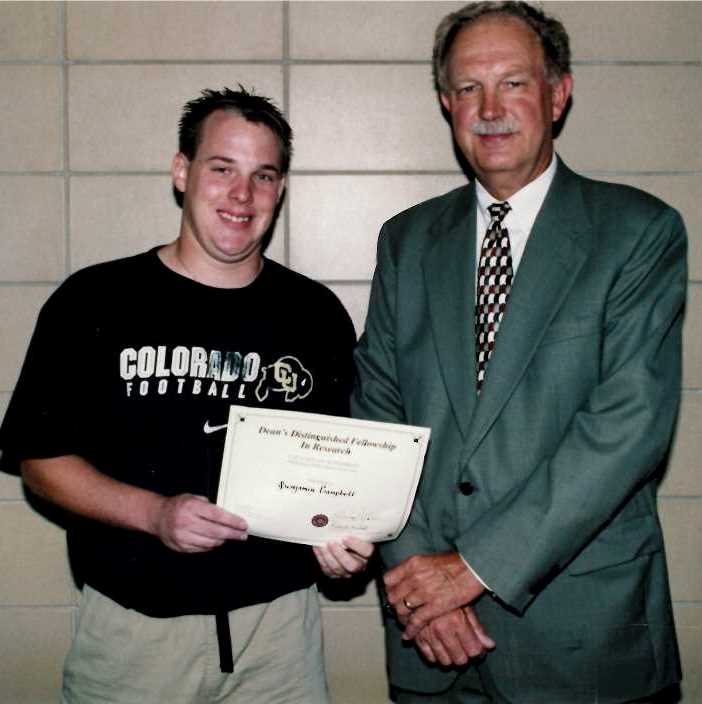
For Nelson, the value of research was best understood outside the classroom.
“They can sit in a classroom, and I can talk about dinosaurs all day,” says the former geology professor. “But when I took those students out in the field and had them do research, they understood it so much better.”
That hands-on experience, he says, gives students a meaningful head start — whether they pursue careers or graduate school.
At UWL, Nelson helped expand opportunities, including the Dean’s Distinguished Fellowship program — a summer research experience pairing students with faculty mentors and providing stipends. The program has grown from about 10 students in its first year to 35 today, with additional opportunities now available for graduate students.
His national connections also raised UWL’s profile. The university hosted the Council on Undergraduate Research conference in 2005, followed by the National Conference on Undergraduate Research in 2009 and again in 2013.
“Hosting conferences like this takes a tremendous amount of effort,” Rada says. “What stood out was the sense of purpose and pride people felt in being part of something bigger.”
For Nelson, the success was always collective.
“It all came together — not because of me, but because of the support I had from a core group of faculty and a supportive administration,” he says.
Building a statewide symposium
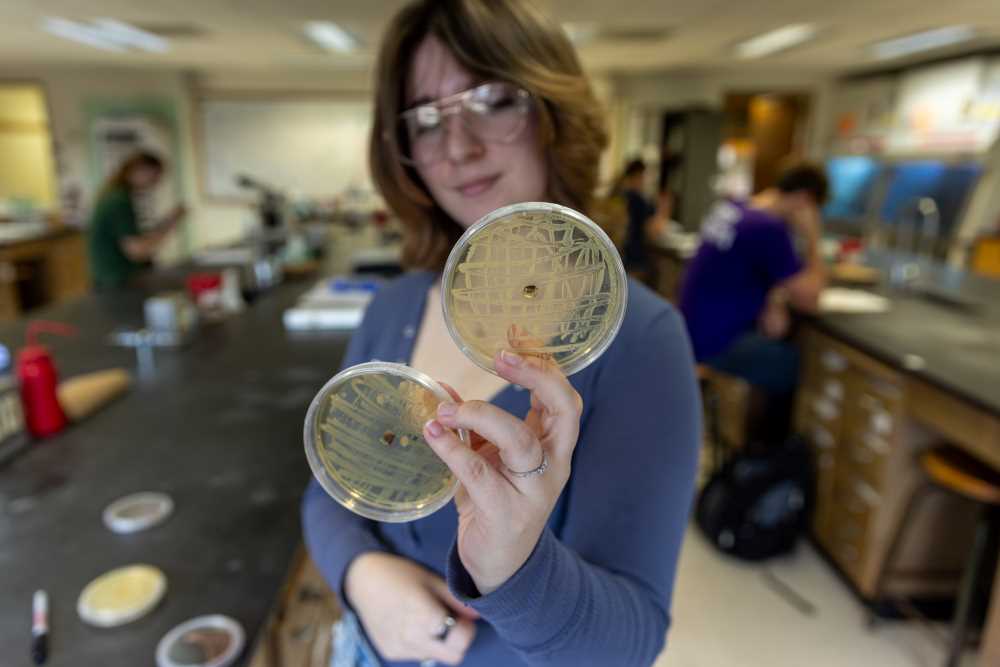
With a strong foundation on campus, faculty turned their attention outward — working to expand undergraduate research across the Universities of Wisconsin.
That effort included making the case to the UW System Board of Regents.
“I remember presenting to the Board of Regents,” Cooper recalls. “I was probably too young to realize how nervous I should have been.”
His argument was straightforward: national conferences were valuable, but often expensive and limited in access. A statewide symposium could offer a similar experience to far more students — at a fraction of the cost.
“It’s one thing to present on your own campus,” Cooper says. “But traveling to a conference makes it feel more real. You’re presenting to a broader audience and making new connections.”
The symposium quickly became more than a student showcase. It created a space for faculty and staff to connect, share ideas and strengthen undergraduate research programs across campuses.
“It became a focal point for undergraduate research in the state,” Cooper says. “Before Zoom, this was how we connected — we needed to be in the same room.”
It also helped spark new initiatives. The Wisconsin Council on Undergraduate Research (WisCUR), which now provides statewide leadership, traces its roots back to that first symposium in 1999.
Research today
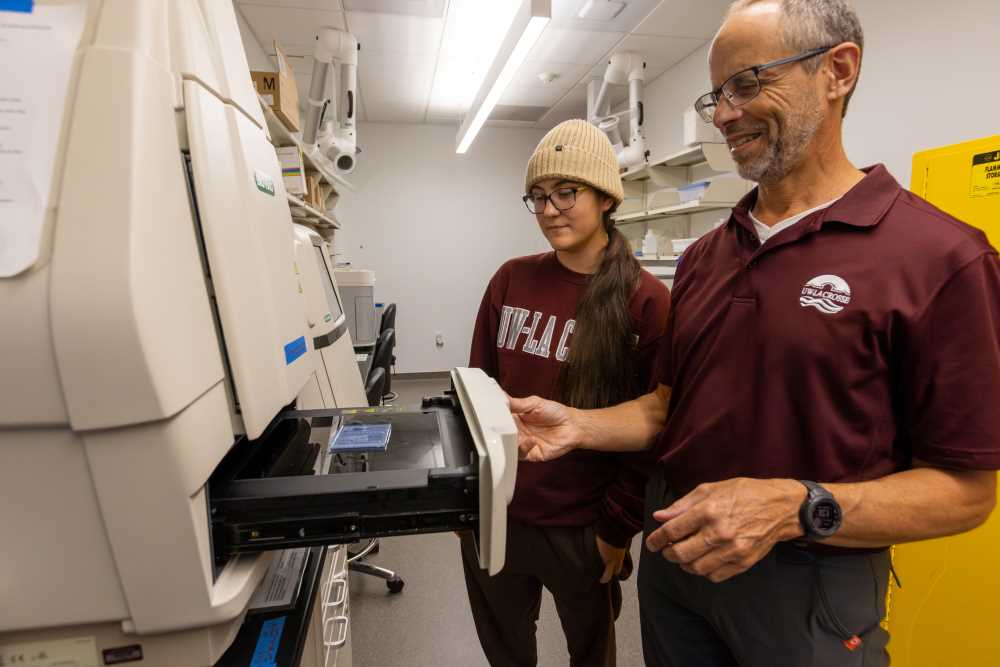
Today, undergraduate research is woven into the fabric of the UWL experience.
The university received national recognition with the Award for Undergraduate Research Accomplishments (AURA) in 2021, and students regularly present their work at regional and national conferences. In the College of Science & Health, involving students in research is now an expectation — even part of the faculty hiring process.
The high impact of undergraduate research has captured the interest of UWL alumni and friends, many of whom have philanthropically invested to support the program thereby greatly bolstering opportunities— such as Dean’s Distinguished Fellowships, undergraduate research grants and more. “Many see this as a way to invest in the future, truly making life-changing differences,” says Rada.
Since arriving at UWL, Monte says his single highest priority has been securing funding to ensure students can fully engage in meaningful research experiences.
“Although we continue to grow in many ways, financial support allows us to do far more,” Monte says. “We are deeply grateful to the many generous donors who help us attract and retain students, recognize their hard work, and make their path to graduation more productive, enjoyable and affordable, while providing essential, hands-on training skills.”
The symposium continues to play a central role in undergraduate research, giving students a platform to share their work, build confidence and gain meaningful experience.
When it returned to campus 25 years later, some of the people who helped build UWL’s undergraduate research culture were part of the moment — a full-circle reflection of how far it has come.
Nelson returned, just as he did last spring for the UWL Research & Creativity Symposium. Reflecting on today’s UWL student researchers, he is impressed.
“One of the things I figured out was that these students are a lot smarter than I ever was,” he says with a laugh. “But that makes you feel good — you know they are going to go on to be really successful.”
Read more about how research looks at UWL today with the growth of course-embedded research.