

Posted 7:57 a.m. Sunday, April 5, 2026
Student teachers share insights at national conference in Washington, D.C.
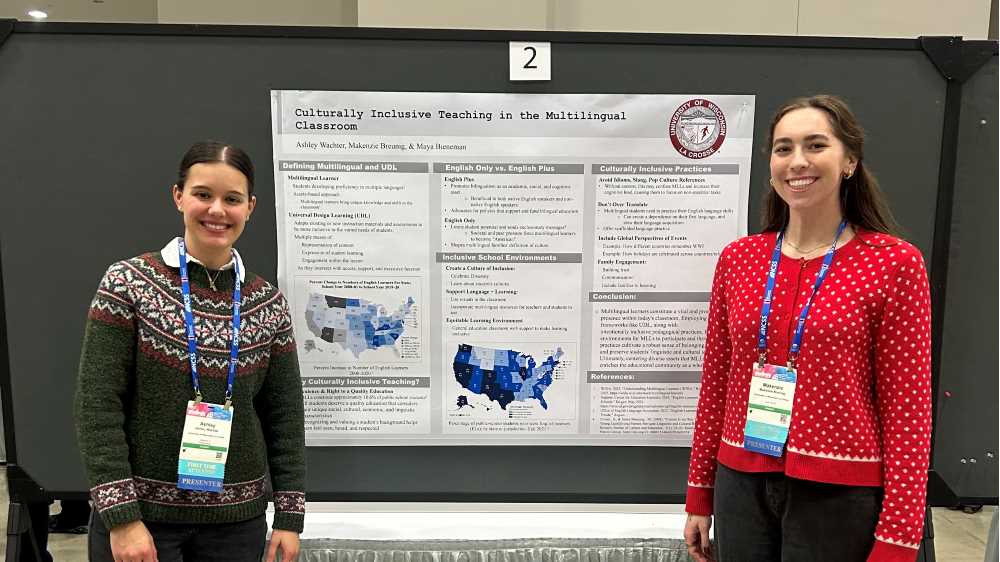
The next generation of educators is already making its mark. In December, School of Education student teachers presented their research in Washington, D.C.
Each year, members of the National Council for the Social Studies (NCSS) gather to provide professional development, share innovative teaching methods and network to strengthen civic education. Conference presenters can apply to share their original research, teaching tips and resources, or address important global topics such as civics and advocacy.
Taylor Hamblin and Dean Vesperman, professors in Broadfield Social Studies Education at UW-La Crosse, posed a question: What if UWL student teachers applied to present their research?
With encouragement, hard work and financial support from campus stakeholders — including the School of Education; the History Department; and the College of Arts, Social Sciences & Humanities Dean’s Office — seven pre-service social studies teachers submitted applications.
NCSS has a unique application process for pre-service teachers, with the goal of engaging teachers early in their careers. Vesperman says, of the research and presentations, “When students facilitate their own research, we know they are taking ownership in their learning, which will carry into the classroom.”
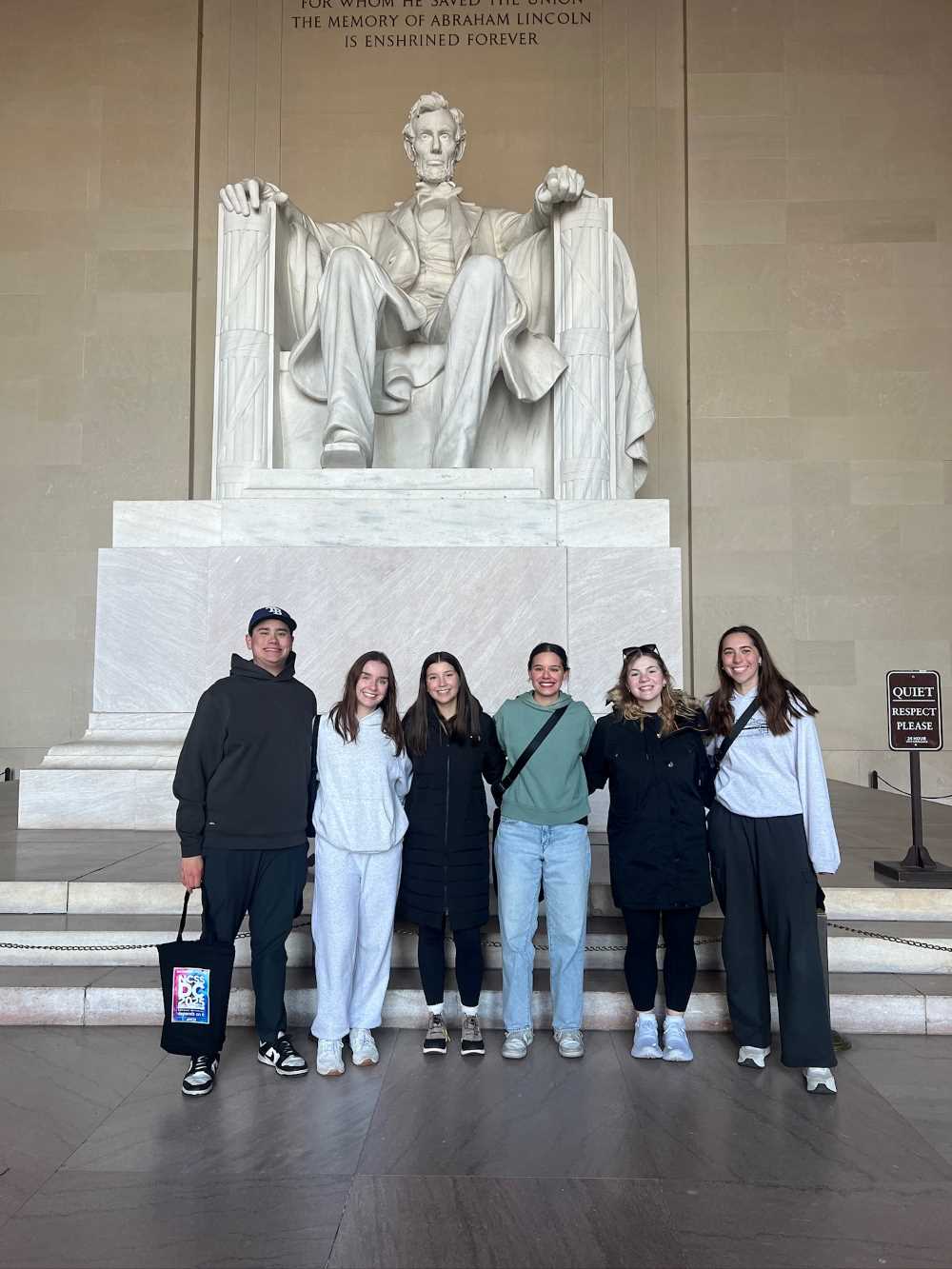
Vesperman accompanied the students: Abrielle Klawitter, Malina Reynolds, Gabi Cox, Ethan Michels, Mackenzie Breunig, and Ashley Wachter. Students worked in pairs and presented research that was completed in HIS 402, their topics ranging from teaching legal vocabulary to English language learners to culturally inclusive teaching. Student Terra Clark also attended, co-presenting with Vesperman on how to improve AI-generated lessons.
This once-in-a-lifetime opportunity left a lasting impression on the students, added to their teaching resumes and allowed them to explore a little of the city, too.
“Connecting with social studies educators across the country was an incredibly empowering experience for us as preservice teachers,” Klawitter says. “Their kind words and interest in our research reinforced why I became a teacher: to holistically support all students in their development towards citizenship in democracies.”