

Posted 3:46 p.m. Friday, April 3, 2026
Language programs connect students with culture and community
Language learning is often stereotyped as memorizing vocabulary and completing grammar worksheets.
But at UW-La Crosse language learning is designed to be far more immersive.
Students in the Department of Global Cultures and Languages practice real conversations with partners across the globe, travel abroad with faculty mentors, work with local communities, and even teach younger students about language and culture.
Beyond grammar, the goal is about developing intercultural competence — the ability to communicate across cultures, adapt to unfamiliar environments and understand perspectives shaped by different lived experiences.
All GCL courses —100- 400 levels — embed cultural content with real life scenarios and most faculty are international, sharing their stories and personalized perspectives from countries such as Cuba, Ecuador, Spain, China and Luxemburg, explains Omar Granados, department chair.
“I love learning a language,” says Grace Albee, a UWL Spanish student. “It makes you think in a different way, and it really opens up a whole new world of understanding people and connecting with them.”
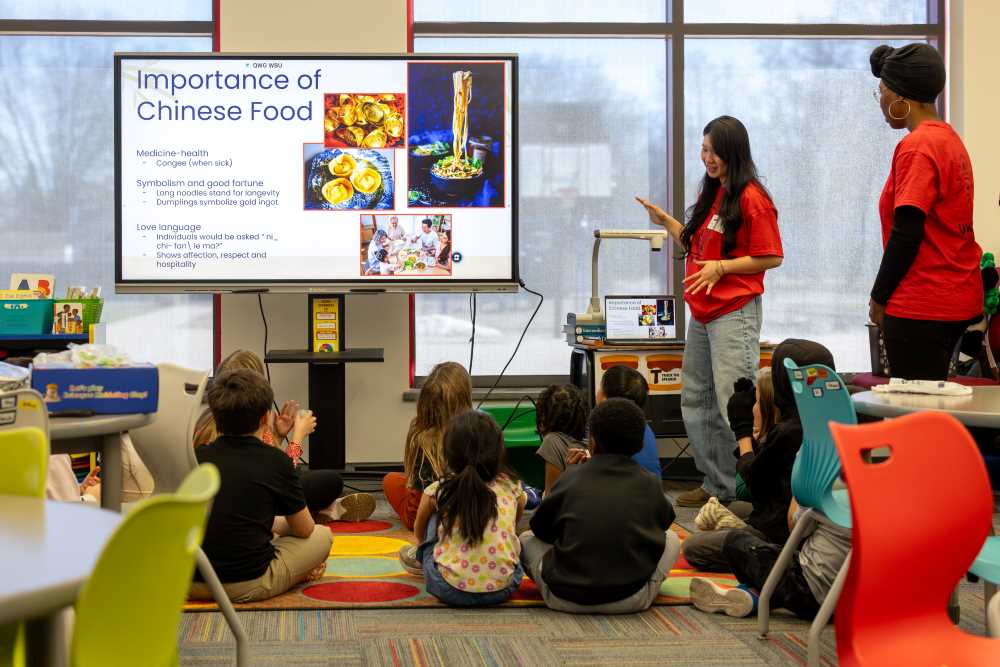
From innovative online speaking tools to virtual exchanges with students abroad, faculty-led study trips and community programs that introduce Chinese language to local elementary students, UWL’s language programs emphasize learning through experience.
“This is about learning to see the world from different perspectives,” says Granados. “No other discipline at UWL forces the student to think from the perspective of a cultural outsider — whether that person is an international individual or an immigrant — like the language classroom does.”
A new certificate in intercultural competence
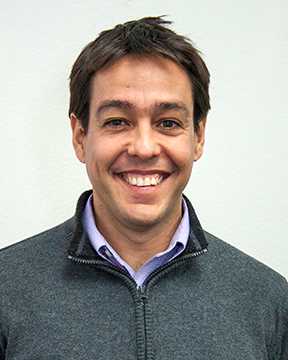
UWL is expanding that philosophy through a new Intercultural Competence Certificate, launching in fall 2026.
Designed to complement a wide range of majors, the certificate helps students develop the cultural awareness and communication skills that employers increasingly value. Unlike traditional language programs, many courses in the certificate are interdisciplinary and taught in English, making global learning accessible to students from any academic background.
The cornerstone course, GCL 100: Becoming a Global Citizen, introduces students to the practical skills needed to communicate and collaborate across cultures. Students complete the certificate with two additional elective courses that deepen those skills.
Granados says the certificate reflects the department’s evolving mission.
“Global Cultures and Languages is really a gateway to intercultural competence,” he explains. “Sometimes students say, ‘I tried a language and it wasn’t for me.’ And we tell them: this isn’t about language. It’s about learning how to think from different perspectives.”
Those skills matter across professions.
“What makes us a better nurse, a better doctor, a better professional?” Granados asks. “Empathy. Being able to understand people who may see the world differently than we do.”
For many students, intercultural learning happens through direct connections with people in other countries.
Albee participates in a virtual language exchange with a student in Peru. Each week, they meet online for about 60 minutes — half the time speaking English and half speaking Spanish.
“You can talk about whatever you want. It’s made me more confident in my Spanish, but it’s also been really fun learning about life in Peru,” says Albee.
Experiences like these allow students to practice language in real conversations while gaining insight into daily life in another culture.
Chinese Studies in elementary schools
While UWL students are building advanced language skills, the university is also helping introduce global learning to younger students in the La Crosse community.
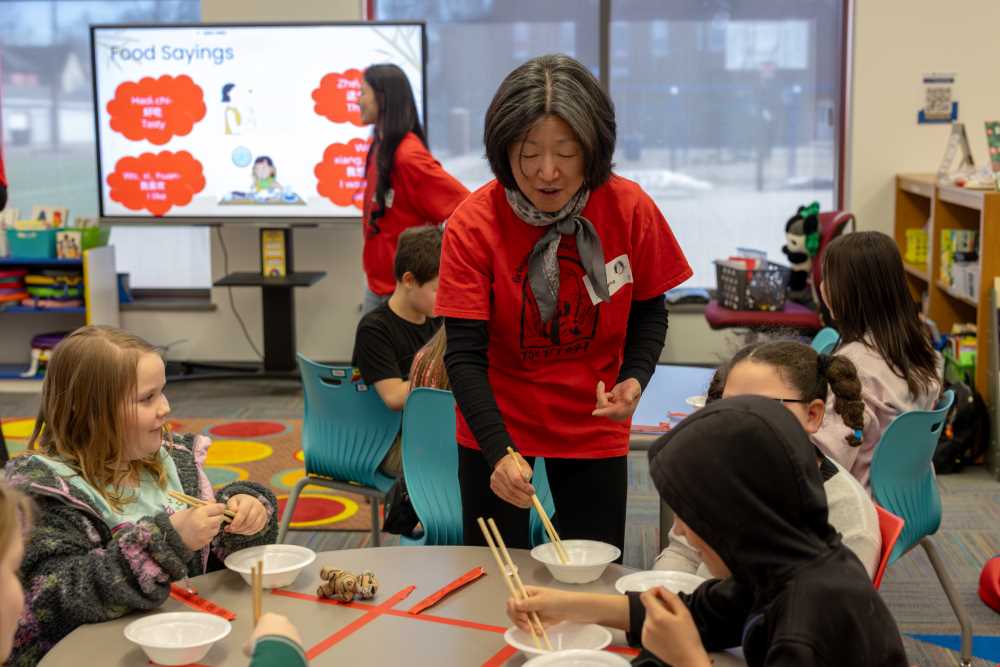
In January, the Chinese Studies program launched after-school Chinese Clubs at two local elementary schools. UWL students help lead the clubs, guiding elementary students through engaging games and activities to learn the Chinese language and culture.
“My students benefit from leading these sessions because they do a lot of discussion, collaboration and planning beforehand and reflect on the sessions afterward,” says Hongying Xu, associate professor of Chinese Studies. “It’s experiential learning through community service.”
A majority of UWL students, nearly 90 % in a student survey, believed that they were able to practice soft skills to a large extent through the after school program — especially skills like collaboration, leadership, critical thinking, problems solving and their understanding of diversity, and inclusion.
Teachers say the response has been enthusiastic, with students eager to attend each week and excited to share new words and cultural discoveries with their families.
Based on survey responses from parents in the program, kids are talking about Chinese Studies students’ visits a lot at home, feel the topics are interesting, activities are fun and easy to understand. They would also like more programming in the future.
“In my opinion, to expose children to different cultures, including languages, at an early age can definitely open up their view of the world, and inspire their curiosity to explore different parts of the world, with a positive attitude and an open mind,” says Xu.
Spanish programs connect language to careers
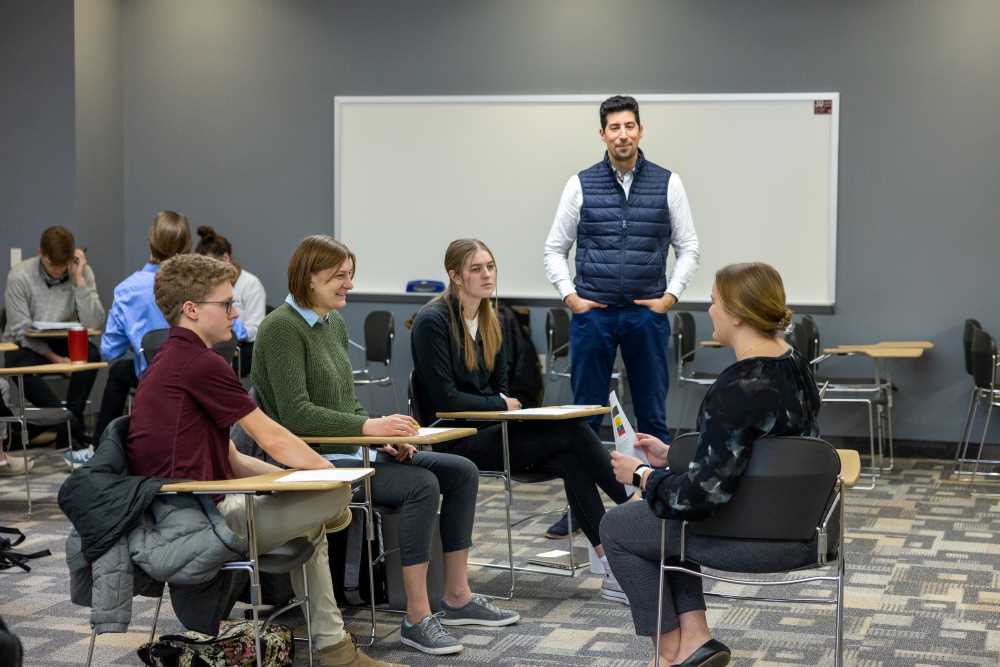
Spanish programs at UWL are also expanding opportunities for students to apply language skills in professional settings.
Two growing certificates — Spanish for Health Professions and Spanish for Business & Organizations — allow students in any major to combine language skills with career preparation.
With Spanish being the second most spoken language in the United States, the certificates provide valuable preparation for careers in fields such as healthcare, social services and business.
Intercultural competence is essential to understanding medical conditions in immigrant populations, but it is often lacking in the U.S healthcare system, explains Granados.
“Many conditions are treated ‘the U.S traditional way’ without really understanding how cultural believes impact what a patient might be going through or how much they trust the provider," he says.
Courses simulate real workplace communication scenarios while emphasizing nationally recognized professional competencies such as communication, teamwork and cultural awareness.
Students in the Spanish for Health Professions Certificate also practice interpersonal skills that are essential for graduate school and professional programs, including cultural competence, oral communication and patient interaction.
French students learn through applied projects
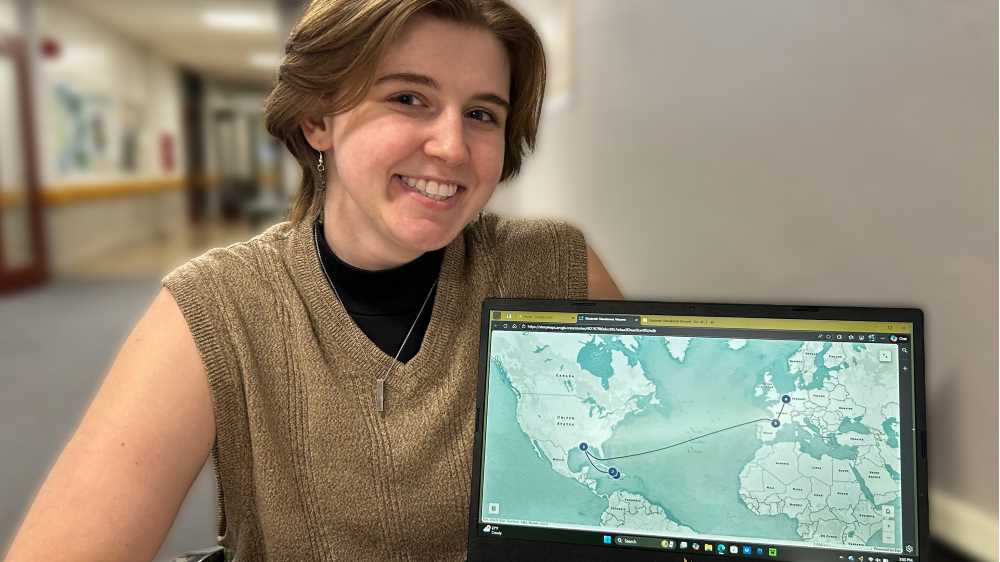
French courses regularly incorporate cultural media, contemporary global issues, and community engagement projects that help students see how language connects to everyday life around the world.
In FRE 320: Global French Cultures: Past, Present and Future, students created interactive digital maps documenting journeys from across the Francophone world. The projects combined text, images and video to tell stories of migration while helping students understand the historical and cultural forces that shape those journeys.
“The beauty of using this platform is that students can trace geographical migration patterns and make these journeys more tangible,” says Dany Jacob, assistant professor of Global Cultures & Languages.
Students selected real or research-based migration stories and built interactive maps that followed individuals traveling across countries and continents. Along the way, they examined the challenges migrants often face — from navigating borders and identity changes to enduring incarceration, theft or long stretches without shelter.
To deepen the storytelling, students also wrote simulated letters from the perspective of their subjects and created physical artifacts representing objects migrants might have carried during their journeys.
For students, the project turns language learning into an opportunity to explore global history and human resilience.
“This project creates a better understanding of the world and the struggles people face,” says Bastien Janiak, a UWL junior majoring in archaeology with minors in French and linguistics.
Program success in Russian Studies
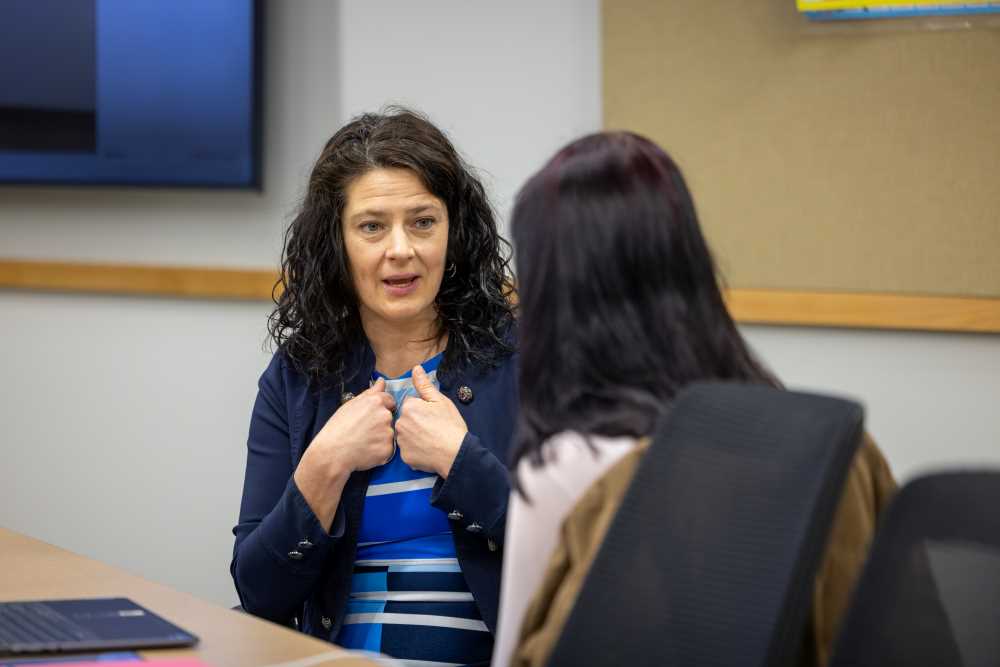
While UWL language programs emphasize cultural engagement, they also deliver strong results in language proficiency.
Students in the Russian Studies program consistently achieve high levels of fluency. Since May 2023, more than 90% of students have passed the nationally recognized STAMP 4S language proficiency exam by the end of the six-semester program.
To pass, students must score at least Intermediate-Mid in reading, writing, listening and speaking.
That achievement qualifies students for the Global Seal of Biliteracy, an internationally recognized credential verifying proficiency in two languages.
Many students reach that benchmark early. Of the 40 students who have taken the test since 2023, one quarter passed ahead of schedule — some as many as three semesters early.
The results reflect the program’s emphasis on communication, collaboration and building confidence through real-world practice.
Study abroad brings learning to life
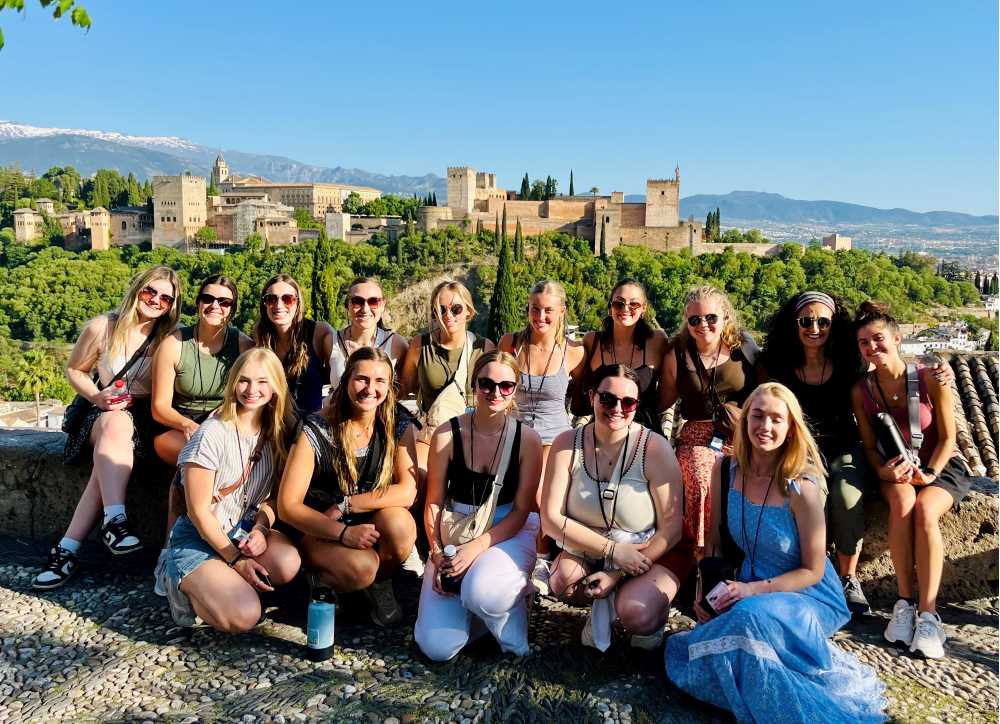
For many students, the most transformative language learning happens abroad.
UWL offers faculty-led programs in destinations such as Spain, Ecuador and China, as well as new opportunities tied to global business and cultural exchange.
This summer, Spanish professor Antonio Martín Gómez will lead a program in Ecuador focused on health and culture. Students will visit Indigenous communities and learn about traditional medicine and midwifery practices.
Granados also leads a January program to Panama and Colombia focused on global trade and intercultural competence for students interested in exploring business and international relations.
Another long-running program in Granada, Spain allows students to travel with classmates and faculty they already know, creating a supportive environment for cultural immersion.
“Going abroad with faculty makes the experience feel more personal,” Granados says. “Students feel supported, but they also gain independence.”
Students often return with new confidence after navigating daily life in another country — learning to use public transportation, communicate with host families, and adapt to unfamiliar environments.
“One thing I hear from students returning from abroad is how much independence and life-skills growth they experienced,” Granados says. “It changes how they see the world.”
Whether through international travel, virtual exchanges, community partnerships or interdisciplinary coursework, UWL’s Global Cultures and Languages programs emphasize learning through experience.
The goal is not simply to learn another language — but to develop the perspective and adaptability needed to thrive in an increasingly interconnected world.
Learn more about Education Abroad/Away programs
Attend an International Education & Engagement (IEE) Abroad 101 Session (offered three times per week during the semester) or visit International Education webpage to start to exploring.