

Posted 11:18 a.m. Tuesday, Dec. 2, 2025
Students explore the complex, global history of chocolate from Mesoamerica to today
When you think of chocolate, what comes to mind?
A creamy bite of a Hershey bar? A decadent layered dessert? Perhaps the whimsical world of Willy Wonka?
Those are the kinds of responses History Professor Gita Pai hears on the first day of her World History 110 course — a class built entirely around the history of chocolate. It’s a course that fills quickly every time it’s offered, thanks in part to the irresistible topic.
“Why try and study something I have no interest in when I can learn about something as globally known and loved as chocolate?” says UWL sophomore Max Wilkens, a finance major.
But Wilkens and his classmates soon discover that beneath chocolate’s sweet exterior lies a complex and often darker global past. When Pai asks the same opening question eight weeks into the semester, students use words like currency, exploitation, medicinal value, slavery and Mesoamerica.
“It goes from this basic, American view to a much more global understanding,” Pai says. “My goal in all history courses is to open students’ eyes and broaden their perspective.”
Students learn that chocolate’s story spans thousands of years. Cacao residue appears on pottery from ancient Olmec, Maya and Aztec civilizations in Mexico and Central America. In Mesoamerica, chocolate held immense value — serving as currency, a sacred food and drink of the gods, and a marker of wealth and status.
“There is a lot of history I didn’t know at all going into this class,” says sophomore Andrew Smerz. “I’ve learned a lot … things I never would have imagined.”
Smerz says it was especially interesting to see how ideas about chocolate changed over time, including debates over its health benefits. Its use as a medicinal substance resurfaces repeatedly in history, including in the 17th century when physicians widely promoted it as a cure-all.
Ultimately, he says, the course has changed how he thinks about everyday foods.
“Look at all the places where they grow chocolate — their lifestyles revolve around harvesting it, and how they perceive it is different than how we see it,” he says. “We’re just the consumers. That has stood out to me.”
For Wilkens, the biggest revelation was chocolate’s deep connections to global power and economics.
“I never knew it was held so highly as an item of power, then converted into more of an economic opportunity as scarcity decreased,” he says.
Uncovering La Crosse’s chocolate past
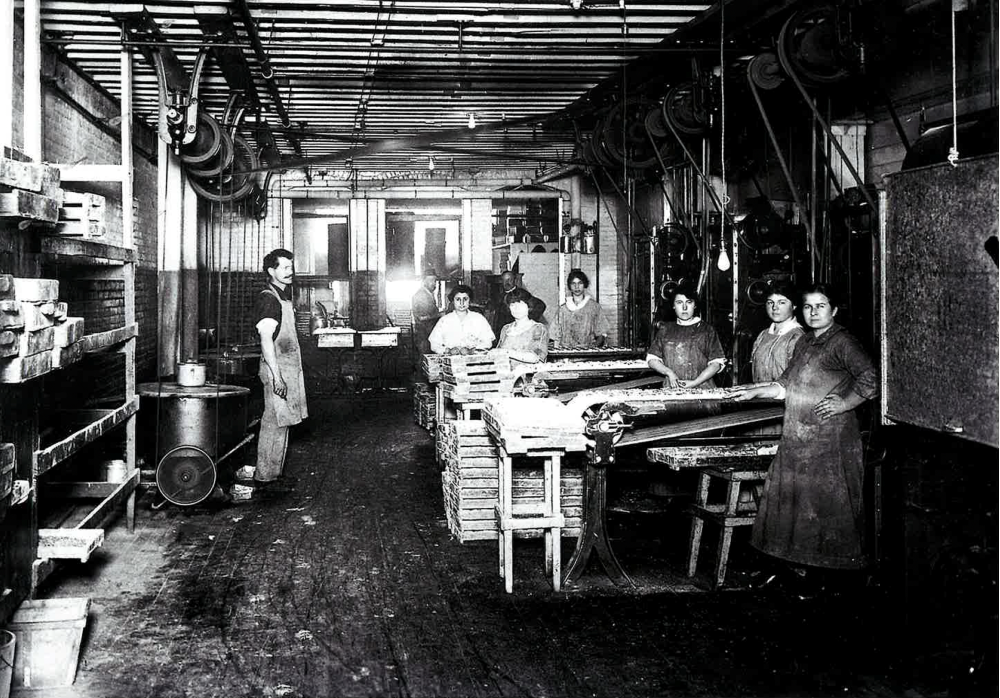
Most recently, students have turned their attention to La Crosse’s own chocolate history by examining 100-year-old artifacts — advertisements, receipts, maps, photographs, newspaper clippings and original candy box wrappers — from the former Funke Candy Factory. Despite its small-town location near Riverside Park, Funke’s chocolates were wildly popular and widely available throughout the country during the 1920s. With the Great Depression, the company declined, and its downtown building now houses the Charmant Hotel.
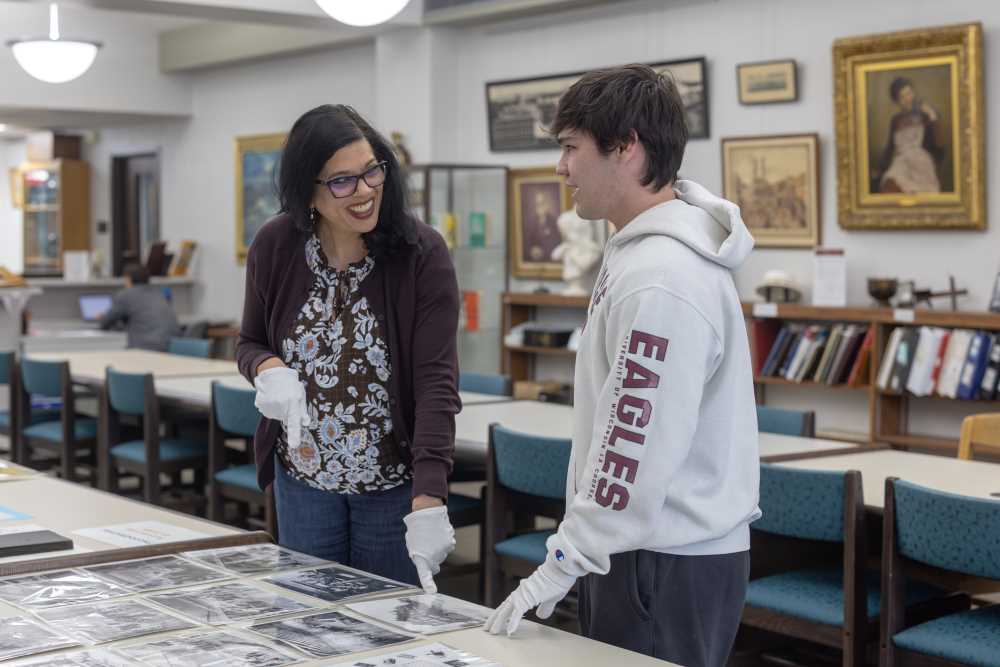
To complete the project, students visit the Murphy Library Special Collections and Area Research Center, where they work hands-on with these primary sources. In addition to learning about chocolate, they gain insight into how historians conduct research, analyze evidence, and build meaning from archival materials, explains Laura Godden, assistant professor at Murphy Library, who assists with the project.
“The project feels organic because we are using research from archives, not online, which gives it a unique feel and sense of authenticity,” Wilkens says.
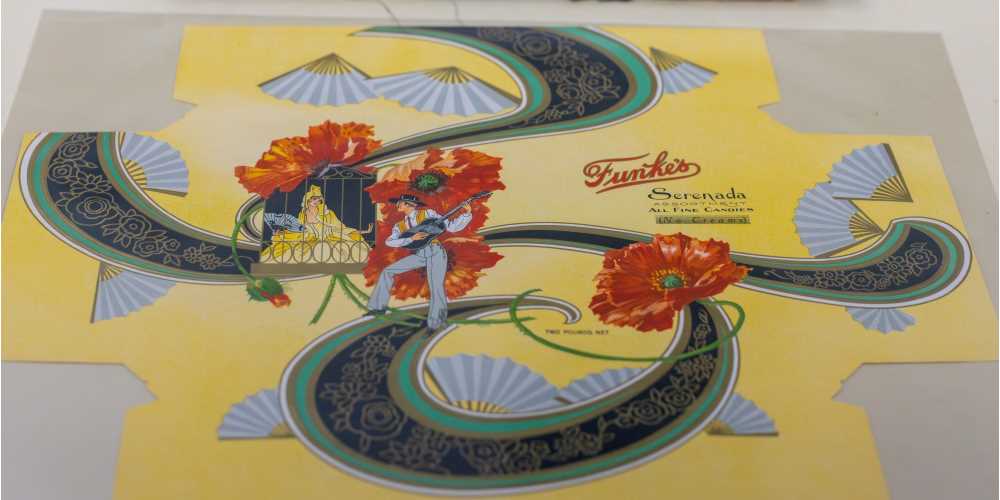
Pai says she designs assignments that push students beyond traditional reading and writing. This project challenges them to examine real objects and create their own interpretations.
“I want them to see that history is more than names and dates,” she says. “To look at what is available locally — what is down the street — and realize La Crosse was part of that world history.”
Smerz says exploring Funke’s history made the past feel surprisingly close.
“It is interesting how Funke was right here in La Crosse, and it wasn’t that long ago,” he says.
For many students, connecting a lesser-known city like La Crosse to global historical themes is eye-opening, Godden adds.
“One of my favorite things about activities like this is that it helps show students that the place they are is part of a larger history — and therefore, by extension, they are, too,” says Godden.