Preparing students for a changing world
New CASSH Dean Marie Moeller aims to connect classrooms, careers and communities
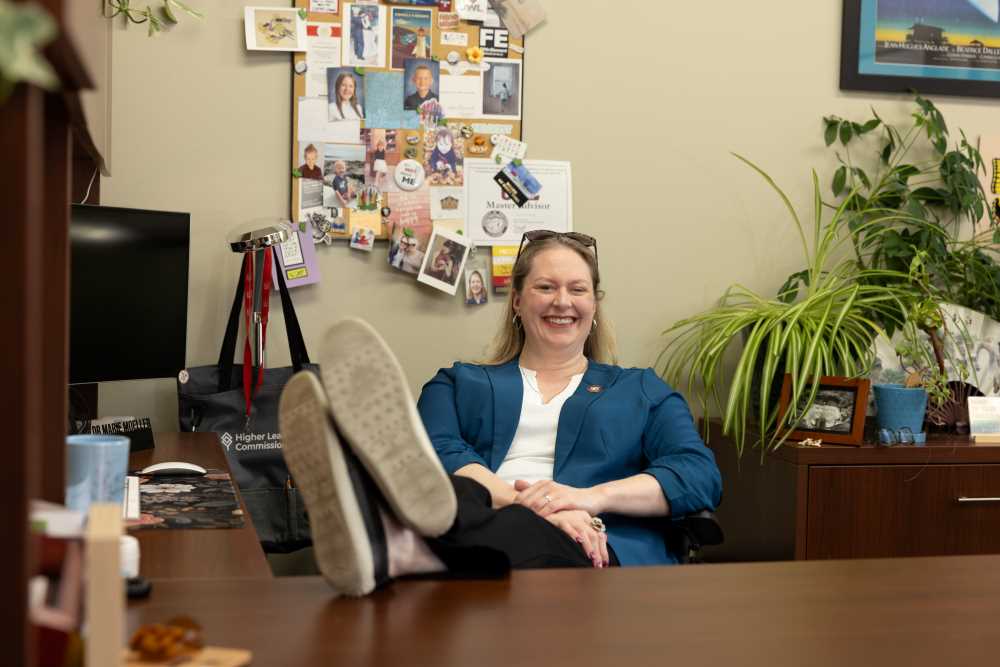
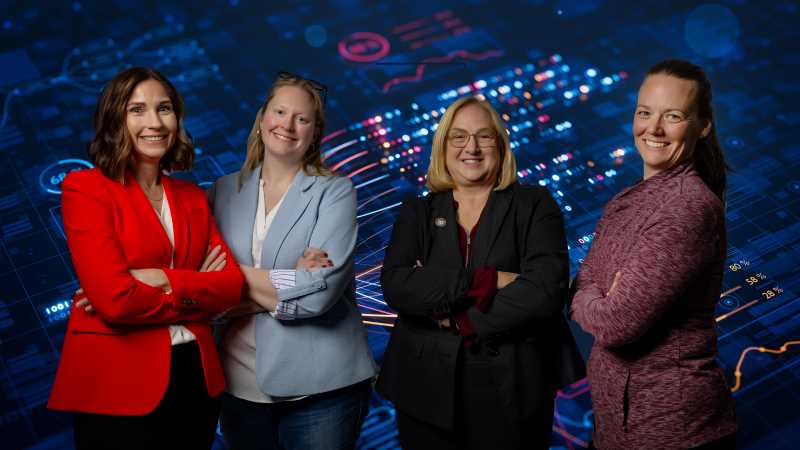
New CASSH Dean Marie Moeller looks to strengthen interdisciplinary learning, career connections and the college’s role in helping students understand the human experience in a rapidly changing world.
Posted 12:51 p.m. Thursday, Nov. 12, 2026
With artificial intelligence reshaping how we work and interact, and social challenges growing more complex, Marie Moeller believes one thing is becoming clearer: Understanding what it means to be human has never been more important.
That belief will help guide Moeller as she takes the reins as dean of the UW-La Crosse’s College of Arts, Social Sciences & Humanities (CASSH), following eight years as the college’s associate dean.
“At its core, the College of Arts, Social Sciences & Humanities is about understanding the human experience — how we think, create, communicate, connect, organize our societies, understand our histories and imagine our futures,” Moeller says. “I believe that mission has never been more important.”
A UWL faculty member since 2010, Moeller brings a deep understanding of the college, its students and its mission to her new role.
She holds a Ph.D. in English from Illinois State University, with emphases in technical communication, online pedagogy, and disability and gender studies. Her teaching has focused primarily on technical communication, including workplace writing, grant writing, risk communication and feminist rhetorics.
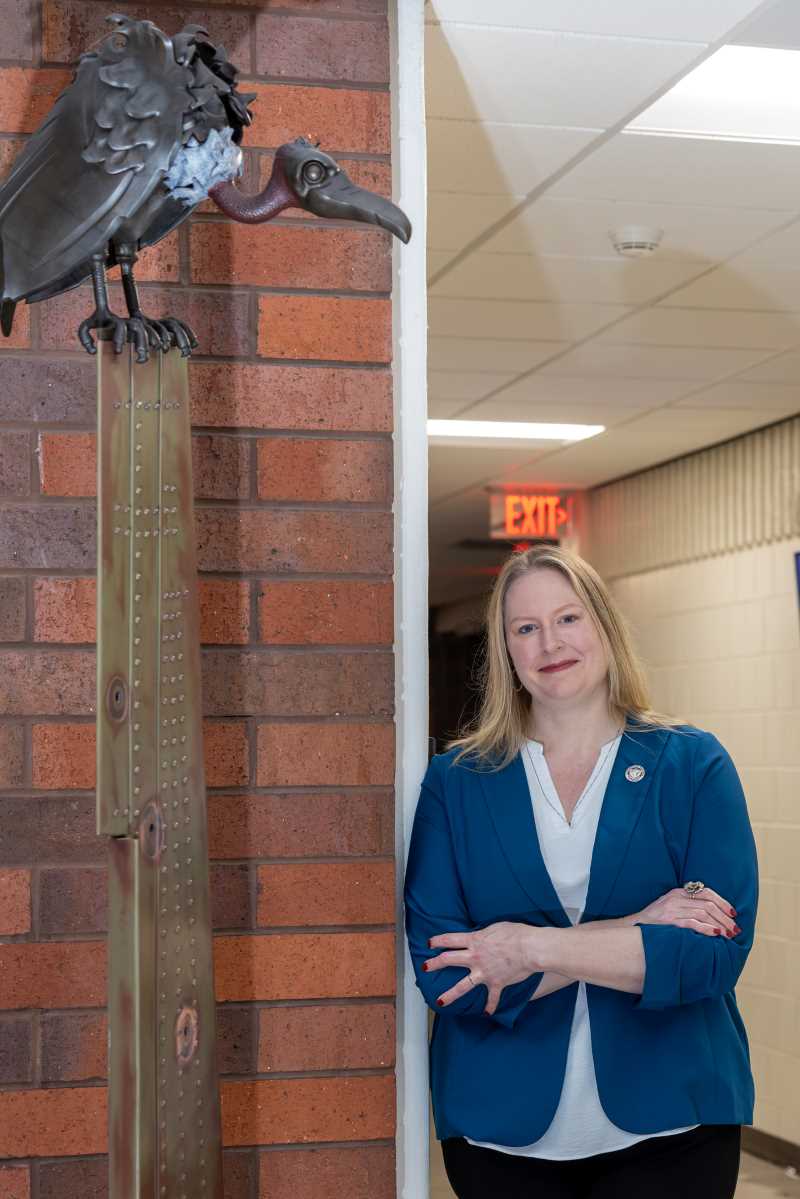
Now, Moeller is looking ahead, with a vision for a college that prepares students not only for careers, but also for meaningful lives and engaged citizenship in a rapidly changing world.
“Knowledge and expertise are important, but they’re only part of what prepares graduates for citizenry and the future,” she says. “We need people who can think critically, exercise sound judgment, understand different perspectives, navigate ambiguity, appreciate creativity and recognize the human consequences of the decisions we make.”
In the years ahead, Moeller hopes to strengthen student experiences by expanding experiential and interdisciplinary learning, and by building stronger connections among students, faculty, alumni and community partners.
Moeller also seeks to help students and the broader public better understand how a CASSH degree can open doors to a wide range of professional opportunities.
One initiative aimed at advancing that goal is Careers in CASSH, a new collaboration with the La Crosse Area Chamber of Commerce. The series will feature one event each semester, connecting students with regional professionals who can demonstrate how a CASSH education translates into careers and community engagement.
“Careers in CASSH is about helping students connect that rich educational experience with the possibilities available to them beyond graduation,” Moeller says.
In addition to increasing understanding of possible careers in CASSH, the initiative will create opportunities for stronger partnerships with alumni, employers and career services, along with expanded mentorship, internships and professional exploration.
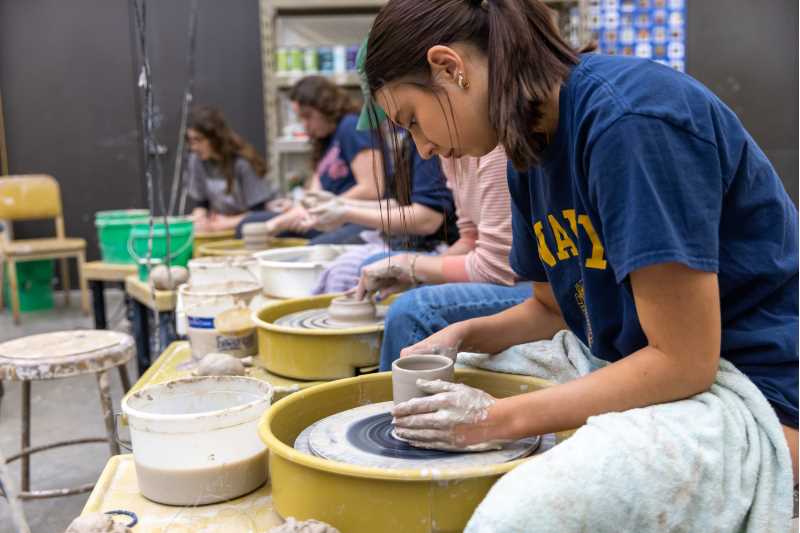
For Moeller, career preparation is essential, but it is only part of the story.
“I am a firm believer that we can both seek a job and never lose sight of larger pictures and more complex goals,” Moeller says. “A CASSH education encourages students to do both.”
She also sees significant potential in interdisciplinary collaboration, particularly as society grapples with questions surrounding artificial intelligence, democracy, identity, justice and community well-being. These challenges, she says, cannot be fully understood through a single academic discipline.
“What excites me most is the tremendous opportunity we have to redefine how people understand the value of the arts, social sciences and humanities — and to demonstrate that value in ways that are visible, compelling and consequential,” she says.
Having spent years working alongside CASSH faculty, staff and students, Moeller knows the college's greatest strength lies in its people. As dean, she hopes to foster a culture where they feel supported, connected and empowered to pursue new ideas.
“I see my role as helping create the conditions in which all of that potential can flourish,” Moeller says. “That means listening, building trust, encouraging innovation, removing barriers where possible and ensuring that we are moving forward with a shared sense of purpose.”
Ultimately, Moeller sees the college's future as a collective effort — one grounded in its longstanding mission and shaped by the opportunities ahead.
“Like anyone or anything in life, I don't believe the future of CASSH is something that will simply happen,” Moeller says. “It's something we have the opportunity — and the responsibility — to create together. That's what makes this moment so exciting.”