Posted 2:01 p.m. Wednesday, Oct. 7, 2026
Economics students uncover insights through partnership with Habitat for Humanity
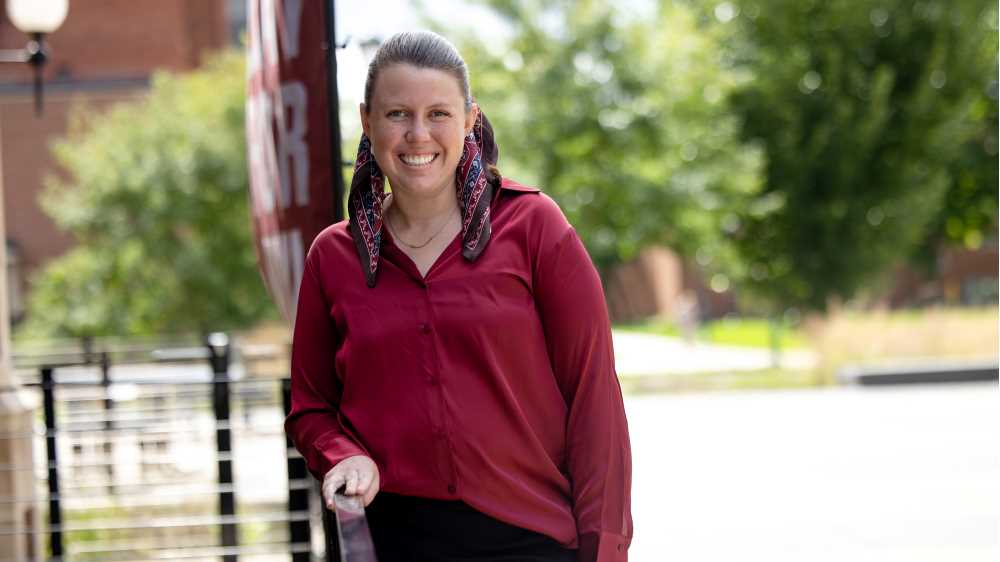
When Assistant Professor of Economics Marissa Eckrote-Nordland set out to create a Community Engaged Learning experience for her students, she wanted to show that statistical analysis can do more than help launch their careers.
It can also be a powerful tool for strengthening their communities.
In coordination with Lisa Klein, director of Community Engagement at UW-La Crosse, Eckrote-Nordland connected students in her spring 2026 Introduction to Econometrics course with Habitat for Humanity of the Greater La Crosse Region. Over the course of the semester, students applied analytical skills they learned in the classroom to real-world challenges facing Habitat, demonstrating how economics can be used to support strategic decision-making at a local nonprofit organization.
The first project examined how the demographic characteristics of people served by Habitat compare with local, state and national benchmarks, including those of the broader homeowner population. Using data provided by Habitat, students cleaned and organized the records, then used statistical tests to assess differences between the groups.
For their second project, students investigated which characteristics were associated with becoming an active volunteer after completing Habitat’s onboarding process. Their analysis found higher participation rates among older adults and people affiliated with church groups, offering insights that could help Habitat focus its outreach and encourage more prospective volunteers to get involved.
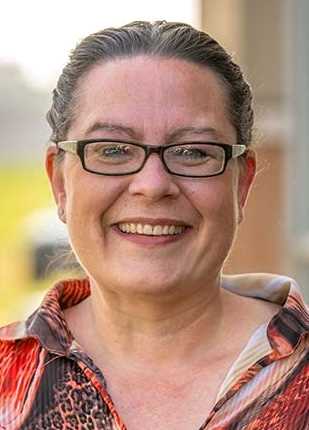
“Overall, this was a phenomenal experience for both me as an instructor and for my students,” Eckrote-Nordland, ’16, says. “It has changed the way I think about real-world examples that students can work on for the class and the future types of projects I will incorporate.”
Kahya Fox, executive director for Habitat for Humanity of the Greater La Crosse Region, says people who work at nonprofit organizations often wear multiple hats as they respond to community needs, leaving little time to analyze data or incorporate it into organizational decision-making.
Seeing the patterns students identified in the data and the practical recommendations they developed from their findings was an eye-opening experience, she says.
“The work the students did has been instrumentally helpful to our organization,” Fox explains. “As staff at a nonprofit, we wear lots of hats, so to know where our time can be best spent to achieve the objectives of our organization, that’s phenomenal. There are just a lot of great tidbits that are literally going to shape how we do the work here at Habitat: who we reach out to, the connections we’re making in the community, the partnerships with different organizations.”
Supporting organizations and businesses in the Coulee Region is central to UWL’s mission to extend transformational educational experiences beyond the classroom. The university’s Community Engaged Learning Program matches faculty experts and their students with area organizations where they can apply their knowledge to make a meaningful difference.
Eckrote-Nordland says the partnership had such an impact on her students that she hopes to build on the project in future semesters.
“I think my students took a lot away from the project both in terms of getting a better sense of what data analysis looks like in the real world and how we can apply the tools from class to questions that have an impact well beyond the classroom,” she says. “It has also made me excited to look into the possibility of partnering with another non-profit in the future to do another Community Engaged Learning project.”