
Posted 8:21 a.m. Friday, April 17, 2026
UWL Prairie Springs Environmental Leadership Award winner blends appreciation and action
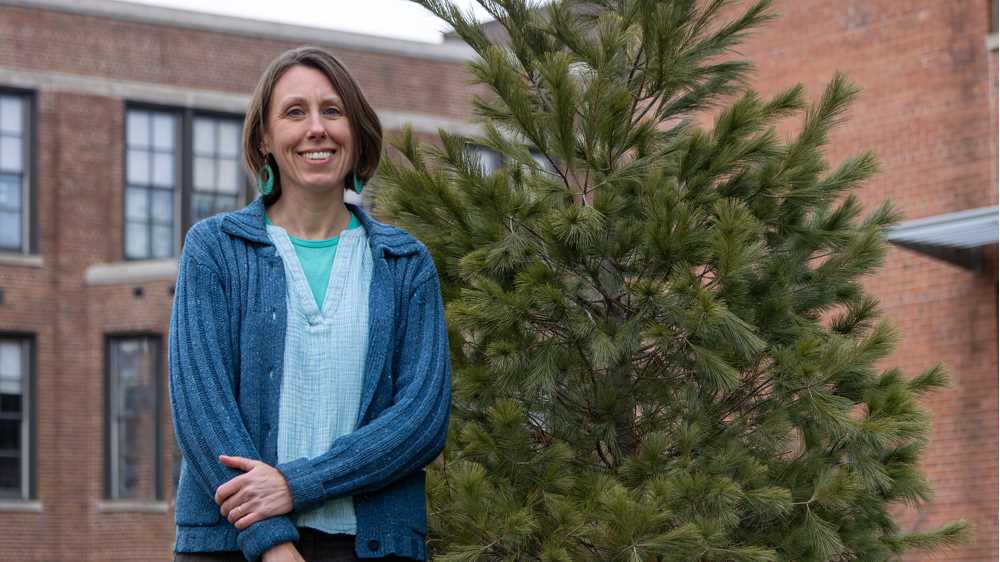
Alysa Remsburg smiles every time she sees a towering white pine. There’s something comforting about the wind moving through its branches and the carpet of burnt orange needles beneath it.
“Working on environmental issues is about savoring and saving — we need to do both,” she says. “We need to sustain our connection to place and people as we work to improve things.”
The notion comes from a favorite E.B. White quote taped to her office door, and it reflects Remsburg’s broader philosophy: environmental work is not confined to a single discipline. It belongs to all of them.
A teaching professor of Sustainability and Environmental Studies housed in UWL’s Philosophy Department, Remsburg brings a cross-disciplinary lens to environmental challenges. Over the course of her career, she has shifted from focusing primarily on biology and biodiversity to exploring the human relationships that shape — and are shaped by — the natural world.
Her deep care and advocacy work for the environment helped Remsburg earn her this year’s Prairie Springs Environmental Leadership Award for instructors.
“Alysa is the epitome of an environmental leader,” says Andrew Ericson, UWL sustainability program manager. “Her unwavering commitment to sustainability and stewardship is evident in everything she does. La Crosse and UWL are unquestionably better places because of her vision and leadership.”
That vision is perhaps most visible at UWL in the Hįnųkwas Tree Trail, a campus initiative Remsburg helped bring to life with help from students in her Woodlands of the Driftless course and Assistant Biology Professor Adam Schneider’s Plant Identification course, along with other key collaborators. The trail guides visitors through campus using signage and an online map to introduce tree species such as white pine, honey locust and red maple. It also highlights the cultural and ecological significance of these trees, including their importance to the Ho-Chunk people.
The project emerged from a campus visit by botanist and author Robin Wall Kimmerer in March 2024. Remsburg, who served on the planning committee, was inspired by Kimmerer’s call to see other living beings as kin rather than objects. “The tree trail is an opportunity to meet the other residents here and honor key ideas from her visit,” Remsburg says.
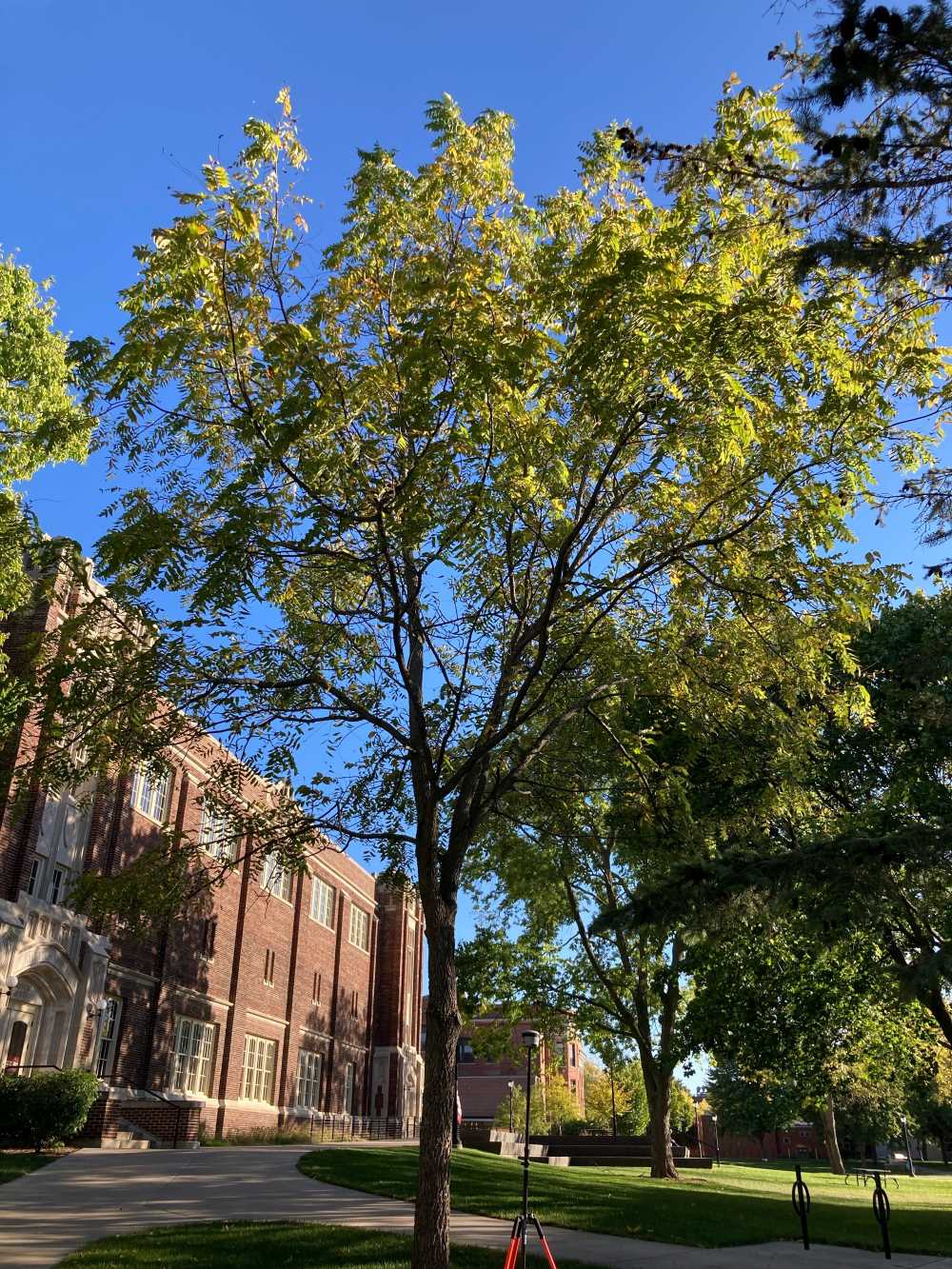
The trail also serves as a teaching tool. In her introductory courses, students use it to build observation skills and explore how environmental knowledge connects across disciplines — and how their own work can make a tangible impact.
Remsburg has also led environmental efforts beyond campus. In 2020, she co-founded Solar on La Crosse Schools, a community-based initiative that has helped install more than 900 solar panels across five schools in the district. The project combined fundraising, advocacy and public education, including more than a dozen engagement events.
Equally important, it created opportunities for students. Remsburg connected current and former UWL students with the initiative, where they gained hands-on experience in areas ranging from marketing and event planning to climate action planning and education.
“It was a chance for students to learn about sustainability while helping the school district save money and reduce its climate impact,” she says.
Christina Mehrkens, ’22, was one of those students. She became involved with SOLS through Remsburg’s capstone course, where she managed social media, created a regular newsletter and helped update the group’s website. Through the experience, she saw firsthand how a small group of committed individuals could make a meaningful impact at the local level.
“As I got more involved, I started to get to know the members and see how hard each one was working,” she says. “I could really see myself doing work like this in the future.”
Today, Mehrkens is doing just that. She works part time for the Sustainability Institute, a La Crosse nonprofit that celebrates regional sustainability efforts and connects people across the community. She also serves as an executive assistant for the La Crosse Builders Association and volunteers with many local environmental initiatives such as the annual Earth Fair at Myrick Park, Drift Cycle — a public bike share program — and ORA Trails.
Mehrkens says her work with SOLS — and her connection to Remsburg — helped introduce her to La Crosse’s environmental network, opening doors to new opportunities.
“It was through this group that I was inserted into the environmental spaces within our community, which connected me to more opportunities and people,” she says.
She also found inspiration in Remsburg’s leadership.
“Seeing the behind-the-scenes work she does through SOLS, I was able to see how many people respect her and how much she contributes,” Mehrkens says. “She is quiet, kind and respectful, but she is such a force.”
Remsburg has since transitioned leadership of the solar initiative to the school district but continues to serve on its sustainability team, which developed the state’s first Climate Action Plan for a public school district.
Mehrkens continues to admire Remsburg’s ability to balance her many roles.
“I think it’s fascinating to see Alysa involved in so many different things while also teaching at UWL,” she says. “I don’t know how she does it. She is truly an inspiration, and her passion sets her apart.”
Growing up outdoors
Remsburg’s commitment to environmental work began early. Growing up in western Michigan, she spent hours exploring a backyard pond fashioned from a buried trash can — home to tadpoles, minnows and whirligig beetles that she eagerly collected and studied.
That curiosity evolved into a lifelong interest in the environment. While her academic path began in biology, her focus broadened over time to include the social, cultural and ethical dimensions of environmental issues that reflect humans’ relationship and impact on the environment.
Today, as director of UWL’s Sustainability and Environmental Studies program, Remsburg emphasizes an interdisciplinary approach that mirrors the complexity of real-world challenges.
“Humanities and social sciences are essential to this work,” she says. “They help us understand how people think, communicate and make decisions about the environment.”
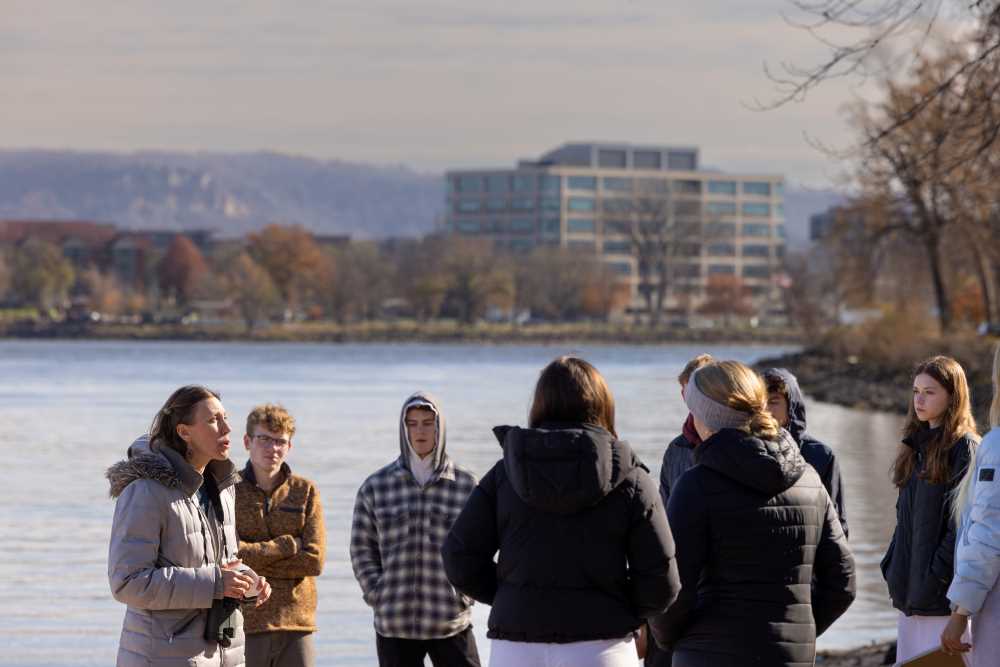
In her classes, students engage in service-learning projects with community partners, gaining practical experience while contributing to local environmental efforts. She also takes students out into the field — to places like the La Crosse River Marsh and Pettibone Island — where they can observe both the beauty of local ecosystems and the pressures they face.
For Remsburg, those experiences are often transformative.
“I love seeing students realize what’s right here around them,” she says. “I hope they learn to seek out that beauty close to home and to ask deeper questions about equity, impact and responsibility.”
At a time when environmental challenges can feel overwhelming, Remsburg stays grounded by focusing on collaboration and steady, incremental progress.
“I feel called to do my best, even though it will never be enough,” she says. “It’s more sustainable to do this work alongside people you enjoy — taking it one project at a time.”
She encourages others to do the same: work together, break big problems into manageable steps, and find a balance between appreciation and action — the tension E.B. White so aptly described.
“Saving the world is not always a sacrifice,” she says. “It can feel good too.”
Alysa Remsburg file:
- Director of the Sustainability and Environmental Studies program
- Students for Sustainability club advisor
- Former Solar on La Crosse Schools (SOLS) Director
- Serves on the River Studies Center Leadership Team and UWL’s Strategic Plan Sustainability workgroup.
- Assists in organizing campus events such as a Social Justice Week keynote speaker and Earth Week film screening.
- Mentor to students in community service and environmental leadership including past Prairie Springs Award student recipients
- Climate action, social justice, and education through service to the Unitarian Universalist (UU) Fellowship.
Watch the March Sustainability Chat from the Sustainability Institute, featuring Alysa Remsburg.