



Profile for Jennifer Klein
Contact me
Jennifer Klein
Pronouns: She/Her/Hers
Adjunct Professor
Biology
University of Wisconsin-La Crosse
Jennifer Klein Pronouns: She/Her/Hers
Adjunct Professor
Biology
Specialty area(s)
Medicine · Molecular Biophysics · Cell Biology · Molecular Biology · Biochemistry · Mathematical Biology
Brief biography
On a summer afternoon, I wade down a Driftless stream, gripped by tiny muddy fingers, collecting insects with elementary school learners before returning to a barn shared by horses and a row of microscopes. In my research laboratory, students gather around fluorescent images of skeletal muscle as we explore how molecular mechanisms contribute to muscle aging and whether those processes can be altered. On a molecular ecology sailing expedition, I help a student navigate the anxiety of losing sight of land and discover confidence through shared adventure. During the COVID-19 pandemic, I pause a Zoom lecture with 120 General Biology students—many isolated in their dorms and some actively infected—to make space for their symptoms, questions, and fears.
These moments reflect what has sustained me through more than 15 years as a biomedical researcher and professor: scientific discovery, mentorship, teaching, and the opportunity to connect science with human experience. My research has evolved from molecular mechanisms of aging and redox regulation in skeletal muscle toward translational studies of exercise, extracellular vesicles, muscle regeneration, and neuroprotection.
In 2026, I completed my medical training at the University of Wisconsin School of Medicine and Public Health through the Wisconsin Academy for Rural Medicine (WARM), bringing my background in biomedical research and education into clinical medicine. I remain committed to integrating scientific discovery, patient care, mentorship, and rural health.
I have included additional descriptions of my teaching and research projects in the hyperlinks below.
Current courses at UWL
Bio 105 General Biology
Bio 315 Cell Biology
Bio 435/535 Molecular Biology
BIO 449/549 Advanced Microscopy and Biological Imaging
Bio 460/560 Modern Genomics
Bio 460/560 Biophysics
Bio 460/560 Rural Health
Bio 491 Biology Capstone
Education
University of Wisconsin School of Medicine and Public Health (2022-2026)
National Institutes of Health NRSA Postdoctoral Training in the Biology of Aging (2010)
University of Minnesota, Minneapolis, MN
Doctor of Philosophy in Biochemistry, Molecular Biology, and Biophysics (2008)
University of Minnesota, Minneapolis, MN
Dissertation Title: Myosin Structural Dynamics
Bachelor of Arts in Chemistry (2002)
College of Saint Benedict, Saint Joseph, Minnesota
Career
Teaching history
After more than 15 years teaching at UWL, my core understanding of teaching and learning has remained remarkably consistent, even as its expression has expanded into places I once could not have imagined. My own liberal arts education strongly shaped how I approach science education, particularly how I motivate students. There are many reasons students choose to pursue science, but one of the most compelling is the pursuit of science in service to others.
Science can be timely, relevant, and captivating, as we have seen so clearly with COVID-19, yet we rarely teach science through this lens. I build and continually revise courses around authentic problems that I hope will fascinate students and draw them into a sustained drive toward understanding and success. Coupled with evidence-based approaches to science education—including learning communities, active learning, problem-solving, and guided inquiry—I have witnessed students achieve outcomes I once thought impossible for 20-year-olds.
I have come to see my role as an instructor as creating curiosity-provoking worlds for students to enter. As their guide, I describe the scenery, the dangers, and the riddles. I provide the right tools at the right time, demonstrate how to use them effectively, and then step back, giving students the intellectual space to plan, pursue, fail, and pursue again. In that space, students develop not only knowledge and scientific skills, but also the self-confidence and self-efficacy to become independent learners.
My transition into medical education has reinforced this philosophy. Whether teaching undergraduates, mentoring research students, or learning alongside medical trainees, I continue to believe that the most meaningful teaching is not about delivering answers. It is about creating the conditions in which learners become curious enough—and confident enough—to find them.
Professional history
University of Wisconsin-La Crosse (2012-Present)
St. Olaf College, Minnesota (2010-2012, Visiting Professor)
University of St. Thomas, Minnesota (2008-2010, Visiting Professor)
Minnesota Supercomputing Institute Fellow (2002)
Research and publishing
Recent Research Seminars
There is an abundance of research activity happening in Dr. Klein's lab.
Current Research Projects (Recruiting)
Exercise-Induced Muscle Exosomes and Human Aging
Past Research Projects
Molecular Mechanisms of Muscle Aging
FoxP3 Epigenetics and Immunotherapy for Food Allergy
Research Sailing Expedition in the Spanish Virgin Islands January 2020
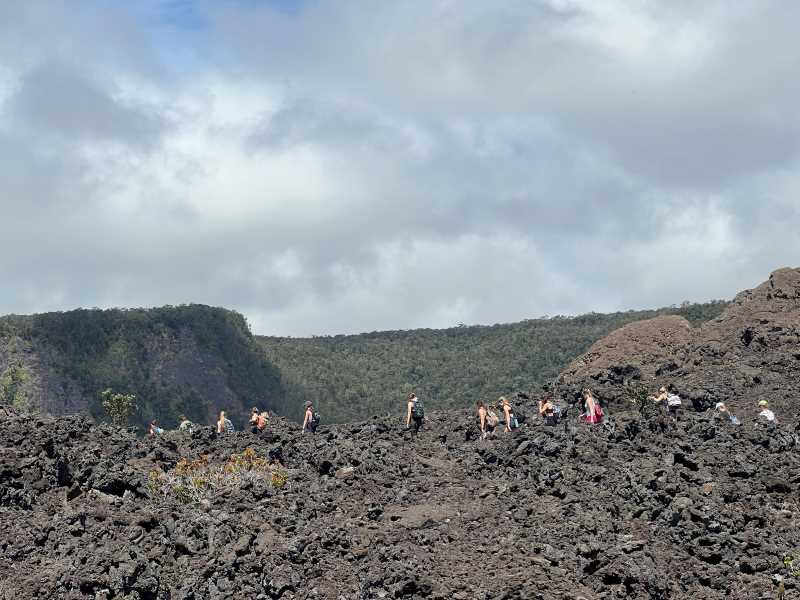
Island Ecology & Molecular Ecology Research Expedition in Kona, Hawaii 2022
Kudos
published
published
published
interviewed