



Psychology
Neuroscience
Overview
 Image of woman Neurologist using desktop computer with MRI of a brain.
UW-La Crosse's Neuroscience Interdisciplinary Minor is a joint program between the departments of Biology, Philosophy, and Psychology, designed to help prepare students to explore that frontier. Although the Psychology Department is the administrative home, the minor integrates expertise across all three core departments and other UWL departments offering elective coursework. A neuroscience minor is ideal for students planning to pursue doctoral training in neuroscience, medicine, psychology, neurology, neuropsychology or philosophy.
How to declare
Each student must first be accepted for admission to the University of Wisconsin-La Crosse. At the end of the online application you will be able to submit the name of your faculty reference, and send them the URL for them to complete an online recommendation form on your behalf. No additional reference letter is required.
Admission into the Neuroscience Interdisciplinary Minor is on a rolling basis, so you can apply as soon as you meet the pre-requisites of a grade of “C” or higher in BIO 105 (or equivalent), PSY 100 (or equivalent) and CHM 100 or CHM 103. You can and are encouraged to take NEU 200: Introductory Neuroscience before you are eligible to apply as it is a requirement once you are admitted.
Students are typically accepted within two weeks of the deadline after receiving your application and faculty reference. A committee of neuroscience faculty will review applications and notify students in time to register for the spring semester courses.
Neuroscience minor application
Our People
Neuroscience Coordinator


- Psychology
- Assistant Professor
- Graff Main Hall
- tthakkar@uwlax.edu
- 608.785.5235
Specialty areas:
Cochlear Implants; Psychoacoustics; Binaural Hearing
Faculty
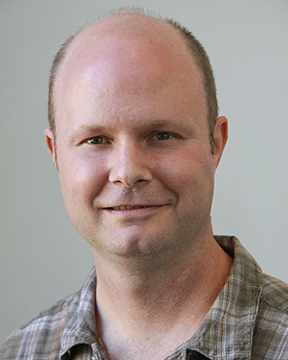
- Philosophy
- Professor
- 4112 Centennial Hall
- scocks@uwlax.edu
- 608.785.8421
Specialty areas:
Philosophy of Mind, Asian Philosophy, 19th/20th Century Continental Philosophy, & Environmental Philosophy

- Philosophy
- Associate Professor
- Graff Main Hall
- dschneider@uwlax.edu
- 608.785.8423
Specialty areas:
AOS: History of Philosophy (Early Modern/Ancient), Epistemology, Metaphysics
AOC: Ethics, Philosophy of Science
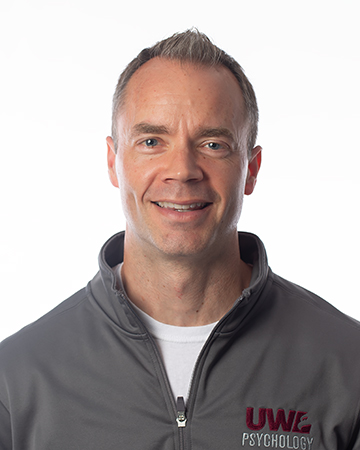

- Psychology
- Professor
- 341D Graff Main Hall
- rmckelley@uwlax.edu
- 608.785.6879
Specialty areas:
Clinical/counseling psychology; men and masculinities; health psychology (stress, resilience; biofeedback; sleep); behavior modification; group counseling; psychopharmacology (i.e., drugs and behavior); workplace mental health

- Psychology
- Associate Professor
- 341C Graff Main Hall
- aobrien@uwlax.edu
- 608.785.6886
Specialty areas:
Visual and auditory perception, Research methods, Teaching methods, Memory
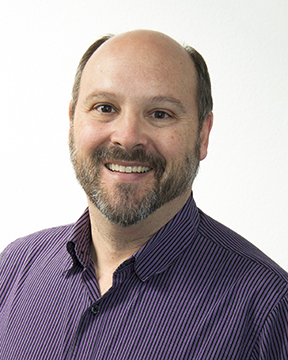
- Biology
- Associate Professor
- 215 Cartwright Center
- bseebach@uwlax.edu
- 608.785.6964
Specialty areas:
Neurophysiology, Human Anatomy & Physiology, Medical Physiology; advising Biomedical Science Concentrators and Neuroscience students
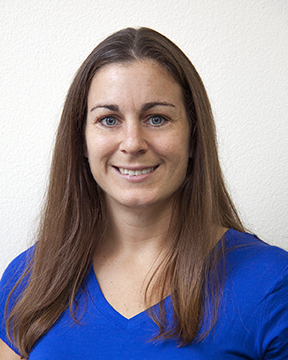
- Biology
- Associate Professor
- 231B Cartwright Center
- cschwartz@uwlax.edu
- 608.785.6974
Specialty areas:
Neuroscience, Physiology, Hibernation biology
Advising
Advising Guide for Psychology Majors
Minor Requirements: 19 credits | Full Catalog Details
Why This Minor?
The Neuroscience Interdisciplinary Minor complements your Psychology major by:
- Deepening understanding of brain–behavior relationships across cellular, systems, and cognitive levels
- Preparing you for graduate programs in clinical psychology, neuropsychology, neuroscience, or medicine
- Building research skills through hands-on lab work and a capstone seminar
- Integrating perspectives from biology, psychology, and philosophy
Eligibility & Admission
Apply once you have:
- 30+ earned credits (fewer than 60 recommended for timely completion)
- Completed BIO 105 and PSY 100 with C or better
- Cumulative GPA of 3.0 or higher
Application deadline: Check with Psychology advising; early application (sophomore year) is strongly encouraged.
Required Courses (19 Credits Total)
Core Foundation (13 credits)
| Course | Title | Credits | Prerequisites | When to Take |
|---|---|---|---|---|
| BIO 105 | General Biology | 4 | None | Year 1 |
| NEU 200 | Introductory Neuroscience | 3 | BIO 105, PSY 100 | Year 2 Fall |
| PHL/PSY 333 | Philosophy of Mind | 3 | PSY 100 | Year 2 Spring |
| BIO 415 or BIO 446 | Neuroethology or Animal Behavior | 3 | BIO 105 | Year 3 |
| BIO 465 | Neurophysiology (lab) | 4 | CHM 103 | Year 4 Fall |
Electives (6 credits)
Choose two courses from this list. These PSY courses count toward both your major and the minor:
- PSY 430 Cognitive Neuroscience
- PSY 432 Learning and Memory
- PSY 434 Clinical Neuropsychology
- PSY 439 Sensation and Perception
- PSY 440 Psychopharmacology
- PSY 459 Genes and Behavior
Consult the full catalog for additional BIO and PHL options if desired.
Capstone
| Course | Title | Credits | Prerequisites | When to Take |
|---|---|---|---|---|
| NEU 490 | Capstone Seminar in Neuroscience | 2 | Senior standing + completion of core | Year 4 Spring |
Sample Four-Year Timeline
Year 1
- Fall/Spring: PSY 100 (if not completed via AP/transfer)
- Fall/Spring: BIO 105 (prereq for NEU 200 and minor admission)
- Spring or Year 2: CHM 103 (prereq for BIO 465)
Year 2
- Fall: NEU 200 (must earn C or better)
- Spring: PHL/PSY 333
- Apply to the minor once grades are posted
Year 3
- Fall or Spring: BIO 415 or BIO 446
- Fall/Spring: Begin PSY electives (PSY 430, 439, 432, 434, 440, or 459)
- Continue PSY major requirements (e.g., PSY 331, PSY 340)
Year 4
- Fall: BIO 465 (lab-intensive; plan schedule accordingly)
- Spring: NEU 490 (capstone seminar)
- Finish remaining PSY neuroscience elective(s) if needed
Pro Tips for Success
- Double-count strategically: PSY neuroscience electives (PSY 430, 432, 434, 439, 440, 459) advance both your major and the minor. Choose ones that align with your interests (e.g., PSY 434 for clinical paths, PSY 440 for pharmacology/medical interests).
- Watch prerequisites: CHM 103 is required for BIO 465. Take it by Year 2 or early Year 3 to avoid delaying your capstone year.
- Plan lab-heavy semesters carefully: BIO 415/446, BIO 465, and some PSY 4xx courses involve labs or heavy reading. Avoid clustering these with other intense courses like PSY 331.
- Connect with faculty early: If you’re interested in research, ask Psychology or Biology faculty about opportunities in neuroscience labs. You may be able to integrate independent research into NEU 490.
- Consider summer coursework: If your schedule is tight, you can take CHM 103, BIO 105, or a PSY elective in summer to spread out your workload.
Next Steps
- Meet with your Psychology advisor to confirm your interest and check your eligibility.
- Review the full minor requirements in the UW-La Crosse Catalog.
- Plan your schedule using this guide and check course availability each semester.
- Apply to the minor once you meet the eligibility criteria (30+ credits, BIO 105 and PSY 100 complete, 3.0+ GPA).
Questions? Contact the the NEU Director at tthakkar@uwlax.edu
Last updated: March 2026
FAQ
Why is there a GPA requirement?
Graduate programs where a neuroscience minor would be helpful are very competitive. Minimum GPAs to apply are often 3.0/4.0; however, actual GPAs are usually much higher. We want our minors to be able to be competitive in the applications process.
Why is there a credit limit of 60 credits to apply?
To help control the initial demand of the minor, students must have a minimum 30 earned credits (including transfer credit). At least 15 of these credits must be earned at UWL. Students with more than 60 earned credits may not be eligible to apply for admission. However, if you have already taken many of the core or elective courses through other programs of study but exceed the 60-credit limit, please apply during the application window of Sept 1 - Nov 1 or contact the Program Coordinator. If there is space available, we will review applicants on a case-by-case basis.
What are some professional organizations in Neuroscience?
Society for Neuroscience: www.sfn.org
What are some graduate programs in Neuroscience?
Graduate programs will periodically contact us with information to share with undergraduate students interested in neuroscience.
What are some things I can do in Neuroscience?
Most of the fields associated with neuroscience require doctorate-level education, but some careers are also available to people with master’s and bachelor’s degrees. Like in many fields, the more practical experience you can get, the more likely it is that you can find a job in your field. Students pursuing the Neuroscience Interdisciplinary Minor who do not go on to graduate training should find internships, part-time jobs, or volunteer experiences that help them find work in a neuroscience-related field.
Entry level careers
- Laboratory technician
- EEG technologist
- Clinical research assistant
- Science writer
Further education
- Biostatistician
- Clinical psychologist
- Medicine (MD, DO)
- Neural engineer
- Neuroimaging technician
- Neuropsychologist
- Physician’s associate
- Research scientist