Posted 12:01 p.m. Friday, May 8, 2026
Construction begins on transformative second phase of Prairie Springs Science Center
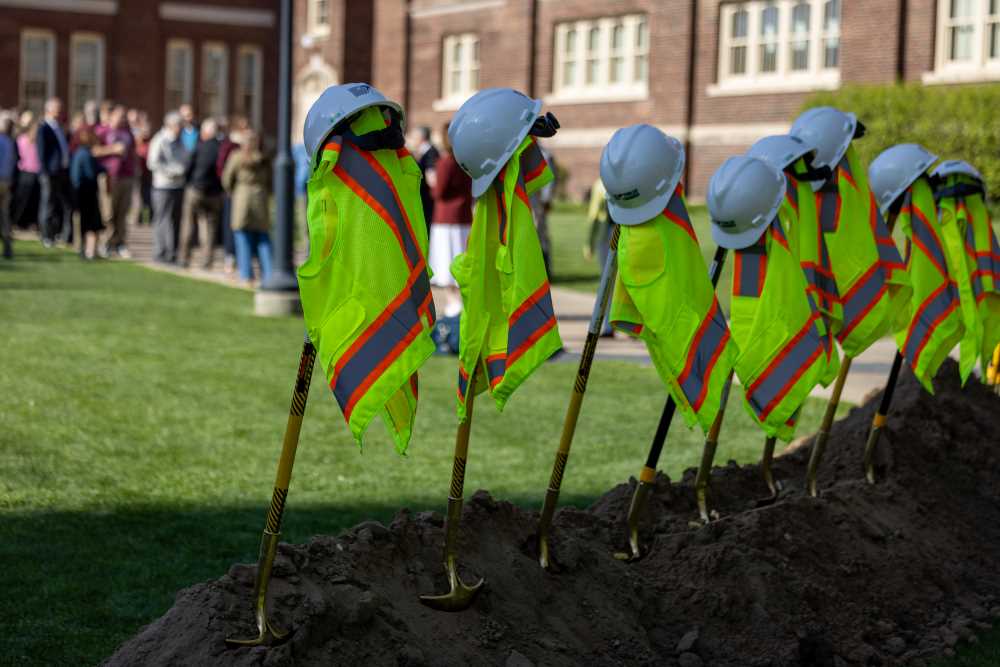
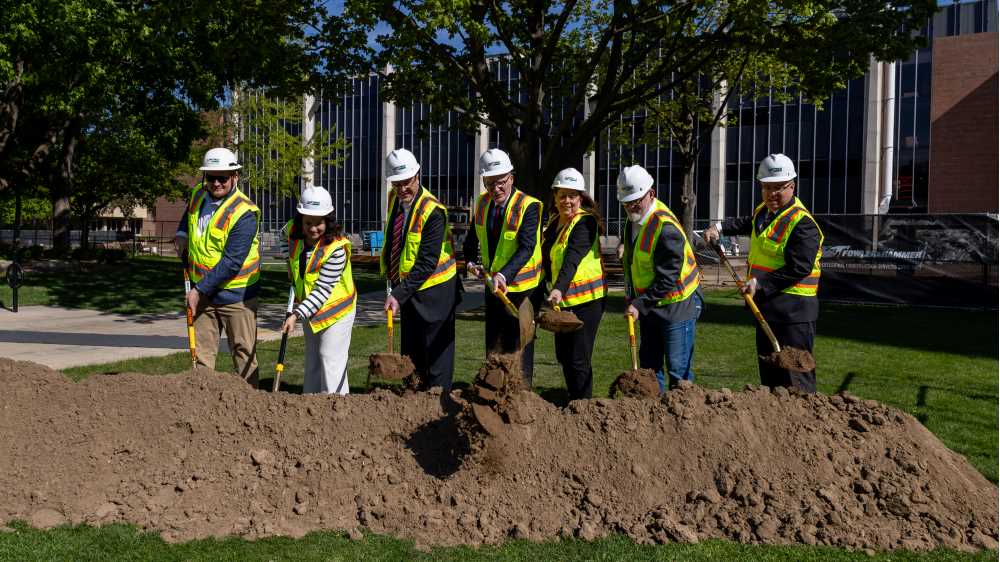
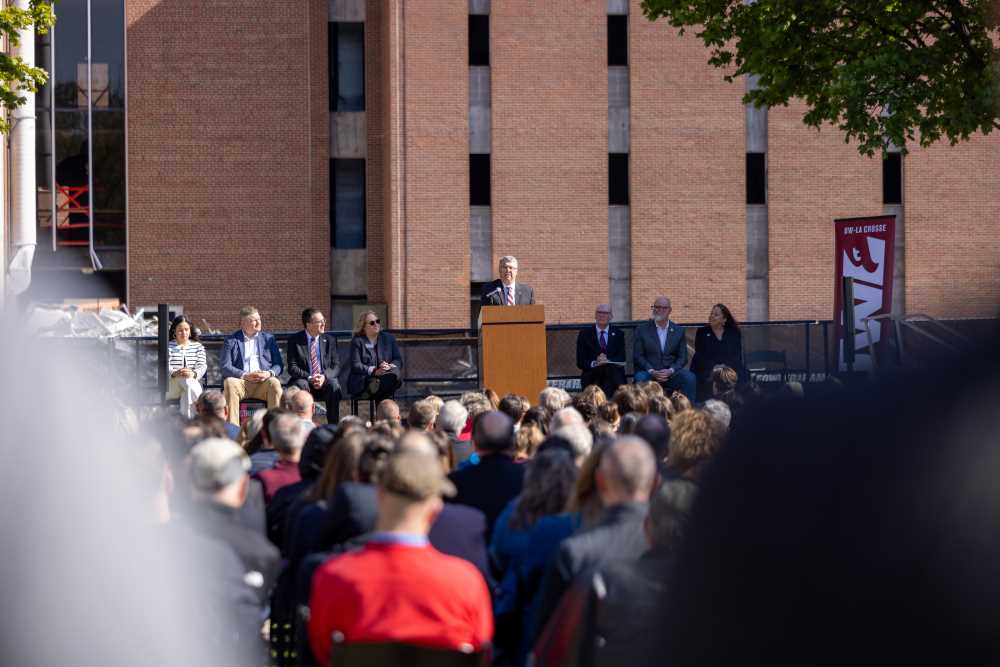
Wielding shovels and donning hard hats, UW-La Crosse leaders broke ground Friday on the second phase of the Prairie Springs Science Center, a highly anticipated facility that will transform science and health education at UWL.
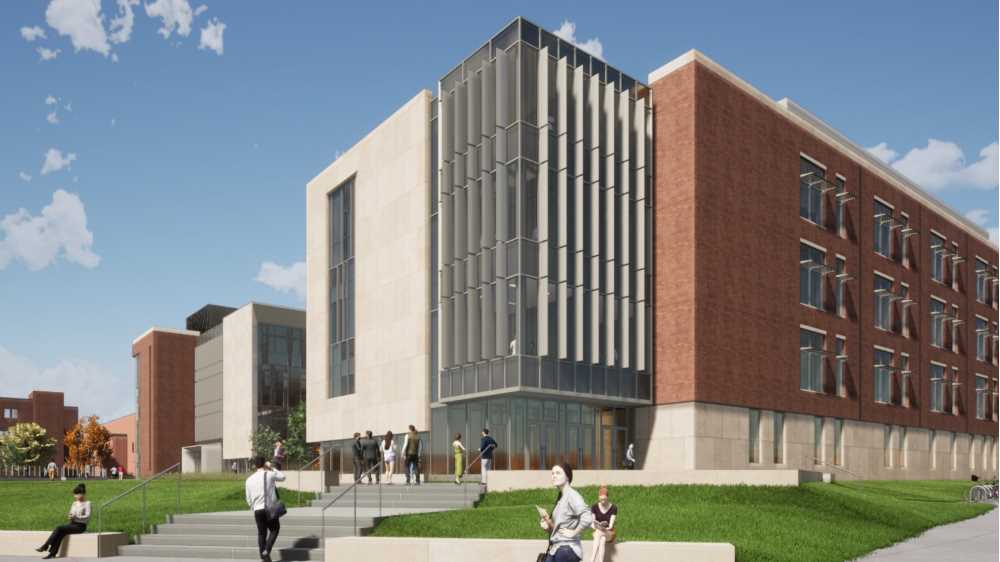
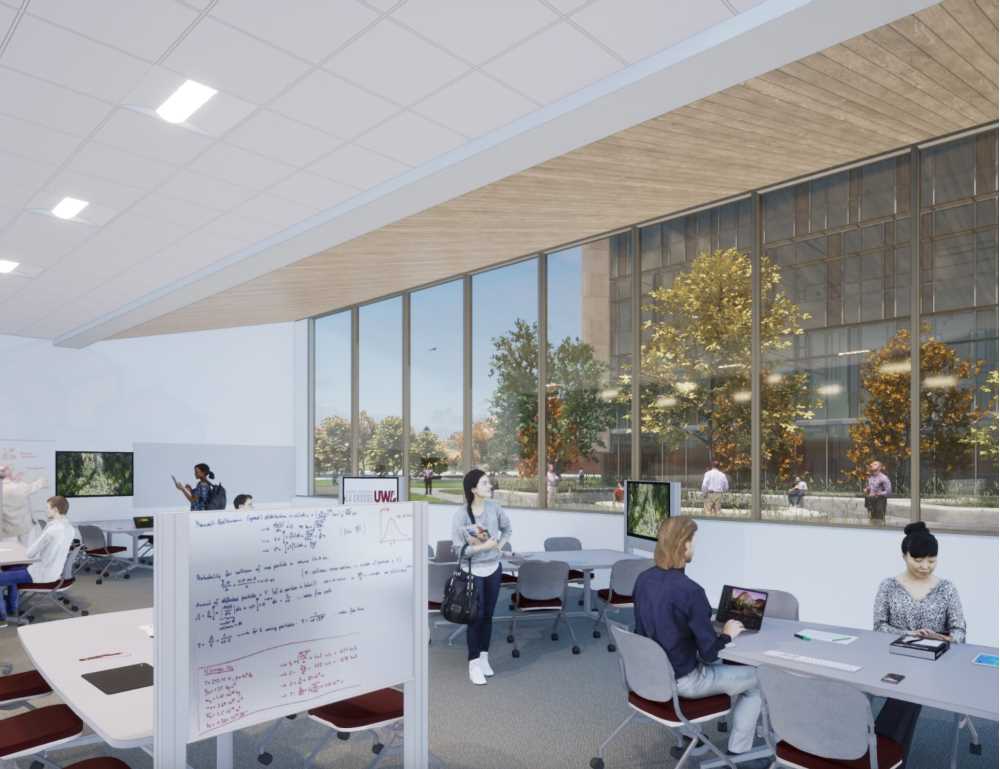
The ceremonial groundbreaking marked the unofficial start of the $194 million project, which will replace Cowley Hall with 30 state-of-the-art labs, classrooms and specialized learning spaces, with completion expected in late 2028.
Together, the two phases will form a comprehensive hub supporting education, research and innovation across a variety of STEM fields.
“It’s incredible to see this vision realized in such a tangible way today,” Provost Betsy Morgan said. “These spaces are designed to support active, hands-on learning where students can engage in discovery, work alongside faculty and apply their knowledge in meaningful ways. For our faculty and staff, this facility will expand opportunities for innovative teaching and research. And for our students, it will create an environment where curiosity leads to discovery, and discovery leads to impact.”
Chancellor James Beeby expressed his appreciation for the broad network of supporters who through the years advocated for the completion of Prairie Springs: students, staff and faculty; alumni and friends; business and community partners; local, state and federal legislators; and others.
When it came time for the obligatory photo op — scooping shovelfuls of dirt in the bright May sunshine — UWL leaders stood shoulder to shoulder with lawmakers from across the political spectrum, a testament to the project’s bipartisan support and far-reaching impact.
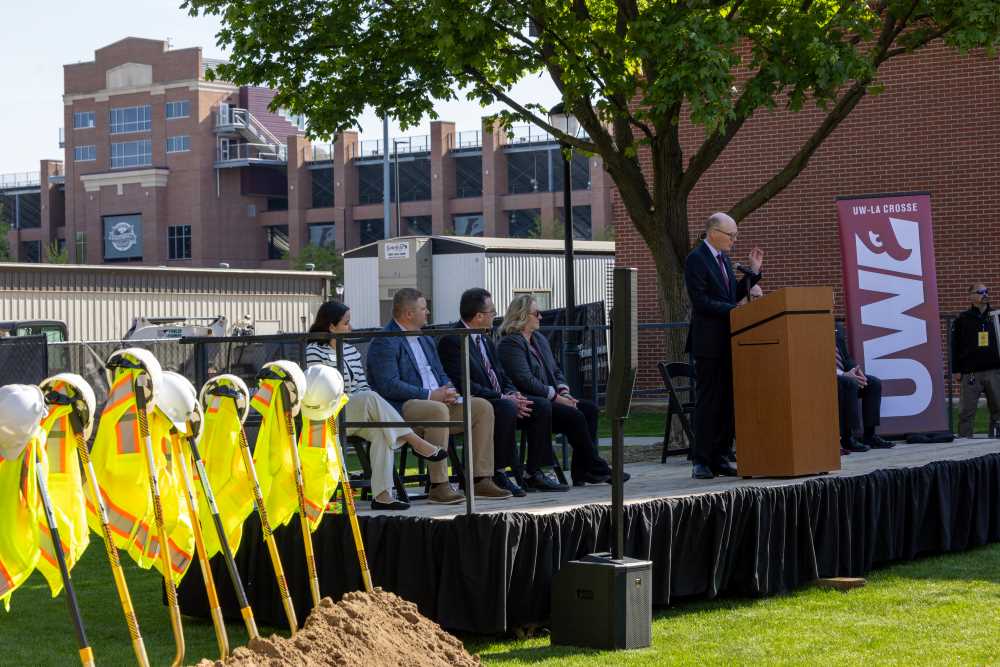
“This has been a long journey, and I’m grateful that we — all of us — brought this building project across the finish line,” State Rep. Jill Billings said, noting the benefits it will bring to UWL’s already strong academic programs.
“Without the magic that happens inside these beautiful buildings, they’re just concrete, bricks and furnishings,” she said. “It’s the magic that occurs in learning and in the interaction between teacher and student that is most crucial to our society. We are supplying an important tool to the process, but the magic is in the learning.”
The completion of Prairie Springs comes at a critical time in the war for talent. Wisconsin faces significant competition in attracting and retaining skilled workers, particularly in fields such as healthcare and technology.
With a fully completed science center, UWL will be poised to produce even more skilled graduates who will go on to careers in La Crosse and throughout Wisconsin, providing communities with better health outcomes and a higher quality of life.
Importantly, 87% of students in UWL’s College of Science & Health continue to live and work in Wisconsin after graduation.
“This facility will be a jewel in the state right here on the west coast of Wisconsin,” Beeby said. “More importantly, it will be a place for students — the next generation of scientists, healthcare professionals, researchers and problem-solvers — who will carry their work far beyond this campus. Here at UWL, preparing students for a successful life and career isn’t just something we talk about. It is something we build into every experience.”
Sustainable by design
In addition to the academic impact, Prairie Springs phase two reflects UWL’s commitment to sustainability and environmental stewardship.
The completed facility will minimize its impact on local ecosystems through recycled and locally sourced building materials, bird-friendly glass, native plantings, and exterior lighting designed to limit light pollution.
The building’s position six feet above the La Crosse River floodplain and nearby stormwater inlets will mitigate flood risk; around the perimeter, rain gardens and bioretention systems will capture runoff to ease pressure on the municipal storm sewer system.
Energy efficiency also played a major role in the building’s design.
Prairie Springs phase two will meet the latest efficiency standards from the American Society of Heating, Refrigerating and Air-Conditioning Engineers. An airtight envelope will prevent air leakage, while a rooftop solar panel array will generate approximately 1.2% of the building’s energy.
Inside, solar shades on the windows will stabilize temperature, blocking sunlight to help with cooling in the summer, and letting in sunlight to provide natural warmth in the winter.
While the new facility will be a significant upgrade over Cowley, not everything from the 1965 building is being left behind.
Materials from Cowley — including concrete, brick and steel — will be reused or recycled in accordance with state specifications, illustrating UWL’s commitment to sustainability and financial stewardship, and ensuring that a piece of the old lives on in the new.