Posted 2:18 p.m. Friday, Dec. 19, 2025
UWL French students give voice to immigrant journeys
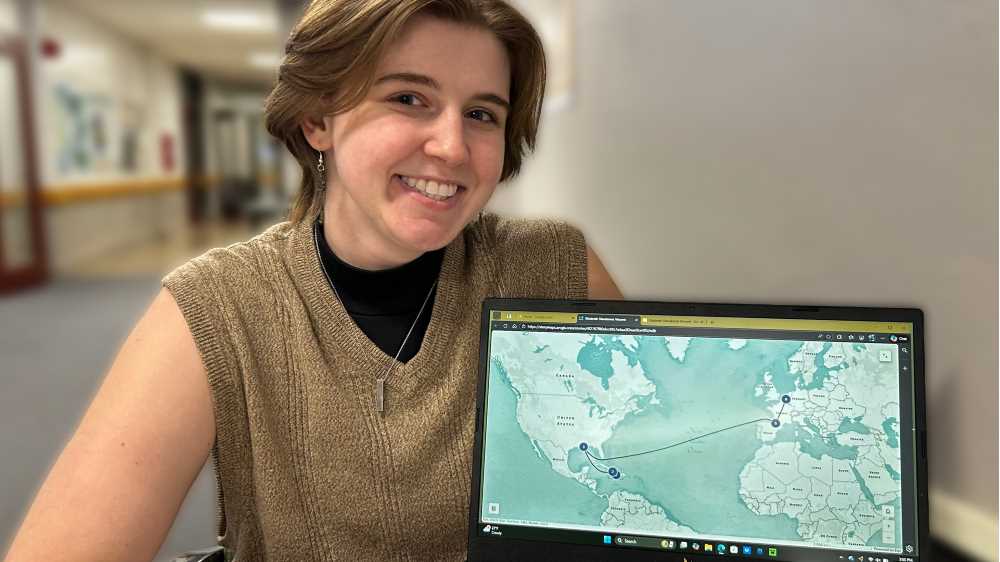
UW-La Crosse French students are giving voice to immigrant stories through web-based, interactive maps that blend text, images and video to document journeys from the Francophone world. Created as part of an advanced French course, the digital projects illuminate personal migration experiences while helping students better understand global history, cultures and human resilience.
The maps trace stories such as a man who dreams of becoming a boxer and survives brutality, robbery and jail time on his journey from Africa to France; a woman who travels alone from Côte d’Ivoire, knowing she will be ostracized if she ever returns home; and a woman of color who immigrates to the United States during a time when slavery was still common.
“The beauty of using this platform is that students can trace geographical migration patterns and make these journeys more tangible,” says Dany Jacob, assistant professor of Global Cultures & Languages, who teaches the course.
The project is part of FRE 320: Global French Cultures: Past, Present, and Future. In addition to selecting immigrant stories based on their interests and creating the digital maps, students also simulated an exchange of letters to further develop each immigrant’s experiences and perspectives.
To add a physical dimension to the digital work, students created an artifact their immigrant might have carried during the journey. The artifacts, Jacob explains, give material presence to voices represented online. Students presented their completed projects in French at the end of the course.
Along the way, students encountered the harsh realities many migrants face. Their research revealed recurring challenges, including mistreatment by police, incarceration, theft, sleeping overnight in public spaces, and the need to adopt false identities and new names to remain safe.
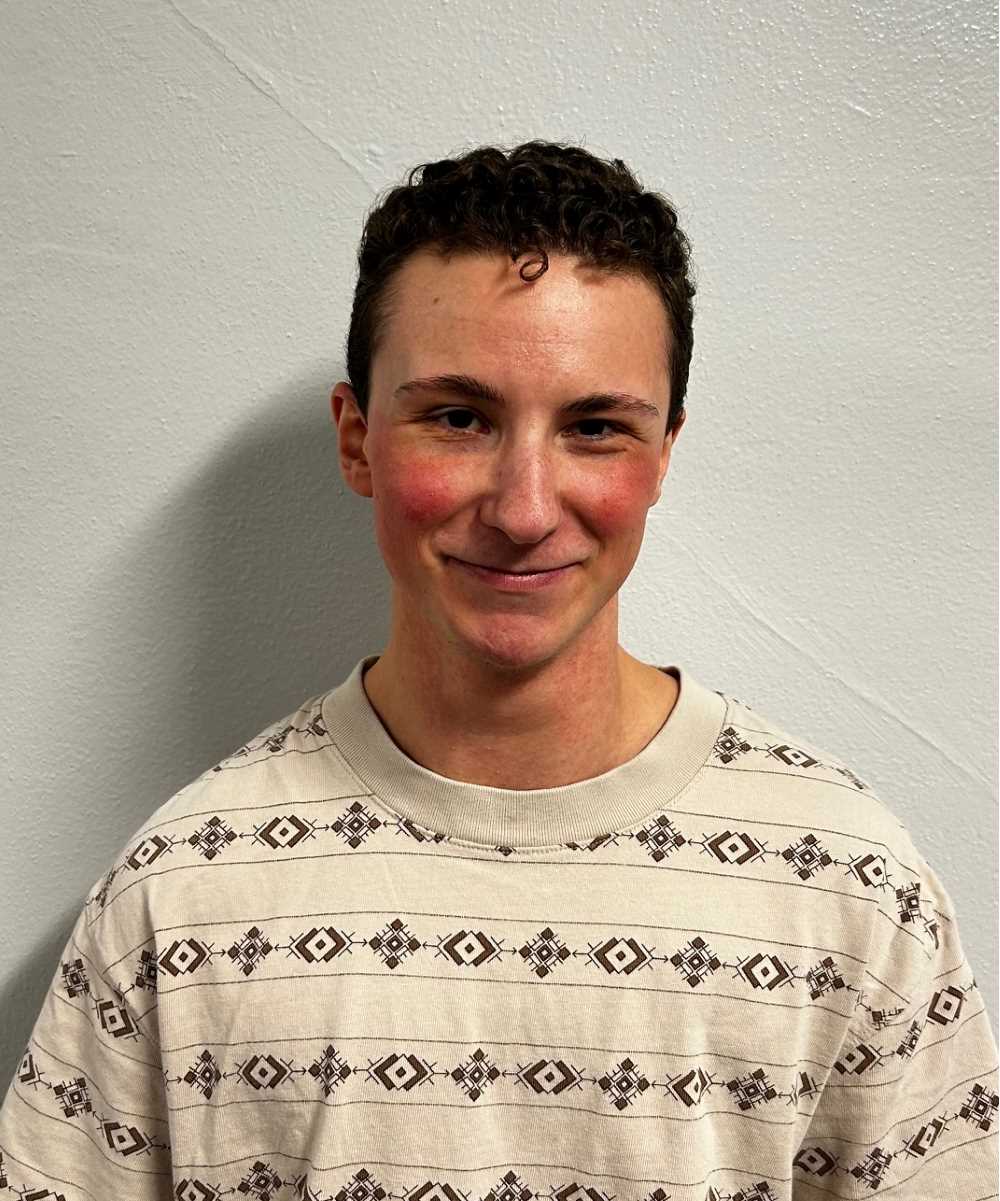
“This project creates a better understanding of the world and the struggles people face,” says Bastien Janiak, a UWL junior majoring in archaeology with minors in French and linguistics. “I like that we had the creative freedom to explore topics that interested us while still meeting the learning goals of the course.”
One of the stories centers on Francis Ngannou, who spent more than a year in Morocco attempting to cross the Mediterranean Sea before eventually reaching France. His journey, marked by repeated hardship, ultimately led him to become a UFC heavyweight champion.
“You get to learn the histories behind these migrations,” says Anthony Villarreal, a senior marketing major with a French minor who documented Ngannou’s story. “It shows the repercussions of failures of colonizing countries, and how history repeats itself in that way.”
UWL senior Elin Voegeli, a theatre major with a French minor, explored the life of Elisabeth Dieudonné Vincent, a businesswoman who lived in five countries and navigated multiple identities and names to navigate stigma associated with illegitimacy and descent from enslaved people. Born in 1798, Vincent ultimately immigrated from Haiti to Louisiana, arriving in the U.S. during a period when slavery was widespread.
“In many history classes, the focus is mostly on the U.S., without much attention to what was happening elsewhere,” says Voegeli. “We study the Civil War as the North versus the South, but not in terms of the stories of those who were not from the U.S. and what their experiences were like.”
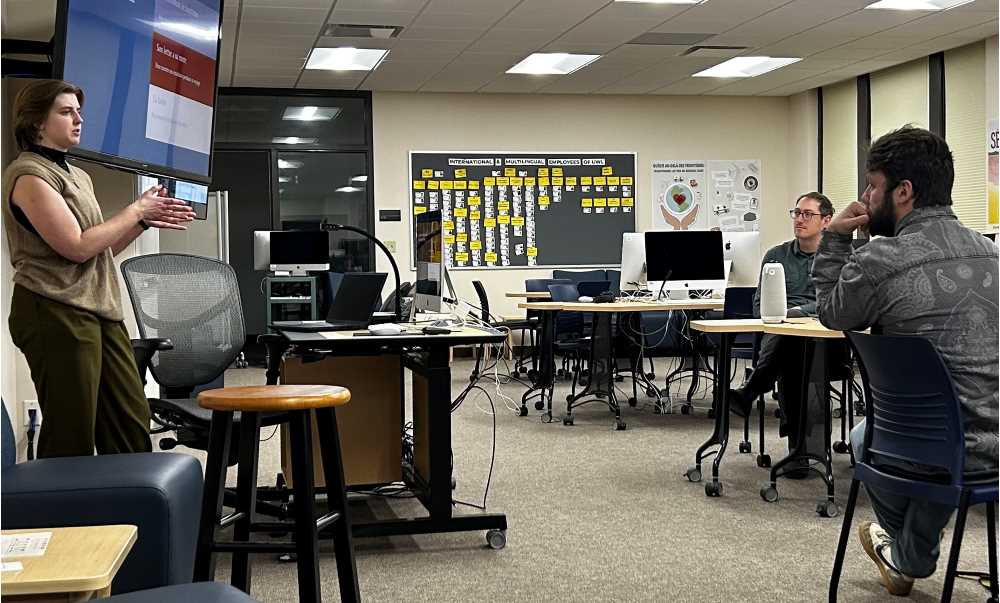
Because Vincent changed names and countries multiple times, researching her life was complex, Voegeli says. “It felt like solving a mystery — connecting different names to the same person and understanding how all these fragments came together.”
Janiak created a fictional character informed by real research on migration from West Africa. His character, a woman traveling alone from Côte d’Ivoire, represents experiences that are often undocumented.
“Many immigrants don’t talk about their stories, so there isn’t much data,” says Janiak. “I thought creating a fictional narrative could help connect ideas and create a more personal understanding of what people go through in search of a better life.”
In the story, the woman travels through Libya and Italy before reaching France, surviving a dangerous Mediterranean crossing where she falls off an overcrowded boat. She left without telling her family, knowing she would be rejected if she ever returned home. “It’s important for people not to fail,” says Janiak. “If they do, they often have nowhere to go.”
Each student’s artifact further deepened the storytelling. Villarreal created a boxing hand wrap made from athletic tape. Voegeli assembled a cigar box containing a baptism certificate that proved her subject was a free woman. Janiak created a headscarf, weathered and dirtied to reflect the length and hardship of the journey.
“These objects are an excellent way to have my students reflect on the emotional charge we infuse in objects during migration,” says Jacob who plans to exhibit the artifacts in a glass case in the department.
Through language, mapping and material culture, the project allowed students not only to practice French, but also to engage critically and empathetically with global migration stories — bringing voices from the Francophone world into clearer focus.