


Physician Assistant Studies
PA Program Specific Policies
In alignment with Accreditation Review Commission on Education for the Physician Assistant (ARC‑PA) standards, our program provides a comprehensive list of all required policies for Physician Assistant (PA) students. These policies are designed to promote transparency, support student success, and ensure compliance with national accreditation requirements. We encourage all current and prospective PA students to review and understand these policies to gain a clear understanding of the expectations, responsibilities, and resources that guide your educational and clinical training
Policies addressed here (A3.14):
- Required academic standards to maintain enrollment and progress in the curriculum
- Requirements and deadlines for completion of the program
- Policies and procedures for remediation
- Policies and procedures for deceleration
- Policies and procedures for withdrawal
- Policies and procedures for dismissal
- Policies and procedures for student grievances
- Policies and procedures for student appeals
- Policy for student employment while enrolled in the program
1. Required academic standards to maintain enrollment and progress in the curriculum
POLICY STATEMENT:
Academic policies define what the institution expects from the students and what students may expect from the institution in terms of academic behavior.
Graduate academic polices are developed and approved through the university's governance system by the Graduate Council. Students remain in good academic standing when they meet the following criteria for grades, professionalism, and technical standards.
A guide to help students navigate through the graduate academic policies can be found at:
https://catalog.uwlax.edu/graduate/academicpolicies/
Academic standing is determined once per term after all courses are completed and grades have been entered. The academic terms at UWL are the fall and spring semesters, summer session, and winter intersession.
Grade Point Average
- Cumulative Grade Point Average (GPA)
Throughout the PA Program, students must maintain a cumulative GPA of 3.0 or greater. If students achieve less than a 3.0 cumulative average in any semester, students will be placed on academic probation the following semester.
Such students must raise their cumulative GPA to at least 3.00 by the end of the term in which they earned their next nine credits or within two terms (whichever comes first) to continue in graduate study.
- Minimum Course Grade
Students must obtain a “C” letter grade or better in all courses, including clinical rotations. If a student receives a grade of “D” or “F,” the student will automatically be dismissed from UWL Graduate Studies and the PA Program. Students may appeal their course grade, as well as dismissal from the Program (refer to Appeals Process)
Professionalism (Professional Behaviors)
The program defines professionalism in terms of intellectual honesty, academic integrity, and professional conduct.
The Program emphasizes the development of professional behaviors – expressions of the ideals and values of the medical profession. Students are expected to adopt behaviors that place the interests and needs of patients above their own. To nurture professionalism, the Program integrates professionalism education into the didactic and clinical curricula and into faculty advising sessions.
During the didactic phase, professional behaviors are introduced and program faculty evaluate students’ professional behavior in their individual courses. Rubrics are provided in individual courses to guide expectations. During the clinical phase, the DCE, Program faculty, and clinical preceptors evaluate students’ professionalism.
If professional expectations are NOT being met, the student will be notified in writing, and the unprofessional behaviors will be addressed in a meeting with the student, student’s faculty advisor, the PD, and/or the DCE. Even though most professional deficiencies result in remediation rather than probation or dismissal, some circumstances may be serious enough to warrant immediate dismissal from the Program.
Technical Standards of Performance
As described in the Introduction - Technical Standards of Performance section, the PA student must possess physical and mental skills and abilities, including observation, communication, motor function, conceptualization, integration and quantitation, and behavioral and social attributes. While accommodation may be made for some disabilities, students must perform these functions independently. If Program faculty or preceptors notice a deficiency during any phase of the Program, The Program may disallow student progression if the deficiency may jeopardize patient care.
2. Requirements and deadlines for completion of the program
POLICY STATEMENT:
To qualify for graduation, students must successfully complete the didactic and clinical phases of the curriculum. In addition, students must successfully complete a summative evaluation.
Summative Evaluation
The summative evaluation consists of written, verbal, and demonstration components meant to provide evidence that a student is competent for entry-level clinical practice including their medical knowledge, clinical and technical skills, clinical reasoning and problem-solving abilities, interpersonal skills, and professional behaviors. Deficiency in any of these areas may necessitate remediation and may delay or jeopardize graduation.
End of Curriculum Exam
PAEA’s End of Curriculum Exam™, which is a written, standardized examination defined in the PAS 802 Summative Assessment syllabi enables students to demonstrate competency in
- Medical knowledge
Exam results are scored on a scale from 1,200 to 1,800 and categorized into performance levels to indicate whether students demonstrate limited, satisfactory, or advanced medical knowledge.
- Scores between 1,200-1,399 indicate limited performance
- Scores between 1,400-1,554 indicate satisfactory performance
- Scores between 1,555-1,800 indicate advanced performance
To pass the written summative evaluation, students must achieve a score of at least 1,400. If this minimum score is not achieved, students must remediate the exam. Any remediation activities will be at the discretion of the program. Students are only allowed ONE remediation attempt. The timeframe for any retake is at the discretion of the exam creator and the program.
Summative Clinical Assessment (Final OSCE)
The Summative Clinical Assessment which is defined in the PAS 802 Summative Assessment syllabi enables students to demonstrate competency in:
- Clinical and technical skills
- Clinical reasoning and problem-solving abilities
- Interpersonal skills
- Professional behaviors
Using a mock patient case or mock clinical case scenario, Program, and instructional faculty, along with standardized patients, jointly evaluate students’ history and physical examination skills, communication, appropriate use and interpretation of diagnostic studies, and ability to generate a differential diagnosis and formulate a treatment plan that is ethical and consistent with standards of care.
The Summative Clinical Assessment Students must achieve an acceptable level of performance on each component of the problem-oriented clinical examination.
If acceptable performance is NOT achieved on each component of the exam, the Program may offer one-time remediation. If students fail to meet expected standards of performance on the second attempt, they will NOT graduate from the Program.
3. Remediation
POLICY STATEMENT:
Remediation is a process for addressing student deficiencies in program defined competencies. The goal of remediation is to assist students in mastering identified learning deficiencies. Remediation policies are offered throughout the length of the program and are specific to the didactic and clinical phases of the Program. Remediation efforts may result in ongoing evaluation of program progression, performance improvement plans, and/or dismissal. Remediation efforts will be measurable and documented in the student's program files.
4. Deceleration
POLICY STATEMENT:
Deceleration is the loss of a student from his or her matriculating cohort and the planned delay of graduation. Deceleration results in additional tuition, fees, and housing costs, and students are responsible for all added costs.
Didactic Phase
Deceleration may be granted to students in good academic standing, who request a leave of absence that is approved by a majority of PA Program faculty and the PA Administrative Committee.
Deceleration may also be offered to didactic phase students, who need additional time to complete a PIP for deficiencies in Professionalism or Technical Standards.
Deceleration is NOT granted to students during the didactic phase due to course failure (D and F grades) or failure to achieve the minimum GPA required by Graduate Studies within nine (9) credit hours or one (1) semester of placement on probation.
Clinical Phase
During the clinical phase, deceleration may be offered to students in good academic standing, who request a leave of absence that is approved by the PA Administrative Committee.
Deceleration may also be offered for completion of a PIP for Professionalism or Technical Standards.
Deceleration may be necessary for the successful completion of remediation when preceptors, the DCE or the Program Director to identify deficiencies in a clinical rotation or PA Professional Development Seminar activity.
5. Withdrawal
POLICY STATEMENT:
Students in good academic standing may request a leave of absence from the Program for up to one calendar year. Voluntary leave may be granted to students who experience life extenuating circumstances that substantially interfere with the completion of the PA program. The PA Administrative Committee will approve or disapprove of all leave requests.
If leave is granted, students will be given a return-to-class notification date. By that date, students must notify the Program of their intention to return. If, by the notification date, students do NOT contact the Program and initiate the return process, students will be withdrawn from the Program by the Program Director.
Students are responsible for initiating the return-to-class process within the specified period. Prior to reentry, the Program may require students to take an examination that assesses retention of completed coursework.
Withdrawal from the Program
Students may discontinue enrollment in the UWL PA Program for any reason (see below Procedure to Request Leave of Absence and Withdrawal from the Program).
However, students must be aware that withdrawal has significant ramifications.
Students may or may NOT be re-admitted to the Program. If, later, students decide to resume PA education, students must re-apply for admission. If admitted, students must restart the Program; students will neither receive credit nor waiver for didactic courses and previously completed clinical rotations
Withdrawal from a Course or Rotation
UWL specifies deadline dates for dropping courses and receiving tuition refunds. This information can be found at https://www.uwlax.edu/cashiers/tuition-and-billing/billing-and-payment/.
Because course and rotation withdrawal carry significant financial and professional ramifications, students must discuss this decision with the Program Director prior to withdrawal.
Withdrawal will delay completion of the Program (refer to above Deceleration Policy) and may result in additional enrollment costs.
Procedure to Request Leave of Absence and Withdrawal
To request a voluntary leave of absence and withdraw or to completely withdraw from the Program, students must first meet with the Program Director and their Academic Advisor to discuss the ramifications of this decision.
Thereafter, to proceed, students must submit a letter containing the following information to the PA Program Director:
- Date of request
- Student’s name and ID number
- Statement of intent to take leave or to withdraw
- Reason for leave or withdrawal
Anticipated period of leave or withdrawal (departure date and expected return date) Mandatory meeting with UWL Office of Student Life - If expected to return, acknowledgment of return-to-class notification date
- Student’s hand-written signature
The student will also be required to meet with personnel from the UWL Student Life Office to initiate formal university procedures for the leave of absence or withdrawal from the program.
6. Dismissal
POLICY STATEMENT:
All graduate students are expected to meet and maintain the academic standards set forth by UWL and the Program.
If a student fails to meet these academic standards, the following procedure will take place, the student has the right to appeal in accordance with the appeals policy listed below and University Policy and Procedures.
- A meeting will be scheduled by the Program Director at the earliest opportunity, but no sooner than 5 business days after the student is notified of non-compliance.
- Meeting attendees will include principal faculty, the Program Director, and Director of Clinical education.
- Program faculty and the student will be provided with all documentation relative to the concern.
- The student will be given time to address the committee regarding the issue.
- The student will be excused (note: the faculty committee does not present their recommendation to the student).
- Faculty will discuss the student’s behavior and recommend a course of action. The faculty’s recommendation will be forwarded to the Program’s administrative committee within two business days for consideration either electronically or at an Ad Hoc meeting.
- The Administrative Committee will then make the recommendation and communicate this verbally, and in writing to the student, program director(s), and other appropriate parties.
- The possible recommendations are:
- Dismissal from the Program – for behaviors the Program believes cannot be remedied or are reprehensible.
- Program continuation with remediation terms. Remediation terms will be set forth by the program faculty and delivered to the student.
- Program continuation without remediation terms.
- Rejection/withdrawal of the accusation.
- The possible recommendations are:
7. Student Grievances
POLICY STATEMENT:
8. Student Appeals
POLICY STATEMENT:
Students may appeal a course or rotation grade, noted deficiencies in professional behaviors or Technical Standards of Performance, and dismissal from the Program.
The Program follows the Health Professions Department Bylaws as follows:
Grade Appeals
Students who believe that the grade they received for a course does not reflect their performance in that course may appeal the disputed grade.
This appeal must take place before the end of the term immediately following the term in which the grade was recorded.
If the disputed grade involves a course that is not part of the department, students should contact the department chair. (See below Procedure for Hearing Grade Appeals) .
Academic Non-Grade Appeals
Students may initiate and resolve complaints regarding faculty or IAS behavior.
Such complaints shall be logged either orally or in writing with the program director, department chair, or Dean of the college within 90 days of the last occurrence.
The hearing procedures for these non-grade concerns are detailed in UWL’s Eagle Eye Student Handbook.
Program and University Policy Appeals
When a student chooses to appeal a program decision, the chair of the HP department is to be informed of the appeal.
If you have questions like those above, or related questions to the Student Code of Conduct or appeals, please contact the Student Life Office at 608-785-8062 or by email at studentlife@uwlax.edu.
Hearing Grade Appeals
The grade appeals process employs four, hierarchical levels: Instructor, Program Director, Department Chair, and Department.
Instructor Level
The student’s request to appeal a grade shall be written and addressed to the individual course instructor. The written appeal shall contain the reason for the grade appeal and any supporting materials. Acceptable reasons for appeal are limited to the following:
- The instructor used different grading standards for the student’s work than for other students in the class.
- The grading process for the student was biased, arbitrary, or capricious.
The instructor shall acknowledge receipt of the written appeal via e-mail within one (1) working day of receiving the appeal.
The instructor will contact the student within five (5) working days of receipt of the appeal and schedule a formal meeting with the student. This meeting will be attended by the course instructor, another Program faculty member or the Program Director, the student, and anyone else the student wishes to bring (if desired).
If the course instructor is the Program Director, another Program faculty member or the Department Chair will be asked to attend the meeting. The meeting will be recorded by notes and audiotape.
The possible outcomes of this appeal hearing are:
- The instructor accepts the student’s appeal and changes the grade.
- The student acknowledges the instructor’s rationale for grading and accepts the grade.
- The instructor does NOT change the grade, and the student does NOT accept the grading decision and chooses to appeal to the next level.
The actual outcome of the Instructor Appeal will be documented by the course instructor, copied to the student, and placed in the student’s academic file.
Program Director Level
The Program Director Appeal level may be skipped if the Program Director has been involved in the Instructor Appeal hearing.
The student’s request to appeal the grade shall be written and addressed to the Program Director. The written appeal shall contain the reason for the grade appeal and any supporting materials. Acceptable reasons for appeal are limited to the following:
- The instructor used different grading standards for the student’s work than for other students in the class.
- The grading process for the student was biased, arbitrary, or capricious.
The Program Director shall acknowledge receipt of the written appeal via e-mail within one (1) working day of receipt. The Program Director shall contact the student within five (5) working days of receipt of the appeal and schedule a formal meeting with the student. This meeting shall be attended by the Program Director, the student, and anyone else the student wishes to bring (if desired). The meeting will be recorded by notes and audiotape. The Program Director may seek additional information from the course instructor and the student before rendering a judgment.
The possible outcomes of this appeal hearing are:
- The Program Director supports the instructor and recommends that the grade should stand, as given.
- The Program Director recommends that the instructor change the grade.
- The student accepts the grade and ends the appeal process.
- The student does NOT accept the grading decision and chooses to appeal to the next level.
The actual outcome of the Instructor Appeal will be documented by the course instructor, copied to the student, and placed in the student’s academic file.
Department Chair Level
The student’s request to appeal the grade shall be written and addressed to the Department Chair. The appeal shall contain the reason for the grade appeal and any supporting materials. Acceptable reasons for appeal are limited to the following:
- The instructor used different grading standards for the student’s work than for other students in the class.
- The grading process for the student was biased, arbitrary, or capricious.
- The Program Director recommended a grade change to the instructor, and the instructor did NOT change the grade.
The Department Chair will acknowledge receipt of the written appeal via e-mail within one (1) working day of receipt. The Program Director will contact the student within five (5) working days of receipt of the appeal and schedule a formal meeting with the student. This meeting will be attended by the Department Chair, the student, and anyone else the student wishes to bring (if desired). The meeting will be recorded by notes and audiotape. The Department Chair will speak to the course instructor after meeting with the student to gather information about the grade. The Department Chair may also formally seek additional information from the course instructor and the student before rendering a judgment.
The possible outcomes of this appeal hearing are:
- The Department Chair supports the instructor and recommends that the grade should stand, as given.
- The Department Chair recommends that the instructor change the grade
- The student accepts the grade and ends appeal process.
- The student does NOT accept the grading decision and chooses to appeal to the next level.
The actual outcome of the Instructor Appeal will be documented by the course instructor, copied to the student, and placed in the student’s academic file.
Department of Health Professions Level
The student may request, in writing, a formal appeal to the Health Professions Department Level. The written appeal, addressed to the Department Chair, shall contain the reason for the grade appeal and any supporting materials. Acceptable reasons for appeal are limited to the following:
- The instructor used different grading standards for the student’s work than for other students in the class.
- The grading process for the student was biased, arbitrary, or capricious.
- The Department Chair recommended a grade change to the instructor, and the instructor did NOT change the grade.
The Department Chair shall acknowledge receipt of the written appeal within one (1) working day. The Department Chair will appoint the five-member ad hoc committee to hear the appeal, as indicated in the Health Professions Department bylaws. The ad hoc committee will consist of five departmental faculty or staff, who have NOT yet been involved in the appeals process. The Department Chair will appoint one committee member to lead or chair this committee. The Department Chair shall NOT be a member of the ad hoc committee but will attend the committee meeting as observer and witness. The instructor will also attend this meeting but will NOT serve as a voting member. This ad hoc appeals committee will meet within one (1) week of receipt of the written grade appeal. Prior to the appeal hearing, the committee members will be given copies of documentation relevant to all previous appeals levels.
The appeals hearing shall be conducted as follows:
- The student shall be given 15 minutes to describe the basis for the appeal and to provide supporting documentation to the committee.
- The instructor will be given 15 minutes to describe the rationale for the grade or the reason for NOT changing the grade.
- The Department Chair will be asked to describe his or her involvement in the situation and the outcomes of actions taken.
- The student, instructor, and department chair will be excused, and committee will deliberate.
- The committee may ask for additional information from any of the parties involved. The request for additional materials will be put in writing, and the committee will specify the period for supplying the materials. If additional materials are requested, the committee meeting will be adjourned.
- The committee will reconvene within one week after the deadline for receipt of the requested materials.
Following the appeals hearing, the ad hoc committee can make two decisions:
- Support the appeal and make a recommendation to the course instructor to change the grade.
- Deny the appeal and support the grade, as given.
The appeals committee chair shall communicate the outcome of the appeal hearing, in writing, to the student, course instructor, and Department Chair within five (5) days of the final committee hearing. A copy of the student’s written appeal and the response of the committee will be given to the student and placed in the student’s permanent academic record.
Any further appeals will be directed to the Dean of the College of Science and Health.
Professionalism and Technical Standards of Performance Appeals
The appeal process for deficiencies in professionalism and technical standards of performance has three, hierarchical levels: the PA Program Administrative Student Progress and Conduct Committee, Department Chair, and Health Professions Department.
The process is detailed here.
PA Program Student Progress and Conduct Committee Level
The student’s request to appeal a noted deficiency shall be written and addressed to the Program Director. The written appeal shall contain the reason for the appeal and any supporting materials. Acceptable reasons for appeal are limited to the following:
- The assignment of deficiency was biased, arbitrary, or capricious.
The Program Director shall acknowledge receipt of the appeal via e-mail within one (1) working day of receipt. The Program Director shall contact the student within five (5) working days of receipt of the appeal and schedule a formal meeting with the student and the members of the PA Program Administrative Student Progress and Conduct Committee. This meeting shall be attended by the Program Director, members of the PA Program Administrative Committee, the student, and anyone else the student wishes to bring (if desired). The meeting will be recorded by notes and audiotape. The Committee may seek additional information from the Program faculty, clinical preceptors, and student before rendering a judgment.
The possible outcomes of this appeal hearing are:
- The Committee supports the Program’s decision and recommends that the noted deficiency stands.
- The Committee recommends that the Program change the noted deficiency.
- The student accepts the deficiency and ends the appeal process.
- The student does NOT accept the decision and chooses to appeal to the next level.
The actual outcome of the appeal shall be documented by the Program Director, copied to the student, and placed in the student’s academic file.
Department Chair Level
The student’s request to appeal the noted deficiency shall be written and addressed to the Department Chair. The appeal shall contain the reason for the appeal and any supporting materials. Acceptable reasons for appeal are limited to the following:
- The assignment of deficiency was biased, arbitrary, or capricious.
- The Program Administrative Committee recommended that the Program change the noted deficiency; the Program did NOT make the change.
The Department Chair shall acknowledge receipt of the written appeal via e-mail within one (1) working day of receipt. The Program Director shall contact the student within five (5) working days of receipt of the appeal and schedule a formal meeting with the student. This meeting will be attended by the Department Chair, the student, and anyone else the student wishes to bring (if desired). The meeting will be recorded by notes and audiotape. The Department Chair will speak to the Program Director after meeting with the student to gather information about the noted deficiencies. The Department Chair may also formally seek additional information from Program faculty, clinical preceptors, and the student before rendering a judgment.
The possible outcomes of this appeal hearing are:
- The Department Chair supports the Program’s decision and recommends that the noted deficiency stands.
- The Department Chair recommends that the Program change the noted deficiency.
- The student accepts the deficiency and ends the appeal process.
- The student does NOT accept the decision and decides to appeal to the next level.
The actual outcome of the Instructor Appeal will be documented by the course instructor, copied to the student, and placed in the student’s academic file.
Department of Health Professions Level
If the student pursues to appeal a professionalism or technical standard deficiency, the request for a formal appeal at the Department of Health Professions Level must be filed in writing with the Department Chair. The appeal shall contain the reason for the appeal and any supporting materials. Acceptable reasons for appeal are limited to the following:
- The assignment of deficiency was biased, arbitrary, or capricious.
- The Department Chair recommended that the Program change the noted deficiency; the Program did NOT make the change.
The Department Chair will acknowledge receipt of the written appeal within one (1) working day. The Department Chair will appoint a five-member ad hoc committee to hear the appeal as indicated in the Health Professions Department bylaws. The ad hoc committee will consist of five departmental faculty or staff, who have NOT yet been involved in the appeals process. The Department Chair will appoint one committee member to lead or chair this committee. The Department Chair shall NOT be a member of this committee but will attend the committee meeting as an observer and witness. The instructor or Program Director will also attend this meeting but will NOT serve as a voting member. The appeals committee will meet within one
- week of receiving the written appeal. Prior to the appeal hearing, the committee members will be given copies of documentation relevant to all previous appeals levels.
The appeals hearing shall be conducted as follows:
- The student shall be given 15 minutes to describe the basis for the appeal and to provide supporting documentation to the committee.
- The involved faculty member or Program Director will be given 15 minutes to describe the rationale for the noted deficiency and reason for NOT changing the Program decision.
- The Department Chair will be asked to describe his or her involvement in the situation and the outcomes of actions taken.
- The student, instructor, Program Director, and Department Chair will be excused, and the committee will deliberate.
- The committee may ask for additional information from any of the parties involved. The request for additional materials will be put in writing, and the committee will specify the period for supplying the materials. If additional materials are requested, the committee meeting will be adjourned.
- The committee will reconvene within one week after the deadline for receipt of the requested materials.
Following the appeals hearing, the ad hoc committee can make two decisions:
- Support the appeal and make a recommendation to the Program to change its decision.
- Deny the appeal and support the decision of the Program.
The appeals committee chair shall communicate the outcome of the appeal hearing, in writing, to the student, course instructor, and Department Chair within five (5) days of the final committee hearing. A copy of the student’s written appeal and the response of the committee will be given to the student and placed in the student’s permanent academic record.
Any further appeals will be directed to the Dean of the College of Science and Health.
Appeal of Dismissal
Students who have been dismissed from their graduate program may request readmission by making an appeal to their graduate program. The dismissed PA student shall be given the opportunity to present evidence to the PA Administrative Student Progress and Conduct Committee that he or she warrants an exception to the requirement of achieving the minimum cumulative GPA of 3.0 by the end of the academic probationary period or to the requirement of professionalism.
If the PA Administrative Student Progress and Conduct Committee finds compelling evidence to warrant an exception to the policy, the Committee can grant the student an exception upon written notification to the Office of University Graduate Studies, the Office of the Dean of the college that houses the program, and to the Office of Records and Registration. Students, who are granted an exception, are readmitted to the graduate program; however, readmission can result in a student’s probation.
If the program is unwilling to support readmission, the student shall consult the Office of University Graduate Studies to discuss the possibility of further action. However, the readmission decision of a graduate program is final.
If the student feels that their graduate program did NOT follow its written procedures for readmission, the student may appeal to Graduate Council for a hearing on due process.
- The Graduate Council will only consider due process appeals (i.e., cases where a graduate program is thought to have acted contrary to its written procedures). The Graduate Council does NOT consider any other evidence for exceptions to a graduate program’s dismissal policies.
- For due process appeals, a graduate program is presumed to follow the probation and dismissal standards of the graduate catalog, unless the Program has additional prescriptive policies in their program guidelines, bylaws, or other equivalent documents that supersede those of the catalog. Such documents should be available to students in the Program and on-file in the Office of the Dean of the college for that graduate program and provided to the Graduate Council prior to any due process appeal.
- If the Graduate Council finds that a program’s decision was inconsistent with that program’s written procedures, then the program must reconsider the request for readmission and base their new decision on the program’s written procedures.
- If the program’s decision is deemed by Graduate Council to be consistent with written procedures, then that program’s decision remains final.
Students who have been dismissed from a graduate program can apply to the Office of Graduate Studies for “special non-degree status” or seek admission to another graduate program. However, it is rare to be accepted to “special non-degree status” or to another graduate program after dismissal, and acceptance should NOT be expected.
Students who are NOT accepted for “special non-degree status” or accepted to another program are dismissed from the university.
9. Student Employment while Enrolled in the Program
POLICY STATEMENT:
Students are NOT permitted to work for the Program in any capacity or function as instructional faculty. Furthermore, due to the demanding nature of PA education, the Program discourages employment while enrolled in PA school.
Students who choose to work while enrolled in the PA program understand that their outside employment is NOT sanctioned by the UWL PA Program, is completed without the supervision of Program faculty, and students are NOT covered by the Program’s malpractice and liability insurance under this circumstance.
The Program expects students to exhibit high standards of professional conduct set forth by the Program and the PA profession outside of the classroom. Specifically, students must act professionally, use good judgment, and communicate accurately and honestly. In addition, if students identify themselves as enrolled in the Program, they must clearly state that their employment represents themselves and NOT the Program.
The Program bears no financial or legal responsibility or liability for extracurricular clinical or nonclinical employment.
In alignment with Accreditation Review Commission on Education for the Physician Assistant (ARC‑PA) standards, our program provides a comprehensive list of all required policies for Physician Assistant (PA) students. These policies are designed to promote transparency, support student success, and ensure compliance with national accreditation requirements. We encourage all current and prospective PA students to review and understand these policies to gain a clear understanding of the expectations, responsibilities, and resources that guide your educational and clinical training
Health professions news feed
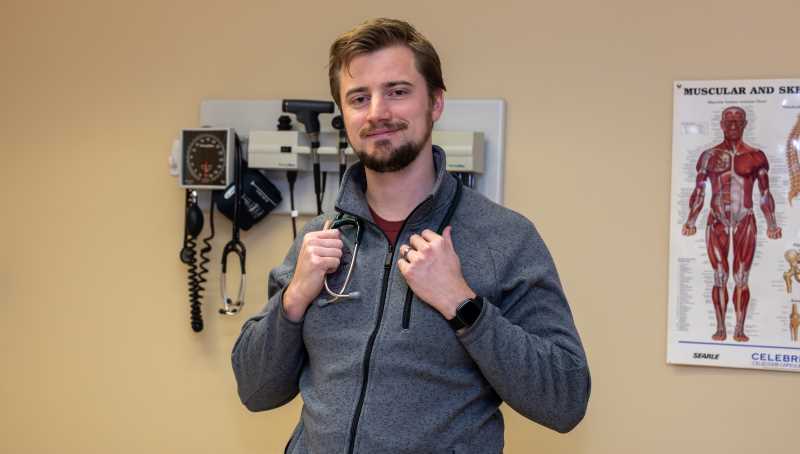 Expanding his scope
Posted 9:50 a.m. Wednesday, Jan. 14, 2026
UWL student returns to grad school, expanding his role in patient care
Read more about Expanding his scope
Expanding his scope
Posted 9:50 a.m. Wednesday, Jan. 14, 2026
UWL student returns to grad school, expanding his role in patient care
Read more about Expanding his scope
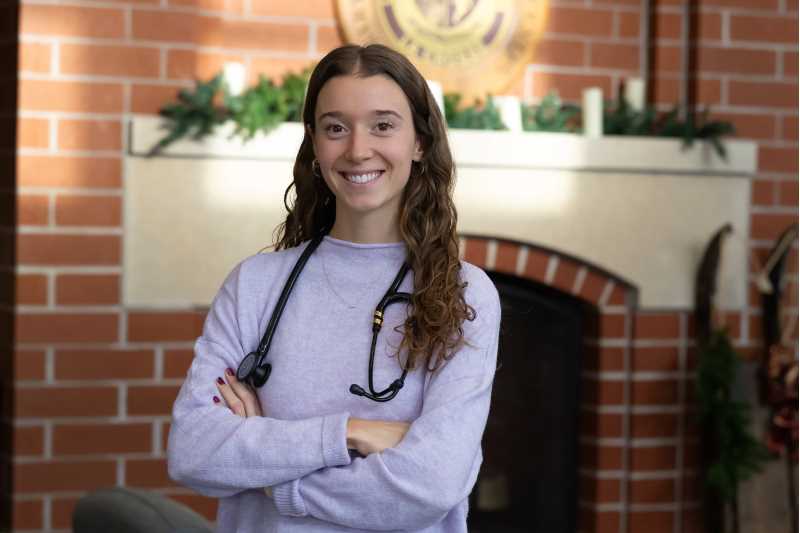 Saying more with less
Posted 2:30 p.m. Thursday, Dec. 11, 2025
Say it in 6 competition challenges grad students to rethink communication, reflect on growth
Read more about Saying more with less
Saying more with less
Posted 2:30 p.m. Thursday, Dec. 11, 2025
Say it in 6 competition challenges grad students to rethink communication, reflect on growth
Read more about Saying more with less
 How to use AI to refine your resume
Posted 9:58 a.m. Friday, Oct. 24, 2025
Learn to use online tools to tailor, refine and perfect your resume
Read more about How to use AI to refine your resume
How to use AI to refine your resume
Posted 9:58 a.m. Friday, Oct. 24, 2025
Learn to use online tools to tailor, refine and perfect your resume
Read more about How to use AI to refine your resume
 Returning to their roots
Posted 12:20 p.m. Thursday, Oct. 23, 2025
Alumni physicians give back through UWL’s Physician Assistant Studies program
Read more about Returning to their roots
Returning to their roots
Posted 12:20 p.m. Thursday, Oct. 23, 2025
Alumni physicians give back through UWL’s Physician Assistant Studies program
Read more about Returning to their roots
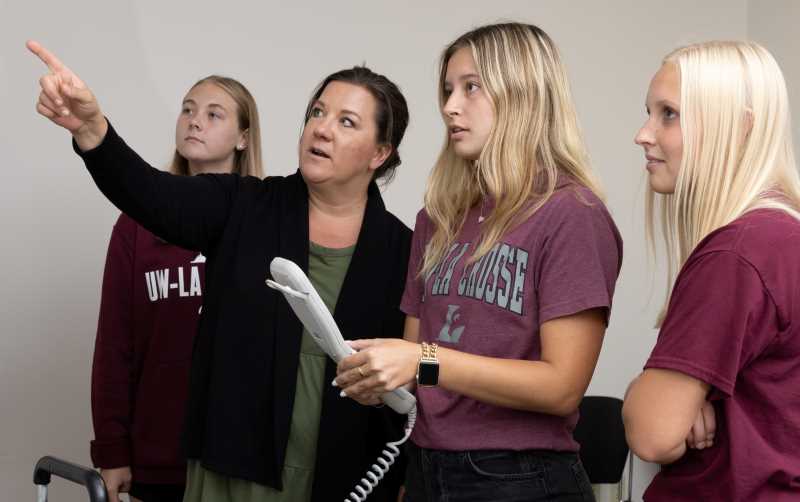 Leading in health professions
Posted 3:23 p.m. Thursday, Oct. 2, 2025
UWL health programs see continual growth, top-tier outcomes and direct pipelines to employment
Read more about Leading in health professions
Leading in health professions
Posted 3:23 p.m. Thursday, Oct. 2, 2025
UWL health programs see continual growth, top-tier outcomes and direct pipelines to employment
Read more about Leading in health professions