


Physician Assistant Studies
PA Program Specific Policies
In alignment with Accreditation Review Commission on Education for the Physician Assistant (ARC‑PA) standards, our program provides a comprehensive list of all required policies for Physician Assistant (PA) students. These policies are designed to promote transparency, support student success, and ensure compliance with national accreditation requirements. We encourage all current and prospective PA students to review and understand these policies to gain a clear understanding of the expectations, responsibilities, and resources that guide your educational and clinical training
Policies addressed here (ARC-PA A3.01, A3.02, A3.03, A3.08, A3.14):
1. Student Policy Introduction and Student Responsibility
POLICY STATEMENT:
PA students enrolled in the Program are responsible for understanding and following the contents of the Student Program Manual. To acknowledge this responsibility, students must review and sign the “Student Program Manual Acknowledgement” form and submit the form to the Program Director within the first week of matriculation. Upon any updates to the manual, students will be notified immediately and must acknowledge their receipt and review of updates. Students are expected to actively contribute to the learning environment by maintaining professional and ethical behaviors.
2. Required academic standards to maintain enrollment and progress in the curriculum
POLICY STATEMENT:
Graduate academic polices are developed and approved through the university's governance system by the Graduate Council. Students remain in good academic standing when they meet the following criteria: https://catalog.uwlax.edu/graduate/academicpolicies/academiceligibility/#probation-retention
- A guide to help students navigate through the graduate academic policies can be found at: UWL Graduate Academic Policies
- Academic standing is determined once per term after all courses are completed and grades have been entered. The academic terms at UWL are the fall and spring semesters, summer session, and winter intersession.
- In addition to the UWL Graduate Academic Policies, the PA program has the following criteria:
Grade Point Average
- Cumulative Grade Point Average (GPA)
Throughout the PA Program, students must maintain a cumulative GPA of 3.0 or greater. If students achieve less than a 3.0 cumulative average in any semester, students will be placed on academic probation the following semester.
Such students must raise their cumulative GPA to at least 3.00 by the end of the term in which they earned their next nine credits or within two terms (whichever comes first) to continue in graduate study.
- Minimum Course Grade
Students must obtain a “C” letter grade or better in all courses, including clinical rotations. If a student receives a grade of “D” or “F,” the student will automatically be dismissed from UWL Graduate Studies and the PA Program. Students may appeal their course grade, as well as dismissal from the Program.
Professionalism (Professional Behaviors)
The program defines professionalism in terms of professional conduct, intellectual honesty, academic integrity, and non-academic professional conduct.
The Program emphasizes the development of professional behaviors – expressions of the ideals and values of the medical profession. Students are expected to adopt behaviors that place the interests and needs of patients above their own. To nurture professionalism, the Program integrates professionalism education into the didactic and clinical curricula and into faculty advising sessions.
During the didactic phase, professional behaviors are introduced and program faculty evaluate students’ professional behavior in their individual courses. Rubrics are provided in individual courses to guide expectations. During the clinical phase, the DCE, Program faculty, and clinical preceptors evaluate students’ professionalism.
If professional expectations are NOT being met, the student will be notified in writing, and the unprofessional behaviors will be addressed in a meeting with the student, student’s faculty advisor, the PD, and/or the DCE. Even though most professional deficiencies result in remediation rather than probation or dismissal, some circumstances may be serious enough to warrant immediate dismissal from the Program.
Technical Standards of Performance
The PA student must possess physical and mental skills and abilities, including observation, communication, motor function, conceptualization, integration and quantitation, and behavioral and social attributes. While accommodation may be made for some disabilities, students must perform these functions independently. If Program faculty or preceptors notice a deficiency during any phase of the Program, the Program may disallow student progression if the deficiency may jeopardize patient care.
3. Requirements and deadlines for completion of the program
POLICY STATEMENT:
To qualify for graduation, students must successfully complete the:
- Didactic phase (Year 1 - 12 months)
- Clinical phase (Year 2 - 12 months)
- Summative evaluation - In addition, students must successfully complete a summative evaluation within the final four months of enrollment in the program to verify that each student meets all the program-defined learning outcomes (competencies).
If acceptable performance is NOT achieved in any curricular component, the Program may offer remediation and re-assessment. Remediation and re-assessment must be completed before the start of the next semester. Students who take a Leave of Absence or Medical Withdrawal must return within one year of the start of the leave.
Summative Evaluation
The summative evaluation occurs during the Spring semester of the clinical year in PAS 802 and consists of written, verbal, and demonstration components meant to provide evidence that a student is competent for entry-level clinical practice. Deficiency in any of these areas may necessitate remediation and may delay or jeopardize graduation.
There are four components of the summative evaluation.
- End of Curriculum Summative Exam
- Summative Objective Structured Clinical Examination
- Summative Evidence-Based Practice Assessment
- Technical Skills Assessment
If acceptable performance is NOT achieved on the first attempt, the Program may offer remediation and one-time re-assessment.
4. Policies and procedures for remediation
POLICY STATEMENT:
The Program utilizes remediation as a systematic process to address student deficiencies in program-defined competencies, academic performance, or professional behaviors during the didactic and/or clinical phases of the curriculum. Additionally, remediation efforts ensure students receive timely access and referral to student services, support students in achieving mastery of identified learning deficiencies and meeting established program expectations.
Remediation efforts may include ongoing evaluation of student performance and progression and may result in the implementation of a Performance Improvement Plan or dismissal from the Program.
Generally, policies and procedures related to remediation during the didactic and clinical phases include:
- Didactic Phase:
- Students who score less than a C grade (<70%) on an exam or assignment may be required to participate in remediation.
- Each semester, students are allowed to remediate up to three exams scoring <70% across all courses. Subsequent failing grades will be retained and may result in course failure and dismissal from the Program.
- During the summer, remediation is not offered for the Basic Science Courses -PAS 509, 510, or PAS 626.
- Remediation is at the discretion of individual Course Directors.
- Clinical Phase:
- The program permits a maximum of three (3) remediations for ANY reason during the entire clinical phase. Subsequent failing grades will be retained and may result in course failure and dismissal from the Program.
- A remediation is triggered by any failure or deficiency found in the following graded components of the clinical phase:
- Time and Case Logging, First Week Clinical Rotation Report, Learning Objectives Checklist
- Preceptor Evaluation of the Student
- End of Rotation™ Examination
- PA Professional Development Seminar Series course work
- Summative Evaluation:
- Students may be offered a ONE-TIME remediation on any failed portion of the summative evaluation.
- Professional Misconduct:
- Professional conduct concerns may be identified by faculty, staff, preceptors, clinical site personnel, standardized patients, peers, or program leadership during either the didactic or clinical phases of the curriculum.
- Professional conduct concerns may include, but are not limited to:
- Violations of the PA Program Professional Conduct Policy or Student Code of Conduct.
- Unprofessional communication or behavior.
- Failure to demonstrate accountability, integrity, respect, responsibility, or ethical conduct.
- Failure to meet professional expectations in classroom, laboratory, clinical, or program-related activities.
- Repeated violations of program policies, procedures, or professional expectations.
The Program will provide all remediation requirements and deadlines, including a PIP if applicable, in writing to the student. Documentation of remediation activities and outcomes will be maintained in the student’s academic file.
Remediation will be individualized based on the nature, severity, frequency, and impact of the identified deficiency and may include one or more of the following:
- Reflective writing assignments.
- Professionalism modules or educational activities.
- Exam re-takes
- Faculty mentoring or advising meetings.
- Counseling or referral to institutional support services.
- Completion of assigned corrective activities.
- Increased monitoring and evaluation during didactic or clinical experiences.
Failure to meet the terms of the PIP or to demonstrate satisfactory improvement in identified deficiencies may result in adverse academic actions, including but not limited to delayed progression, additional coursework or clinical requirements, additional tuition and associated fees, delayed graduation, or dismissal from the Program, in accordance with established Program policies.
Deceleration is NOT granted to students in any phase of the program due to course failure (D and F grades) or failure to achieve the minimum GPA required by UWL Graduate Studies.
Performance Improvement Plans (PIP)
The Program utilizes a Performance Improvement Plan (PIP) as a formal mechanism to document, monitor, and remediate student deficiencies in meeting program-defined competencies, academic standards, or professional expectations during the didactic and/or clinical phases of the curriculum.
A PIP may be initiated by program faculty or the Program Director when a student demonstrates performance that does not meet established benchmarks for progression. The PIP will clearly define the identified deficiencies and include specific, measurable outcomes, required actions, timelines for completion, and methods for evaluation. The plan will be individualized to support the student’s successful attainment of program competencies.
Remediation activities and outcomes will be documented using program-approved documentation processes and maintained in the student's academic file.
5. Policies and procedures for deceleration
POLICY STATEMENT:
Deceleration is defined as a modification of a student’s progression through the program that results in an extended timeline for completion of the curriculum. Deceleration may be implemented to support student success in meeting program-defined competencies, academic standards, or professional expectations during the didactic and/or clinical phases.
The decision to decelerate a student is made by the Program Director in consultation with program faculty and the PA Program Administrative committee and will be based on documented academic performance, clinical performance, professional conduct, or other factors affecting the student’s ability to meet program requirements. Deceleration may occur in conjunction with remediation efforts, including the implementation of a Performance Improvement Plan (PIP), when appropriate.
A formal deceleration plan will be developed and provided to the student in writing. This plan will outline the revised sequence of coursework or clinical experiences, expectations for performance, timelines for completion, and any associated requirements for continued progression. The plan will be individualized to facilitate the student’s successful attainment of all program competencies.
Deceleration may result in additional time to complete the program, which may lead to increased tuition and fees and a delayed graduation date. All deceleration decisions and supporting documentation will be maintained in the student’s permanent academic record.
Failure to meet the terms of the deceleration plan or to demonstrate satisfactory progress may result in further academic action, including additional remediation, further deceleration, or dismissal from the Program, in accordance with established Program policies.
Deceleration is NOT granted to students due to course failure(s) (D and F grades) or failure to achieve good academic standing after academic probation.
6. Policies and procedures for withdrawal
POLICY STATEMENT:
All requests for leave of absence and withdrawal are reviewed by program faculty, the PA Administrative Committee, and UWL. Requests are approved or denied on a case-by-case basis.
Voluntary Leave of Absence from the PA program
A leave of absence may be granted in cases of extenuating life circumstances that significantly interfere with a student’s ability to meet program requirements and in which a regular university withdrawal is not appropriate. Examples include but are not limited to students who experience a serious or unexpected physical or behavioral health condition, who may need to provide care to an immediate family member who is experiencing a serious or unexpected physical or behavioral health condition, or who have experienced the death of an immediate family member. In the case of pre-existing, recurring, or chronic health conditions, documentation must show that the recurrence or worsening of the condition(s) began after initiation of the term for which the withdrawal is requested.
The program follows the university's policy for requesting a leave of absence .
If a leave of absence is granted, the Program, along with the university will provide the student with a designated return-to-class notification date. Students may request a leave of absence from the Program for up to one calendar year maximum. The student is responsible for notifying the Program of their intent to return by this date. Failure to initiate the return process by the specified deadline will result in administrative withdrawal from the Program by the Program Director.
Students are responsible for completing all program and university requirements for reentry within the specified timeframe. The Program may require a reentry assessment, including examination(s), to evaluate retention of previously completed coursework.
Voluntary Withdrawal from the Program
Students may voluntarily withdraw from UWL and the Program (https://catalog.uwlax.edu/graduate/academicpolicies/withdrawal/) at any time. Students should be aware that withdrawal may have significant academic and financial implications.
Students who withdraw and later seek to return to the Program must reapply through the standard admissions process. Readmission is not guaranteed. If readmitted, the student will be required to restart the curriculum in its entirety. Credit for previously completed didactic coursework or clinical rotations will not be awarded or transferred.
Withdrawal from a Course or Clinical Rotation
Students must adhere to University policies regarding course withdrawal deadlines and tuition refund schedules, which are available through the University Cashier’s Office.
Due to the academic, financial, and professional implications, students are required to consult with the Program Director prior to withdrawing from any course or clinical rotation. Course or rotation withdrawal will delay program completion (see Deceleration Policy) and may result in additional tuition and associated costs.
Procedures for Leave of Absence and Withdrawal
Students requesting a leave of absence or withdrawal must complete the following steps:
Consultation Requirement
Meet with the Program Director and Academic Advisor to review the purpose of the request as well as academic, financial, and professional implications of the request.
University Process
Contact the Student Life Office (608.785.8062; studentlife@uwlax.edu; 149 Graff Main Hall) to schedule an appointment and initiate a withdrawal. The Student Life Office provides a checklist which withdrawing students are expected to follow carefully. Withdrawal procedures must be fully completed before a withdrawal becomes official.
Written Request
Submit a formal written request to the Program Director that includes:
- Date of request
- Student name and ID number
- Statement of intent (leave of absence or withdrawal)
- Reason for request
- Anticipated dates (departure and expected return, if applicable)
- Acknowledgment of the designated return-to-class notification date (if applicable)
- Student’s signature
Procedures for returning from Leave of Absence
The student is responsible for notifying the Program of their intent to return along with return date. Failure to initiate the return process by the specified deadline will result in administrative withdrawal from the Program by the Program Director. Students requesting a return from leave of absence must complete the following steps.
Consultation Requirement
Meet with the Program Director and Academic Advisor to discuss return.
University Process
Contact the Student Life Office (608.785.8062; studentlife@uwlax.edu; 149 Graff Main Hall) to schedule an appointment and initiate a return. The Student Life Office provides a checklist which returning students are expected to follow carefully.
Written Request
Submit a formal written letter to the Program Director that includes:
- Date of request
- Student name and ID number
- Statement of intent (return from leave of absence)
- Reason for request
- Anticipated dates (expected return, as applicable)
- Acknowledgment of any required re-entrance documents.
- Student’s signature
7. Policies and procedures for dismissal
POLICY STATEMENT:
All students are expected to meet and maintain the academic, professional, and technical standards established by the University of Wisconsin–La Crosse (UWL) and the Program.
The PA program follows the UWL Graduate studies' Graduate Probation and retention standards for dismissal, readmission to the program after dismissal, and appeals process for graduate students. These policies are be found: https://catalog.uwlax.edu/graduate/academicpolicies/academiceligibility/#probation-retention
Review Process
Review Process
When a student is identified as failing to meet program or university academic standards, the following process will be implemented within the program:
- The student will be notified in writing of the concern(s) and the specific standards not being met.
- The Program Director will schedule a formal review meeting at the earliest reasonable opportunity, but no sooner than five (5) business days after notification, ensuring the student has adequate time to prepare a response.
- Meeting participants will include the Program Director, Director of Clinical Education, and principal faculty, and Administrative Committee members as appropriate.
- The student and involved program representatives will be provided access to all relevant documentation prior to the meeting.
- The student will have the opportunity to respond to the concern(s), present information, and provide context to the reviewing committee.
- Following the student’s statement, the student will be excused. Designated program representatives will deliberate in a closed session to ensure impartial evaluation and provide a summary report with recommendation of action.
Possible Outcomes
Recommendation and Committee Action
- The review committee's recommendation will be forwarded to the Program Director who will prepare a formal report for the Program’s Administrative Committee, the Health Profession's Department Chair within 24 hours; who will render a final decision, ensuring consistency with program policies and institutional requirements.
Outcomes may include:
- Dismissal from the Program: Applied in cases of serious, unprofessional, or unremediable deficiencies.
- Continuation with Required Remediation: A structured remediation plan will outline required actions, expectations, and timelines for successful progression.
- Continuation without Remediation: No further action required; the student is deemed to be in good standing.
- Dismissal of Concern: The concern is not substantiated and no action is taken.
Notification and Documentation
- The final decision will be communicated to the student in writing and verbally in a timely manner by the Program Director.
- Written notification will include:
- The decision
- The rationale for the decision
- Any required remediation actions and timelines (if applicable)
- Information regarding the student’s right to appeal
- All documentation related to the process and outcome will be maintained in the student’s permanent academic file, in accordance with ARC-PA standards for recordkeeping.
Appeal Process (Due Process Rights)
Students have the right to appeal any adverse decision through established University procedures:
- Appeal procedures are outlined in https://catalog.uwlax.edu/graduate/academicpolicies/academiceligibility/#probation-retention
- Students will be informed of their appeal rights at the time of decision notification.
- The appeal process will be conducted independently and without retaliation.
Non-Retaliation and Fair Treatment Statement
The Program prohibits retaliation against any student who participates in this process. All students will be treated fairly, consistently, and without bias, in alignment with ARC-PA Standards on student rights and institutional integrity.
8. Policies and procedures for student grievances
POLICY STATEMENT:
This policy is adopted from and aligned with the current University of Wisconsin–La Crosse (UWL) Eagle Eye Student Handbook.
All students have the right to file a grievance related to the Program. Complaints may be directed to the Program Director, the Chair of the Department of Health Professions, appropriate University offices, or the program’s accrediting body, the Accreditation Review Commission on Education for the Physician Assistant (ARC-PA).
Students who raise concerns or file complaints, whether informally or formally, are protected from retaliation and have the right to a fair review, investigation, and, upon request, periodic updates regarding the status of their concern.
Informal Complaint Process
Informal Complaints:
If a student has a concern or a complaint about a faculty member or course, the general process for making informal complaints is outlined in steps 1-3 below. Students are welcome to bring a friend or a UWL staff member with them during the following steps. Students who report concerns/complaints/grievances, whether informally or formally, will be protected from retaliation and have the right to expect an investigation and the option to have regular updates on the investigation:
- The student should speak directly to the instructor.
- If the student is uncomfortable speaking with the instructor, or they are unsatisfied with the solution, they should go to the chair of the faculty member’s home department.
- If the student is uncomfortable speaking with the department chair, or the chair is the faculty member in question, or they are unsatisfied with the solution, the student should speak with their college dean.
Depending on the specifics of the student's concern, it may be helpful for them to reach out to additional offices:
- Complaints/concerns/grievances about grades, teaching performance, course requirements, course content, incivility, or professional ethics should follow the process outlined above. Students may also wish to seek support from the Student Life office.
- Complaints/concerns/grievances related to hate/bias and discrimination may follow the process outlined above, and in addition or instead students may contact the Center for Civil Dialogue & Civic Engagement office and/or submit a hate/bias incident report.
- Complaints/concerns/grievances related to sexual misconduct may begin with the process outlined above, but will also need to involve the Office of Title IX. Students should know that faculty members are mandatory reporters of sexual misconduct, but that confidential resources, including Violence Prevention are available to them.
Formal Complaint Process
If the student is unsatisfied with the solution of their informal complaint, they have the right to file a formal institutional complaint with the Student Life office, as described below under Institutional Complaint Process.
Students can file formal institutional complaints with UWL.
Only formal, written complaints, signed by a student or sent through the student's official UWL email, and addressed to the Vice Chancellor for Student Affairs/Dean of Students will be accepted as Official Complaints. In the complaint, it will be necessary for the student to demonstrate that they have already attempted and not achieved resolution through other University procedures as documented in the Student Handbook.
For more information regarding Institutional Student Complaints please visit this webpage.
Complaints to ARC-PA
Students may file a complaint with ARC-PA if they believe the Program is not in compliance with accreditation Standards or policies. Additional information is available on the ARC-PA website.
- ARC-PA reviews only written, signed complaints that include specific allegations related to accreditation compliance.
- Complaints may be submitted via email to: Complaints@arc-pa.org
Reporting a Clinical Year Concern or Grievance
Students may follow the informal and formal complaint policies set forth by UWL. Students are encouraged to promptly notify the Director of Clinical Education (DCE). The DCE will collaborate with the clinical site (e.g., site director or clinical coordinator) to address the concern. Each clinical site maintains its own grievance procedures, which will be followed in conjunction with UWL policies under the Institutional Complaint Process.
9. Policies and procedures for student appeals
POLICY STATEMENT:
Students may appeal a course grade, program decisions and dismissal from the Program.
The Program follows the UWL Graduate Studies and Health Professions Department Bylaws as follows:
The full UWL Graduate Studies policy on grade appeals can be found at this link: https://catalog.uwlax.edu/graduate/academicpolicies/gradesgrading/#appeal-final-grade
The Health Professions Department Bylaws Appendix A states:
VIII.A.A-1 Grade Appeals
Students who believe that the grade they received for a course does not reflect their performance in that course may appeal the disputed grade. This appeal must take place before the end of the term immediately following the term in which the grade was recorded. Appeals Process: The Department of Health Professions appeal process has four steps: Instructor, program director, department chair, department. The process will be detailed for each step:
Instructor
The request to appeal a grade will be put in writing and addressed to the individual course instructor. The appeal will contain the reason for the grade appeal and any supporting materials. Acceptable reasons for appeal are limited to the following: ● Instructor used different grading standards for student work than for other students in the class ● Grading for student was biased, arbitrary, or capricious. The instructor will acknowledge the appeal was received via e-mail within 1 working day of receipt of the appeal. The instructor will contact the student within 5 working days of receipt of the appeal and schedule a formal meeting with the student. This meeting will be attended by the course instructor, another faculty member or program director, the student, and anyone else the student wishes to bring (if desired). If the course instructor is the program director, another faculty member or department chair will be asked to attend the meeting. The meeting may be recorded by notes and audiotape. The possible outcomes of this appeal hearing are: ● Instructor accepts student’s appeal for grade change and changes the grade ● Student acknowledges instructor’s rationale for grade and accepts the grade ● Instructor does not change the grade; student does not accept the decision and decides to appeal to the next level. The outcomes of the appeal will be documented by the course instructor with a copy sent to the student and placed in his/her file.
Program Director (optional step: may be skipped if the program director has been involved in the initial appeal hearing with the individual faculty member).
The request to appeal the grade will be put in writing and addressed to the program director. The appeal will contain the reason for the grade appeal and supporting materials. Acceptable reasons for appeal are limited to the following: ● Instructor used different grading standards for student work than for other students in the class ● Grading for student was biased, arbitrary, or capricious. The program director will acknowledge the appeal was received via e-mail within 1 working day of receipt of the appeal. The program director will contact the student within 5 working days of receipt of the appeal and schedule a formal meeting with the student. This meeting will be attended by the program director, the student, and anyone else the student wishes to bring (if desired). The meeting will be recorded by notes and/or audiotape. The program director may seek additional information from the course instructor and /or student before rendering a judgment. The possible outcomes of this appeal hearing are: ● Support for the instructor and a recommendation that the grade should stand as given. ● Recommendation to instructor to change the grade ● Student accepts the grade and ends the appeal process. ● Student does not accept the grading decision and decides to appeal to the next level. The outcomes of the appeal will be documented by the program director with a copy sent to the student and placed in his/her file.
Department Chair
The request to appeal the grade will be put in writing and addressed to the department chair. The appeal will contain the reason for the grade appeal and supporting materials. Acceptable reasons for appeal are limited to the following: ● Instructor used different grading standards for student work than for other students in the class ● Grading for student was biased, arbitrary, or capricious. ● Program director recommended a grade change to the instructor; instructor did not change the grade. The department chair will acknowledge the appeal was received via e-mail within 1 working day of receipt of the appeal. The program director will contact the student within 5 working days of receipt of the appeal and schedule a formal meeting with the student. This meeting will be attended by the department chair, the student, and anyone else the student wishes to bring (if desired). The meeting will be recorded by notes and audiotape. The department chair will speak to the course instructor after meeting with the student to gather information about the grading.
The department chair may also formally seek additional information from the course instructor and /or student before rendering a judgment. The possible outcomes of this appeal hearing are: ● Support for the instructor and a recommendation that the grade should stand as given. ● Recommendation to instructor to change the grade. ● Student accepts the grade and ends appeal process. ● Student does not accept the grading decision and decides to appeal to the next level. The outcomes of the appeal will be documented by the department chair with a copy sent to the student and placed in his/her file.
Health Professions Department Level
A student may request for a formal appeal at the Health Professions Department Level. The appeal must be filed in writing with the department chair. The appeal will contain the reason for the grade appeal and supporting materials. Acceptable reasons for appeal are limited to the following: ● Instructor used different grading standards for student work than for other students in the class. ● Grading for student was biased, arbitrary, or capricious. ● Department chair recommended a grade change to the instructor; instructor did not change the grade. The department chair will acknowledge receipt of the written appeal within 1 working day. The department chair will appoint a five-member ad hoc committee to hear the appeal. The committee will consist of five faculty/staff of the Department who have not yet been involved in the appeals process. The department chair will appoint one of the committee members to chair the committee The department chair shall not be a member of this committee but will attend the committee meeting as observer and witness. The instructor will also attend this meeting but will not be a voting member. This appeals committee will meet within 1 week of receipt of the written grade appeal. The committee members will be given copies of the documentation of the previous 3 levels of appeal prior to the appeal hearing. The appeals hearing will be conducted as follows: · Student will be given 15 minutes to describe the basis for the appeal and provide supporting documentation to the committee. · · Involved teacher will be given 15 minutes to describe the rationale for the grade and reason for not changing the grade. Department chair will be asked to describe involvement in the situation and outcome of actions.
The student, instructor, and department chair will be excused, and committee will deliberate. · · · The committee may ask for additional information from any of the parties involved. The committee will specify the time frame for supplying the materials. The request for additional materials will be put in writing. If additional materials are requested, the committee meeting will be adjourned. The committee will reconvene within one week after deadline for receipt of the requested materials. The possible decisions the committee can make are: 1. Support the appeal and make a recommendation to the course instructor to change the grade. 2. Deny the appeal and support the grade as given. The appeals committee chair will communicate the outcome of the appeal hearing in writing to the student, course instructor, and department chair within 5 days of the final committee hearing. A copy of the student’s written appeal and the response of the committee will be given to the student and placed in the student’s permanent record.
Any further appeal will be directed to the Dean of the College of Science and Health.
Program Policy Appeals
When a student chooses to appeal a program decision, the chair of the Health Professions department is to be informed of the appeal by written request.
Dismissal Appeals
A student who has been dismissed from their graduate program may request readmission. The student should consult with their program director and/or the Office of Graduate & Extended Learning for advice and help with how to proceed.
The student's request for readmission must be stated in a formal letter addressed to the program director, outlining the rationale for the request and plans for improved performance
Students should use the following link for the full policy: https://catalog.uwlax.edu/graduate/academicpolicies/academiceligibility/#readmission-after-dismissal
10 Policy for student employment while enrolled in the program
POLICY STATEMENT:
All faculty, staff, and students must understand and adhere to the following:
- PA students are not required to work for the Program as a condition of enrollment or participation.
- PA students may not function as, or substitute for, instructional faculty, clinical staff, administrative staff, or any other Program personnel.
Due to the rigorous and demanding nature of PA education, the Program strongly discourages employment while enrolled.
Students who elect to maintain employment during their enrollment in the PA Program acknowledge and understand that:
- Such employment is not sponsored, endorsed, or supervised by the UWL PA Program.
- Program faculty are not responsible for overseeing or evaluating students' employment activities.
- Students are not covered by the Program's professional liability or malpractice insurance while engaged in outside employment activities.
- Employment responsibilities must not interfere with academic, clinical, or professional obligations required by the Program.
The Program expects all students to uphold the professional and ethical standards of the PA profession both within and outside of Program activities. Students must demonstrate professionalism, exercise sound judgment, and communicate honestly and accurately in all employment settings.
Students who identify themselves as members of the UWL PA Program in the workplace must clearly represent their status as PA students and must not imply that they are acting on behalf of, representing, or speaking for the Program.
The Program assumes no financial, legal, or professional responsibility or liability for students' extracurricular employment, whether clinical or non-clinical in nature.
11. Policy for immunization and health screening of students
POLICY STATEMENT:
The PA Program's immunization and health screening policy protects students, faculty, staff, and patients during classroom, laboratory, and clinical activities. Students are responsible for keeping their own health records and for providing accurate, timely documentation when requested.
The program's immunization and titer requirements are based on current Centers for Disease Control and Prevention (CDC) recommendations for health care personnel. The policy addresses every vaccine in the CDC's Adult Immunization Schedule by Medical Condition and Other Indication, and identifies each as required, recommended, or not required by the program (see the table below). The program also follows the Healthcare Personnel Vaccination Recommendations from Immunize.org, the CDC's guidance on tuberculosis screening of health care personnel, applicable state law, and the requirements of the program's clinical partners.
The Program Director reviews this policy annually against current CDC guidance and clinical partner requirements, and updates it when recommendations change.
State Law
Neither federal law nor Wisconsin law mandates or prohibits any specific immunization for adults, including health care personnel and health professions students.
Under Wis. Stat. § 36.25(46), UWL must give every enrolled student annual information about the risks of meningococcal disease and hepatitis B and about the availability and effectiveness of vaccines against them. Students living in residence halls must report whether they have received these vaccines. The statute does not require vaccination. The program's hepatitis B requirement goes beyond the statute.
Prevention of Transmission
Students who are ill or have symptoms of a communicable disease must stay home, self-isolate as appropriate, and seek medical care. They must notify the Program Director (didactic phase) or the Director of Clinical Education (clinical phase) as soon as possible so that appropriate precautions can be taken.
Questions
Direct questions about this policy to the Program Director.
References
- CDC, Adult Immunization Schedule by Medical Condition and Other Indication
- CDC, Frequency of Tuberculosis Screening and Testing for Health Care Personnel
- Immunize.org, Healthcare Personnel Vaccination Recommendations
- Wisconsin Department of Health Services, Recommended Immunization Schedules
- Wis. Stat. § 36.25(46), Meningococcal disease and hepatitis B
Confidentiality. The program does not receive or review students' medical records. Students submit only the Student Health Examination form, immunization and titer documentation, and TB screening results needed to verify that requirements are met. These documents are stored confidentially and are not available to program faculty and staff except as needed those authorized to verify compliance.
Immunization Requirements
The table below lists every vaccine in the CDC adult schedule by medical condition and indication, with the program's status for each. Required immunizations must be documented by the deadlines in this policy. Recommended immunizations are encouraged but not required. Not required immunizations are recommended by CDC only for certain ages, medical conditions, or exposures. Students should discuss these with their own health care provider.
| Vaccine | Program status | Documentation and notes |
|---|---|---|
| Hepatitis B | Required | Complete vaccine series and a positive hepatitis B surface antibody (anti-HBs) titer. Students with a negative titer follow CDC guidance for revaccination and retesting. |
| Measles, mumps, rubella (MMR) | Required | Two doses of MMR vaccine or positive titers for measles, mumps, and rubella. |
| Varicella | Required | Two doses of varicella vaccine or a positive varicella titer. |
| Tdap/Td | Required | One dose of Tdap, then a Td or Tdap booster every 10 years. |
| Influenza (inactivated or recombinant) | Required (declination permitted) | One dose each influenza season, by December. Clinical sites may decline students who are not vaccinated. |
| Influenza, live attenuated (LAIV) | Acceptable alternative | CDC advises that personnel caring for severely immunocompromised patients receive inactivated or recombinant vaccine instead of LAIV. |
| COVID-19 | Required (declination permitted) | Current dose by December each year, per CDC guidance. Clinical site requirements vary. |
| Meningococcal ACWY | Recommended | Recommended for students living in residence halls and for those with certain medical conditions or laboratory exposures. |
| Meningococcal B | Not required | Recommended by CDC only for certain medical conditions or exposures. |
| Hepatitis A | Not required | Recommended by CDC for those at increased risk. |
| Human papillomavirus (HPV) | Recommended | Recommended through age 26; shared clinical decision-making for ages 27–45. |
| Pneumococcal | Not required | Recommended by CDC based on age or medical condition. |
| Respiratory syncytial virus (RSV) | Not required | Recommended by CDC based on age, pregnancy, or medical condition. |
| Recombinant zoster (RZV) | Not required | Recommended by CDC for adults 50 and older and certain immunocompromised adults. |
| Haemophilus influenzae type b (Hib) | Not required | Recommended by CDC only for asplenia or stem cell transplant. |
| Mpox | Not required | Recommended by CDC only for specific occupational or other risk. |
| Polio (IPV) | Not required | CDC recommends completing the series if incompletely vaccinated. |
Self-reported dates and results are not accepted. Documentation must come from a health care professional, health care organization, or state immunization registry. Health examinations must be performed by a licensed MD, DO, PA-C, or NP who is not related to the student.
Didactic Phase Requirements and Timelines
Didactic Phase
By July of the matriculating year, students will:
- Complete a health examination using the Student Health Examination form. The examination assesses communicable disease, conditions that might endanger others, immunization status, and fitness to undertake graduate education.
- Document all required immunizations and titers in the table above, using the PA Program Required Immunizations checklist.
- Submit the forms to the program and keep personal copies of all health records.
By December of the matriculating year, students will:
- Receive seasonal influenza and COVID-19 immunizations, or submit the Attestation/Declination of Seasonal Influenza and COVID-19 Vaccination form.
- Submit medical documentation showing the student's name, vaccine name, and date, and keep personal copies.
By May 1 of the didactic year, students will:
- Submit baseline TB screening results as described above.
- Keep personal copies of all health records.
Clinical Phase Requirements and Timelines
Clinical Phase
Before the clinical phase, students may be asked for an updated health examination, especially after a change in health status that affects their ability to participate in clinical rotations.
By December of the clinical phase, students will:
- Receive seasonal influenza and COVID-19 immunizations, or submit the Attestation/Declination of Seasonal Influenza and COVID-19 Vaccination form.
- Submit medical documentation showing the student's name, vaccine name, and date, and keep personal copies.
- Meet any additional clinical partner requirements listed above before starting at that site.
Tuberculosis Screening
TB screening follows the CDC's Frequency of Tuberculosis Screening and Testing for Health Care Personnel.
- Baseline screening: Within three months before starting the clinical phase and before direct patient care, students complete a two-step tuberculin skin test (TST) or a TB blood test (IGRA), signed by a licensed medical provider (MD, DO, PA, or NP). [If students have patient contact during the didactic phase, move baseline screening to matriculation.]
- Prior positive result: Students with a prior positive TST or IGRA provide documentation of a chest radiograph and clinical evaluation instead of repeat testing.
- Ongoing screening: Routine annual testing is not required unless a clinical site requires it or a student has a known exposure. After an exposure, students follow the clinical site's and the program's exposure procedures.
Declination of Vaccination
Declination of Vaccination
Students may decline an immunization for personal or medical reasons by submitting the Attestation/Declination of Vaccination form. Clinical partners may decline to accept students who lack required immunizations or medical documentation. Declining an immunization may therefore delay or prevent completion of clinical rotations and progression in the program.
Questions about the health and immunization policy should be directed to the Program Director.
12. Policy for student non-Responsibility for clinical site and preceptor placement
POLICY STATEMENT:
Prospective and enrolled students are not required to provide or solicit clinical sites or preceptors.
Clinical rotations are completed within the health systems of our affiliated partner institutions. This provides students with a variety of opportunities for experiences in the many rural and suburban clinics and hospitals within these health systems in Wisconsin, Minnesota, and Iowa.
Travel is required for many rotation sites. Students are responsible for their own housing and transportation during the clinical year. Some clinical sites are able to provide housing; however, this is highly specific to the location and current availability. Students are encouraged to secure housing through known contacts, personal connections, and former students.
Clinical Base Site Matching
Students will be assigned to clinical rotation sites based on availability within one of the clinical base sites. As the clinical phase progresses, the clinical site and/or Program may need to alter rotation schedules due to unforeseen circumstances with preceptors and clinical departments. While changes will be kept to a minimum, students are expected to professionally accept rotation assignments without complaint.
Students are never permitted to arrange their own preceptors or clinical sites. The DCE will secure all rotations. Students who must understand and comply with this policy are required to sign the Clinical Placement Acknowledgement form.
13. Policy for student travel to required clinical rotation sites
POLICY STATEMENT:
Clinical rotations are completed within the health systems of our affiliated partner institutions. This provides students with a variety of opportunities for experiences in the many rural and suburban clinics and hospitals within these health systems in Wisconsin, Minnesota, and Iowa. Additional information about partner specialties and practice sites is available via the links below.
Travel is required for many rotation sites. Students are responsible for their own housing and transportation during the clinical year. Some clinical sites are able to provide housing; however, this is highly specific to the location and current availability. Students are encouraged to secure housing through known contacts, personal connections, and former students.
Health professions news feed
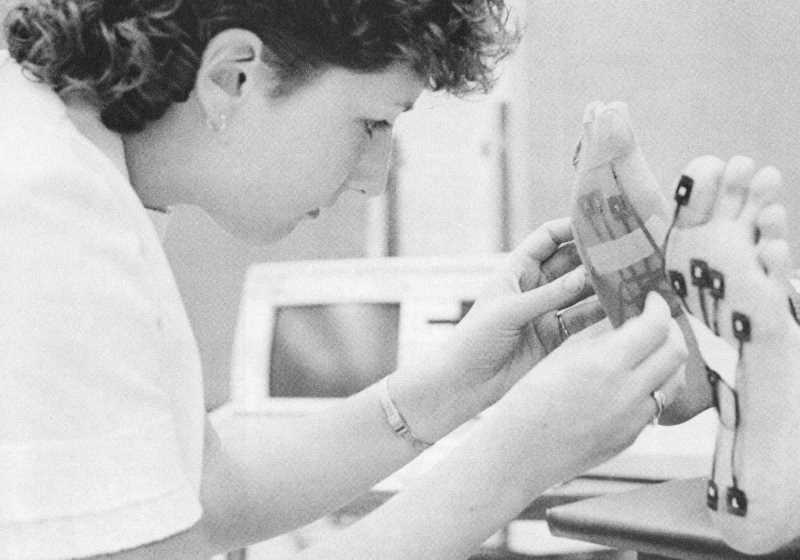 Celebrating 50 years
Posted 1:27 p.m. Thursday, Oct. 1, 2026
UWL’s PT program: evolution, research and the people who made it possible
Read more about Celebrating 50 years
Celebrating 50 years
Posted 1:27 p.m. Thursday, Oct. 1, 2026
UWL’s PT program: evolution, research and the people who made it possible
Read more about Celebrating 50 years
 Imaging the future
Posted 10:27 a.m. Friday, Sept. 11, 2026
New SPECT camera prepares students for careers in precision medicine
Read more about Imaging the future
Imaging the future
Posted 10:27 a.m. Friday, Sept. 11, 2026
New SPECT camera prepares students for careers in precision medicine
Read more about Imaging the future
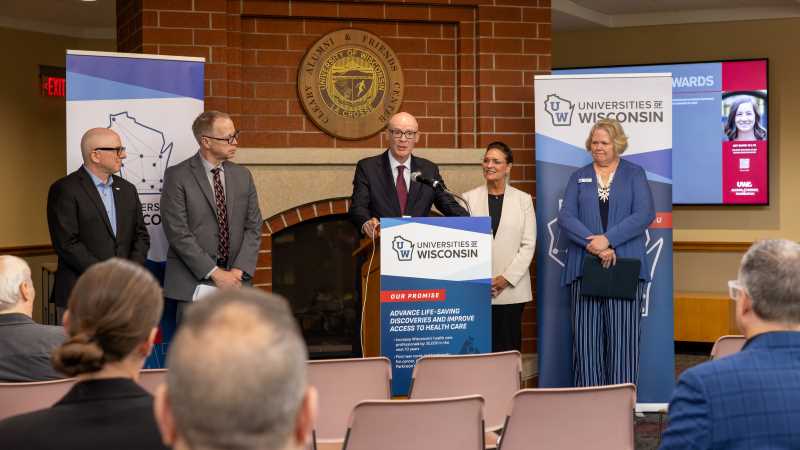 Building a Healthy Wisconsin
Posted 12:17 p.m. Tuesday, Aug. 11, 2026
Chancellor Beeby, UW leaders call for greater investment in health education
Read more about Building a Healthy Wisconsin
Building a Healthy Wisconsin
Posted 12:17 p.m. Tuesday, Aug. 11, 2026
Chancellor Beeby, UW leaders call for greater investment in health education
Read more about Building a Healthy Wisconsin
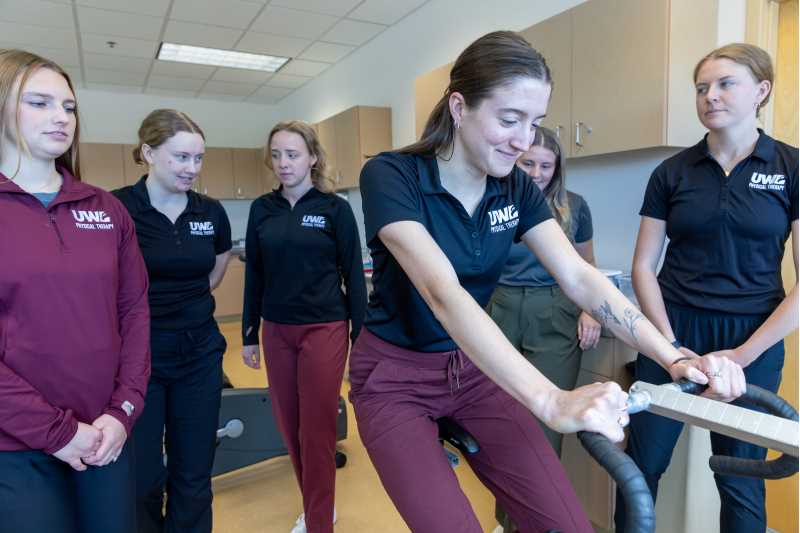 Moving lives forward
Posted 4:17 p.m. Friday, Aug. 7, 2026
Physical therapy program celebrates five decades of educating compassionate professionals
Read more about Moving lives forward
Moving lives forward
Posted 4:17 p.m. Friday, Aug. 7, 2026
Physical therapy program celebrates five decades of educating compassionate professionals
Read more about Moving lives forward
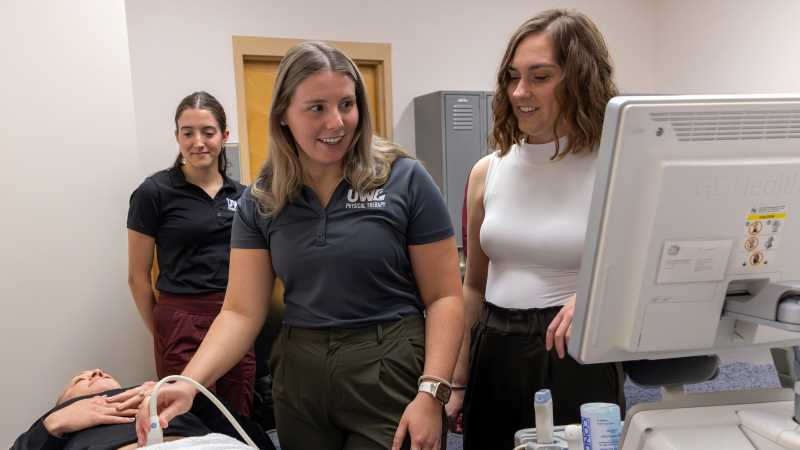 Scholarship that listens
Posted 12:48 p.m. Thursday, May 7, 2026
High-impact student research rethinks postpartum care, exemplifies depth of PT education and student authorship
Read more about Scholarship that listens
Scholarship that listens
Posted 12:48 p.m. Thursday, May 7, 2026
High-impact student research rethinks postpartum care, exemplifies depth of PT education and student authorship
Read more about Scholarship that listens