



Microcredentials
A page within Microcredentials
Microcredentials at UWL
Microcredentials are focused learning opportunities designed to meet the needs of learners, employers, and community partners. They provide key skills to improve a learner’s career outlook. The Eagle Advantage skills provide a great starting point for thinking about the skills we can support with microcredentials.
UWL offers both non-credit microcredentials and credit-based microcredentials.




What is a digital badge?
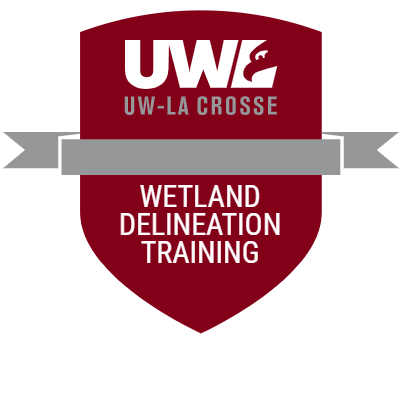
A digital badge is a virtual and verifiable credential that represents a skill, achievement, or competency. They contain embedded data about the issuer, the criteria to earn the badge, and other details making them more than just a static image. At UWL, digital badges are available for all non-credit microcredentials.
Creating new microcredentials
Do you have an idea about a set of learning experiences that demonstrate a key skill and enhance career advancement? The Eagle Advantage skills provide a great starting point! Then follow the steps below to move forward with proposing a new microcredential.
How do I propose a new non-credit microcredential?
UWL students
You will need a campus office, department, or college to sponsor your microcredential. Reach out to a UWL employee whose role or expertise lines up with what you would like to propose. Share the link to this website with them and ask if they can help you with the proposal process. That employee’s office can be the sponsoring unit for the microcredential.
Community partners
Reach out to UWL Director of Community Engagement Lisa Klein to share your ideas. She can help connect you with a UWL campus office, department or college that can potentially sponsor the new microcredential.
UWL employees
Review the procedures for establishing non-credit microcredentials. If you are ready, you can start completing the UWL Non-Credit Microcredential Proposal form.
Then reach out to Graduate & Extended Learning (GEL) Professional Education Program Specialist Amber Miller-Adamany, who will assist with completion of the form and next steps.
If your new microcredential is approved, the sponsoring campus office will work with GEL to develop a memorandum of understanding to guide tracking of microcredential completion by individual learners. This will include a one-time administrative fee for the workload involved in microcredential establishment and digital badge set-up.
There will also be a $5 fee per digital badge issued. This cost can be charged directly to learners, or paid to GEL by the campus office sponsoring the microcredential.
How do I propose a new credit-based microcredential?
Faculty interested in creating a microcredential curriculum should review the Credit-Based Microcredentials Policy (UWL login required) and can then follow the new academic program development guidance from Provost’s office.
Non-credit microcredential documents
Microcredential FAQs
How is a microcredential different from a degree or certificate?
Earning a degree is a longer process that comprehensively covers a broad array of information. Certificate programs are typically shorter and more specific than a degree; at UWL, certificates are available only to degree-seeking students, and are based on 9–16 credits of coursework. Microcredentials are generally the most specific are competency-based, and focused on career readiness or progression.
Last modified: 12/10/2025
How are microcredentials different from Continuing Education Units (CEUs)?
CEUs are awarded based on the time spent on an activity and do not necessarily include a direct alignment with a specific workplace competency. CEUs can be awarded for any length of professional development activity, while UWL's non-credit microcredentials require at least 30 hours of effort. Check out our CEU website to learn more!
Last modified: 02/06/2026
How do credit and non-credit microcredentials compare?
| Non-credit microcredentials | Credit-based microcredentials |
| Based on non-credit learning activities such as volunteering, training or workshops | Based on a set of UWL courses |
| Reviewed and approved by UWL faculty and administrators in accordance with the UWL Non-credit Microcredential Policy | Reviewed and approved by UWL faculty and administrators in accordance with the UWL Credit-based Microcredential Policy (UWL login required) |
| 30+ hours of effort to complete | 4–8 credits |
| Available to anybody (UWL students, employees, and community members) | Currently available only to students enrolled in the College of Business Administration (CBA) |
| Documented with a digital badge | Appear on the UWL transcript |
Last modified: 12/10/2025
Can a microcredential include coursework?
Yes! Credit-based microcredentials are entirely based on coursework. Non-credit microcredentials can also include courses, along with other types of activities, e.g. work experience, participating in a campus event, serving in a leadership role, intramural or team athletics involvement, etc.
Last modified: 12/04/2025
Can we create credit-based microcredentials for UWL students outside of the CBA?
Yes! The first UWL credit-based microcredentials were created specifically for CBA students, but there is no restriction on credit-based microcredentials in terms of which courses they use or which students are eligible.
Last modified: 12/03/2025
How do I find a Subject Matter Expert?
Professional Education Program Specialist Amber Miller-Adamany can help you identify a campus expert to partner with you in developing a new NCMC.
Last modified: 12/03/2025
Can my student organization propose a microcredential?
Yes! But you will need to find a campus office or faculty member to support you. Possibilities include an academic department aligned with your organization, the Leadership & Involvement Center, or another office that lines up with your idea.
Last modified: 12/04/2025
Why do we have to pay for creating and issuing digital badges?
Graduate & Extended Learning has the expertise and software needed to support digital badging. As a self-funded unit, we need to cover the labor and software costs involved. The fees allow us to cover these costs and provide campus with these services.
Last modified: 12/04/2025
Why should I get a digital badge?
Microcredentials and their associated digital badges enhance employability, enable lifelong learning, and support workforce development by providing accessible, affordable opportunities.
Last modified: 12/10/2025
How do I share my digital badge with employers?
Within Parchment (UWL's digital badge platform), you can:
- Download a credential graphic
- Add it to LinkedIn (one-click sharing)
- Generate a QR code for resumes or portfolios
- Provide a verification link to employers
Last modified: 12/10/2025
Are digital badges FERPA-protected?
Badge records are considered part of a student’s educational record. Students must opt in to receive a badge; doing so includes an notification that records of badge completion may be shared with third parties unless the learner opts to restrict the release of that information.
Last modified: 12/10/2025
Why doesn't UWL issue digital badges for credit-based microcredentials?
Credit-based microcredentials are documented on each student's official UWL transcript instead of using a digital badge.
Last modified: 01/06/2026
How do microcredentials support equity and access?
- Create shorter, low-cost learning opportunities
- Provide early wins that build confidence
- Recognize learning outside traditional credit structures
- Validate skills for first-generation, rural, and returning adult students
- Support lifelong learning
Last modified: 12/10/2025
Contact

- Professional Education Program Specialist
- 205F Morris Hall
- amiller-adamany@uwlax.edu
- 608.785.6528