


Visual & Performing Arts
Attend the Tale of Dave and Sound
To start, tell the folks at home a little about yourself.
There's a lot to tell... I'll start narrowly. This is my second year at UWL. For 21 years before that I was in Moscow, Idaho. For much of the last decade there, I ran a small theatre company that I founded, and taught as adjunct faculty at the University of Idaho.
But I came to theatre as a third career. After getting an undergraduate degree in American History and computer science, I spent five years as a university police officer. When I realized I didn't have a satisfying career path there, I took advantage of a college connection and joined a small startup as the lead designer and coder for what would have been the first travel e-commerce web site. In the process of building the site, I invented some techniques that had never been used before. And out of that experience I ended up writing a couple of big books about web programming... and then the company ran out of money and laid me off.
I joined another small company - a marketing agency that was just getting into web-based services. (If you want a great job interview story, ask me about THAT job interview.) After two crazy years there as a programmer, writer, sales lead, and ultimately VP of sales and CTO, I was hired away by one of my clients - IBM - where I spent 17 years leading a cross-corporate writing team.
About six years into my time with IBM, I decided to pursue an MFA in playwriting at the University of Idaho. (I've always been a writer.) I ultimately earned both playwriting and directing emphases. I did IBM and theatre together for about a decade until IBM laid me off. Which gets me back to the last decade I described above and landing at UWL. Whew.
The sound design for Machinal seems very complex. How did you develop the concept for the design, and how did your work intersect with the other design areas? How many cues are there?
The director, Mary Trotter, and I have worked together a lot, and we started talking about the sound for the show shortly after we selected the play. I had an initial inspiration that adapted and changed with her vision for the show and led us to the design we ended up with.
Mary and I wanted the sound to help the audience understand that we were telling memory story. With the script having a lot of repetition in it, I latched on to that idea. I used echoes, reverberation and a handful of key songs and sounds that had a grounding in some key "real" moments. Those sounds then morphed when used later (or sometimes as foreshadowing) to help push us into moments of memory.
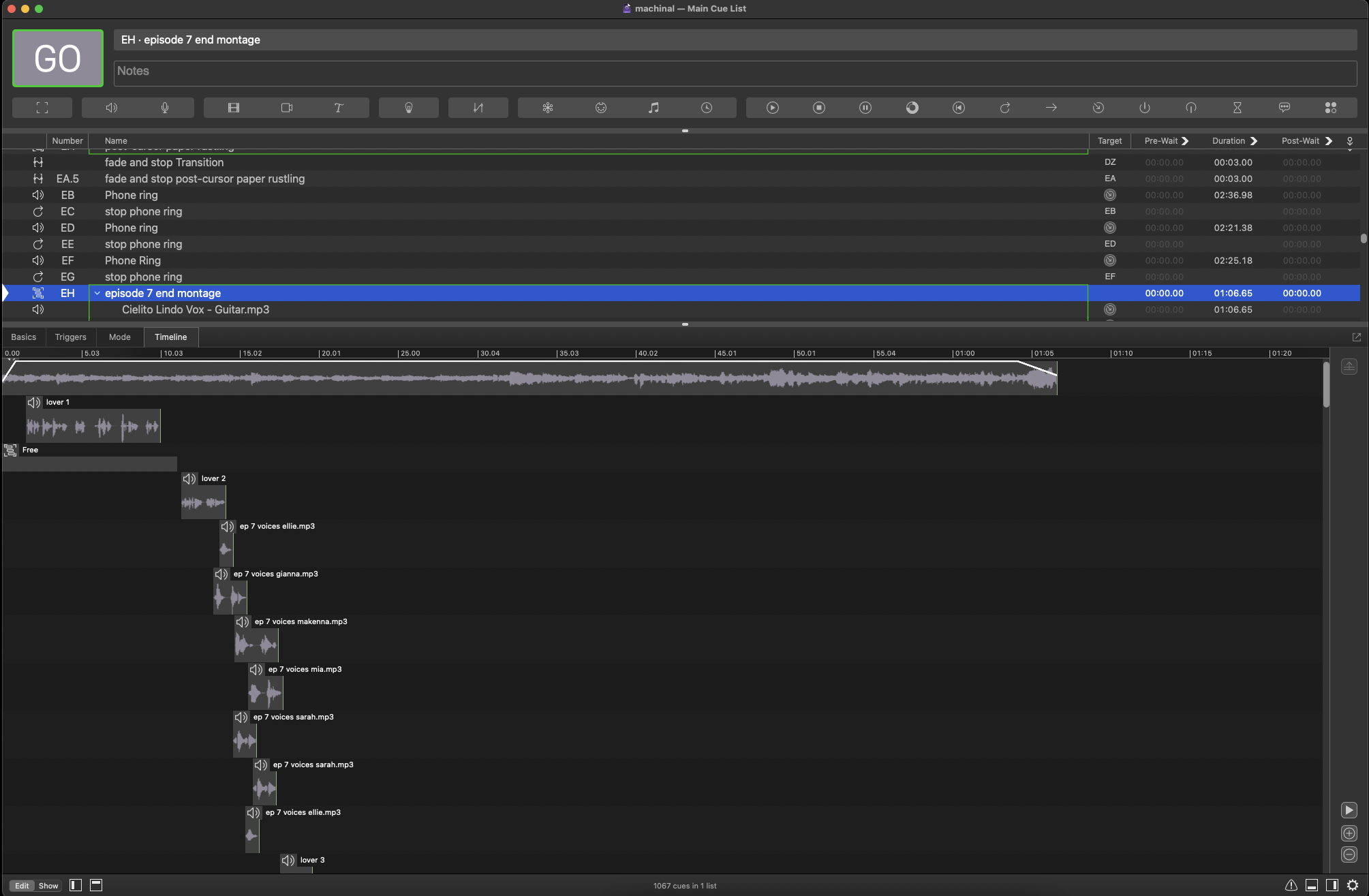
The result is a design with over 150 called cues, made up of perhaps 700-800 individual sounds. One great example is a key moment in the play that involves an audio montage - a character experiencing a traumatic moment of memory and loss - that is one minute and eight seconds. It is made up of 125 sounds layered together, treated with various audio effects and sent to different speakers around the theatre. As the sound is playing, the lights move and change as the ideas and themes move in the montage text. The result, we hope, is the audience getting to experience this key moment WITH the main character.
This sounds like an intense process. How does this fit into the mix with the sound needs for the other productions this semester?
Wheeee! I'm designing sound for all three shows this semester. For the kids show, coming up next, I've decided to compose original music, using instruments that will help us understand who these main characters - animals - are. I think I've gotten the inspiration I need for this task - and will have the time now that I've finished Machinal. I'm working with a wonderful assistant designer who is going to help me build environmental sounds (think breezes and waves and rustling leaves) to bring the audience into the four worlds we'll build in this play.
For the musical at the end of the semester, we're planning to use on-stage, actor-generated sound effects. This kind of design is an entirely different effort as it involves figuring out how to make the various sounds we need, making sure we can get the various items we need for each sound on or around stage and then training actors to actually make the sounds. It's a lot of work, but it’s also a lot of fun for the actors and makes for a great audience experience. And, of course, I'll be helping our student sound engineer set up and mix wireless mics for 15 or so actors and 20-25 mics/inputs for the live orchestra.
And aren’t you also the co-author of one of those shows?
I am! Nic Barilar and I adapted four of our favorite Beatrix Potter tales into a sweet little show framed around Beatrix herself and the letters she wrote to children. The tales meant a lot to both of us as children and we're very excited to share our adapted story with our audiences - particularly kids.
I’ve heard you ask about actor-generated sound in early meetings for several past productions. Is this something you often look for when creating a sound design for a show?
I love actor-generated sounds. One of my early professional sound design assignments was ALSO an on-stage role as a WWII-era BBC sound effects technician. My character was on stage the whole show, interacted with the rest of the cast constantly, but had no spoken lines (he was mute due to his experiences in WWI). But through sound I was the glue that held the story together. I researched early 20th century radio sound effects. I built a handful of key sound "engines" based on historical documents. And I used them on stage. Since then, I've used on-stage or backstage actor- (or crew-) generated sound whenever it helps tell the story.
What else would you like us to know about you?
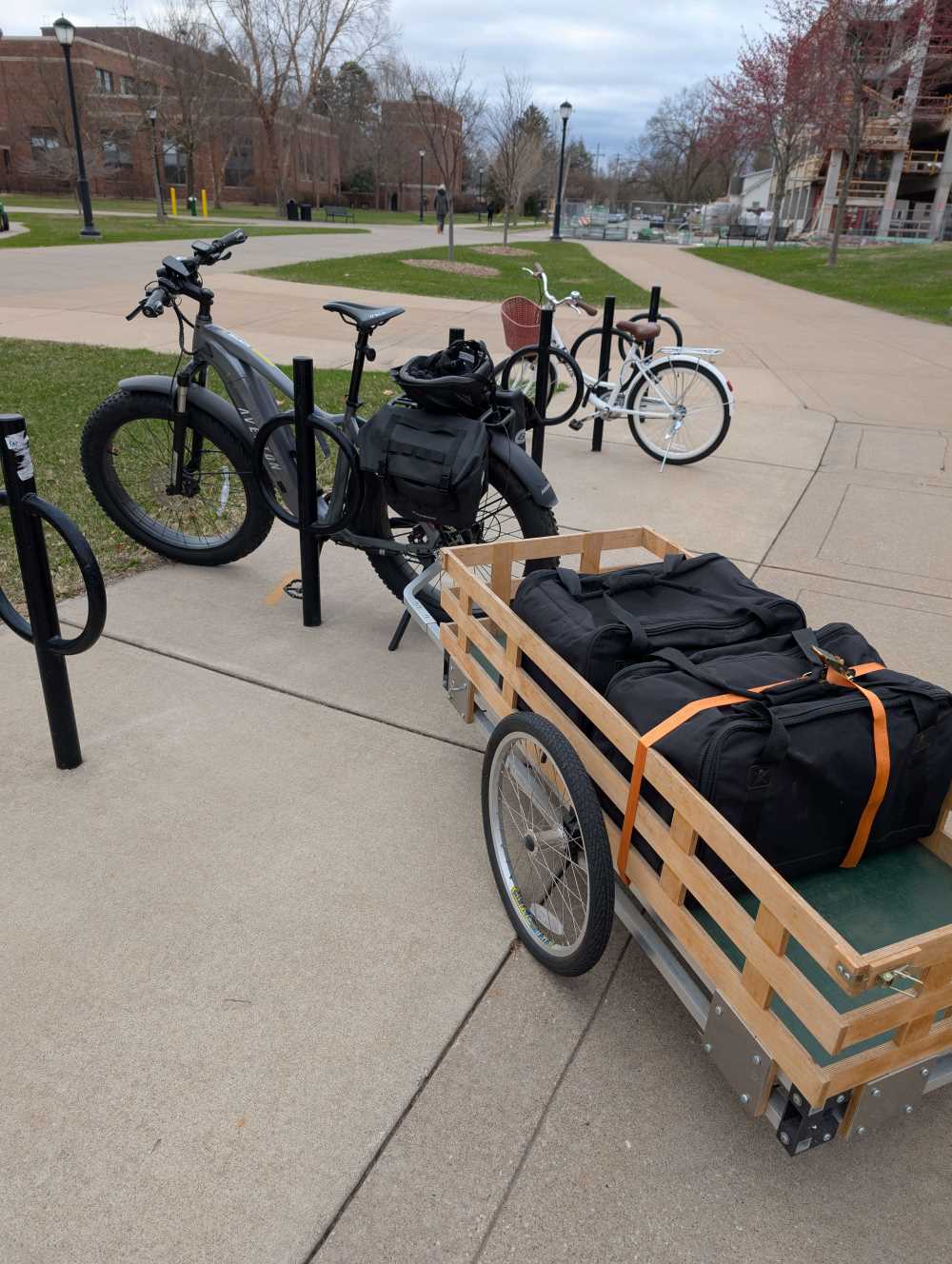
I read 200 or so books a year. I only wear black or gray. I own a props cache that might rival some professional theatres. I get around exclusively on foot or on my e-bike (I don't even own a car.) I could go on, but that's probably enough.
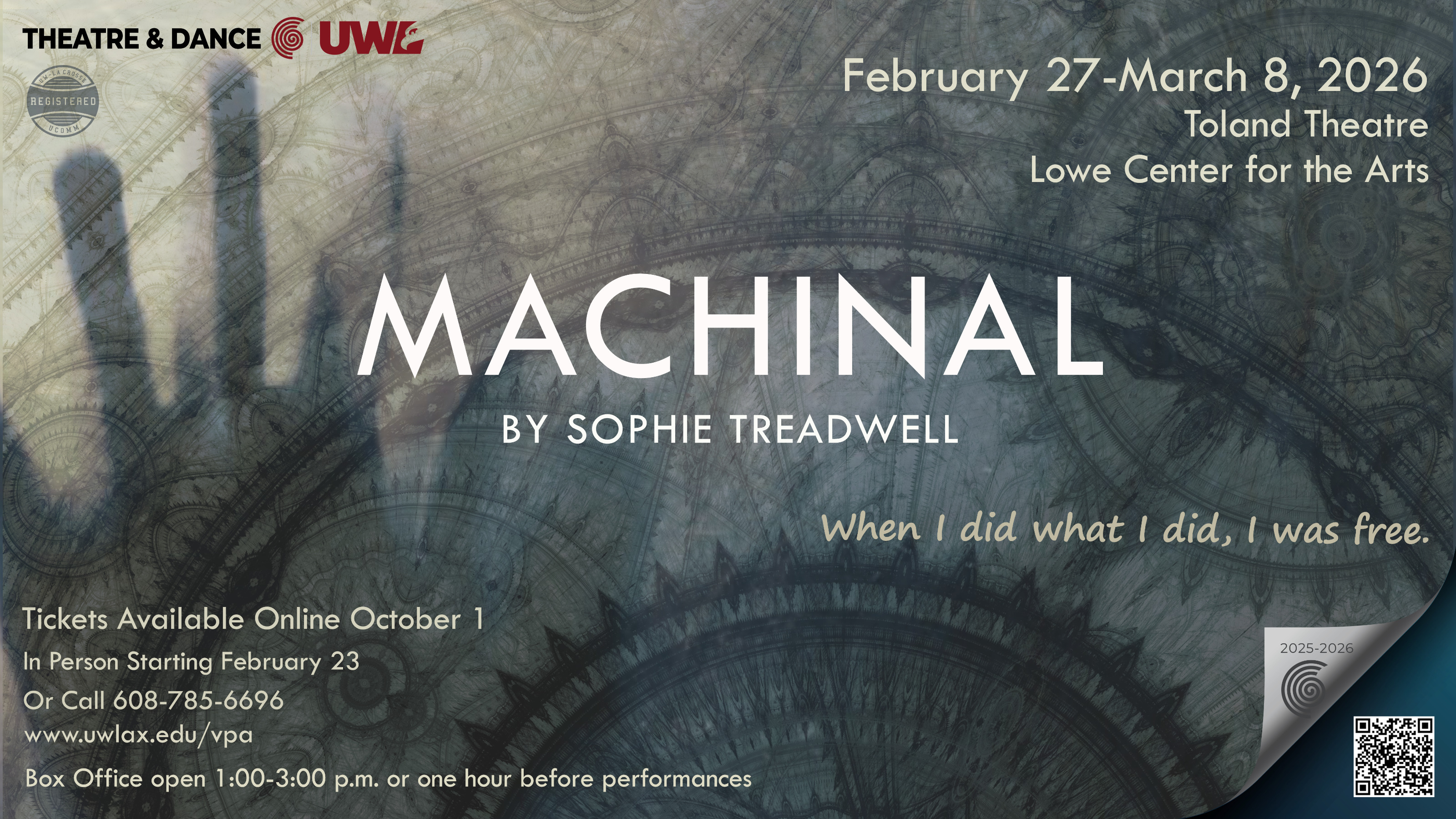
Machinal
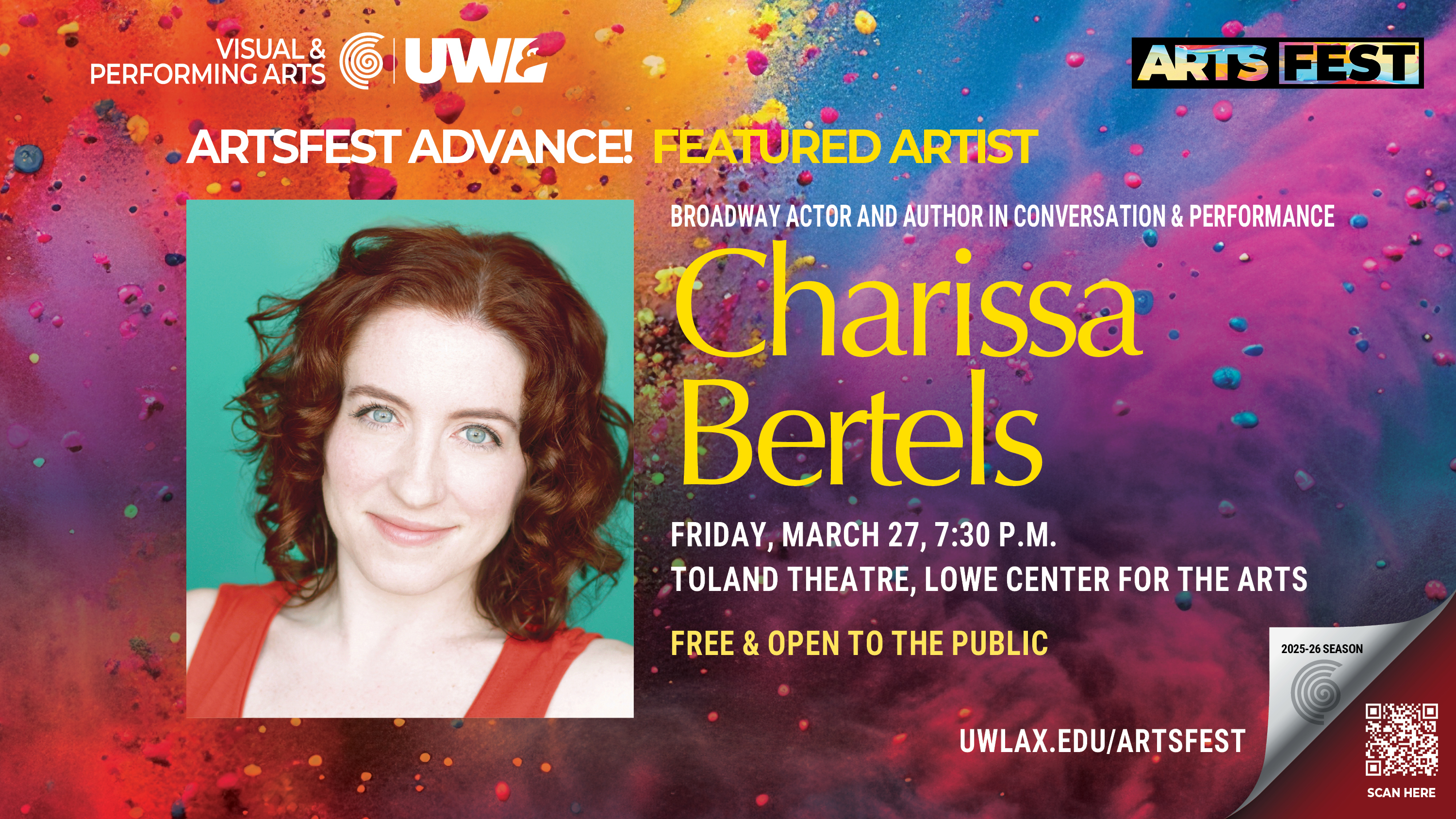
Charissa Bertels in conversation & performance
ArtsFest Advance! Featured Artist