


Visual & Performing Arts
Watching the Detectives
Playwright Ken Ludwig is a fan. He is such a fan of mystery writer Agatha Christie that he pays homage to some of her most well-known stories in his play The Game’s Afoot: Holmes for the Holidays. Or does everyone get snowed in at their mansion when a murder occurs? He is also a fan of Czech playwright Tom Stoppard, including not only exchanges between characters meant to echo “The Questions Game” from Rosencrantz and Guildenstern are Dead but also a stealthier nod to the play Arcadia.
Ludwig also reveres Shakespeare. This is part of the reason the characters in the play quote from his works so often. It’s also scene that could be based on real life. Main character William Gillette is a real person and the idea that he invited friends and fellow actors to his large and quirky mansion for a holiday gathering is right in line with the man himself.
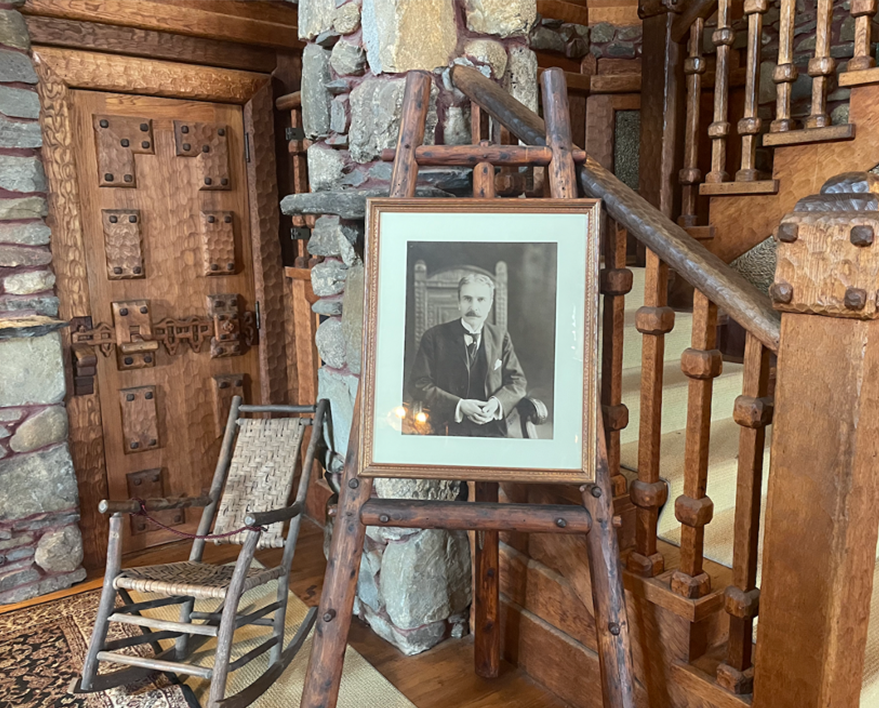
William Gillette was born in 1853 in Hartford, Connecticut. His father was a lawyer, farmer, and politician who served a term in the U.S. Senate. His mother was a descendant of Thomas Hooker, founder of the State of Connecticut. Will grew up in Hartford with the likes of Harriet Beecher Stowe and Samuel Clemens (Mark Twain) as neighbors. He attended but quit at least four colleges, including Yale and Harvard. Around 1875 Will left home to pursue an acting career. A string of stage appearances, interspersed with time spent directing, writing about theatre, and patenting a new method for creating the sound of galloping horses (really!), led to a fateful introduction to Sir Arthur Conan Doyle. The play-within-a-play which opens The Game’s Afoot is taken from Gillette’s actual script, blessed by Doyle, which opened on Broadway in 1899.
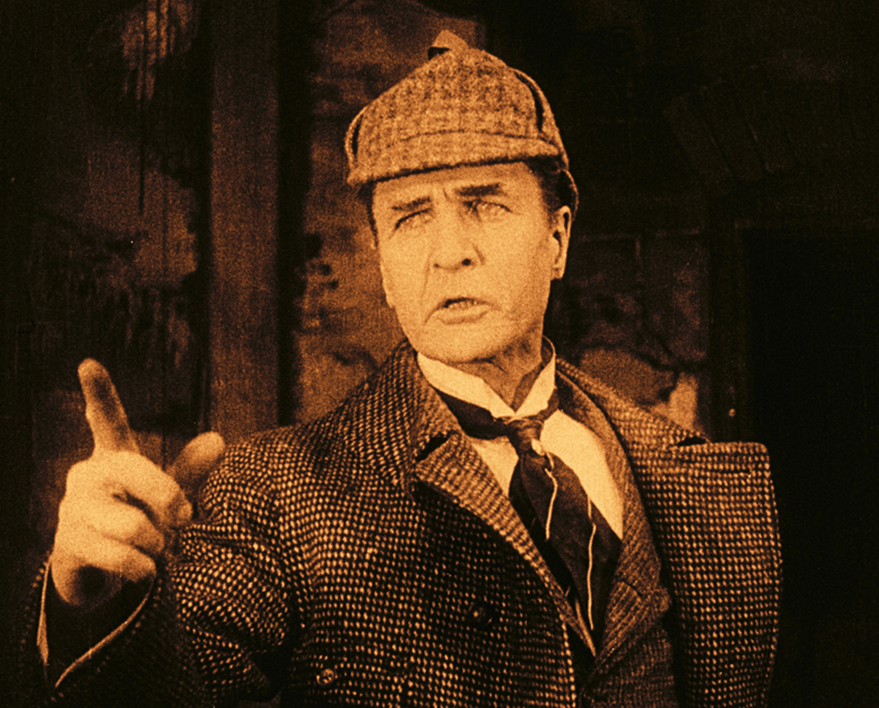
In bringing Sherlock Holmes to life on the stage, Gillette introduced elements that became synonymous with the famous detective: his deerstalker cap, a distinctive cloak, a purple robe, and that curved pipe. He also authored the iconic “Elementary, my dear Watson.” The fact that we associate these traits with Holmes himself and not a specific iteration of the character is a tribute to Gillette’s talent and what became a lifelong friendship with Doyle.
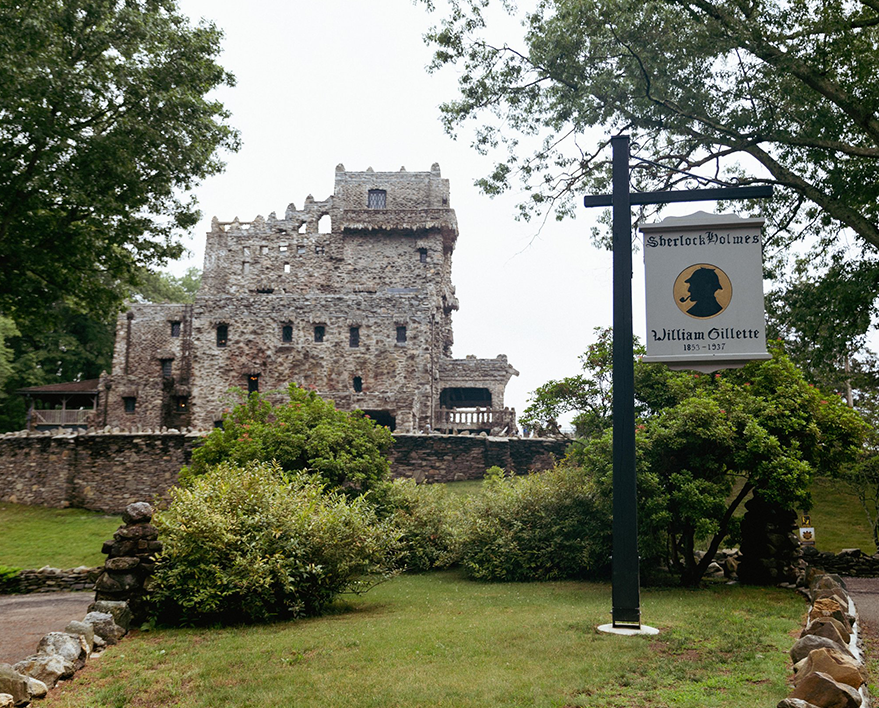
After nearly 1,300 performances over 33 years, Gillette retired to East Haddam, Connecticut. Holmes had made him wealthy, and Gillette used that money to build his castle-like mansion with tricks, secret passages, and even a railroad.
So what is an actor or director to do when the script contains so many direct and indirect references to sources outside the play? If they are popular, then audience members will recognize them—and the actors need to understand the source to pay appropriate homage. And if they are more obscure, the actors still need to be confident about what they are saying and discussing so that the audience doesn’t pick up on their confusion and become confused themselves.
Director Greg Parmeter said that “as outlandish as it all is, it somehow fits; it follows its own logic and is ultimately, believable.”
Enter the dramaturg. The research specialist on a theatrical production, the dramaturg studies the script, the writer, the era in which it was written, the era in which it is set, and countless other topics in order to craft a robust analysis to provide the director, actors, designers, and eventually the audience with adequate background to live fully in a very specific make-believe world for a few hours every day.
And sometimes that world is not so make believe. One of the other tasks of a dramaturg is to help the director distill “why this play now” for everyone involved. Even a comedy whose main goal is to make you laugh works best when it is the RIGHT comedy. For the time of year, for the theatre space, and for the moment.
When not doing her day job teaching stage management and arts administration courses, or her other day job chairing the Department of Theatre & Dance, Associate Professor Laurie Kincman can be found these days pulling the night shift as Dramaturg for The Game’s Afoot, or Holmes for the Holidays.
The work began last spring once the script was solidified as part of the 2025-2026 season. Initial research focused on the era of the play, the specifics of Gillette’s script, and that most unusual home—details that would support the work of the production’s designers. Ludwig may have taken some art deco liberties with the aesthetic, but stage directions describe Gillette Castle almost exactly. Over the summer, the research was broadened to include other essential topics that would serve the cast, as well and a detailed glossary of references in the script ranging from Shakespeare quotes to an explanation of why a character would up the phone and speak to the operator rather than dialing a number. Text, images, audio, and video were all assembled and published on a website for the production.
Rehearsals began in mid-October. The dramaturg attends regularly and looks for additional questions in the stage manager’s nightly rehearsal report. Sometimes the request is for a Gen Z translation of “fly in the ointment,” and other times it’s a little background on Mae West. Ultimately all of the research makes its way to the audience, on kiosks in the lobby of the Lowe Center for the Arts and, well, I guess this note!
In this play, the authenticity of the story is essential. Ken Ludwig follows Agatha Christie’s “no red herrings in a mystery” rule, and so our cast and production team have endeavored to do the same. And since the only thing better than a mystery is a farcical one—or a “muscular” one to use Ludwig’s term—we’ve paired time learning lines with physical comedy and stage combat work. Routing art deco-inspired molding with figuring out if a vintage dress has enough give to be worn by a dead body lofted about the stage, or if it needs to be built from scratch in our costume shop.
And so, a process that began last spring will, at last, be ready to share with you beginning Thursday December 4. The Department of Theatre & Dance presents The Game’s Afoot, or Holmes for the Holidays in Toland Theatre in the Lowe Center for the Arts. Performances take place at 7:30 p.m. on December 4-6 and at 2:00 p.m. on December 6-7.
We hope you will join us for some holiday fun with a side of Holmes. And on behalf of the faculty, staff, and students in the Department of Theatre & Dance, Merry Christmas! Here’s to the revels.
Sources:
“Holmes at Home: The Life of William Gillette” by Emily E. Gifford
“Why Mysteries Grab Us” by Ken Ludwig

Ken Ludwig's The Games Afoot, or Holmes for the Holidays