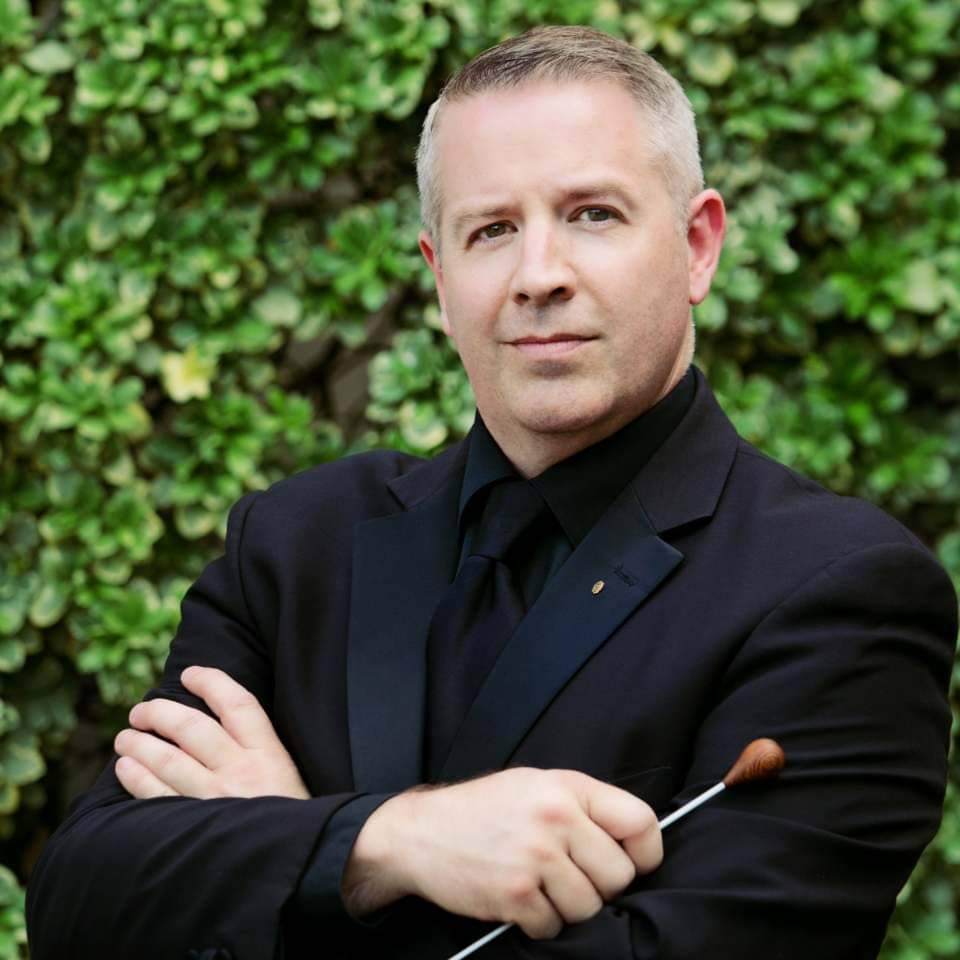
For Wind Ensemble Director Dr. Martin I. Gaines, the composer’s ArtsFest Advance! residency is an opportunity to introduce students and audiences to a distinctive musical voice—and to consider what American music can tell us about the country we are becoming.
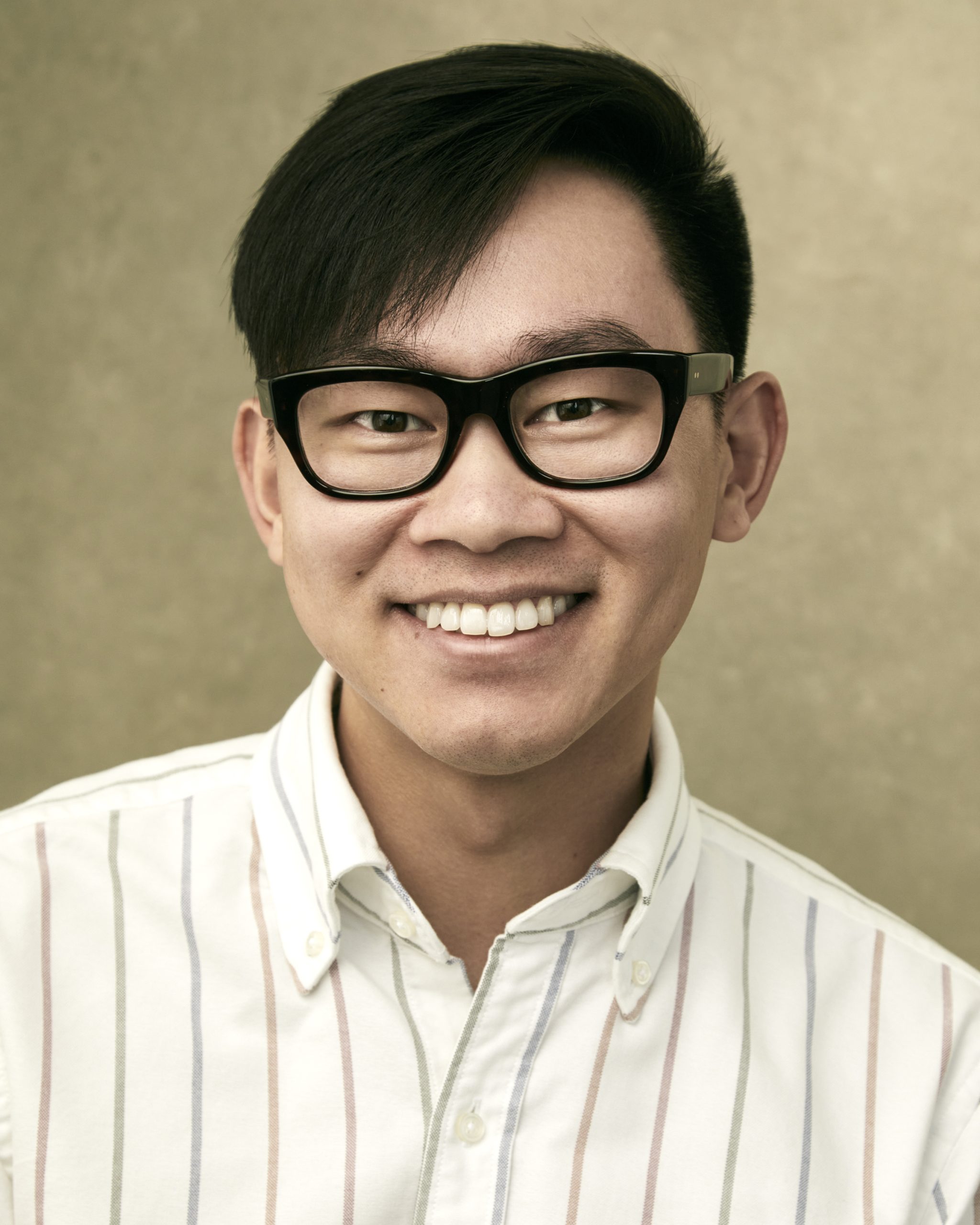
When Dr. Martin I. Gaines talks about composer Viet Cuong, he returns to two ideas: the excitement of hearing something new and the power of music to make us think differently about the world around us.
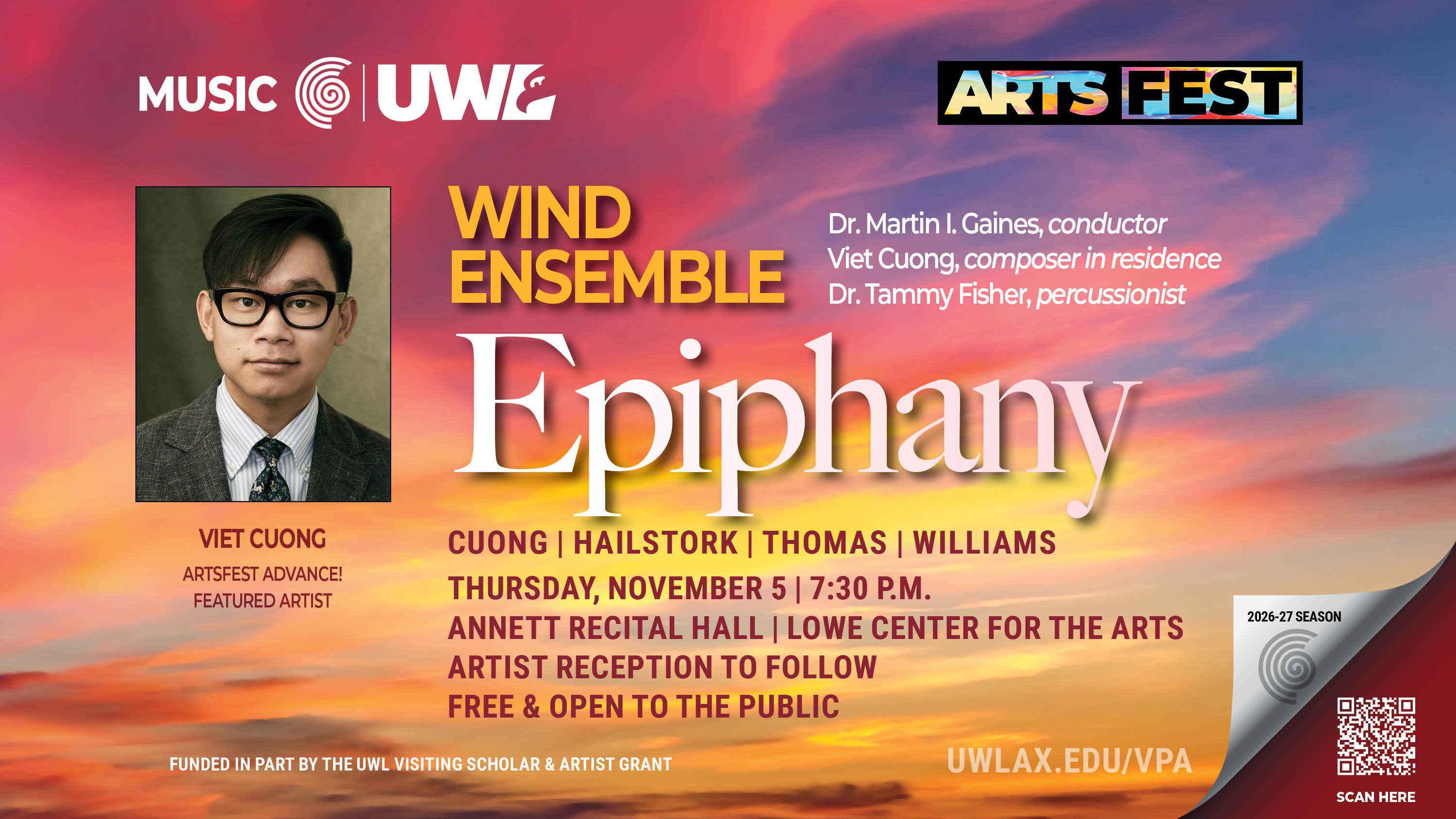
Cuong, a Vietnamese-American composer whose works have been performed worldwide will visit the University of Wisconsin–La Crosse as the School of Visual & Performing Arts’ ArtsFest Advance! guest artist. His residency culminates in “Epiphany,” a concert by the UWL Wind Ensemble at 7:30 p.m. Thursday, Nov. 5, in Annett Recital Hall. The free, public performance features two works by Cuong alongside music by American composers Omar Thomas, Adolphus Hailstork and Clifton Williams.
Gaines, who conducts the Wind Ensemble and whose academic focus is American symphonic music, says the department has discussed bringing Cuong to campus for approximately three years. “He is the harbinger of what is to come in music composition,” Gaines says. “He has wildly influenced writing for every instrument and modern scoring itself. It is super cool to expose the students to this.”
For Gaines, the residency offers more than a chance to perform music by a prominent living composer. It allows students to meet an artist who is actively shaping the future of the field—and to experience firsthand how contemporary music is imagined, created and communicated.
A landscape of sound
Cuong’s music is known for its vivid instrumental colors, rhythmic energy and inventive orchestration. His compositions often bring unexpected sounds together in ways that feel both surprising and accessible. His official biography describes a musical voice shaped by influences ranging from earlier compositional traditions to electronic music and contemporary pop.
Gaines describes a compositional approach that can create what he calls a “shimmering effect.” Cuong often begins with a rhythmic idea, then distributes it across different instrumental sections, building layers of sound that combine into something greater than their individual parts.
“Some might call it a cinematic approach,” Gaines explains, “but at its core, it's a fairly simple concept.”
The result, he says, is music that can initially seem complex but reveals an underlying clarity as listeners become familiar with it. Cuong’s skill lies in orchestrating those simple ideas to achieve a distinctive musical effect.
That approach will be on display in Re(new)al: Concerto for Percussion Quartet and Wind Ensemble, featuring UWL music faculty member Dr. Tammy Fisher and three undergraduate percussionists. The three movements draw inspiration from renewable energy: Hydro, Wind and Solar.
The piece offers an especially vivid example of Cuong’s imagination at work. In the opening movement, percussionists use precisely pitched wine glasses, producing delicate sounds that interact with the wind ensemble. In the wind-energy movement, the percussionists move across the stage and form a visual arrangement inspired by a wind turbine. The final movement explores solar energy through metallic percussion and unusual playing techniques.
As Gaines puts it, “this is for the ears and for the eyes.” The music is not only something to hear; the performers’ movements and the physical production of sound become part of the experience.
Gaines first encountered Cuong’s music through Re(new)al, and the work made an immediate impression. Now, he is eager to share it with UWL students and audiences.
“He's become quite a recognizable figure in composition worldwide,” Gaines says, “which is exciting to hear from another Georgia boy.”
More than a concert: music that tells a story
While Cuong’s work is a central feature of the evening, Gaines has designed “Epiphany” as a larger musical narrative. The concert continues a series of programs exploring American composition, with a particular focus on the nation’s history, identity and aspirations as the United States celebrates its 250th anniversary.
“Part of my job as a conductor is story-telling. We, of course, teach the notes, rhythm, and expression of each piece," Gaines says, "but we strive to push beyond this, toward a full expression of the art. We want to tell a story with the program we are presenting."
The evening begins with Re(new)al, then turns to Omar Thomas’s A Mother of a Revolution, a work honoring the Stonewall uprising. The piece has taken on additional significance following controversy surrounding its performance in Wisconsin. Gaines says the work was programmed well before that controversy arose, but the circumstances reinforced his conviction that the ensemble should continue presenting it.
UWL alumnus Reid LaDew, a high school band director who was involved in the controversy, has been invited to guest conduct the work. Gaines hopes LeDew’s participation will give UWL’s future music educators an opportunity to learn from his professional experience.
The program also includes Adolphus Hailstork’s American Guernica, a visceral musical response to the 1963 bombing of the 16th Street Baptist Church in Birmingham, Alabama, in which four Black girls were killed. Gaines describes the piece as a work that does not shy away from the violence of the event, using sounds that evoke sirens, tearing metal and human cries before transitioning into gospel piano.
“It is a piece of American history that is necessary to remember,” he says.
Cuong’s John and Jim follows, offering a contrasting emotional perspective. The work celebrates the 2015 U.S. Supreme Court decision in Obergefell v. Hodges, which established the constitutional right to same-sex marriage nationwide. Beneath its layered textures, the piece draws on the familiar melody of Pachelbel’s Canon, allowing that musical idea to emerge at a particularly powerful moment.
Gaines sees the pairing of the two works as essential to the concert’s broader message: confronting painful chapters of American history while also recognizing moments of progress and possibility.
The program concludes with Clifton Williams’s Caccia and Chorale, a wind ensemble masterwork that Gaines connects to perseverance and the possibility of becoming our best selves. The piece’s story—Williams completed its opening section before an operation he feared he might not survive, then returned to write the chorale after recovering—offers a fitting close to a concert built around reflection and renewal.
Gaines hopes listeners will leave considering not only the music but also the history and ideas behind it.
“Not pushing any political agenda whatsoever,” he says, “but just I think it's important that we recognize the meaning and historical significance of these works.”
Bringing the composer into the classroom
Cuong’s visit will extend beyond the concert stage. During his residency, he will meet with student conductors, visit theory and composition classes, and take part in a student question-and-answer session. The opportunities will allow students to hear directly from a working composer about the creative process and the practical realities of building a career in music.
Gaines is particularly interested in helping students understand that communicating with living composers can be an important part of their own professional development.
“I’m hoping from that, we’ll talk about how you might interact with a composer or things you might do if you wanted to commission a work or to not be afraid to contact a living composer,” he says. “That’s kind of a big part of the process: access to living composers!”
The visit also creates opportunities for students beyond the Wind Ensemble to engage with Cuong’s work and ask questions relevant to their own musical interests. For students preparing to become music educators, seeing a contemporary composer’s work come to life—and learning how that composer thinks about sound, structure and meaning—can connect classroom study to the broader profession.
For Gaines, that exchange is one of the most valuable aspects of bringing a composer of Cuong’s stature to campus.
His own scholarly focus has long centered on a question that remains open to interpretation: What is American music? The answer, he believes, continues to evolve as new generations of composers explore the country’s many musical influences and experiences.
"The next chapter of what it means to be an American composer is being led by Viet Cuong," Gaines says.
He emphasizes that Cuong’s identity as a Vietnamese-American composer is part of the larger story of American music—not something that places him outside it. Having been raised in Georgia, Cuong is helping shape a musical tradition that has never been static.
For Gaines, sharing that perspective with students and the public is part of the university’s broader educational mission. Music can entertain, challenge, commemorate and inspire. It can help audiences recognize familiar ideas in new ways—or encounter experiences they have never considered before.
“Music is not just for the students on the stage or for me or for the composer,” Gaines says. “Music is about people and about our society.”
He hopes the concert will encourage listeners to reflect on the nation’s history, its present circumstances and the kind of community it might become.
“And I think we wish it would reflect more toward, from their artists to toward society as opposed to the opposite, which seems to be more and more the case these days,” he says.
Ultimately, Gaines is measuring success not only by the quality of the performance but also by what audiences take away from it.
“If even one person leaves thinking about something a little differently, I think that will be a major success,” he says.
And he has a final invitation for the community: “come hear the students play!”
“This is probably one of the best wind ensembles we've had since I've been here,” Gaines says. “Even though it's a very young group, they have really bought into this concept and everything we're doing to prepare. I could not be more proud of their efforts.”
Attend Epiphany
UWL Wind Ensemble featuring composer Viet Cuong
- When: 7:30 p.m. Thursday, Nov. 5, 2026
- Where: Annett Recital Hall, Lowe Center for the Arts, UW–La Crosse
- Admission: Free and open to the public
- Featured artists: Dr. Martin I. Gaines, conductor; Viet Cuong, composer in residence; Dr. Tammy Fisher and three UWL undergraduate percussionists featured in Re(new)al
The concert is part of the School of Visual & Performing Arts’ ArtsFest Advance! guest artist series, which brings artists to campus for performances, presentations and engagement with students ahead of UWL’s annual ArtsFest celebration. A reception with Cuong will follow the concert.


 UWL's Eagle Mark logo