



Posted 11:14 a.m. Wednesday, June 17, 2026
Benefits Instructors & Students
by Marjorie Bazluki, Senior Instructional Designer
Designing an online course takes significant time and planning—even short learning activities can require months of development. Course templates streamline this process by saving time, ensuring consistency, and embedding best practices in instructional design, accessibility, and usability.
Using a template provides a strong foundation for course development while still allowing flexibility for individual teaching styles. A consistent course structure helps students easily find materials, navigate content, and stay focused on learning—reducing cognitive load and improving the overall experience.
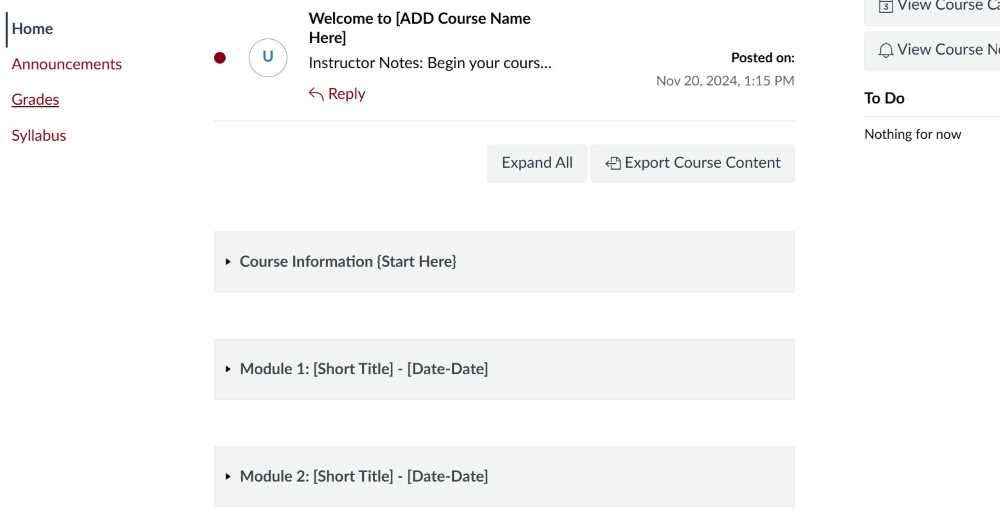
CATL’s Canvas course template can be imported into any course and used as an organizational framework. It includes key components like a Start Here module, weekly content structure, and placeholders for learning outcomes, assessments, and engagement activities. These elements are aligned with accessibility standards and Universal Design for Learning (UDL) and can be customized to fit course goals.
Overall, templates help instructors save time, support student engagement, and create a more consistent and effective learning experience.
The top three benefits of using a course template
Benefits for Instructors
- Saves time: Templates provide a consistent, ready-to-use structure that simplifies updates and eliminates the need to rebuild courses from scratch.
- Supports content focus: Instructors can focus on teaching, content development, and student engagement rather than course layout and technical setup—leading to a more cohesive learning experience.
- Applies best practices: Templates are designed with usability and instructional design principles in mind, helping organize content in ways that prevent overload and support effective learning.
Benefits for Students
- Reduces cognitive load: Predictable layouts, clear navigation, and consistent structure allow students to focus on learning instead of figuring out how to navigate the course.
- Improves time management: Well-organized modules help students identify tasks, track deadlines, and plan their work more effectively.
- Enhances readability and clarity: Clear organization helps students quickly locate information, understand expectations, and stay focused on relevant learning tasks.