


Accessibility menu

Skip to main content Skip to footer

Sociology & Criminology

Email Call Visit Print

Sociologists study human experiences, from love and marriage to war and revolution. If you're curious, start asking questions with us.

Request info Declare a program Apply today

Declare a program

Interested in one of our majors, minors or certificates? Fill out the declaration form to declare a major or minor.

Undergraduate programs
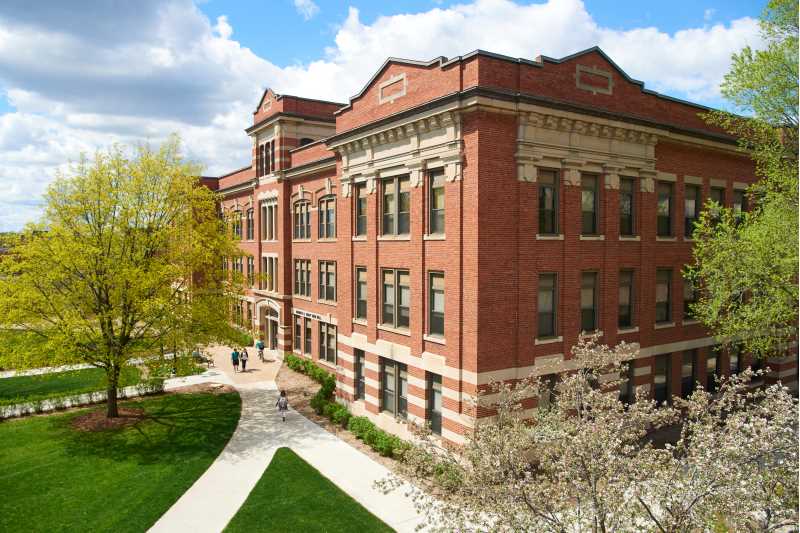
Sociology

Undergrad major Undergrad minor

Sociologists study human experiences, issues and problems. Learn about this area of study and career opportunities.

Criminology

Undergrad major

With a criminology major you will gain the knowledge and experience needed to study crime, criminal behavior and their broader impacts on society.

Criminal Justice

Undergrad minor

With a criminal justice minor, you will expand your understanding of deviance, crime, approaches to justice, law enforcement, courts, corrections and more.

Human Rights & Criminal Justice Certificate

Undergrad certificate

Understand the relationship between human rights and criminal justice through The Human Rights and Criminal Justice Certificate Program.

Featured courses

  • Marriage and Family
    SOC 212 | 3 credits
    The major focus of this course is on understanding the contemporary institutions of marriage and family, and the changes that these institutions have experienced. The influences that gender, race/ethnicity, sexuality, socioeconomic class and age have on marriage and family experiences will be included in the investigation. Offered Occasionally.
  • Society and Schools
    SOC 216 | 3 credits
    A social analysis and review of research on the school as a learning environment, a social organization and a societal institution. Specific topics include classroom interaction, school social climate, social inequalities in the schools, and selected educational controversies. Offered Occasionally.
  • Methods of Social Research I
    SOC 250 | 3 credits
    This course introduces students to principles and procedures for the quantitative measurement of social phenomena. It emphasizes interpretation and uses of quantitative techniques in sociological data analysis. The primary goal is to provide students with skills and practical application of techniques used to understand how sociologists measure, evaluate and use individual and social indicators such as socioeconomic status, residential segregation, and crime statistics. The department strongly encourages students to take SOC 200 and SOC 250 concurrently. Prerequisite: CRIM 115 or SOC 110 or SOC 120; sociology major or criminology major. Offered Annually.
  • Disability and Society
    SOC 308 | 3 credits
    In this course students study sociological understandings of disability and explore the experiences of people with bodily and mental differences. The sociological study of disability examines the commonalities of social life that exist and persist despite the presence of biological differences. Additionally, this course encourages critical evaluation of the influence of social systems, institutions, professional understandings of disability, and our own assumptions about the disability experience on the well being of people with disabilities and members of their families. Students examine disability through understandings of identity (personal and collective), inequalities, social movements, social experience, sexualities, gender, race, class, intersectionalities, and physical and mental variation. Students examine the ways in which people with bodily and mental differences construct personal and collective identities and develop, support, and maintain communities; the effects of stigma on experiences of disability; and how disability is constructed by the cultural and structural demands of global capitalist societies. Students explore the ways in which the experience of disability and disability studies can be used to further sociological understandings and to reexamine and reconceptualize taken-for-granted ideas about social life and experience, the social structure, and sociological theories and methodology. Prerequisite: one of the following: CRIM 115, SOC 110, SOC 120, SOC 225, RGS/SOC 150, ANT 101, ANT 102, PSY 100, or PSY 200. Offered Annually.
  • Social Stratification
    SOC 310 | 3 credits
    Students examine the nature, study, theories, and types of social stratification systems along with the forces contributing to their maintenance and disruption. Prerequisite: ANT 101 or CRIM 115 or SOC 110 or SOC 120. Offered Spring - Odd Numbered Years.
  • Demography
    SOC 320 | 3 credits
    This course is designed as a basic survey of the field of demography. Sources of population data are explored along with causes and consequences of population growth, composition, and distribution. This course focuses on the concepts, measurements, trends, and theories of the major demographic processes of fertility, mortality, and migration. Prerequisite: CRIM 115 or SOC 110 or SOC 120 or ANT 101. Offered Spring - Even Numbered Years.
  • Sociology of Mental Illness
    SOC 325 | 3 credits
    In this course students examine mental health and illness, and mental health care systems in the U.S. and other industrialized and non-industrialized societies. This includes the processes involved in identifying and recruiting patients into the mental health care system; a social analysis of psychotherapy, including talk therapies, medications, electro-convulsive treatment and psychosurgery; and social organization of mental hospitals and of community mental health centers; socio-legal issues related to mental illness; and a review and synthesis of social psychological and sociological theories relevant to understanding mental health and illness. Prerequisite: CRIM 115 or SOC 110 or SOC 120 or ANT 101 or PSY 100. Offered Occasionally.
  • Environmental Sociology
    SOC 328 | 3 credits
    This course provides a framework for understanding the relationship between human societies and their physical environment. This course focuses on how environmental sociologists explain the social origins of environmental degradation, how environmental harms are unequally distributed among different communities and nations, and the role of environmental movements in protecting the physical environment. Prerequisite: CRIM 115 or SOC 110 or SOC 120 or ENV 101. Offered Fall.
  • Social Psychology
    SOC 330 | 3 credits
    This course explores social psychology from a sociological perspective. The course focuses on social behavior and communication patterns in terms of their genesis and change in the context of social groups and social relationships. Prerequisite: CRIM 115 or SOC 110 or SOC 120 or ANT 101 or PSY 100. Students may only earn credit in SOC 330 or PSY 241. Offered Occasionally.
  • Collective Behavior
    SOC 335 | 3 credits
    In this course students examine social processes which emerge in unstructured social situations as well as principles of behavior as expressed in crowds, mobs, fads, fashions, and especially in social movement activities. Prerequisite: CRIM 115 or SOC 110 or SOC 120 or ANT 101. Offered Fall.
  • Methods of Social Research II
    SOC 350 | 3 credits
    An overview of the issues and methods involved in the process of scientific investigation of social phenomena. The limitations of, and ethical issues involved in, social research are examined. Data collection methods, both quantitative and qualitative, including surveys, observation, and secondary data analysis are investigated. Students propose and complete a research project, applying material learned in Sociological Research Methods I, including student application of various research techniques and computer-assisted data analysis. Prerequisite: SOC 200, SOC 250. Offered Fall, Spring.
  • Sociology of Gender
    SOC 370 | 3 credits
    This course explores the social construction, variation and consequences of gender categories across time and space. Students examine how gender identities are developed and how gender structures our experiences in education, work, families, the media, and other institutions. Prerequisite: one of the following: CRIM 115, SOC 110, SOC 120, SOC 225, RGS 100, RGS/SOC 105, or RGS/SOC 150. Offered Fall.
  • Fat Studies and Body Politics
    SOC 380 | 3 credits
    The purpose of this course is to explore the social construction, medicalization, and pathologization of fat in the United States. Fat is examined as a social justice issue that intersects with race, class, gender, sexuality, and ability status. This course explores the body politics behind attempts to redefine fat identity, including body positive and fat positive movements. This course also examines fat activism as a means of addressing fatphobia and size discrimination. Emphasis is placed on the use of historical and empirical evidence to evaluate common myths about fat bodies. Prerequisite: one of the following: CRIM 115, RGS/SOC 105, SOC 110, SOC 120, RGS/SOC 150, ANT 103, ANT 195, PSY 100, or RGS 100. Offered Occasionally.
  • Sociological Theory
    SOC 390 | 3 credits
    Sociological theory is a lens that is constructed based on detailed examinations of the world around us, and then used for viewing, studying, and understanding the social world in which we live. Beginning with early attempts to explain society, this course provides a critical survey of social theory and theorists over time, and traces the themes of sociological inquiry into the modern era. Theories covering society, groups, interactions and the human self will be summarized, explored, compared, contrasted, and, most important, applied to help better understand contemporary social conditions and life in modern societies. Prerequisite: SOC 200. Offered Fall, Spring.
  • Quantitative Social Research Seminar
    SOC 405 | 3 credits
    This course guides students through the completion of an independent quantitative sociological research project. Students conduct research on a topic related to their own interest within the field of sociology or criminology using standard quantitative methods such as survey research, evaluation research, or secondary data analysis. Each student formulates a sociologically relevant research hypothesis, designs the appropriate research methodology, reviews relevant theoretical and empirical literature, and gathers and analyzes data in a step-by-step process. The results of the research process are presented in a formal research paper. Prerequisite: SOC 350; CRIM 322 or SOC 390. Offered Fall, Spring.
  • Qualitative Explorations
    SOC 416 | 3 credits
    In this course students develop and conduct a field research project. The course explores and employs the major techniques of qualitative data collection and analysis that is used by sociologists and other social scientists. These include feminist methods, participant observation, in-depth interviewing, biographical methods, content analysis, archival research, and a variety of nonreactive techniques. Also addressed are the links among theory, data, and methods and an appreciation for the qualitative tradition in social sciences. The course follows a seminar format that, along with the research project, emphasizes reading, group discussion, in -and out - of class exercises, and both oral and written presentations. Prerequisite: SOC 350; CRIM 332 or SOC 390. Offered Fall, Spring.
  • Health Care and Illness
    SOC 420 | 3 credits
    This course introduces students to the social, political, and economic context of health and illness in society. The course is divided into four parts. First, students focus on social factors of illness with a particular focus on the role of inequality in shaping health risks. Students discuss how to measure and quantify mortality and morbidity and the effect of social context. In the second part of the course students focus on the meaning and experience of illness with a particular focus on how different kinds of social deviance become categorized as medical, criminal, or personal issues in different societies and at different times. Next the course focuses on health systems and technologies, especially the political and economic configurations of health care provision in different countries. Finally, the course considers the role of health professionals and issues of bioethics. Prerequisite: CRIM 115 or SOC 110 or SOC 120 or ANT 101. Offered Fall.
  • The American Legal System
    POL 221 | 3 credits
    An introductory survey of the American legal system in operation; utilizing case materials, class discussion, and hypothetical conflict situations to illustrate and study the range of problems, proceedings, actions, and remedies encountered. Offered Fall, Spring.
  • Abnormal Psychology
    PSY 204 | 3 credits
    This course introduces students to various clinical presentations of psychopathology that may occur throughout human development from a trauma-informed perspective. It provides an overview of specific psychological disorders as well as disorder-specific etiological considerations, associated clinical features, defining characteristics, and diagnostic criteria. The course also includes overviews of current treatments for the major disorders, and ethical considerations in mental health care. Prerequisite: PSY 100 or PSY 212; sophomore standing. Offered Fall, Spring, Summer.
View all courses