

Accessibility menu

Skip to main content Skip to footer

Universities of Wisconsin Symposium

A page within Undergraduate Research & Creativity
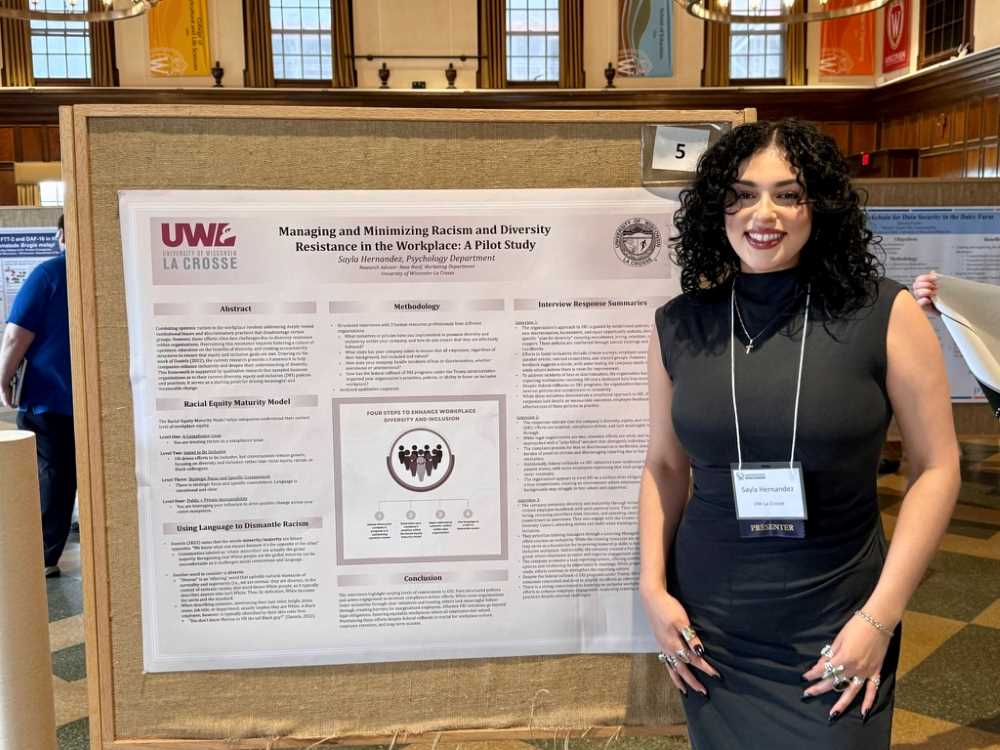
A student stands near her research poster A student stands near her research poster
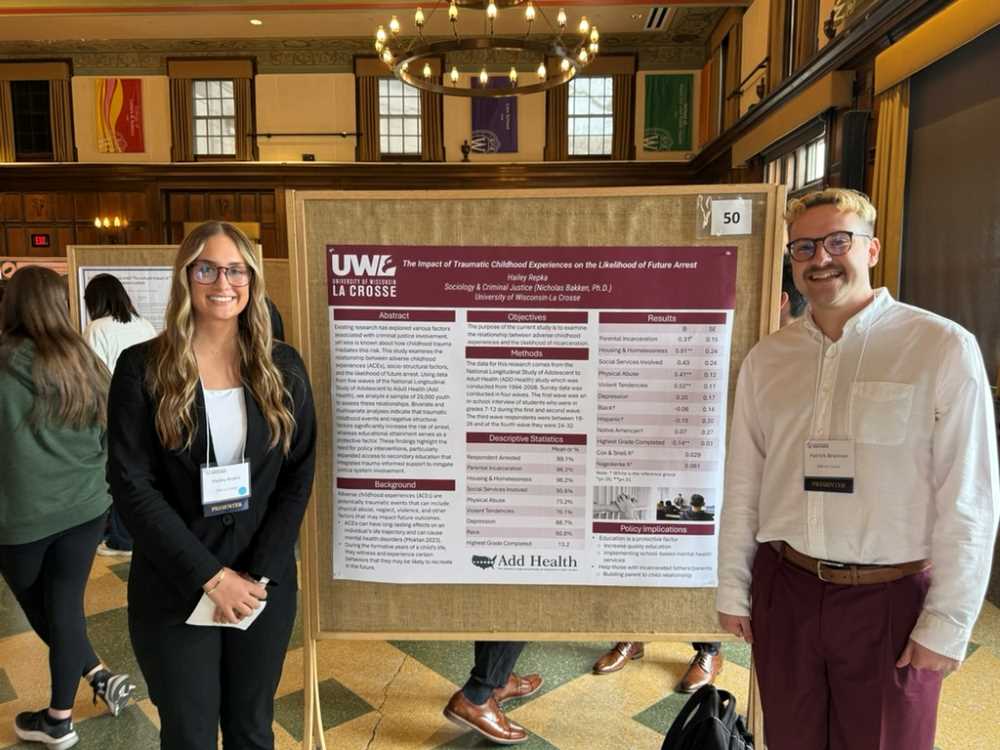
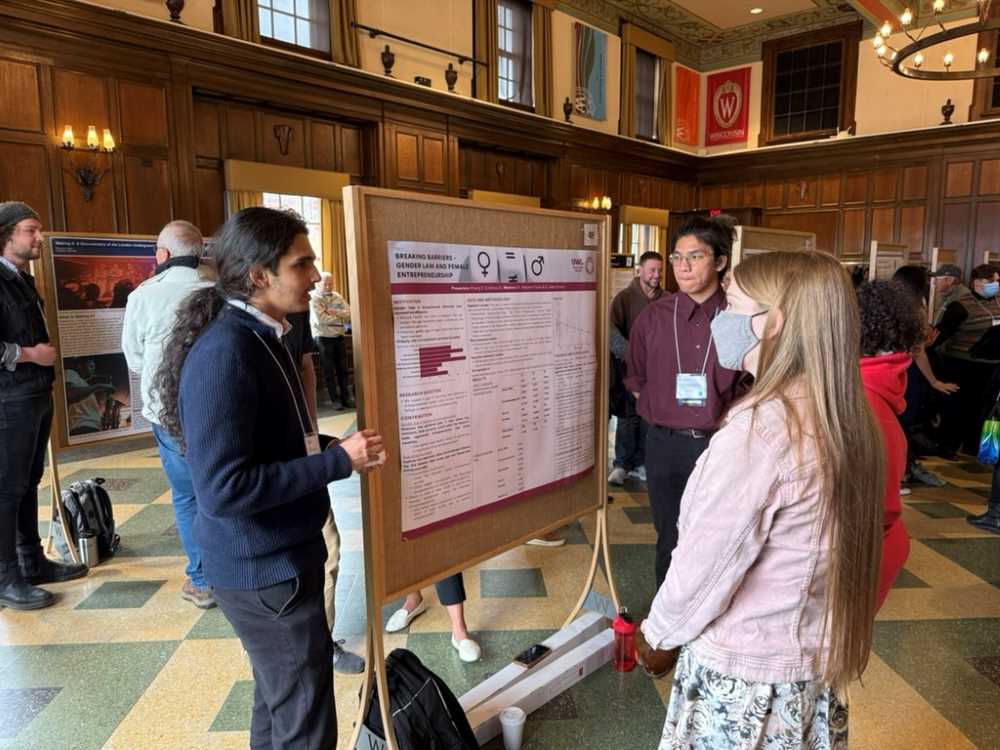
Two students stand in front of a research poster Two students stand in front of a research poster
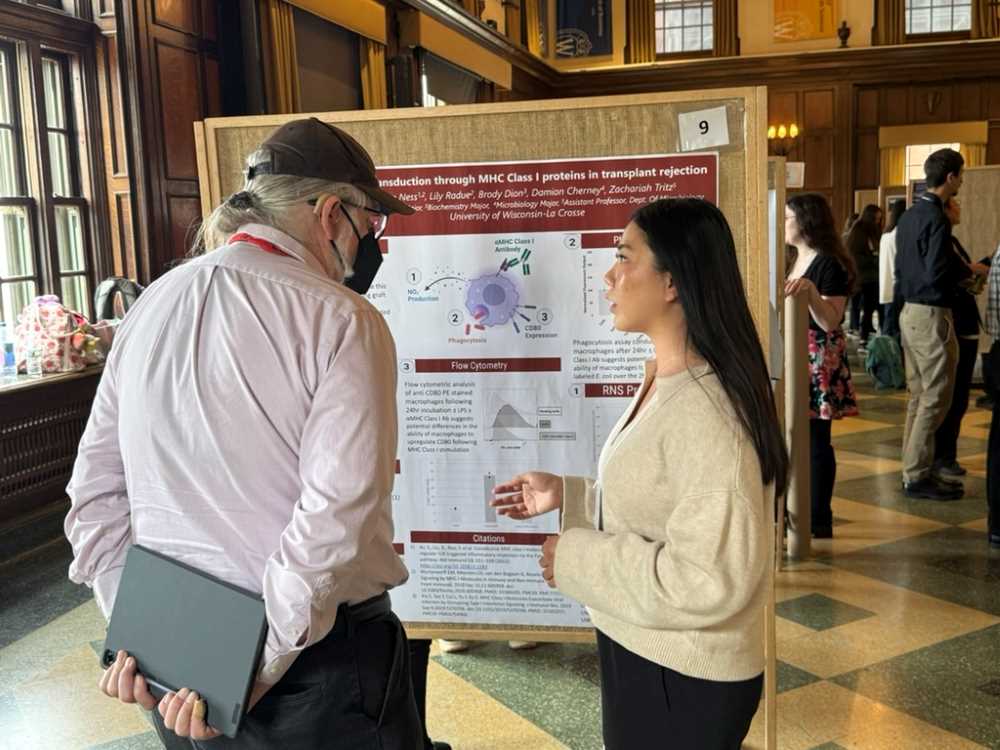
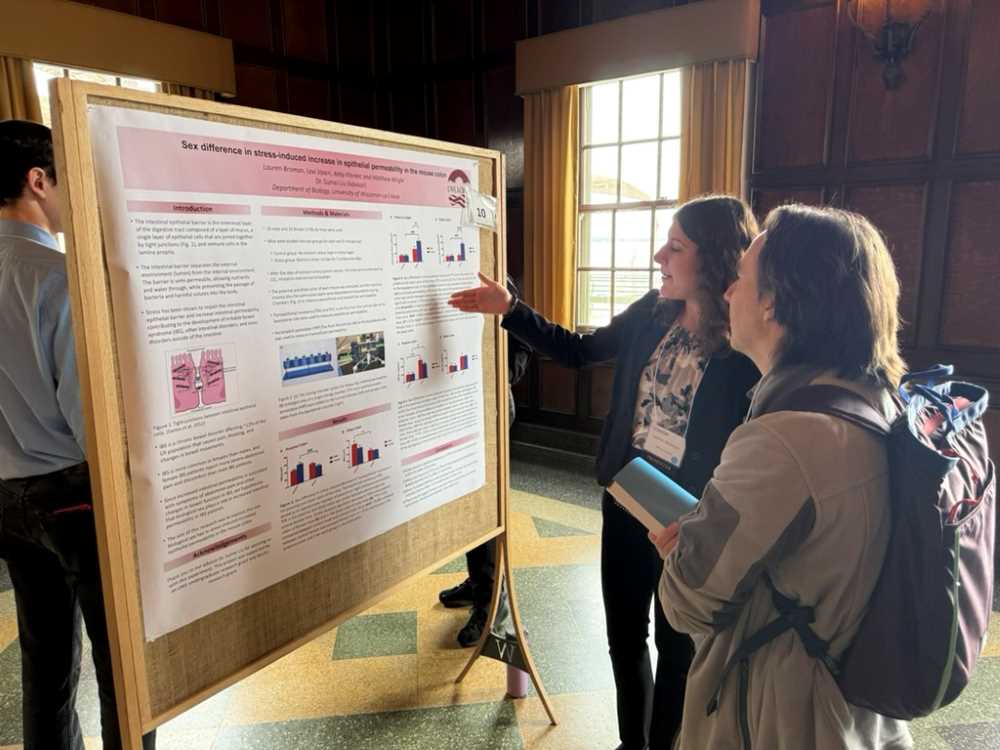
A student presents her research poster to an onlooker A student presents her research poster to an onlooker
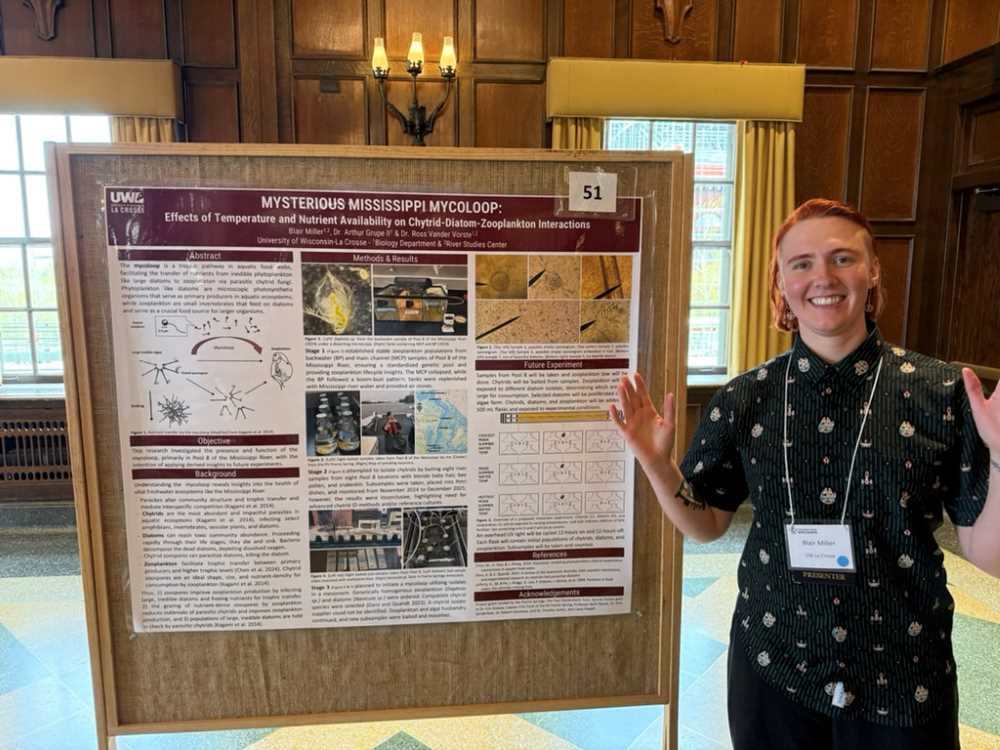
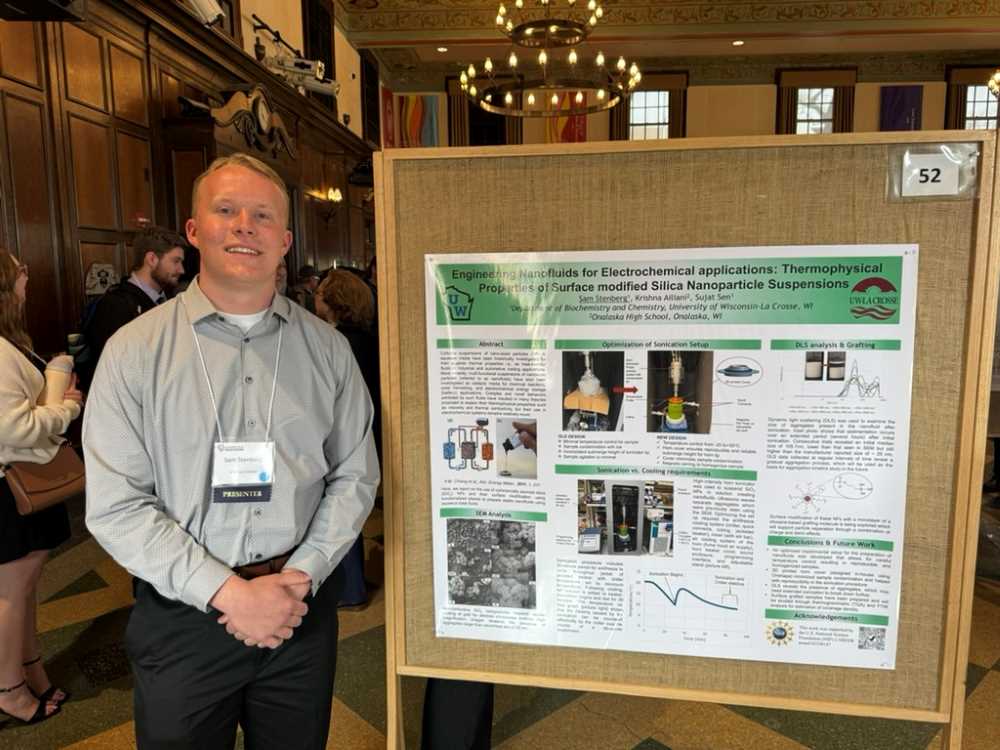
A student stands in front of their research poster A student stands in front of their research poster
Two students present their research to onlookers Two students present their research to onlookers
A student stands near his research poster A student stands near his research poster
A student presents her research poster to an onlooker A student presents her research poster to an onlooker

UWL will host UW Symposium in 2026

The annual Universities of Wisconsin Symposium for Undergraduate Research and Creative Activity will be held in La Crosse, WI on Friday, May 1, 2026.

The Symposium highlights the diversity, breadth of expertise, and the life-changing and career-launching power of undergraduate research ongoing across the UWs, and it showcases the creativity, scholarship, and innovation that are at the core of the Universities of Wisconsin. Please join us to celebrate and be inspired by the extraordinary work by UW undergraduate students and their faculty mentors!

When: Presenters and registered attendees can check-in beginning at 8:15am. The opening remarks will begin at 9:15am. Presentations will begin at 9:45am and end at 2:45pm. A tentative schedule for the rest of the day is available.

Where: Presenters and registered attendees should check-in in the Union Bluffs Foyer, which is on the second floor of the Student Union. Posters and exhibits will be held in Cleary Center; oral presentations and performances will be held in rooms on the 3rd floor of the Student Union.

Who: Undergraduate students from any Universities of Wisconsin campus are invited to present their research or creative project. Anyone else is welcome to attend.

Registration will open January 26, 2026, and close March 15, 2026. All presenters must register. Only attendees who will be present for opening/closing remarks and the lunch/keynote are required to register.

Guidance for Abstract Submission

Note: Only undergraduate students from a UW campus are eligible to present. If you are a UWL graduate student who would like to present your research, please visit the 2026 Graduate Research Symposium webpage.

The following information will be essential for submitting an abstract through the registration form. Please have the following information available. Students should work with their faculty/research mentor(s) to prepare their presentation’s abstract.

  1. Abstract Title (Use Title Case) (Word count: 0/30): (Example: The Effect of Preventative Care on Tooth Integrity)
  2. Primary Undergraduate Student Presenter/Primary Author: This is the primary presenter submitting the abstract and who plans to register for the conference and present (if accepted). You will be asked to provide your name, email, university (ordered alphabetically by name), major, class level, and hometown. Student researchers should be the ones to submit their abstracts rather than their mentor.
  3. Co-Presenter(s)/Co-Author(s) (Optional): This is a place where you can list the names for any co-authors/co-presenters who may have contributed to the project. Any co-author(s) who will participate in the presentation must register separately for the symposium. You will be asked to provide the name, email, and university for each co-presenter added. Please do not include your faculty mentor(s) in this section. You will be asked to provide their information in a separate section.
  4. Non-Presenting Co-Author(s) (Optional): This is a place where you can list the names for any co-authors who may have contributed to the project but who will not be presenting at the symposium. You will be asked to provide the name, email, and university for each co-author added. Please do not include your faculty mentor(s) in this section. You will be asked to provide their information in a separate section.
  5. Abstract Text ONLY (Word count: 0/200): Submit your abstract text only (e.g. no title, authors, references, etc.), formatted as a single paragraph. The main text of abstracts should not exceed 200 words; there is an absolute 1500-character limit including spaces. Bold, italics, underline, superscript and subscript are accepted via file submission. Please proofread your abstract carefully and pay attention to grammar as the submitted text will be used in the final program and there will not be an opportunity for editing.
  6. Faculty/Research Mentor(s): A mentor should be a professor or qualified individual (e.g. staff member) who is familiar with your work. Some students may have more than one mentor, so please be sure to provide information for each mentor. You will be asked to provide each of your mentor’s name, university/affiliation, and their email. Be sure to complete each of your mentor’s information thoroughly and accurately, especially your mentor’s email address. They will be contacted in regard to your presentation and will be able to deny your participation if they do not feel that the abstract is adequately prepared.

Important Information

  • All abstracts must be submitted by the posted deadline(s). Please refer to the submission deadlines and make sure you submit your abstract accordingly.
Guidance for Presentation Format and Preparation

Poster Presentations

Your poster presentation session is 55 minutes long, and you are required to be at your poster during the time for which you are scheduled. If you have co-presenters, please ensure that they are at the poster during the scheduled time. Posters will be hung on a poster board using clips and pushpins that will be provided at the event. Please be sure to let symposium organizers know of any special accommodations that you may require for your poster presentation.

Some important information to remember as you are preparing your poster:

  1. Your poster should be no larger than 48 inches in height and 48 inches in width. Recommend poster dimensions are 36" high by 42" wide.
  2. A typical organization for a poster will include:
    1. Title of your presentation
    2. Your name, any co-authors’ names, and your faculty mentor’s name
    3. Name and logo of your university
    4. Abstract
    5. Introduction (Background information regarding your research, the research question that you asked/hypothesis or objective of your study)
    6. Methods (how you did your research or explored a particular topic)
    7. Findings/Results: tell us what you found and what results you obtained
    8. Discussion: What do the results mean? How are they important? What additional questions have presented themselves
    9. Conclusion/Summary
  3. Limit the amount of text on your poster and focus on key information.
  4. When presenting your poster, use your own words to elaborate upon the material and guide the audience on where you want them to focus on the poster.
  5. Engage in conversation with others while you’re at your poster. Invite people to your poster to learn more about the work that you’ve done!
  6. Use visuals/graphics...not only are they eye-catching, but they are a great point upon which you can elaborate and explain your points.  Be sure, however, to describe what you are showing…don’t just skip over it!
  7. Focus on what you’ve done (or plan to do), the importance of the study, how you did the study, what results you’ve found, etc.
  8. Be sure to practice, practice, practice! Practicing will allow you to establish how long it will take you to present your material and will also allow for you to develop confidence in your presentation abilities!

10-Minute Oral presentations

Oral presentations are limited to 10 minutes with 5 minutes for questions and answers. While PowerPoint is the preferred presentation format and will be available on all computers in the oral session rooms, you may certainly present without the use of PowerPoint if you would prefer to use other visuals (video, demonstrations, speeches, project display, etc.). However, please be aware that presenters will be required to use the PC computer provided in the room. Please plan to bring your presentation on an external hard drive. You will be asked to arrive at the presentation room at least 10-15 minutes before the session to load your presentation on the PC computer provided in the room. More details on your presentation time and set-up time will be provided as we near the event. Please be sure to let the symposium organizers of any special accommodations that you may need for your presentation.

Some important information to remember when you are preparing for your presentation:

  1. Plan the format of your presentation. A common organization for a talk will include the following components; however, prepare the presentation in a format that is logical for sharing your work.
    1. Title slide with the title of your presentation and your name, any co-authors' names, your mentor’s name, and the name of your university.
    2. Introduction (Preview of the topic and talk, the research question that you asked/hypothesis or objective of your study)
    3. Methods or Process (how you did your research or explored a particular topic)
    4. Findings/Results: tell us what you found and what results you obtained
    5. Discussion: What do the results mean?  How are they important?  What additional questions have presented themselves?
    6. Conclusion:  provide a summary of your presentation and provide some form of closing statement.
    7. Acknowledgement: provide an acknowledgement for any funding agencies and financial support, as well as any individuals (non-coauthors) who contributed to the research but did not provide substantial contribution to the project.
  2. Limit the amount of text that you put on slides, and focus on key information
  3. Use your own words to elaborate upon the material on the slide.
  4. Limit the number of slides- too many slides can be overwhelming to the audience. A 10-minute presentation typically has between 10-15 slides.
  5. Use visuals/graphics…not only are they eye-catching, but they are a great point upon which you can elaborate and explain your points.  Be sure, however, to describe what you are showing…don’t just skip over it!
  6. Don’t just focus on how you decided to do this research, but focus on what you’ve done (or plan to do), the importance of the study, how you did the study, what results you’ve found, etc.
  7. Be sure to practice, practice, practice!!!  Practicing will allow you to establish how long it will take you to present your material and will also help you to develop confidence in your presentation abilities!

Note: Further guidance and UWL poster templates are available on our Poster display webpage. Non-UWL students should first check with their universities for templates but are welcome to use UWL's templates as long as they change the name, logo, and colors to their university's.

Exhibits

During exhibits, students will display their art, interactive projects, or demonstrations for the entire time that their session is scheduled. Similar to a poster presentation, students should share information about their project with attendees circulating the room. Detailed Information regarding setup and scheduling for your display will be provided as we near the event. Please be sure to let symposium organizers know of any special accommodations that you may need for your presentation prior to the event.

Film or Performance

Films and performances should generally be shorter than 15 minutes. If you plan to present a longer piece, consider sharing a clip/segment or shortened version of your work.

Be sure to plan and practice how you will introduce and conclude your film/performance. Many students briefly share their project title, names of project members, and background. Please let symposium organizers know of any specific accommodations or specific needs for your presentation prior to the event. Detailed information regarding the scheduled session will be provided as we near the event.

Frequently Asked Questions

Why should I participate in the symposium?

The symposium provides students with an opportunity to showcase their work, develop presentation skills, inspire new ideas, engage with students from other universities, network with professionals, and gain feedback to refine their research. Additionally, presenting their work builds confidence, fosters a sense of community, and enhances their resume for future academic or career opportunities.

Can I attend the symposium if I am not presenting?

Absolutely! Everyone is welcome to attend. Come to learn more about the research, scholarly and creative projects in which students across the UW universities are engaged, gain information on how they became involved in their projects, or come to support your friend or family member.

Note: If you are planning to attend the opening/closing remarks and/or the lunch/keynote session, you must register. Lunch and refreshments will only be provided for those who registered for them by the deadline.

Who should register?

  • Presenters:
    • All presenters must register and check-in at the Union Bluffs Foyer prior to their assigned session. Name tags will be provided at check-in. Registering for the opening/closing remarks and lunch/keynote is optional.
  • Attendees:
    • Any attendees that will be present for the opening/closing remarks and/or the lunch/keynote must register and check-in in the Union Bluffs Foyer. Name tags will be provided at check-in.
    • Attendees who will only be attending poster/exhibit or oral presentation/performance sessions do not have to register for the event. These attendees should not check-in and will not receive a name tag.

Note: Lunch and refreshments will only be provided for those who registered for them by the deadline.

Can a presentation have multiple presenters?

Yes! When a project has more than one presenter, the group should select one primary presenter for the symposium. The primary presenter will submit the abstract for the group using the abstract submission form. Any co-presenters who are not designated as the primary presenter will still need to register separately for the symposium using the registration form.

My project has multiple presenters. Should everyone submit the presentation abstract?

No. Please designate one individual as the primary presenter. The primary presenter will submit the abstract on behalf of the entire team. All other co-presenters should register using the symposium registration form.

What types of research are suitable for presentation at the symposium?

Projects from any discipline are welcome.

Do I need to have a mentor for my abstract to be accepted?

Yes, all students submitting an abstract will be asked to provide information for the individual (i.e., faculty or staff member) who mentored or guided their work.

Can I present research conducted outside my home university?

Yes, students can present research performed at other universities/institutions, provided that their mentor agrees that it's appropriate to present the work.

Can I present my project if it is not currently completed?

Of course! Projects may be in progress. We encourage you to discuss your project with your project mentor to confirm that it will be ready for the symposium.

Can I participate if I have already graduated?

Yes, alumni may present research that they conducted as an undergraduate at a UW university.

Where and when will my presentation be held?

All presentations will take place in Cleary Center (posters/exhibits) and the 3rd Floor Student Union (oral presentations/performances) on Friday, May 1st; however, specific details for presentation times won't be available until after the abstract submission deadline has passed. The symposium organizers will send an update with specific time, room, etc. when the schedule has been finalized.

I'm giving a poster presentation. How will I hang my poster?

The symposium venue will provide clips and pushpins for hanging posters. Please ensure that your poster is no larger than 48" by 48". Recommended dimensions are 36" high by 42" wide.

I have more than one project. Can I submit more than one abstract?

Yes, you will need to complete the abstract submission form for each abstract. The presentations will be scheduled for different sessions.

Is it okay for me to submit an abstract that I have already submitted to or used for another conference?

Yes, we don't have any prohibitions for submitting abstracts used for other conferences. Please confirm with your mentor that you're permitted to present the work at multiple conferences.

Can I submit an abstract with preliminary findings?

Yes, we accept abstracts for research in all stages.

Are my family and friends permitted to attend?

Absolutely! Family and friends are welcome to attend the symposium. We ask that anyone attending the symposium register for the event.

Will I be assigned a presentation timeslot?

Yes, a time for your presentation will be assigned after abstract submission has closed and a schedule has been finalized.

What should I expect during the presentation?

Presentations can take various forms, including oral presentations, poster sessions, art displays, or performances, depending on the discipline. Students should be prepared to discuss their work and answer questions from attendees.

Upcoming events: