



Women Abroad
A page within International Education & Engagement
Participating in an education abroad experience is very exciting and provides the opportunity to explore and learn from other cultures. In order to maximize this experiential learning opportunity and make the most out of this experience, students need to plan and research in advance before choosing a program. If you identify yourself as women, part of this research will need to be focused on the role of gender in a new cultural context.
Expectations about how women should dress, act, or even talk will be influenced differently by gender roles in each country, and you may be frustrated by feeling that you cannot be yourself. One of the most common stereotypes that women from the U.S. face abroad is the preconception that they are “easy” or “loose.” Or an unpleasant situation that women might experience in some countries is catcalling, or a friendly smile and eye contact that would be appropriate in the U.S., may draw unwanted attention from men. Understanding the cultural differences related to gender roles before you go abroad, will help you learn how to behave, and how to react to unexpected situations or unwanted attention triggered by your gender. It is important to always be aware that what might be perceived as common behavior for women in the U.S., may be misunderstood in other cultures, frowned upon, or even prohibited by law.
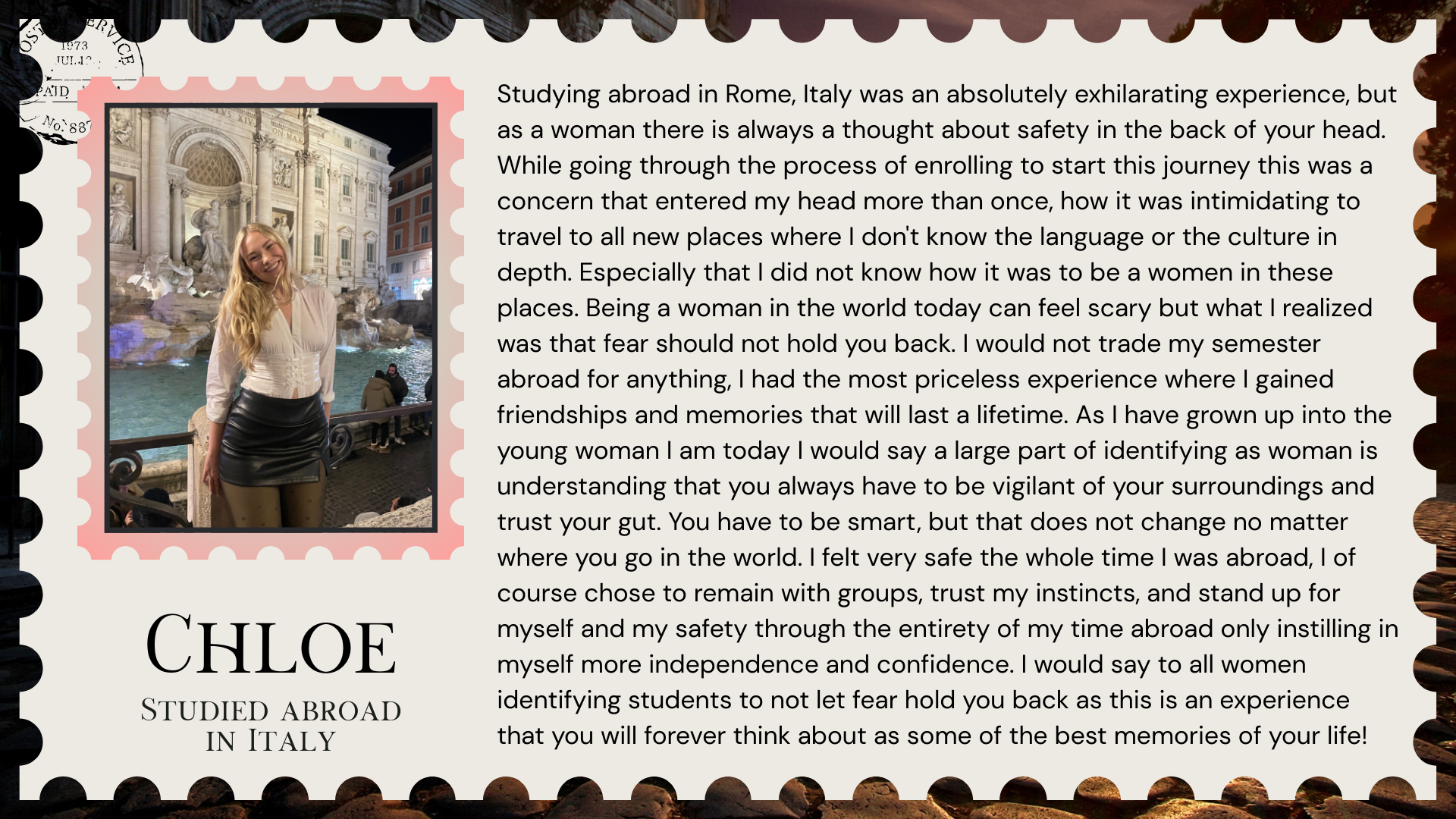
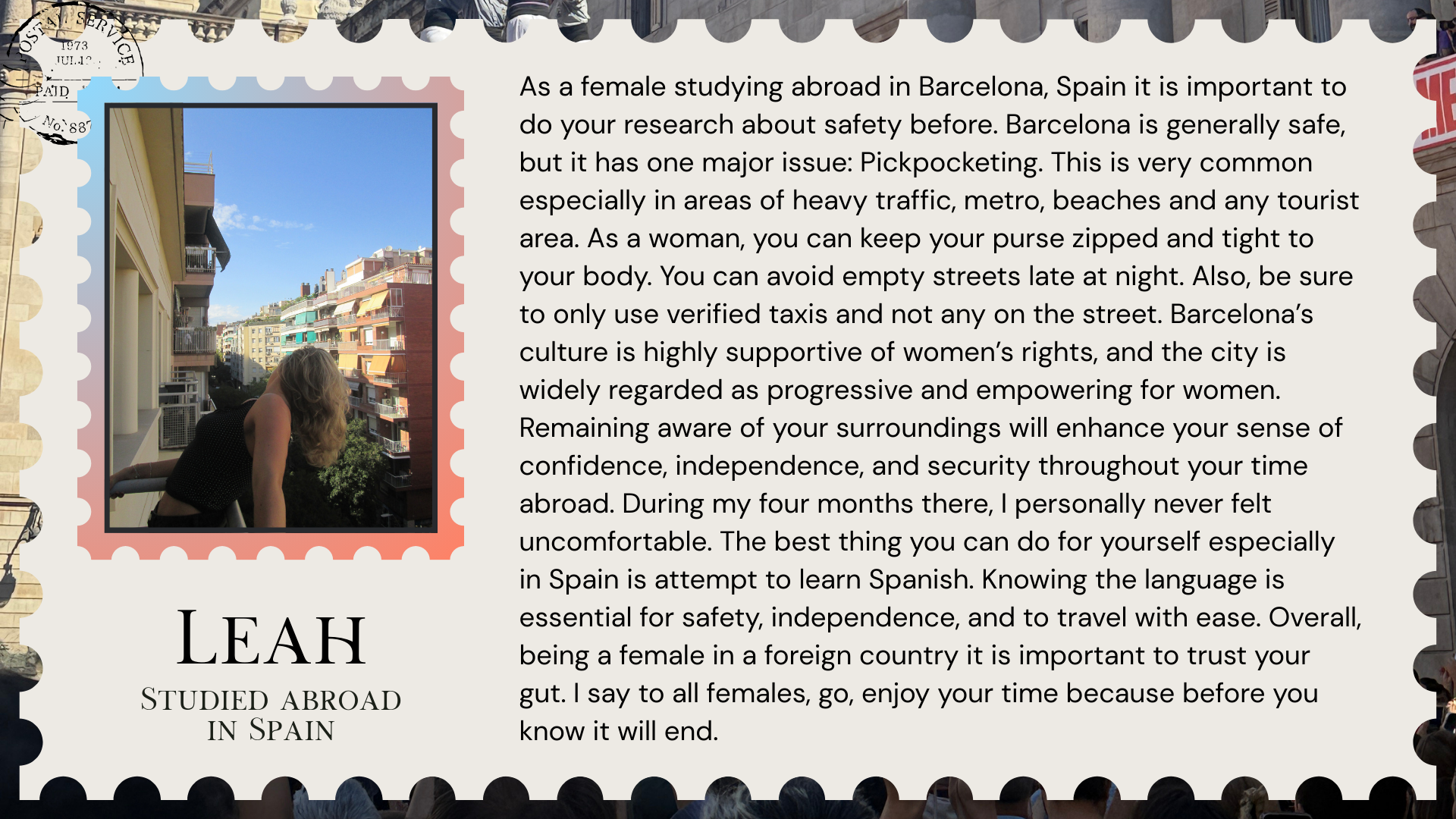
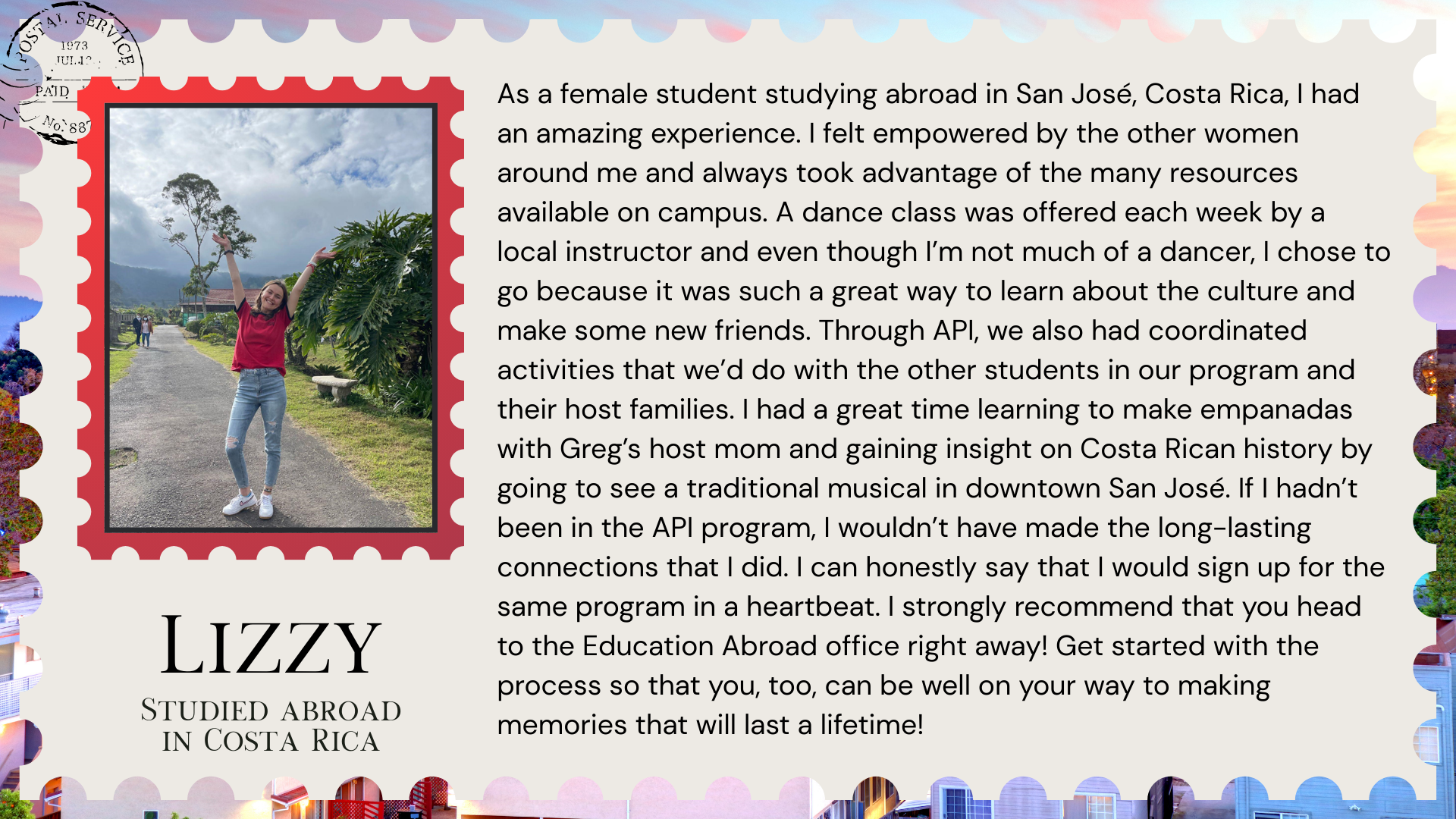
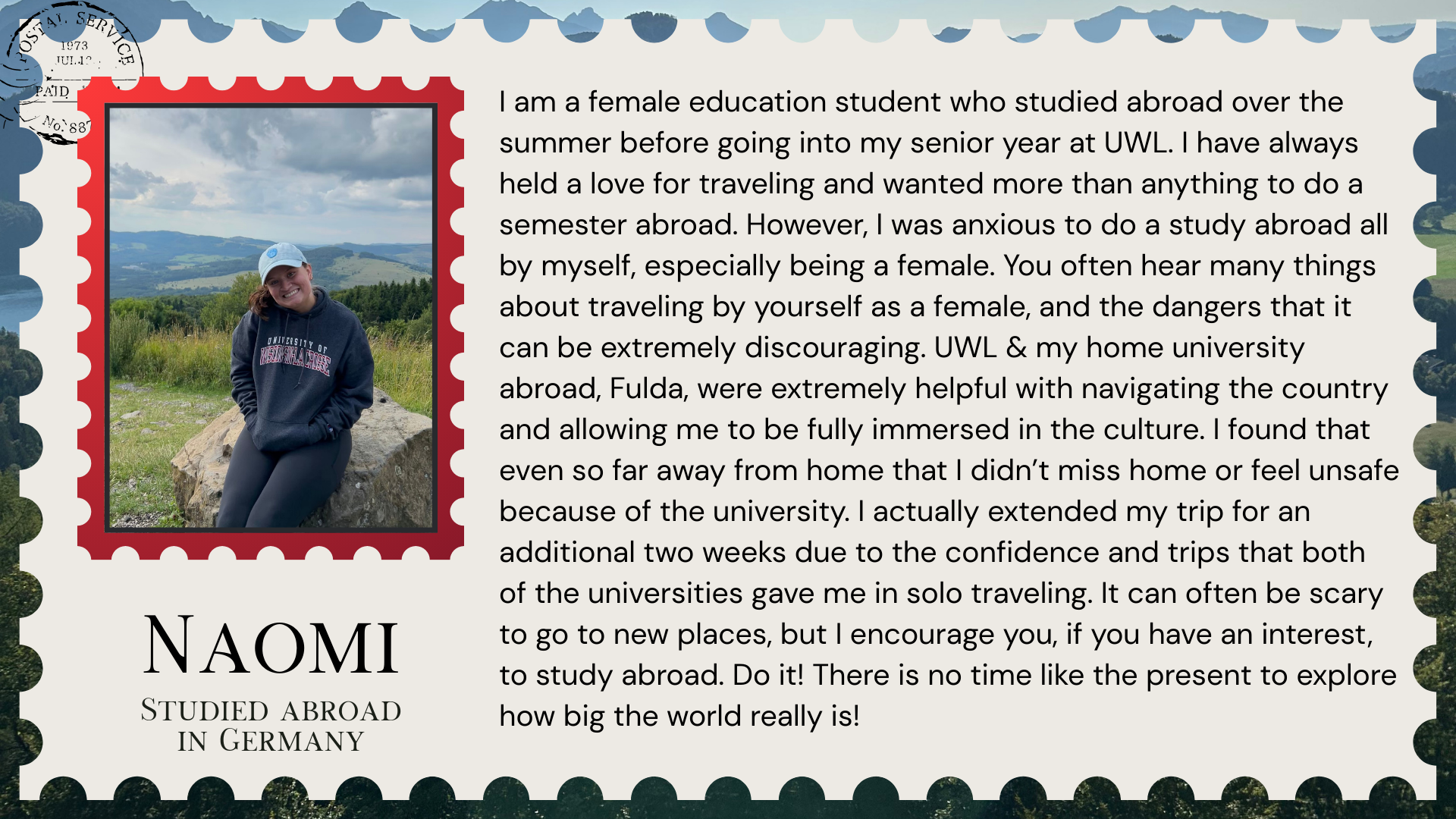
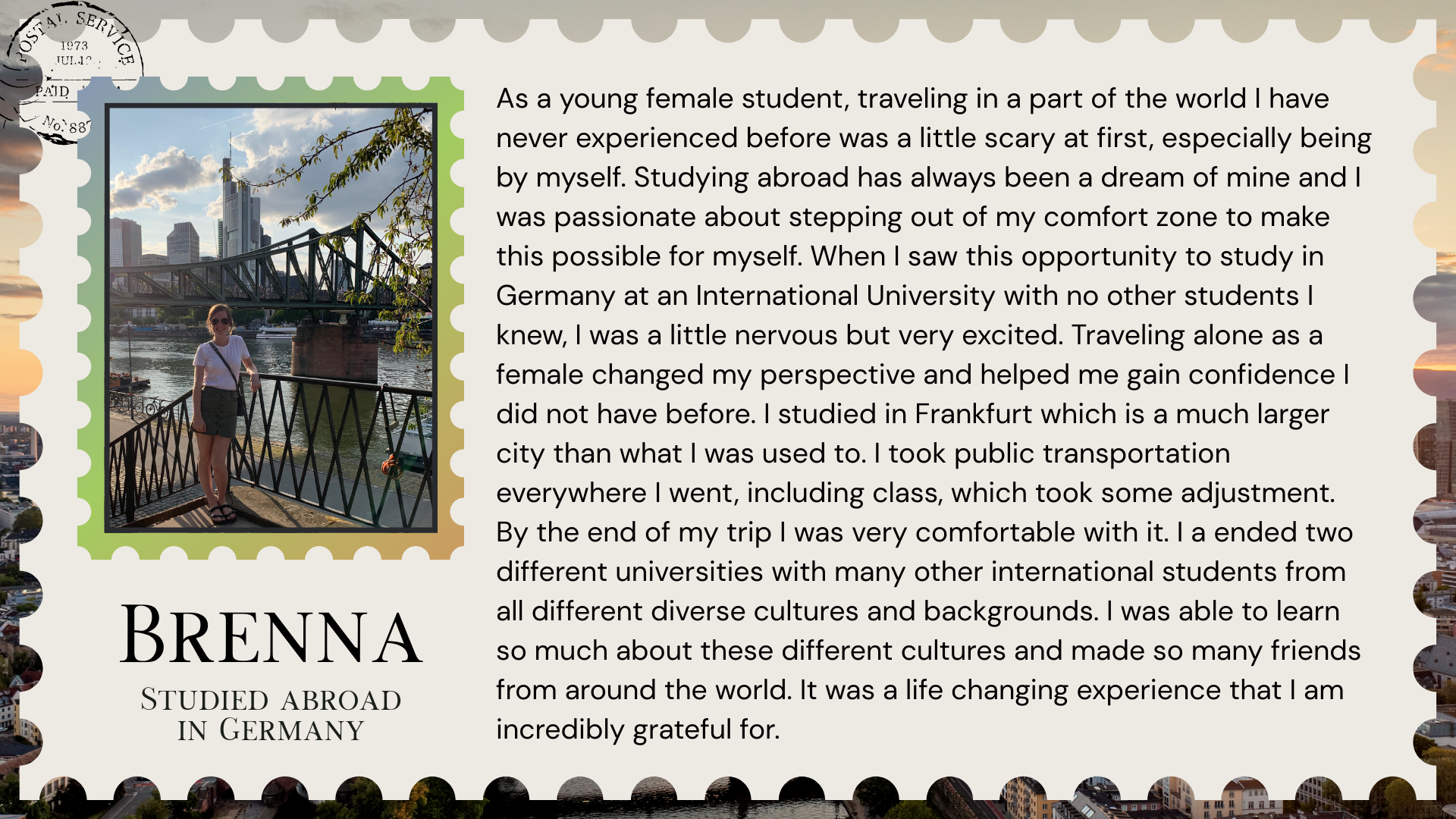
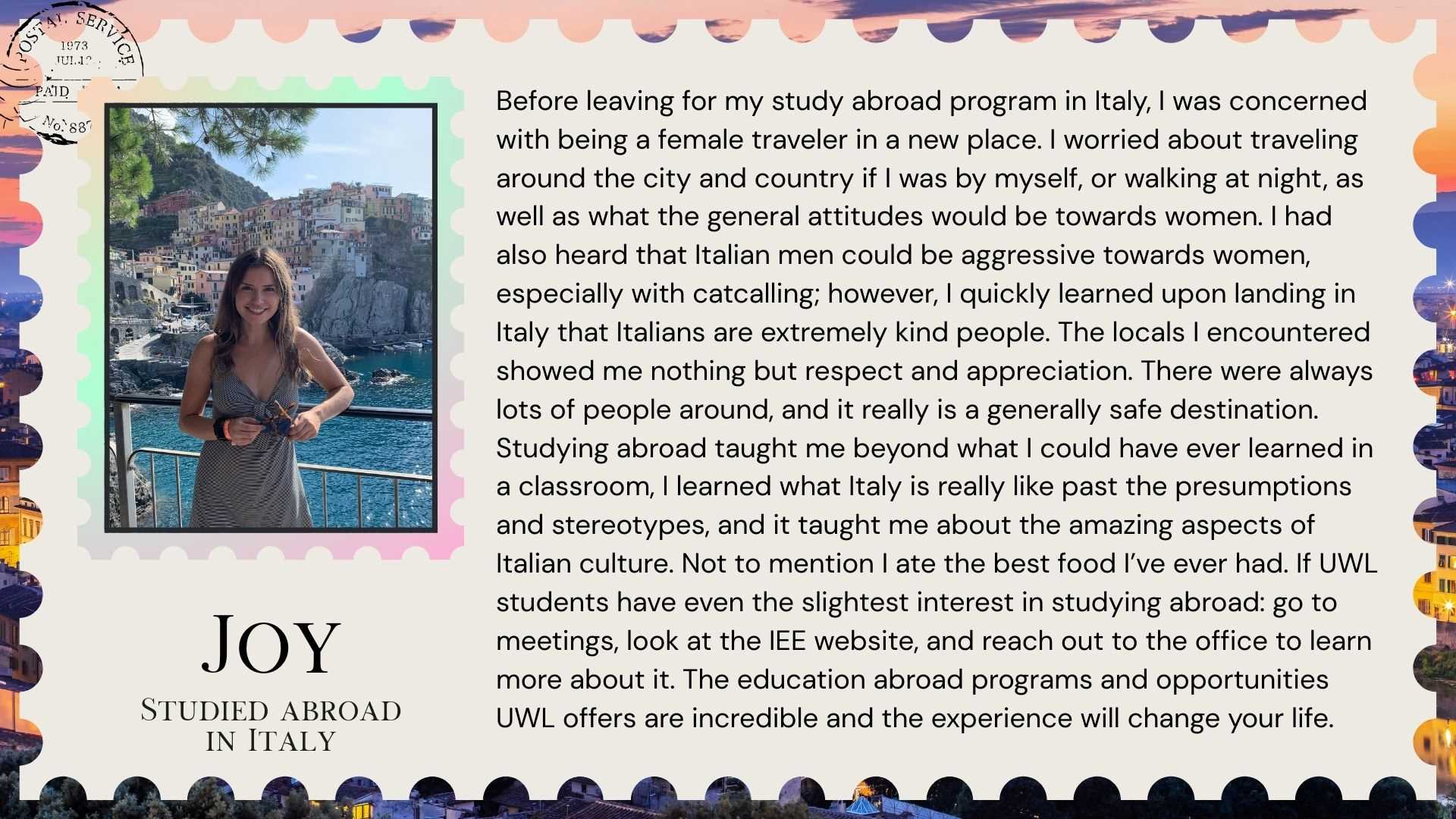
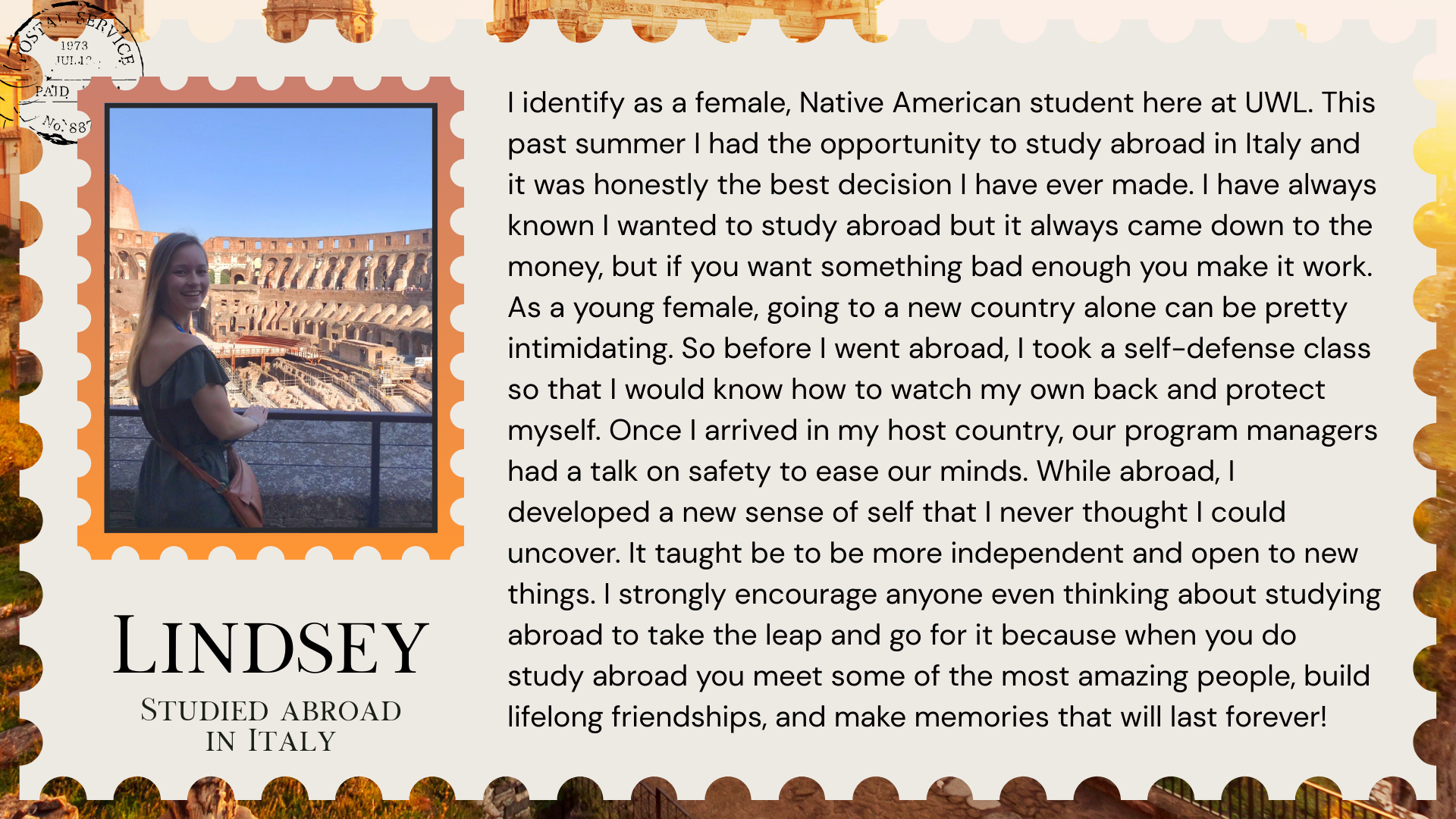
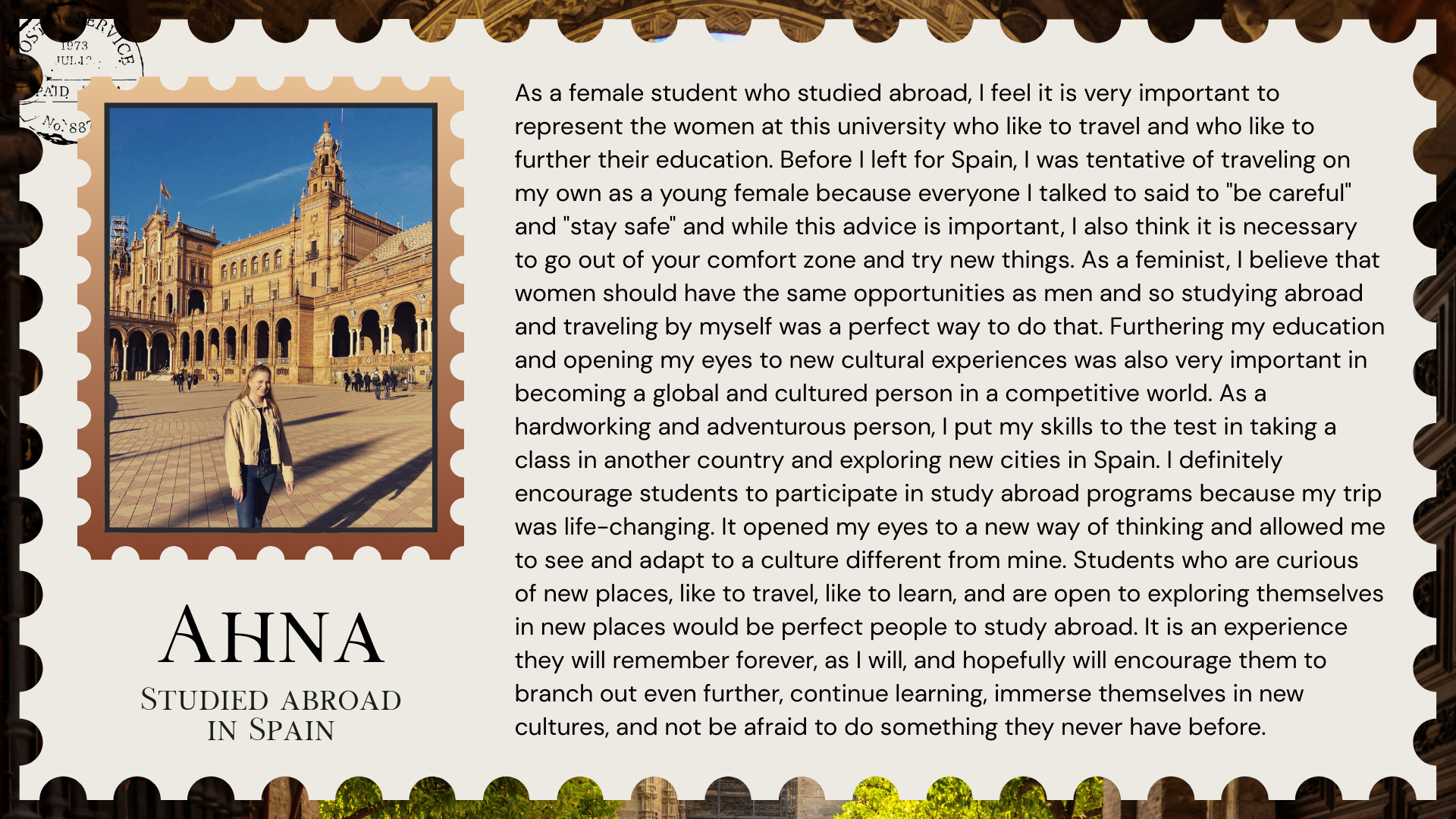
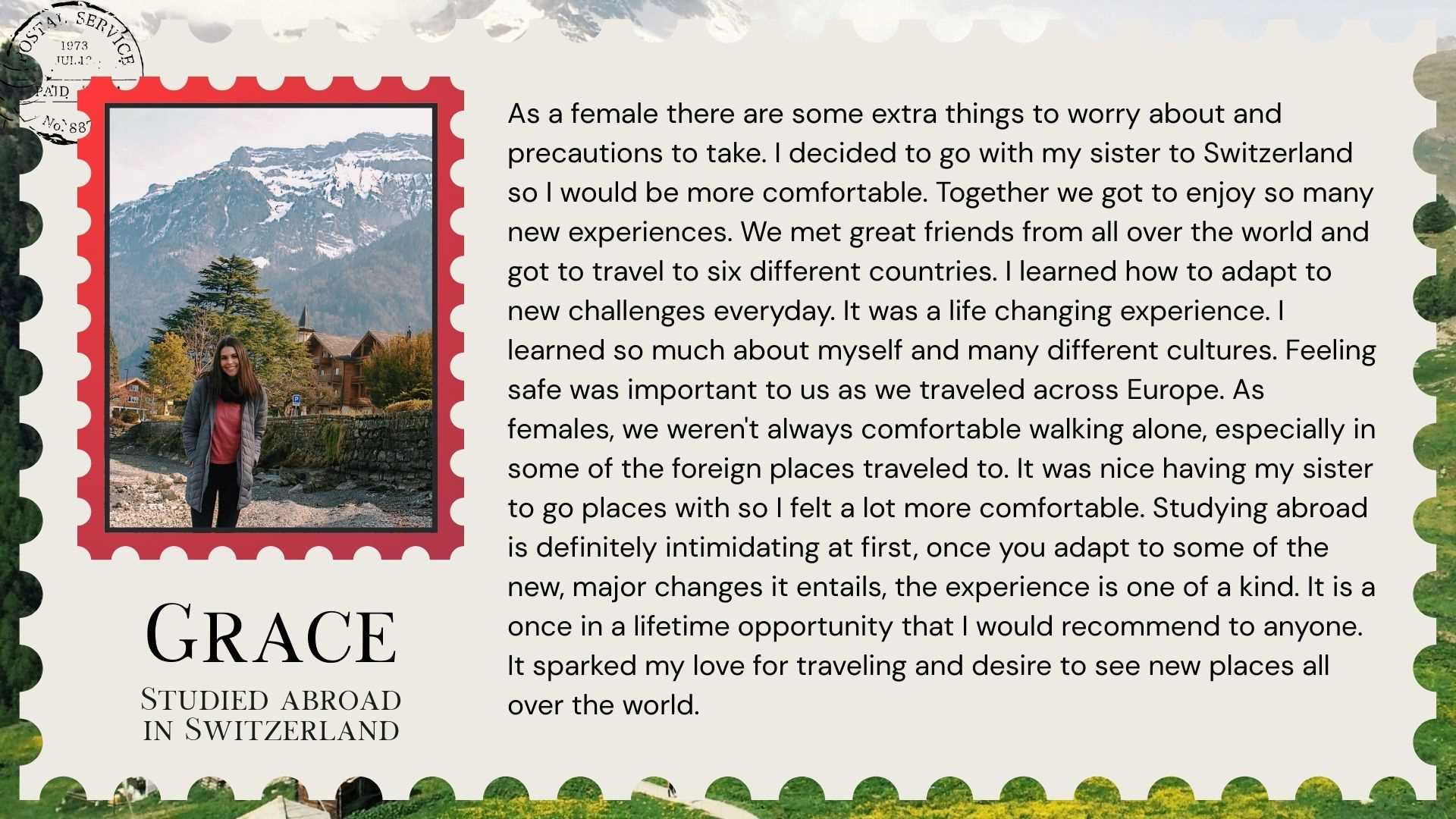
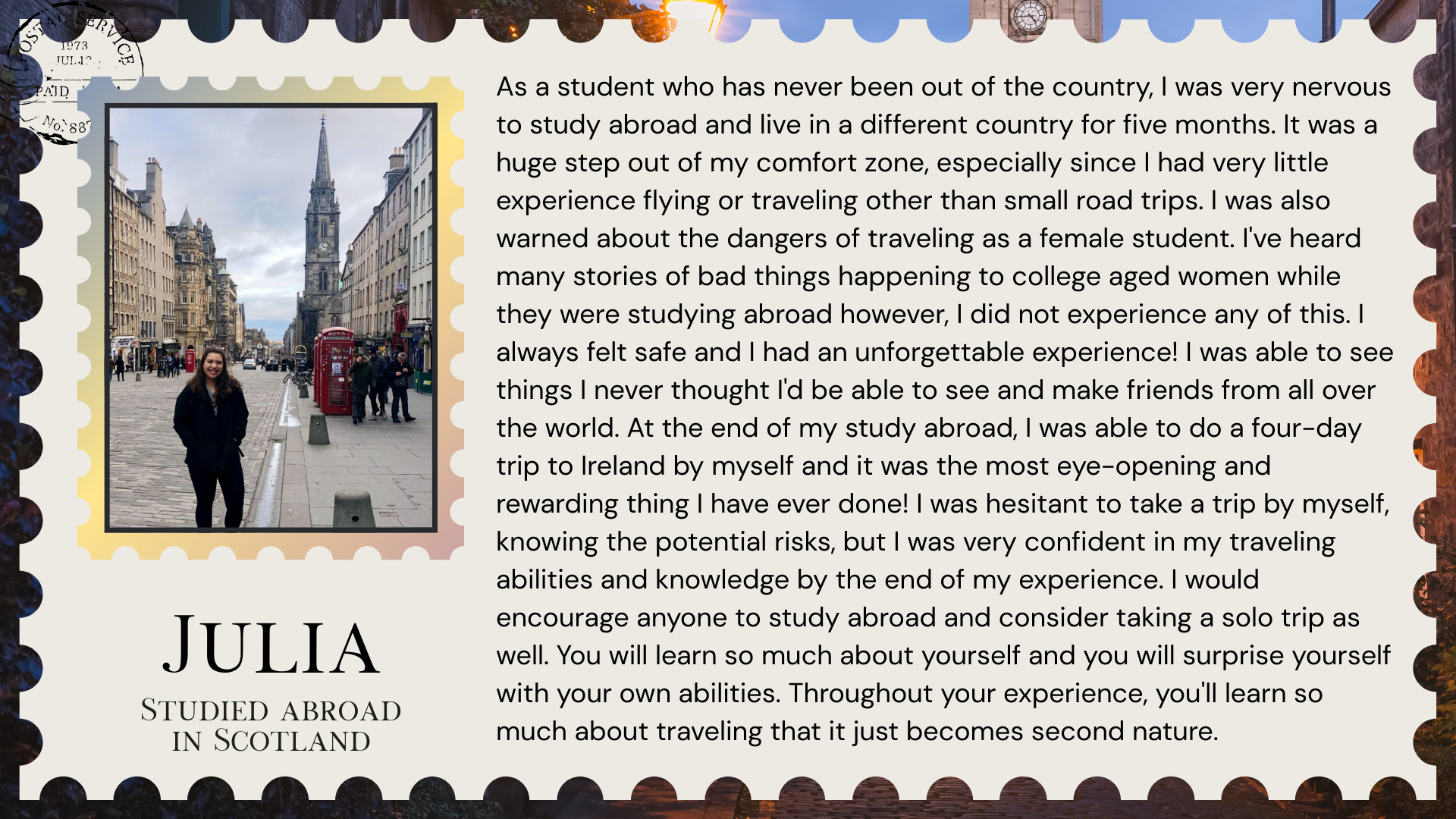
Before you start doing your search, take some time to think about how you feel about gender norms different than those in the U.S. Once you are ready, use these questions and suggestions to guide your research:
- What are the typical gender roles in that country?
- Will I be comfortable in a location where gender roles are very different from what I am used to in the U.S.?
- What are the cultural expectations for both men and women?
- Are there any stereotypes about women from the U.S.? What are they?
- How do my personal values compare to that country’s attitudes towards women?
- If gender inequality is the norm, how will I feel?
- What are the dating customs and norms? Is it acceptable for women to express their feelings openly?
- If you are very particular about your feminine hygiene products, will you be able to find them in that country?
- If you are using any kind of birth control find out if you will be able to get it in that country, or plan on bringing enough to last through your entire stay.
- Think about your safety, is it safe for me to go out alone? Are there cities I should avoid? How are the drinking norms there?
- Review emergency procedures and learn about safety practices such as traveling in pairs or groups, and dressing in a culturally appropriate way.
- What is considered sexual harassment in that country? Educating yourself about sexual harassment is integral to maintaining your sense of safety. While harassment may be more difficult to understand abroad because of different cultural norms, cultural sensitivity does not mean you should accept behaviors that make you feel uncomfortable or unsafe.
Talking with other women who have studied abroad in that location can also be a good place to start your research and learn about what to expect. It is important to remember that your words and actions have a chance to be perceived differently than intended due to cultural differences.
If you are unsure about how to interpret some of the gender norms in a country, you can contact your education abroad advisor. They will be more than happy to help you with your research. Once you are abroad, talking with local women and students can help you bridge the gap, if any, between the information you found in your research and how the local gender roles really are in that country.
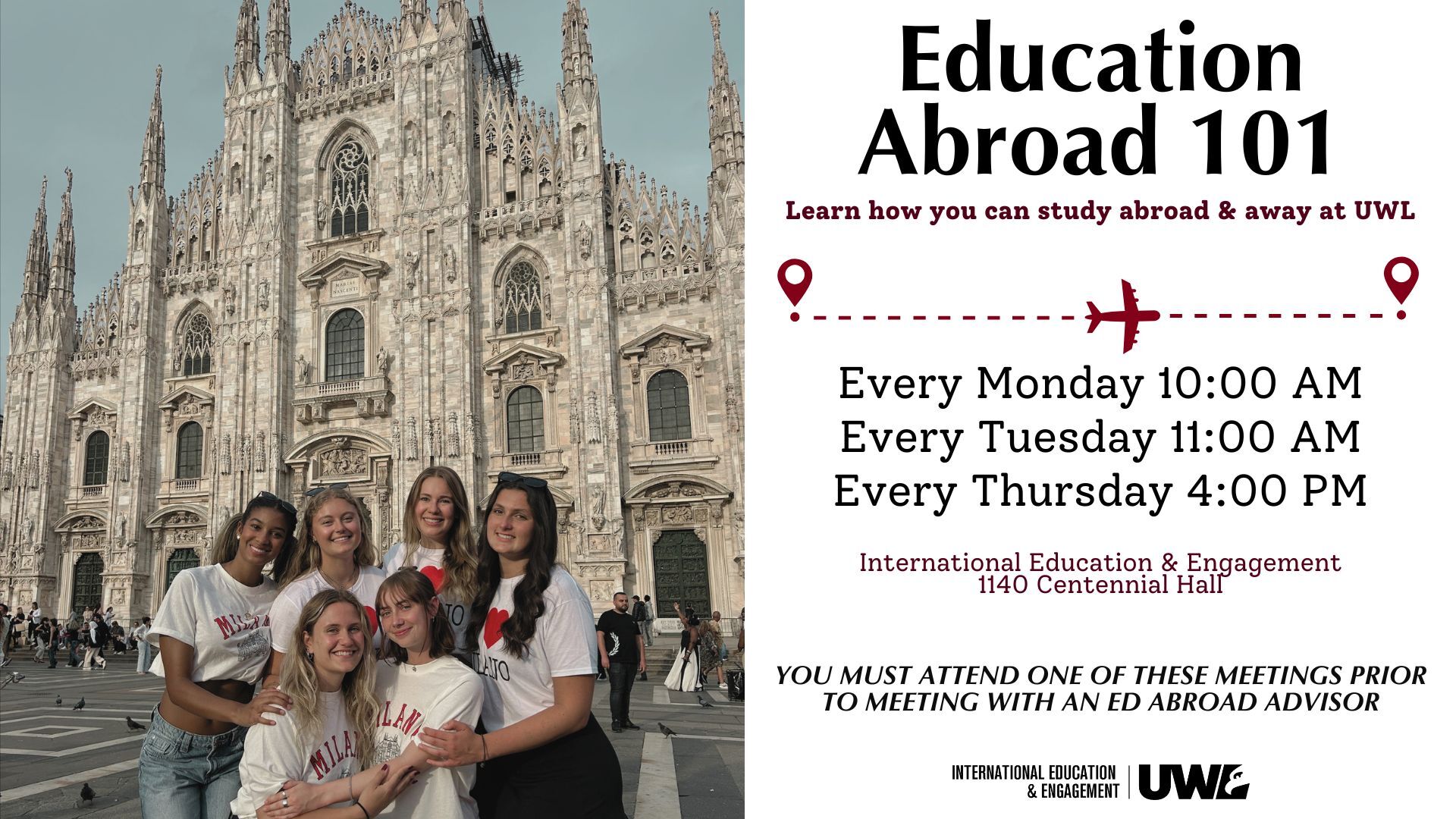
Start by doing some research based on the information above. To learn more about the education abroad process and programs offered at UWL, we encourage you to attend an Education Abroad 101 session. We are here for you!
Resources
Study Abroad Safety Tips for Female Students
Disclaimer
The resources provided on this website are for informational purposes only. They do not constitute an endorsement or approval by UW-La Crosse of any of the products, services, or opinions of the corporation, organization, or individual. UW-La Crosse bears no responsibility for the accuracy,
Student's Testimonials












Events


News
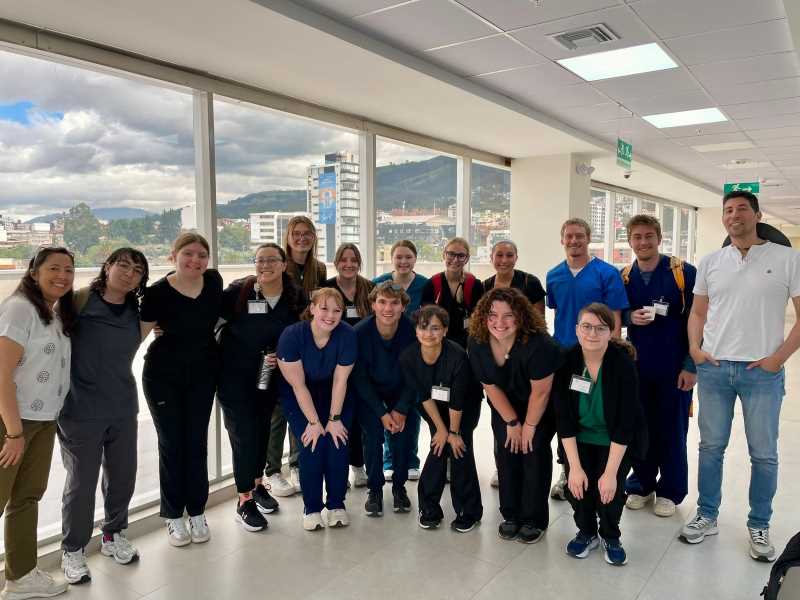 A deeper understanding
Posted 9 a.m. Friday, Sept. 4, 2026
UWL students gain medical, cultural experience through Ecuador study abroad
Read more about A deeper understanding
A deeper understanding
Posted 9 a.m. Friday, Sept. 4, 2026
UWL students gain medical, cultural experience through Ecuador study abroad
Read more about A deeper understanding
 Introducing the Spotlight Series
Posted noon Wednesday, Sept. 2, 2026
New event series builds campus and community connections
Read more about Introducing the Spotlight Series
Introducing the Spotlight Series
Posted noon Wednesday, Sept. 2, 2026
New event series builds campus and community connections
Read more about Introducing the Spotlight Series
 Exchanging more than ideas
Posted 12:44 p.m. Friday, Aug. 21, 2026
UWL-Frankfurt partnership opens doors for global connections
Read more about Exchanging more than ideas
Exchanging more than ideas
Posted 12:44 p.m. Friday, Aug. 21, 2026
UWL-Frankfurt partnership opens doors for global connections
Read more about Exchanging more than ideas
 Built to innovate
Posted 1:11 p.m. Wednesday, July 22, 2026
Research, entrepreneurship, leadership define NJ Jariwala's path at UWL
Read more about Built to innovate
Built to innovate
Posted 1:11 p.m. Wednesday, July 22, 2026
Research, entrepreneurship, leadership define NJ Jariwala's path at UWL
Read more about Built to innovate
 Finding her fit, launching her future
Posted 9 a.m. Wednesday, May 6, 2026
Business grad Jaidyn Strang reflects on UWL experiences that shaped her success
Read more about Finding her fit, launching her future
Finding her fit, launching her future
Posted 9 a.m. Wednesday, May 6, 2026
Business grad Jaidyn Strang reflects on UWL experiences that shaped her success
Read more about Finding her fit, launching her future