CHM 103 General Chemistry I
An introduction to chemistry including topics in atomic structure, chemical bonding, molecular structure, chemical stoichiometry, reactivity, states of matter, solutions, acid-base theory, and nuclear chemistry, and also including selected topics in descriptive and applied chemistry. Scientific inquiry, experimental design and data analysis are included. CGER NSWL-ES Natural Science & Wellness: Experiential Science. Lect. 3, Lab 3, Disc. 1. Prerequisite: grade of "C" or better in MTH 150 or placement into MTH 151 or higher. Students who are currently enrolled in CHM 103 may not register for this course again until after priority registration (unless they have instructor/department consent). Offered Fall, Spring, Summer.
CHM 303 Organic Chemistry Theory I
A study of the structure, methods of structure determination, stereochemistry and chemical behavior of hydrocarbons, alcohols, and halogenated hydrocarbons. Theories and mechanisms are introduced to explain chemical behavior. Prerequisite: CHM 104. Students with credit in CHM 300 cannot earn credit in CHM 303. Offered Fall, Spring.
CHM 301 Analytical Chemistry
This course offers a broad survey of common methods and scientific instruments used for chemical analysis. Instrumental methods include the topics of spectroscopy, chromatography, and electrochemistry. Quality assurance and calibration techniques are emphasized. Lect. 3, Lab 6. Prerequisite: CHM 104. Offered Fall, Spring.
CHM 309 Physical Chemistry Theory I
This course is a study of real gases, equations of state, properties of gases, molecular energies, classical thermodynamics, chemical equilibria, changes of state, and reaction kinetics and mechanisms. Prerequisite: CHM 104; PHY 103 or PHY 203; PHY 104 or PHY 204; grade of "C" or better in MTH 208. Offered Fall.
CHM 325 Fundamental Biochemistry
This course is the study of the fundamental chemical processes in biological systems emphasizing the structure and function of biological macromolecules, metabolism and the regulation of cellular processes, transport mechanisms, nature of biological energy, and applications to cellular and organismal function. Lect. 3, Lab 3. Prerequisite: CHM 300 or CHM 304. Students with credit in CHM 417 cannot earn credit in CHM 325. Offered Fall, Spring.
CHM 441 Instrumental Analysis
This is an in-depth course covering the operational principles, design, and application of instrumentation used for chemical analysis. Topics include instrumental methods for separations, mass spectrometry, spectroscopic, and electrochemical analysis; and specific instrumentation for materials characterization. Lect. 3, Lab 3. Prerequisite: CHM 301. Offered Fall.
CHM 424 Spectroscopy
A survey of important spectroscopic methods used in chemistry; infrared and ultraviolet, proton and carbon-13 NMR, and mass spectrometry. Theory and practice of techniques are covered. Emphasis is placed on structure determination of organic molecules. Analysis of dynamic systems and mixtures may also be covered. Lect. 2, Lab 3. Prerequisite: CHM 300 or CHM 304; junior standing. Offered Spring - Even Numbered Years.
CHM 330 Industrial Chemistry
An overview of both the scientific and commercial aspects of the chemical industry. Industrially important chemical processes will be discussed. Topics will include production and end use of basic inorganic chemicals of commercial importance, industrial gases, and petroleum-based products. The economics of various chemical processes will be presented. Global and local topics such as regulatory compliance, product liability, and patent/trade secret documentation may also be discussed. Prerequisite: CHM 300 or CHM 303. Offered Spring - Even Numbered Years.
CHM 461 Nuclear Chemistry
This course is a study of the decay of radioactive nuclides with emphasis on the theory of nuclear decay. The laboratory includes the study of the detection of radiation, methods of radio analysis, and the safe handling of unsealed radioactive sources. Lect. 3, Lab 3. Prerequisite: four semesters of chemistry courses; junior standing. Offered Spring.
CHM 413 Environmental Chemistry Laboratory
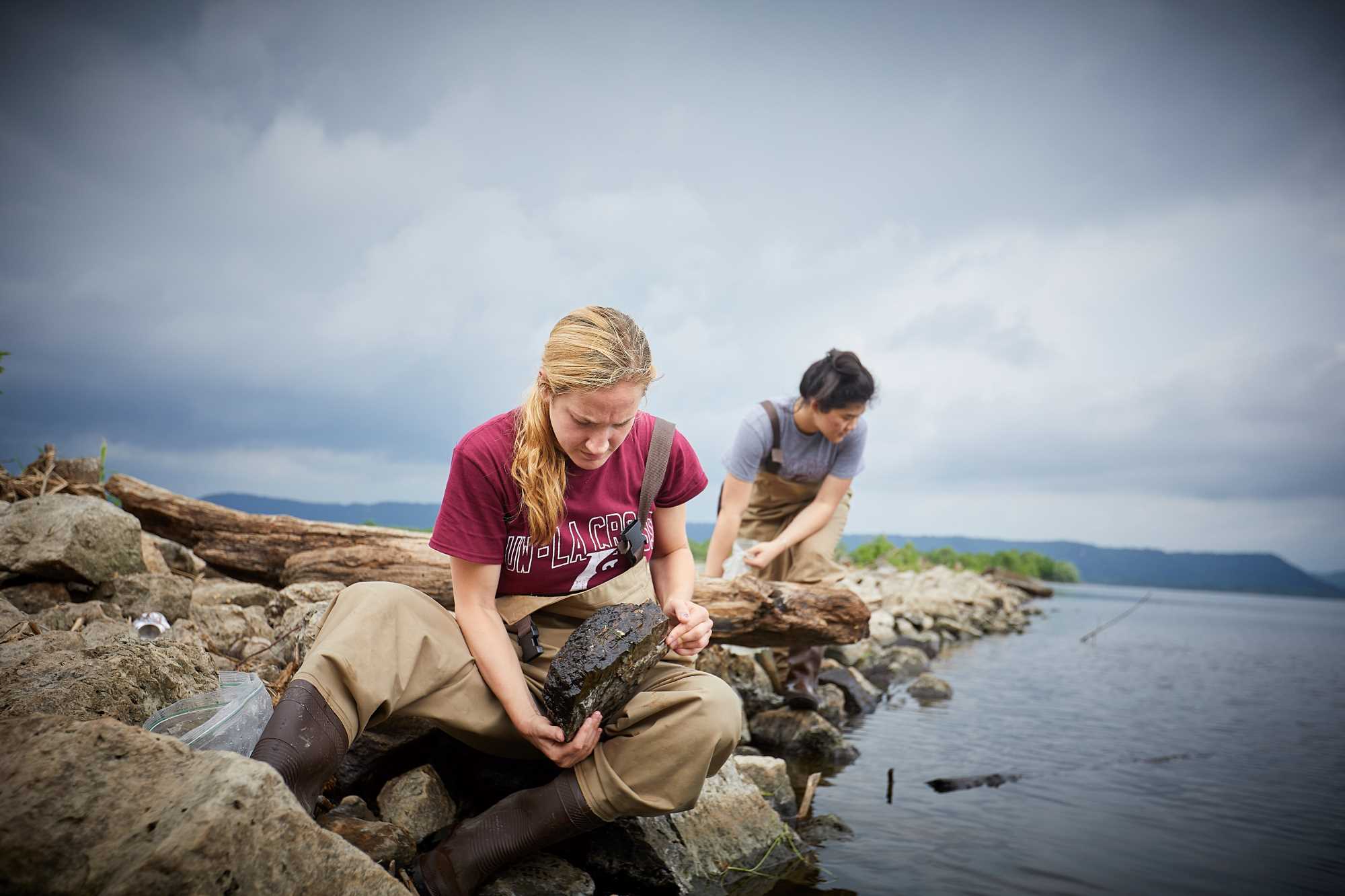
This course is an exploration of chemical reactivity and measurement in atmospheric, terrestrial, and aquatic ecosystems. Students collect and analyze samples and perform experiments that validate major environmental topics. Lab experiments include measurement of the physical/chemical properties of air, water, and soil relative to environmental standards and toxic thresholds, as well as investigations of the chemistry of greenhouse gases, contaminants, indoor pollution, and acid rain. Lab 4. Prerequisite: CHM 300 or CHM 303 or CHM 301. Offered Fall.


 UWL's Eagle Mark logo